Risk Factors and Predictive Modeling of Occult Choledocholithiasis in Patients with Cholecystolithiasis
Ping Zhang, Long-jiang Chen, Dan-feng Liu

TL;DR
This study creates a predictive model to help identify patients with gallstones who may also have occult bile duct stones, using factors like age and blood test results.
Contribution
A novel predictive model for diagnosing occult choledocholithiasis in gallstone patients is developed with high accuracy and sensitivity.
Findings
Age, ALT, GGT, DBIL, gallstone location, and bile duct dilation are independent risk factors for occult choledocholithiasis.
The predictive model achieved a high AUC of 0.940, sensitivity of 0.839, and specificity of 0.891.
The model provides a valuable diagnostic tool for identifying occult bile duct stones in gallstone patients.
Abstract
Occult choledocholithiasis, if not diagnosed and treated in a timely manner, can have severe consequences. The purpose of this study is to construct a predictive model to assist in the diagnosis. A total of 988 case datasets were included. Data were analyzed using chi‐square tests and multivariate logistic regression. Ultimately, a predictive model for gallstones combined with occult choledocholithiasis was constructed. Multivariate logistic regression analysis revealed that age, alanine aminotransferase (ALT), gamma‐glutamyl transferase (GGT), direct bilirubin (DBIL), location of gallstones, and ultrasonographic indication of common bile duct dilation are independent risk factors for gallstones combined with occult choledocholithiasis. A predictive model was constructed based on these factors: logit(P) = −5.109 + 2.007x1 + 1.175x2 + 3.479x3 + 1.412x4 + 2.199x5 + 2.473x6 (where x1–x6…
Genes, proteins, chemicals, diseases, species, mutations and cell lines named across the full text — each resolved to its canonical identifier and authoritative record.
Click any figure to enlarge with its caption.
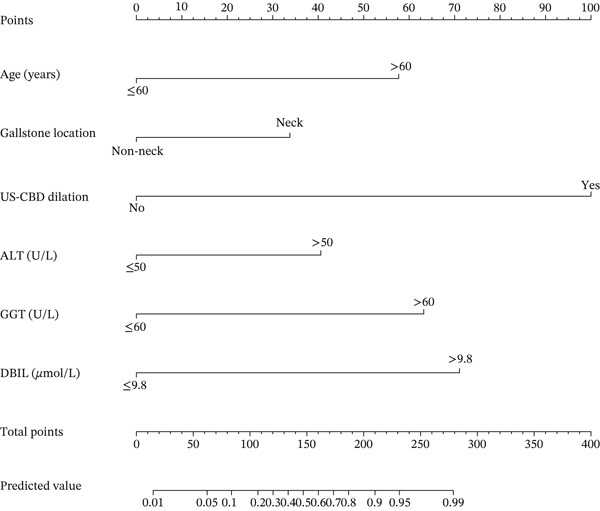 Figure 1
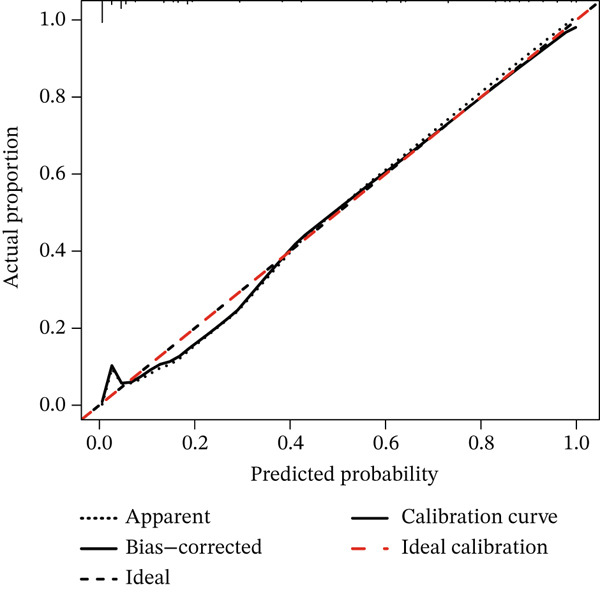 Figure 2
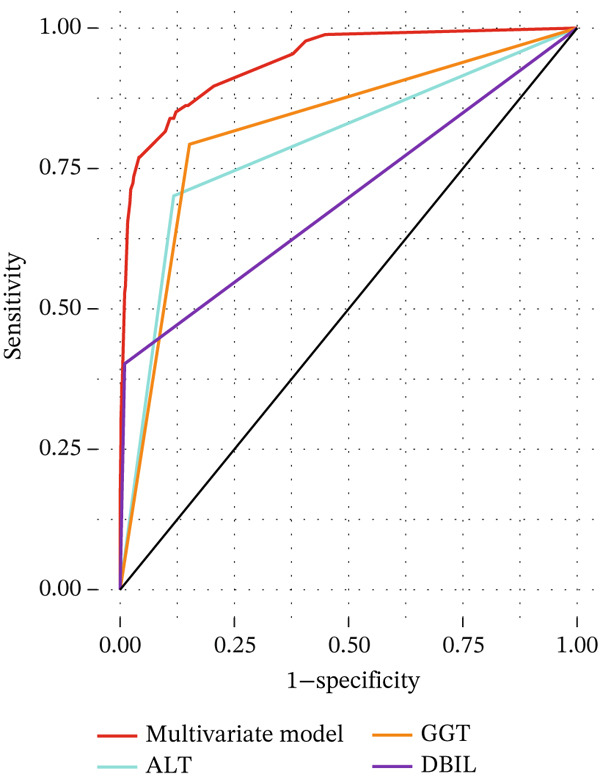 Figure 3
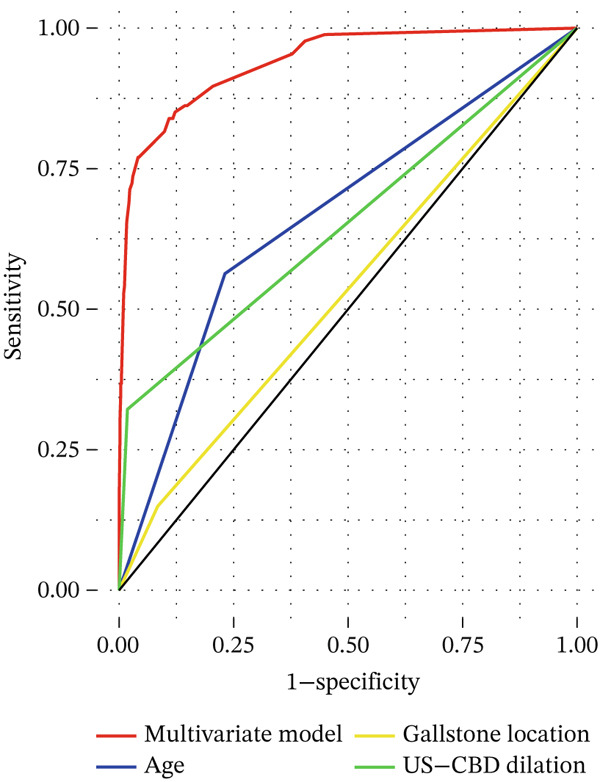 Figure 4
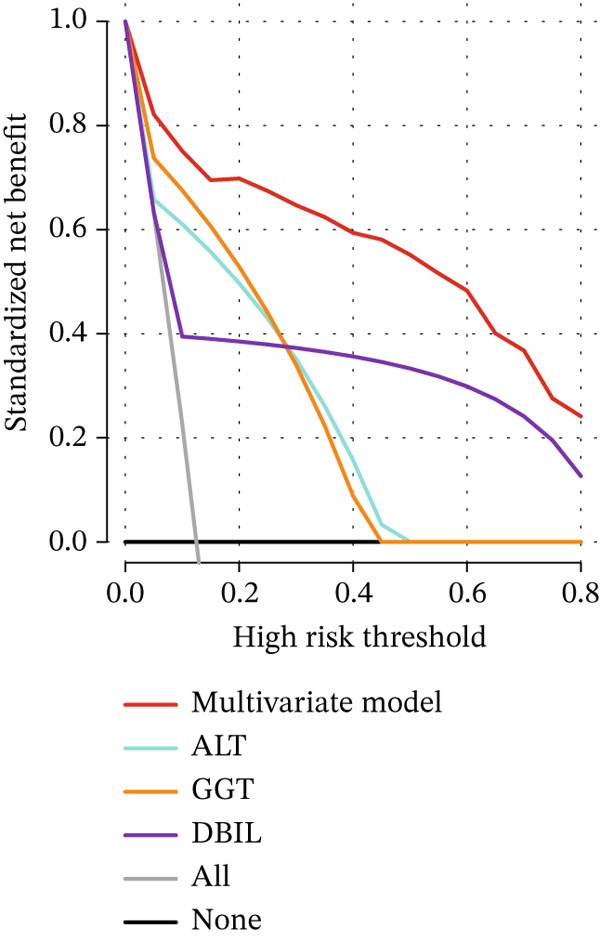 Figure 5
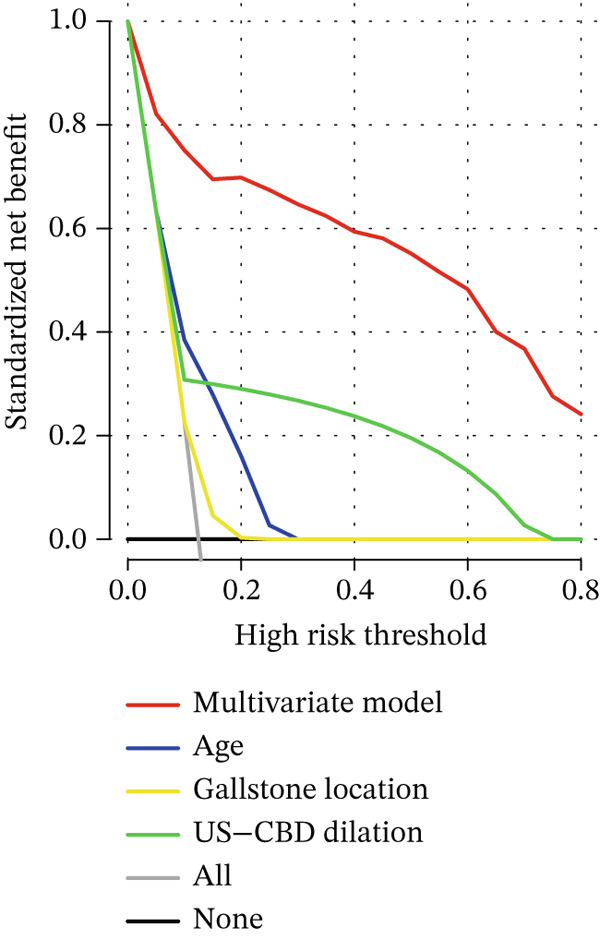 Figure 6
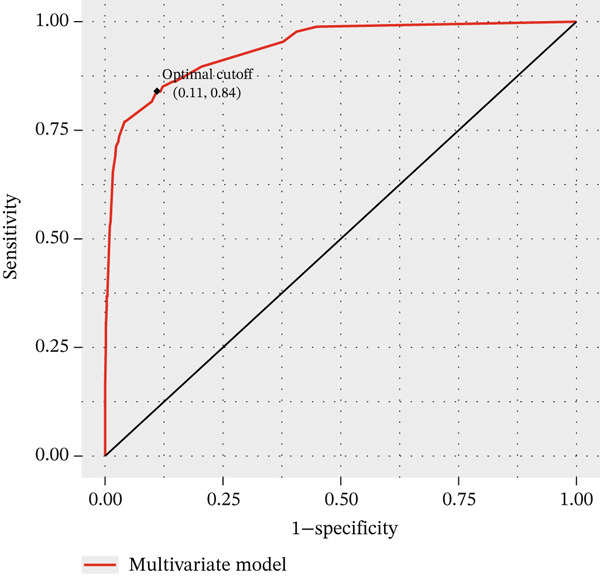 Figure 7
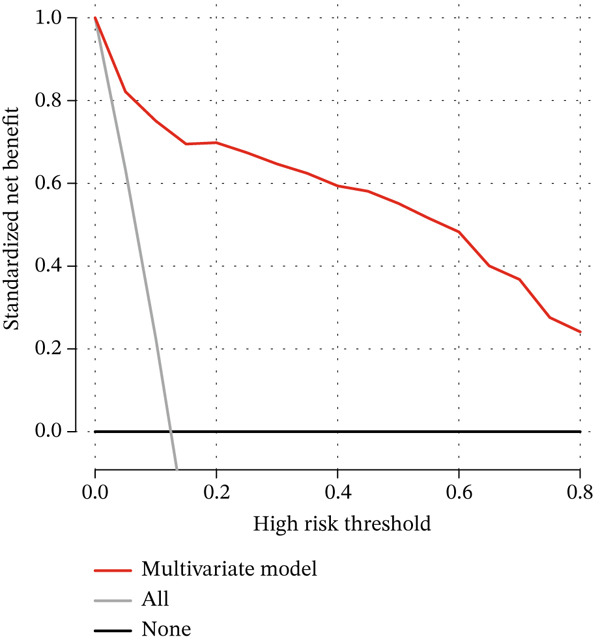 Figure 8
Peer Reviews
No public reviews on file for this paper yet. If you reviewed it on a platform where reviews are public (OpenReview, ICLR, NeurIPS, ICML), you can paste yours below so the community can read it here.
Videos
No videos yet. Explain this paper in a talk, walkthrough, or lecture? Add one.
Taxonomy
TopicsGallbladder and Bile Duct Disorders · Appendicitis Diagnosis and Management · Abdominal Surgery and Complications