Sex Differences in Muscle–Respiratory Function Relationship in Lung Transplant Patients: A Longitudinal Study
Chiara Ceolin, Agnese Alessi, Anna Citron, Monica Loy, Mario Virgilio Papa, Carlotta Andaloro, Bruno Micael Zanforlini, Maria Devita, Sara Bertolino, Sara Gonnelli, Daniele Michele Seccia, Anna Bertocco, Federico Rea, Giuseppe Sergi, Marina De Rui

TL;DR
This study finds that muscle health is linked to better lung function in lung transplant patients, with differences observed between men and women.
Contribution
The study provides new insights into the longitudinal relationship between muscle parameters and respiratory function in lung transplant patients, with a focus on sex-specific differences.
Findings
Higher handgrip strength is independently associated with better pulmonary function in both male and female lung transplant recipients.
In women with restrictive disease, lower muscle mass predicts higher FEV1 and TLC over time.
Muscle health is shown to have a significant and persistent impact on respiratory outcomes after lung transplantation.
Abstract
Lung transplant recipients are at increased risk of sarcopenia and osteoporosis, which may negatively influence respiratory outcomes. Although muscle health is known to affect lung function, little is known about the long‐term interplay between muscle parameters and pulmonary volumes, especially across sexes. The objective of this study is to evaluate the longitudinal relationship between muscle mass and strength and respiratory function in lung transplant patients, with sex‐specific analysis. This prospective cohort included three assessments (baseline ≥ 3 months after transplant, ~1 year and 2–3 years). The primary outcome was the longitudinal change in pulmonary function (VC, FVC, FEV1 and TLC) in relation to appendicular skeletal muscle mass index (ASMMI) and handgrip strength (HGS). Associations at baseline were tested with multivariable linear regression. Analyses were performed…
Genes, proteins, chemicals, diseases, species, mutations and cell lines named across the full text — each resolved to its canonical identifier and authoritative record.
Click any figure to enlarge with its caption.
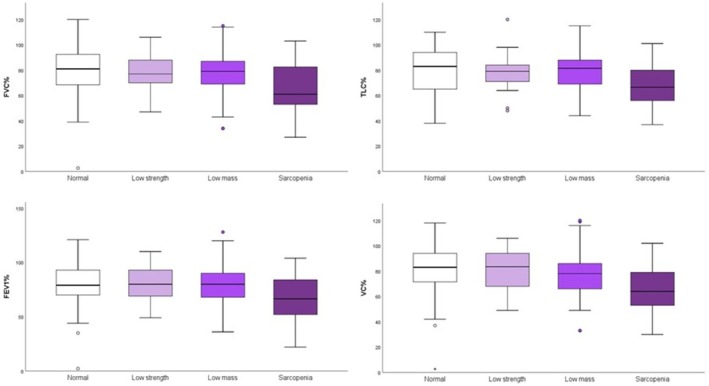 Figure 1
Peer Reviews
No public reviews on file for this paper yet. If you reviewed it on a platform where reviews are public (OpenReview, ICLR, NeurIPS, ICML), you can paste yours below so the community can read it here.
Videos
No videos yet. Explain this paper in a talk, walkthrough, or lecture? Add one.
Taxonomy
TopicsTransplantation: Methods and Outcomes · Renal Transplantation Outcomes and Treatments · Cardiovascular and exercise physiology