In situ laser fenestration with coil embolization of expanding internal iliac artery aneurysm following previous stent graft coverage
Crista E. Horton, Jake Forman, Luc Lanteigne, Samantha Moore, Ahmed K. Ghamraoui, John J. Ricotta, Joseph J. Ricotta

TL;DR
A new endovascular technique using laser fenestration and coil embolization successfully treated a complex internal iliac artery aneurysm.
Contribution
A fully endovascular approach using in situ laser fenestration is presented for managing high-risk aneurysms.
Findings
In situ laser fenestration enabled access to embolize feeding vessels and the aneurysm sac.
The technique provided a safe treatment option for complex type II endoleaks in high-risk patients.
Abstract
We treated a large internal iliac artery (IIA) aneurysm from a type II endoleak with a prior endovascular aortic aneurysm repair and complete coverage of the IIA origin. In situ laser fenestration was used to create temporary access through the iliac limb, allowing selective coil embolization of feeding vessels and the aneurysm sac. The fenestration was then sealed with an iliac stent graft extension. This case demonstrates that in situ laser fenestration can provide a safe, fully endovascular option for managing complex type II endoleaks with IIA aneurysm expansion in high-risk patients.
Genes, proteins, chemicals, diseases, species, mutations and cell lines named across the full text — each resolved to its canonical identifier and authoritative record.
Click any figure to enlarge with its caption.
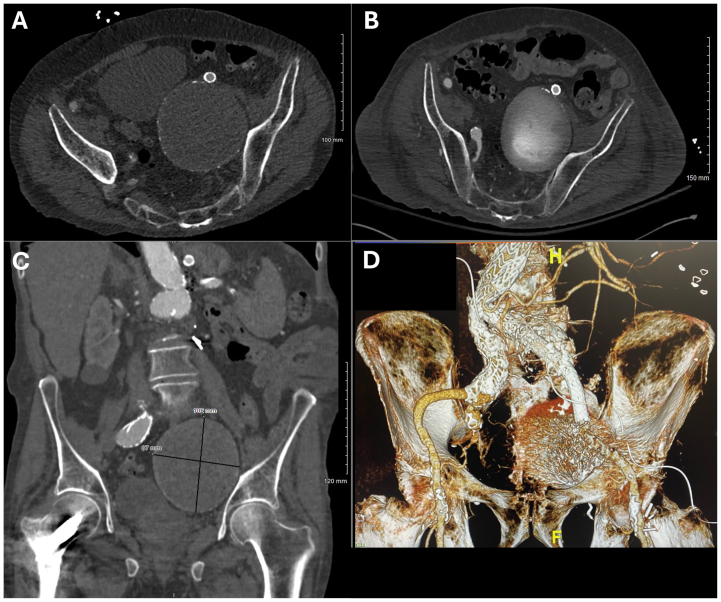 Figure 1
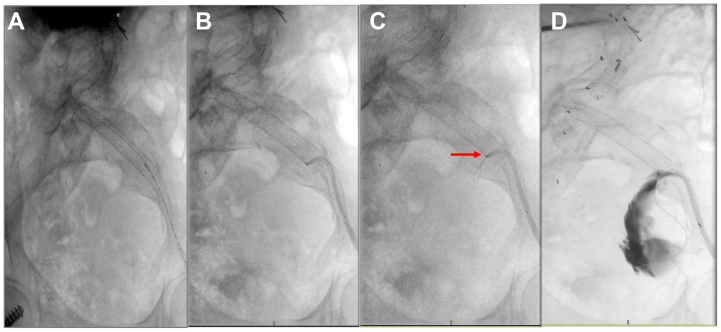 Figure 2
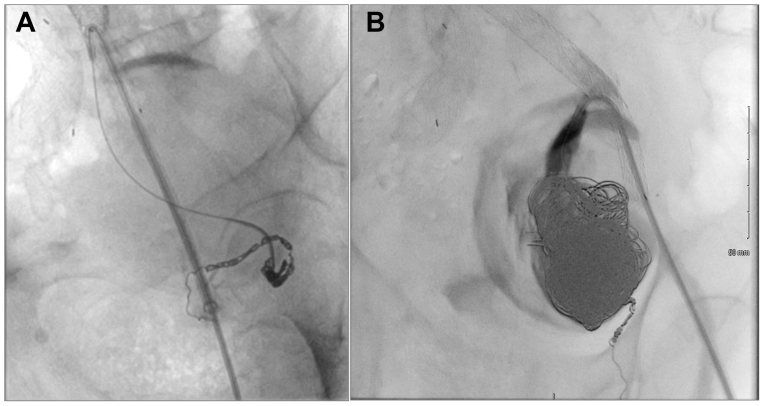 Figure 3
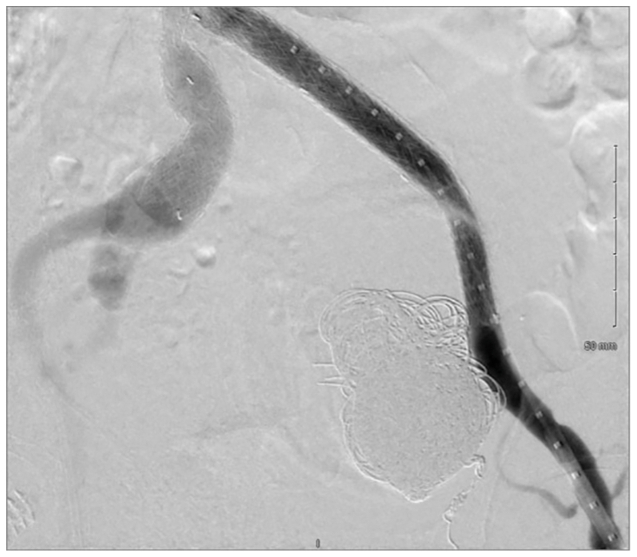 Figure 4
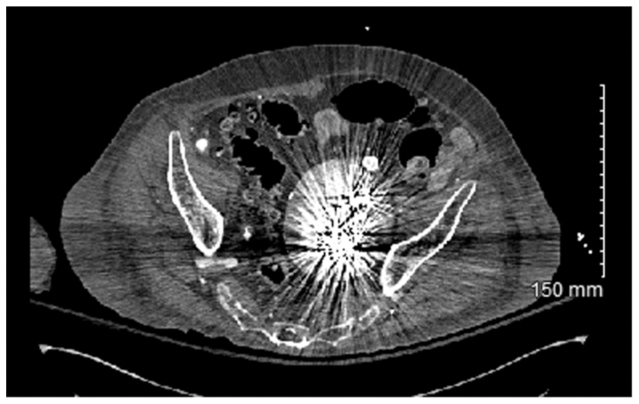 Figure 5
Peer Reviews
No public reviews on file for this paper yet. If you reviewed it on a platform where reviews are public (OpenReview, ICLR, NeurIPS, ICML), you can paste yours below so the community can read it here.
Videos
No videos yet. Explain this paper in a talk, walkthrough, or lecture? Add one.
Taxonomy
TopicsAortic aneurysm repair treatments · Aortic Disease and Treatment Approaches · Infectious Aortic and Vascular Conditions