Rhizobial motility preference in root colonization of Medicago truncatula
Anaïs Delers, Anne Bennion, Ambre Guillory, Lisa Frances, Elizaveta Krol, Fanny Bonnafous, Laurena Medioni, Javier Serrania, Rémi Peyraud, Joëlle Fournier, Fernanda de Carvalho‐Niebel, Anke Becker

TL;DR
This study explores how rhizobia bacteria move inside plant roots to form nitrogen-fixing nodules, finding that they rely on passive movement rather than flagella.
Contribution
The study reveals that rhizobia use flagella-independent surface translocation to colonize Medicago truncatula roots.
Findings
Rhizobia move slowly (2–6 μm h−1) inside infection threads, suggesting passive rather than active motility.
Flagella-less mutants could still colonize roots and nodules, indicating flagella are not essential for in planta motility.
Mutation in the rhbE gene impaired surface motility and nodule development, promoting branched infection threads.
Abstract
Tunnel‐like infection thread (IT) structures support root colonization by symbiotic nitrogen‐fixing rhizobia bacteria in most legume species. These tip‐grown structures are key to directing rhizobia from root hairs to developing nodules, where they are hosted to fix nitrogen. Rhizobia likely progress inside ITs by combining growth and motility by modes not yet defined.Here, we tackled this question by combining mathematical modeling, live cell imaging, and bacterial mutant phenotyping in Medicago truncatula.Modeling the motion of fluorescently‐labeled Sinorhizobium meliloti inside root hair IT compartments estimated slow movement (2–6 μm h−1), compatible with passive rather than active motility. Consistent with this model, flagella‐less S. meliloti mutants were impaired in active swimming motility in vitro, yet could colonize host roots and nodules in planta. By contrast, mutation in…
Genes, proteins, chemicals, diseases, species, mutations and cell lines named across the full text — each resolved to its canonical identifier and authoritative record.
Click any figure to enlarge with its caption.
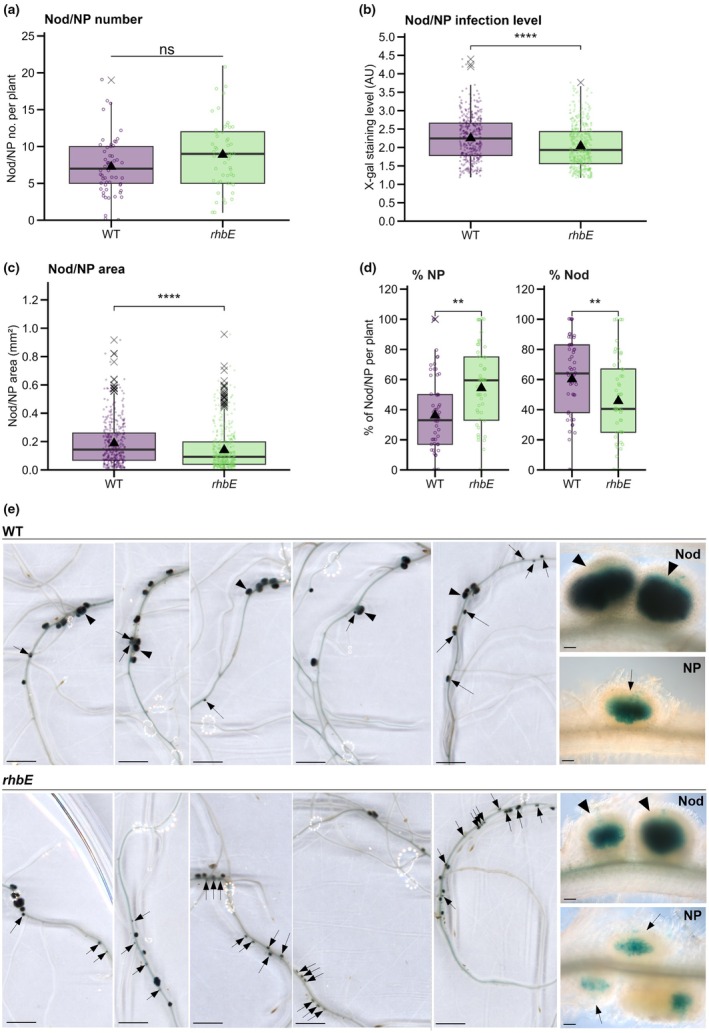 Figure 1
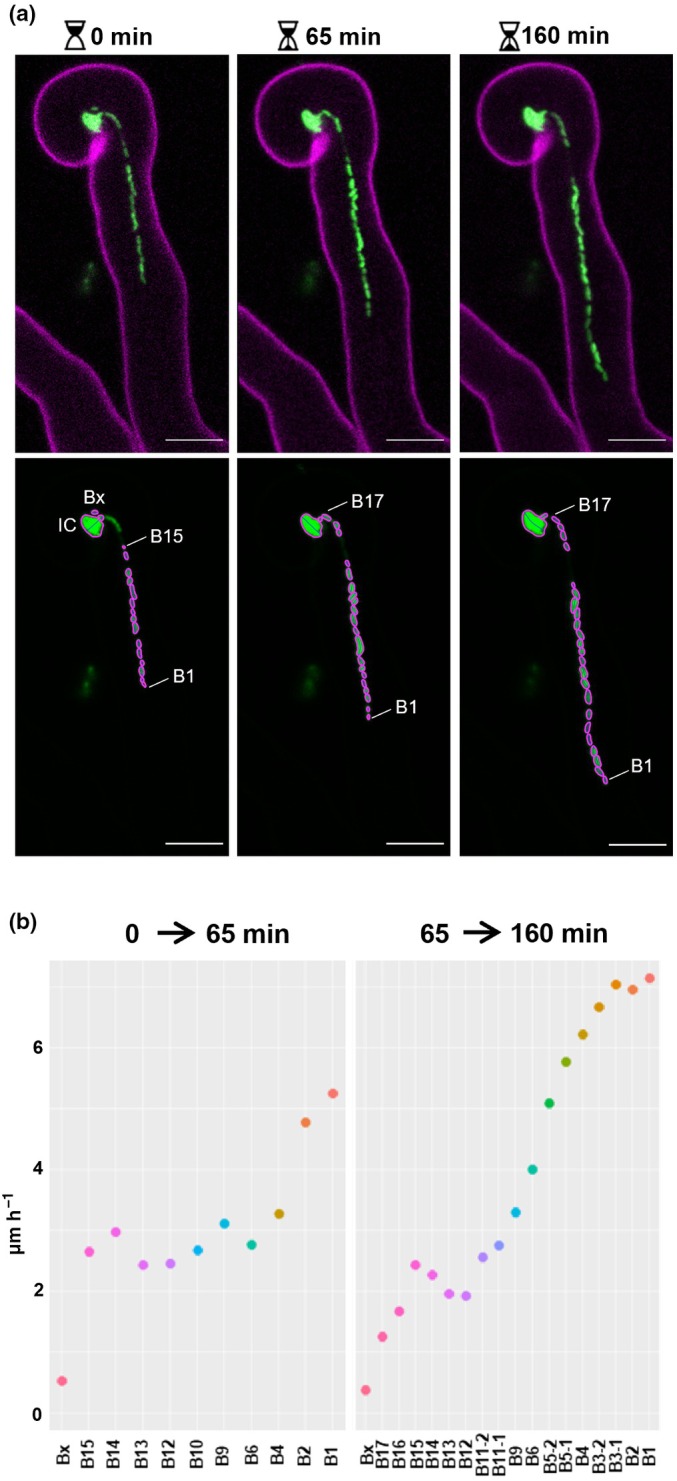 Figure 2
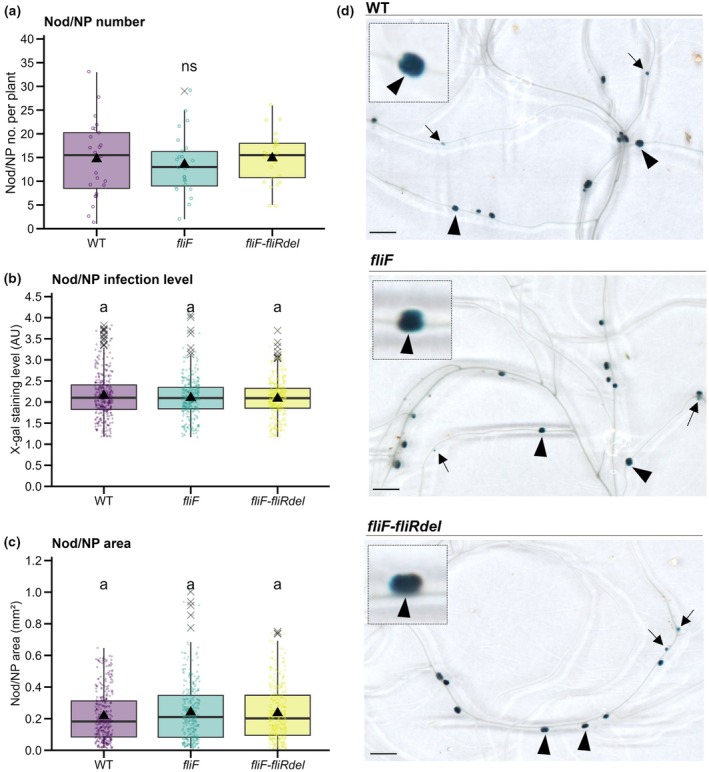 Figure 3
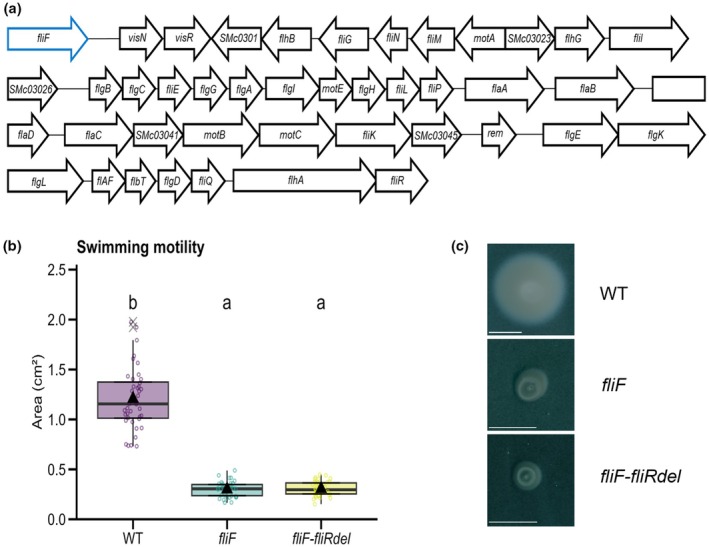 Figure 4
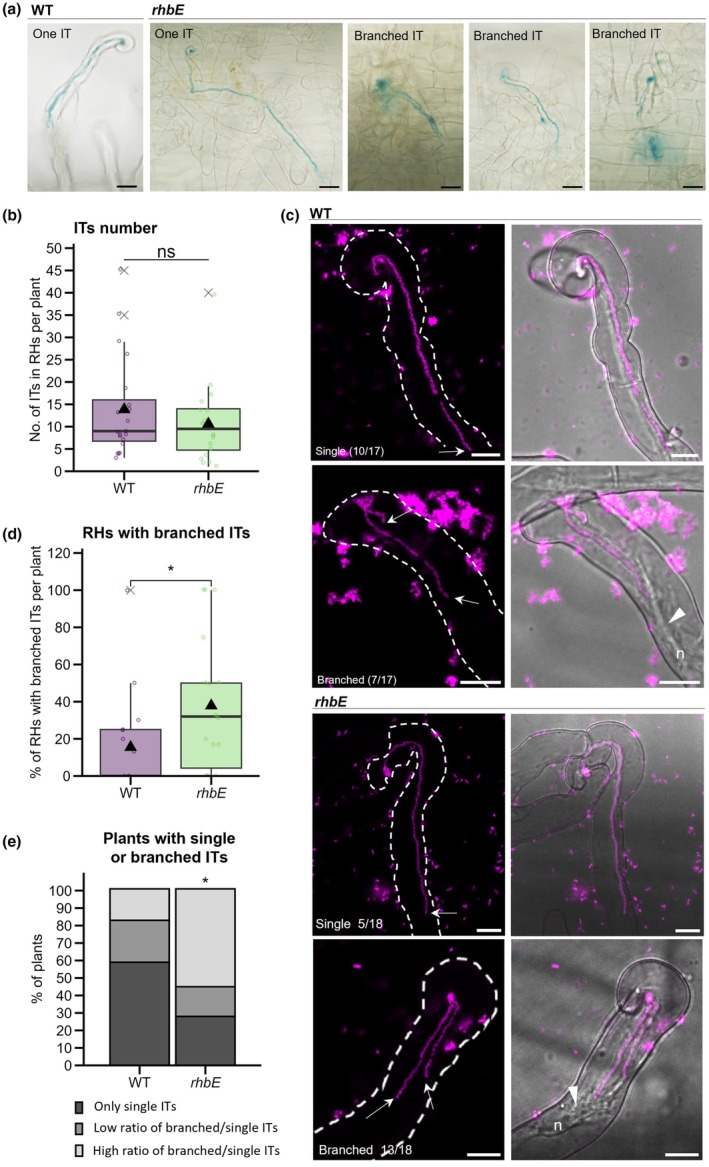 Figure 5
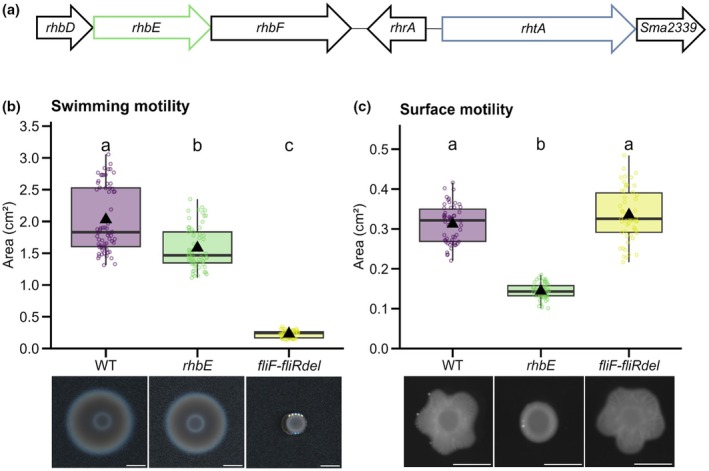 Figure 6
Peer Reviews
No public reviews on file for this paper yet. If you reviewed it on a platform where reviews are public (OpenReview, ICLR, NeurIPS, ICML), you can paste yours below so the community can read it here.
Videos
No videos yet. Explain this paper in a talk, walkthrough, or lecture? Add one.
Taxonomy
TopicsLegume Nitrogen Fixing Symbiosis · Plant nutrient uptake and metabolism · Plant-Microbe Interactions and Immunity