Small RNAs regulation and genomic harmony: insights into allopolyploid evolution in marsh orchids (Dactylorhiza)
Mimmi C. Eriksson, Matthew Thornton, Emiliano Trucchi, Thomas M. Wolfe, Francisco Balao, Mikael Hedrén, Ovidiu Paun

TL;DR
This study explores how small RNAs influence genome evolution in marsh orchids, revealing shared and unique patterns in polyploid species.
Contribution
The study identifies convergent and divergent small RNA patterns in independently formed allopolyploids, linking them to genomic stability and evolution.
Findings
Allopolyploids Dactylorhiza majalis and D. traunsteineri show overlapping small RNA patterns despite independent origins.
TE-associated 24 nt small RNAs resemble the paternal genome, while shorter ones reflect the maternal genome.
Older D. majalis has more small RNAs near regulatory genes, while younger D. traunsteineri shows non-additive patterns.
Abstract
Hybridization and polyploidy are major drivers of plant diversification, often accompanied by shifts in gene expression and genome composition. Small RNAs (smRNAs) are thought to influence such genomic changes, particularly through their interactions with transposable elements (TEs).We quantified smRNAs in established sibling allopolyploids Dactylorhiza majalis and D. traunsteineri and their diploid progenitors to assess how independent allopolyploidization events shaped smRNA landscapes.Despite independent origins, the allotetraploids exhibited substantial overlap in smRNA composition, including transgressive accumulation of smRNAs near genes related to transcriptional regulation, cell division, and stress response. Consistently, TE‐associated 24 nt smRNAs more closely resembled the paternal and larger genome, while shorter smRNAs typically reflected the maternal and smaller genome.…
Genes, proteins, chemicals, diseases, species, mutations and cell lines named across the full text — each resolved to its canonical identifier and authoritative record.
Click any figure to enlarge with its caption.
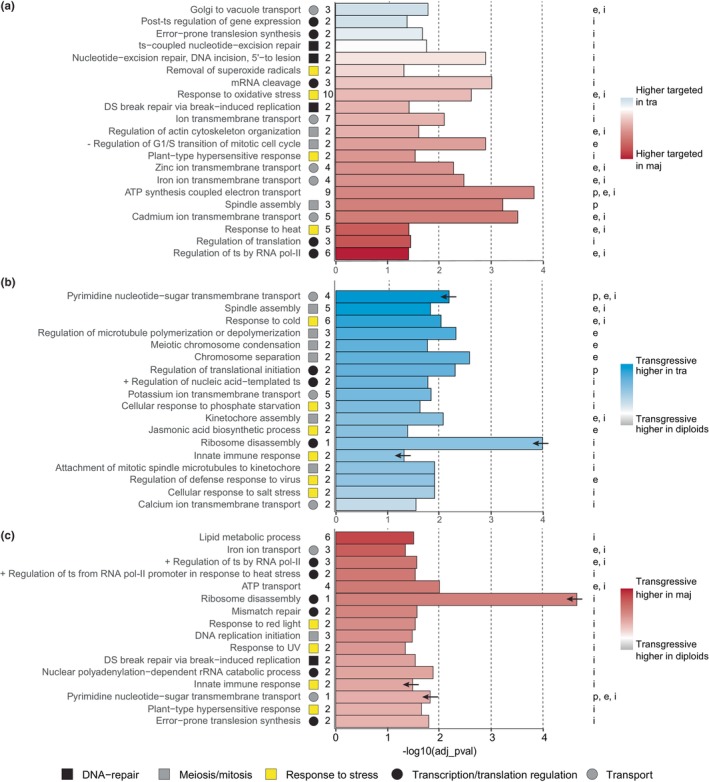 Figure 1
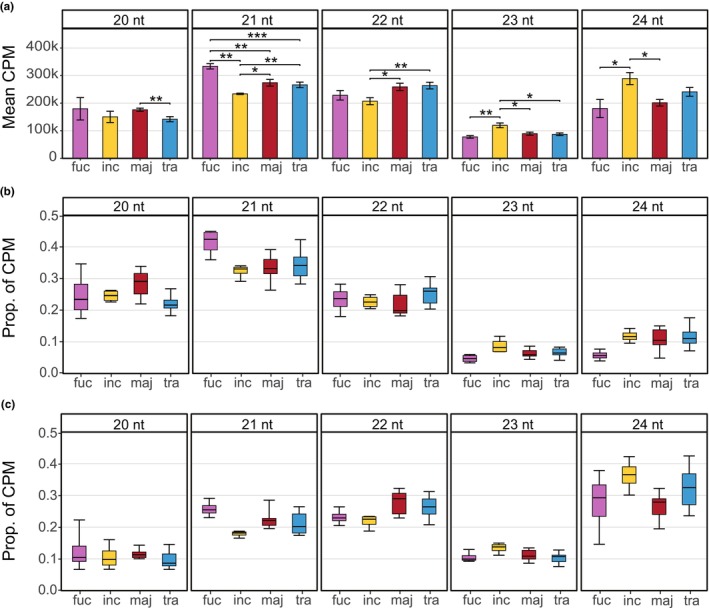 Figure 2
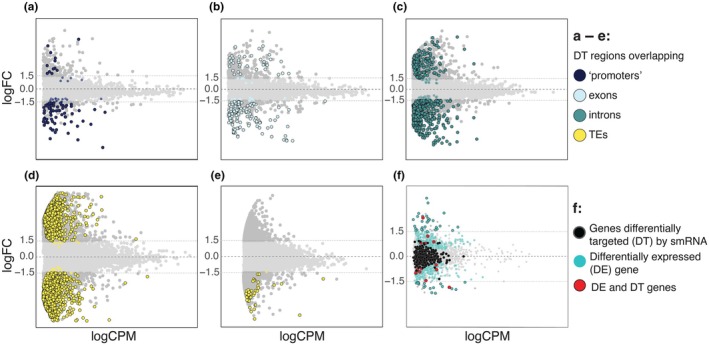 Figure 3
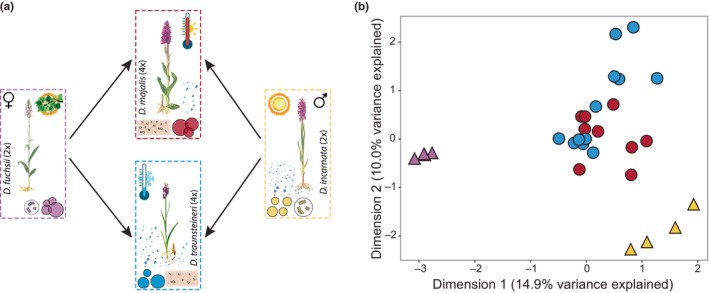 Figure 4
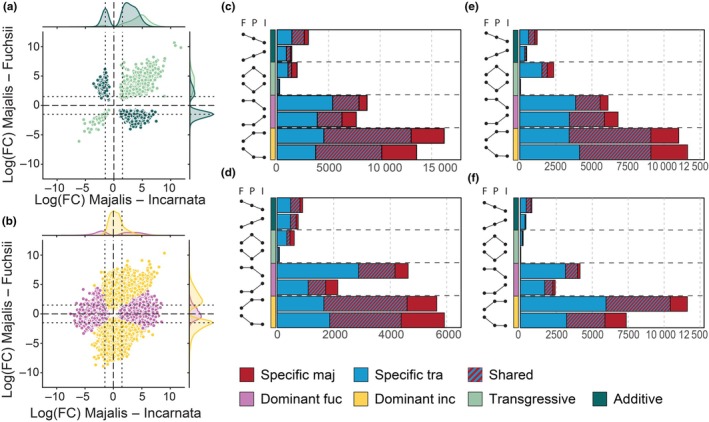 Figure 5
Peer Reviews
No public reviews on file for this paper yet. If you reviewed it on a platform where reviews are public (OpenReview, ICLR, NeurIPS, ICML), you can paste yours below so the community can read it here.
Videos
No videos yet. Explain this paper in a talk, walkthrough, or lecture? Add one.
Taxonomy
TopicsChromosomal and Genetic Variations · Plant Molecular Biology Research · Plant Taxonomy and Phylogenetics