Distinct Proteomic Signatures Driving Progression of Sarcopenia: A Longitudinal Multicohort Study
Sung Hye Kong, Ok Hee Jeon, Ji Yeon Kim, Miji Kim, Jinhee Kim, Seung Shin Park, Hak Chul Chang, Chang Won Won, Dohyun Han

TL;DR
This study identifies specific proteins and biological pathways linked to the progression of sarcopenia, a muscle-wasting condition in older adults, using data from two independent groups.
Contribution
The study provides the first validated plasma proteomic signatures and key biological pathways associated with sarcopenia progression across multiple longitudinal cohorts.
Findings
Seventy proteins were differentially expressed in sarcopenia progression, with specific proteins like APOA1, KLKB1, and LECT2 showing significant changes.
Seven protein signatures (e.g., LRG1, CST3, TIMP1) consistently associated with sarcopenia components were identified and validated across cohorts.
Key pathways like LXR/RXR signaling, acute phase response, and complement cascade activation were found to be central to sarcopenia progression.
Abstract
Sarcopenia is an age‐related condition characterized by progressive muscle mass, strength and physical performance declines, contributing to frailty and adverse health outcomes. Despite increasing interest in molecular biomarkers, longitudinal data with external validation are limited. This study applied high‐throughput proteomic analysis to identify and validate biomarkers associated with sarcopenia progression in two independent prospective cohorts. The discovery cohort (n = 171) was classified into three groups: (1) nonsarcopenic at both baseline and the 2‐year follow‐up; (2) newly developed sarcopenia; and (3) persistently sarcopenic. The validation cohort (n = 93) was followed up for 2 years. Plasma proteomic profiling was conducted using data‐independent acquisition (DIA) mass spectrometry. For the validation cohort, targeted quantification (Hyper Reaction Monitoring‐DIA) and…
Genes, proteins, chemicals, diseases, species, mutations and cell lines named across the full text — each resolved to its canonical identifier and authoritative record.
Click any figure to enlarge with its caption.
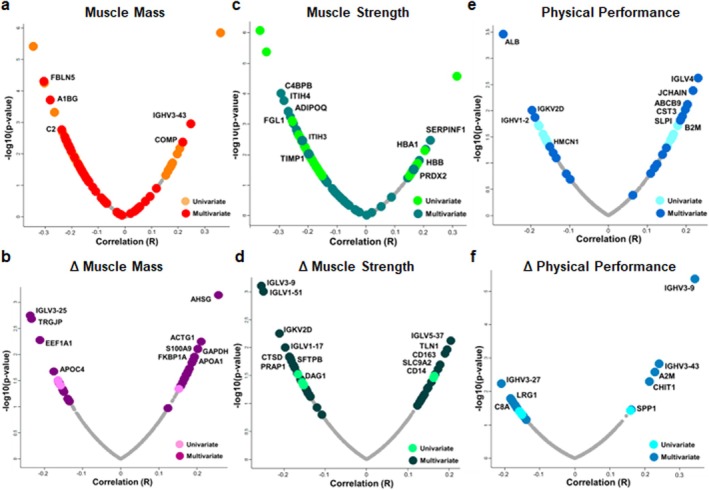 Figure 1
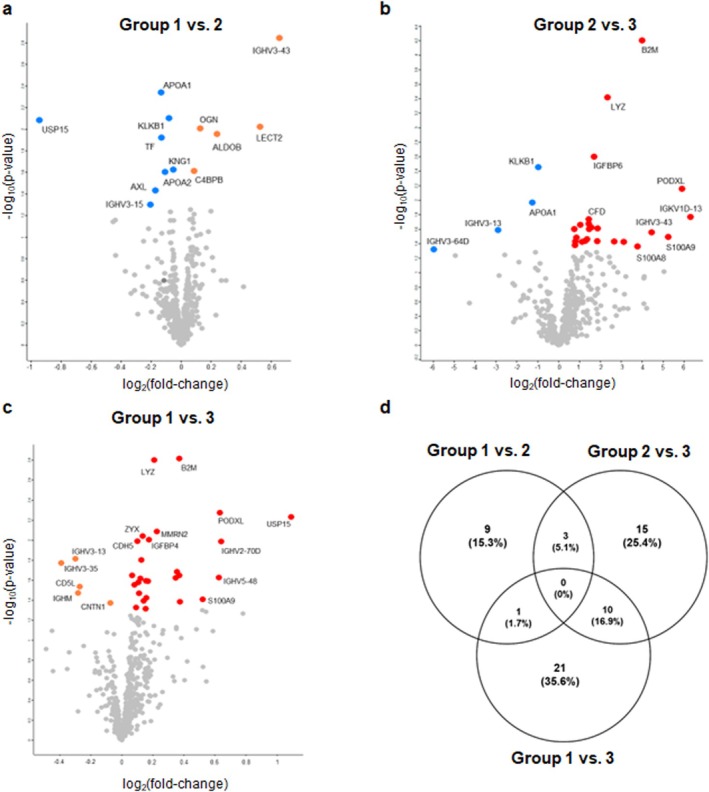 Figure 2
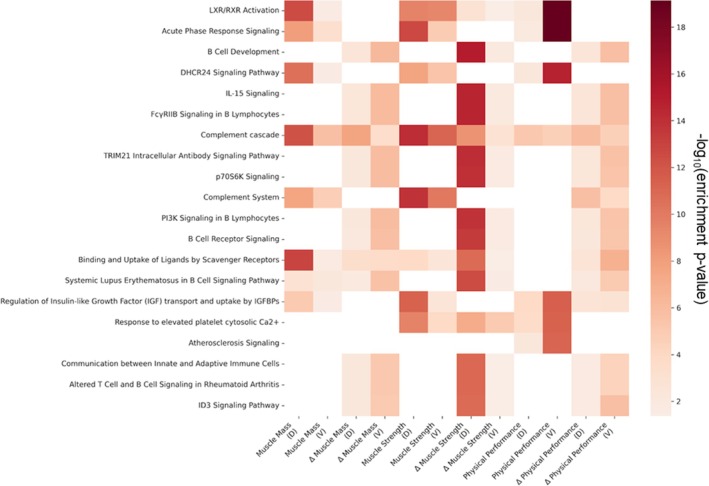 Figure 3
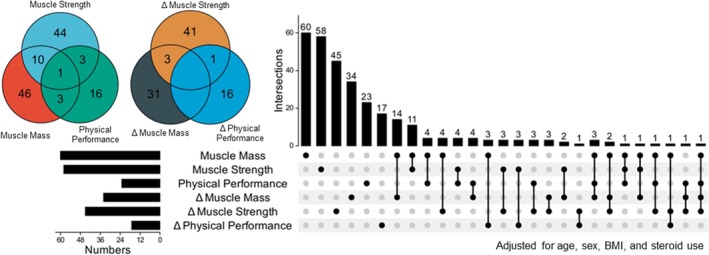 Figure 4
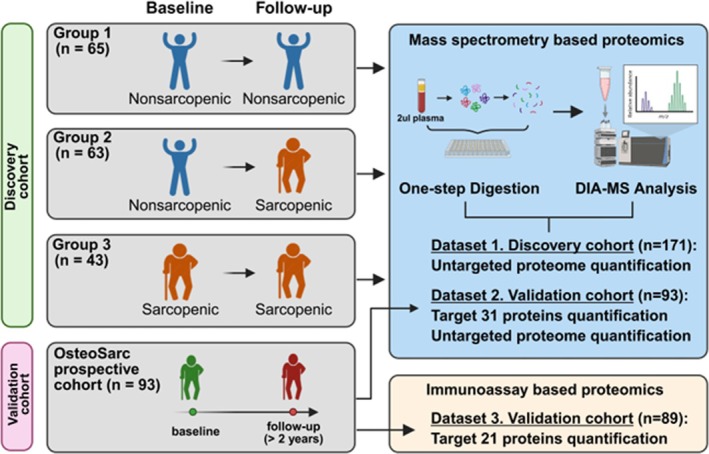 Figure 5
Peer Reviews
No public reviews on file for this paper yet. If you reviewed it on a platform where reviews are public (OpenReview, ICLR, NeurIPS, ICML), you can paste yours below so the community can read it here.
Videos
No videos yet. Explain this paper in a talk, walkthrough, or lecture? Add one.
Taxonomy
TopicsNutrition and Health in Aging · Adipokines, Inflammation, and Metabolic Diseases · GDF15 and Related Biomarkers