Torsion of a congenital human tail in a Japanese Infant: A case report
Yoshie Sasaki, Ken-ichiro Konishi, Kei Nakano, Akira Nishi, Junko Hirato, Charles M. Malata, Akito Hamajima

TL;DR
A Japanese infant had a congenital tail that twisted, causing a medical emergency and highlighting the need for early surgery.
Contribution
The case demonstrates torsion as a potential complication and advocates for early surgical intervention.
Findings
Torsion of the congenital tail caused vascular compromise requiring emergency surgery.
Early surgical intervention is recommended after confirming no spinal cord involvement.
The postoperative recovery was successful with no complications.
Abstract
The optimal timing of surgical intervention for a human tail remains unclear. We report a 2-month-old male infant with a tail-like structure in the sacral region, lacking continuity with the spinal cord. Although elective surgery was scheduled at 3 months of age, vascular compromise due to torsion developed on postnatal day 60, requiring emergency excision under local anesthesia. The postoperative course was uneventful, with preserved limb function and no complications at follow-up. This rare case highlights torsion as a potential complication and supports early surgical intervention, even during the neonatal period, once imaging confirms the absence of spinal cord involvement and spinal dysraphism, particularly in cases with a constricted base.
Genes, proteins, chemicals, diseases, species, mutations and cell lines named across the full text — each resolved to its canonical identifier and authoritative record.
Click any figure to enlarge with its caption.
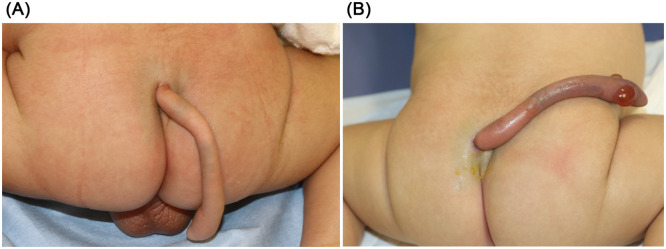 Figure 1
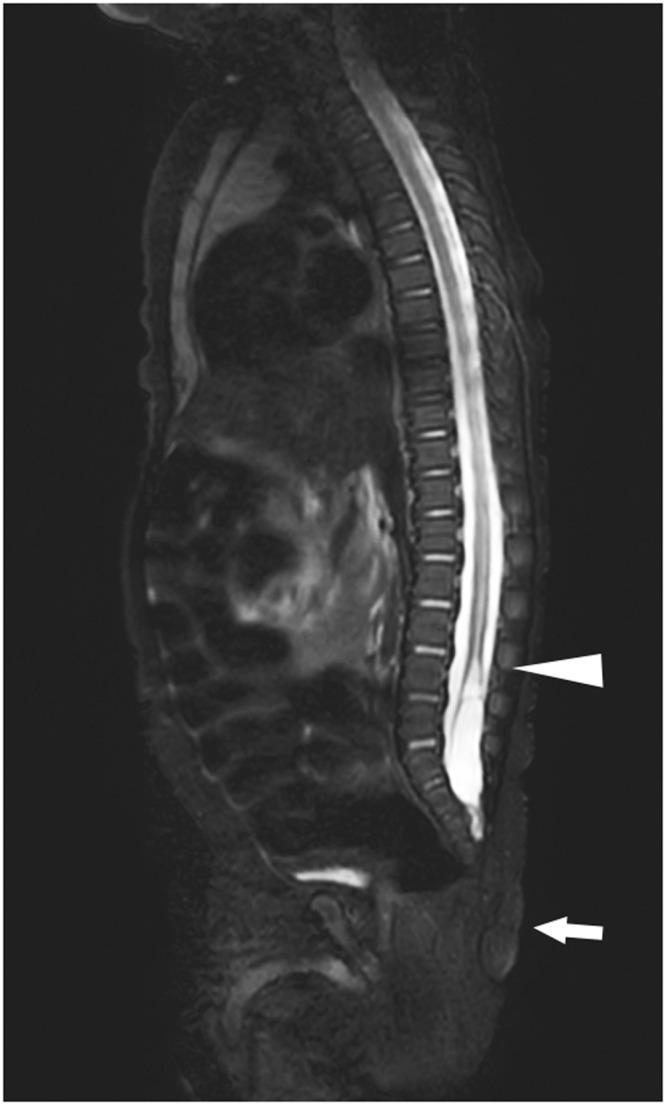 Figure 2
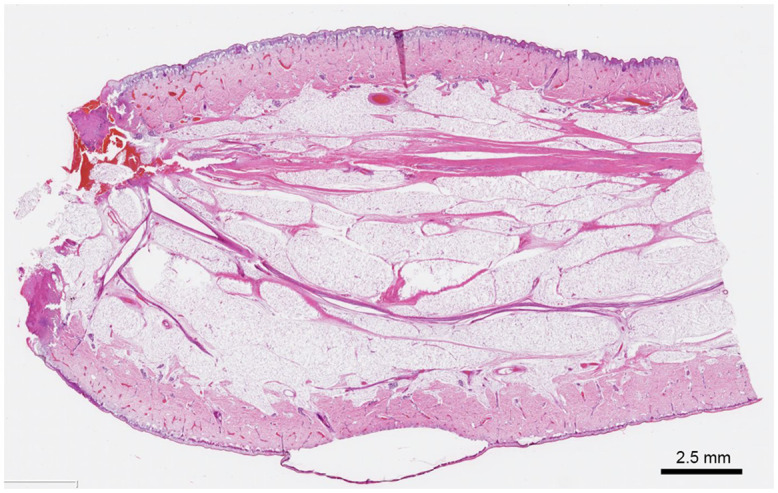 Figure 3
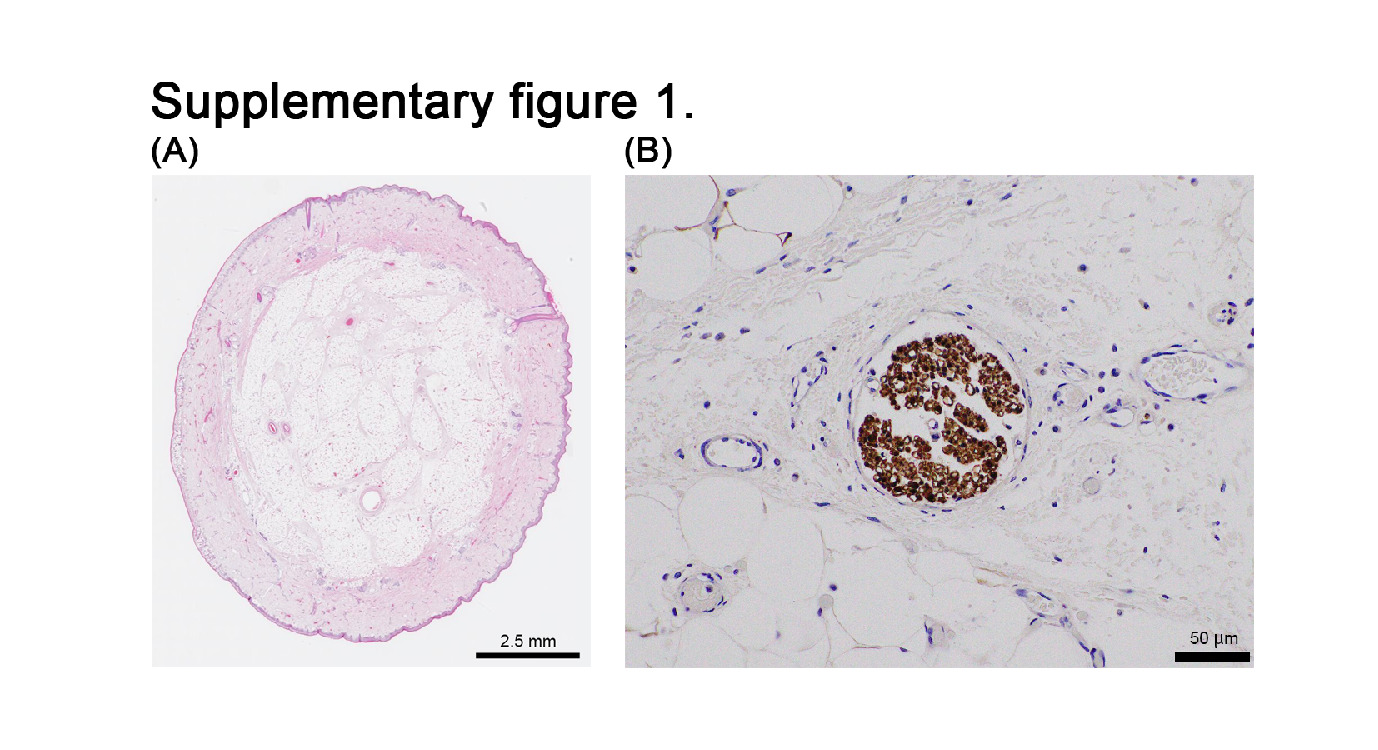 Figure 4
Peer Reviews
No public reviews on file for this paper yet. If you reviewed it on a platform where reviews are public (OpenReview, ICLR, NeurIPS, ICML), you can paste yours below so the community can read it here.
Videos
No videos yet. Explain this paper in a talk, walkthrough, or lecture? Add one.
Taxonomy
TopicsSpinal Dysraphism and Malformations · Congenital Anomalies and Fetal Surgery · Scoliosis diagnosis and treatment