Intravenous Hydroxocobalamin for Cyanide Poisoning From Smoke Inhalation: A Comprehensive Scoping Review
Robert Dunne, Jeffrey M. Goodloe, James J. Augustine, Tommy Begres, Remle P. Crowe, Erica Carney

TL;DR
This review examines the use of hydroxocobalamin for cyanide poisoning from smoke inhalation, finding it generally well-tolerated but highlighting gaps in evidence and real-world application.
Contribution
The study provides a comprehensive scoping review of hydroxocobalamin use in cyanide poisoning from smoke inhalation, emphasizing real-world variability and gaps in evidence.
Findings
Hydroxocobalamin was administered prehospital in 45.9% of cases, with 5 or 10 g being the most common doses.
Most patients survived to hospital discharge (66.0%), and the treatment was generally well-tolerated.
Adverse events included chromaturia, skin discoloration, and acute kidney injury.
Abstract
Smoke inhalation from closed-space fire can result in hydrogen cyanide (HCN) exposure, an underrecognized contributor to morbidity and mortality in burn and smoke inhalation victims. Hydroxocobalamin, a vitamin B12 precursor, is recommended by the American Heart Association for suspected HCN poisoning; however, evidence regarding its real-world use, particularly in the prehospital setting, remains fragmented. This scoping review aims to identify the existing literature on hydroxocobalamin administration for HCN toxicity secondary to smoke inhalation. BIOSIS Previews, Embase, PubMed, and MEDLINE were searched from inception through January 1, 2025. Data extracted included patient demographic characteristics, hydroxocobalamin dosing, pretreatment and posttreatment clinical data, and adverse events (AEs). We reported descriptive statistics. Of 591 titles and abstracts screened for…
Genes, proteins, chemicals, diseases, species, mutations and cell lines named across the full text — each resolved to its canonical identifier and authoritative record.
Click any figure to enlarge with its caption.
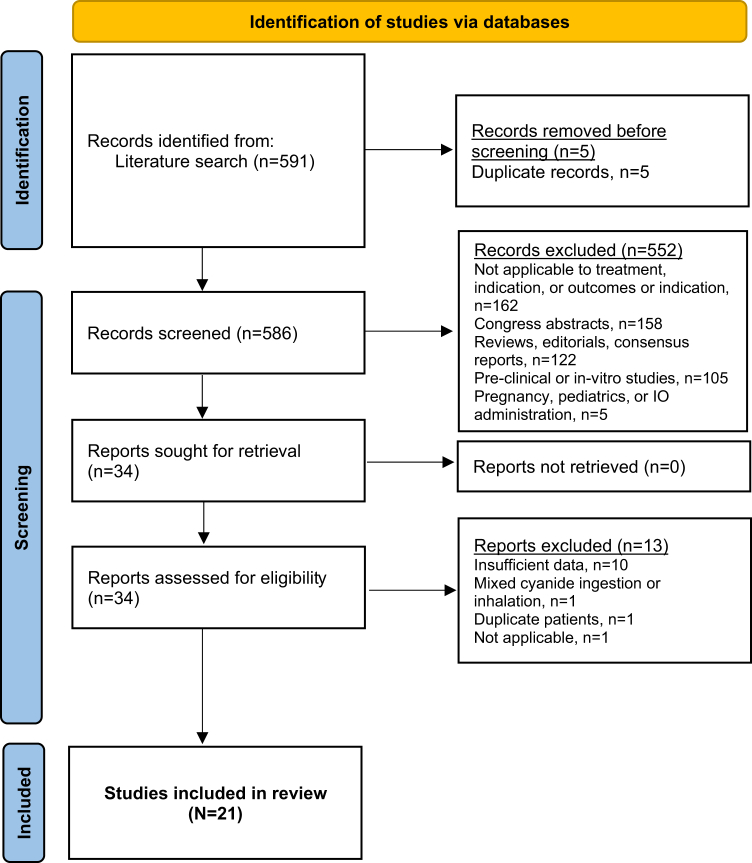 Figure 1
 Figure 2
 Figure 3
Peer Reviews
No public reviews on file for this paper yet. If you reviewed it on a platform where reviews are public (OpenReview, ICLR, NeurIPS, ICML), you can paste yours below so the community can read it here.
Videos
No videos yet. Explain this paper in a talk, walkthrough, or lecture? Add one.
Taxonomy
TopicsCassava research and cyanide · Molecular Sensors and Ion Detection · Forensic Fingerprint Detection Methods