Boron-based fire retardancy for natural polymeric materials
Xuan Wang, Sheldon Q. Shi

TL;DR
This paper reviews how boron-based compounds can improve fire resistance in natural materials like wood and textiles, offering a sustainable alternative to fossil-based polymers.
Contribution
The paper highlights the transition from macro-scale boron treatments to molecular-level engineering for fire retardancy in natural polymers.
Findings
Boron compounds act as dual catalysts for dehydration and char formation while forming a physical barrier against fire.
In situ mineralization and covalent grafting help retain boron in solid natural materials like wood and bamboo.
Boron can be integrated as a structural element in engineered composites and bio-based adhesives through borate ester crosslinks.
Abstract
The shift from fossil resources to natural polymers as the building blocks of a global bioeconomy is hampered by the intrinsic flammability of these bio-derived materials. In this paper, the recent advances in boron-based fire retardancy of natural materials are reviewed, highlighting the transition from macro-scale salt impregnation to molecular-level engineering of boron chemistry. Boron compounds act as a dual Lewis acid catalyst for dehydration and subsequent char formation, and as a glassy physical barrier to slow down the release of fuel and the diffusion of oxygen. The boron chemistry in the context of the physical constraints dictated by the natural material is analyzed. In solid wood and bamboo, the challenge is to use in situ mineralization and covalent grafting to overcome water solubility and leaching. In engineered wood composites and bio-based adhesives, boron moves from a…
Genes, proteins, chemicals, diseases, species, mutations and cell lines named across the full text — each resolved to its canonical identifier and authoritative record.
Click any figure to enlarge with its caption.
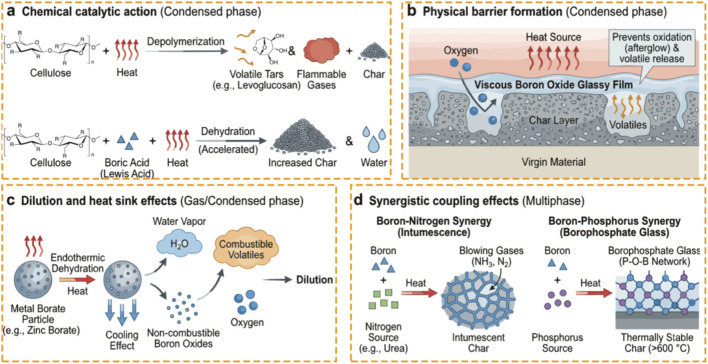 Figure 1
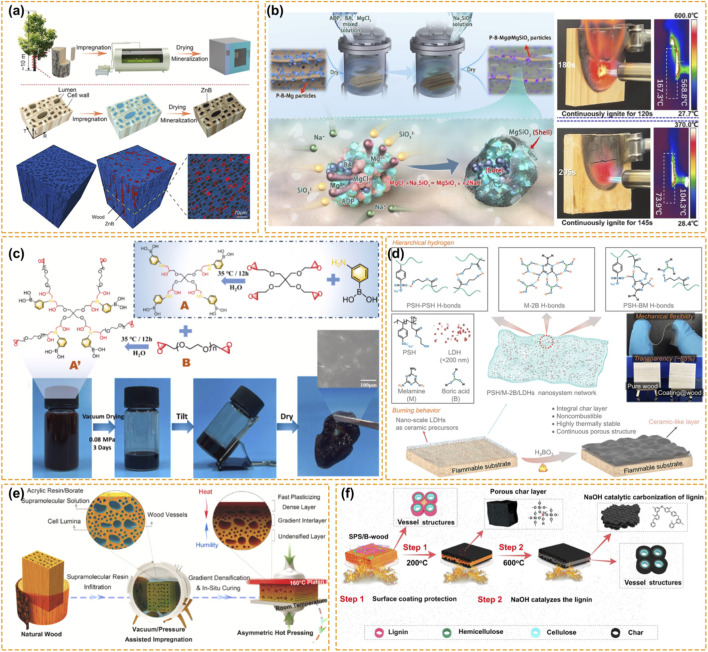 Figure 2
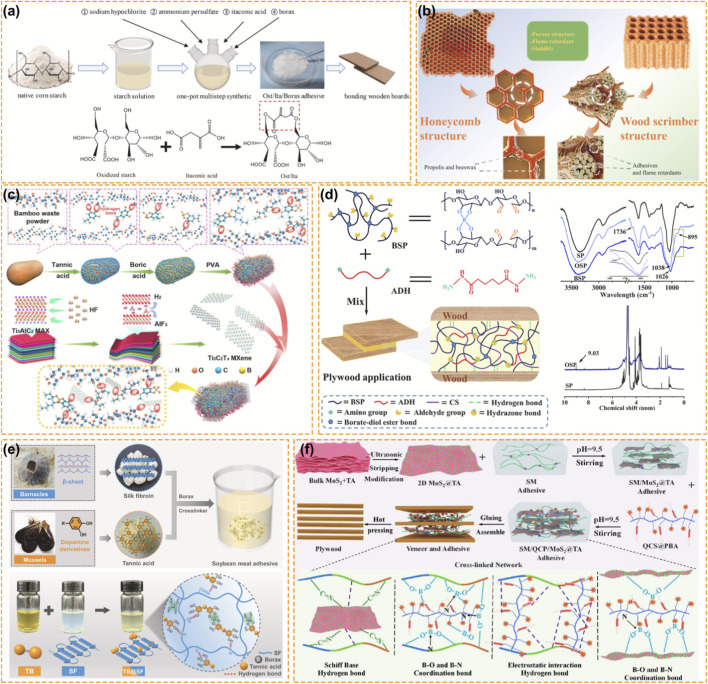 Figure 3
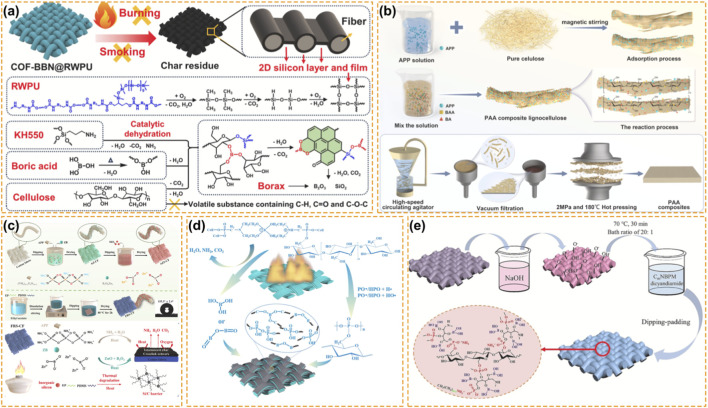 Figure 4
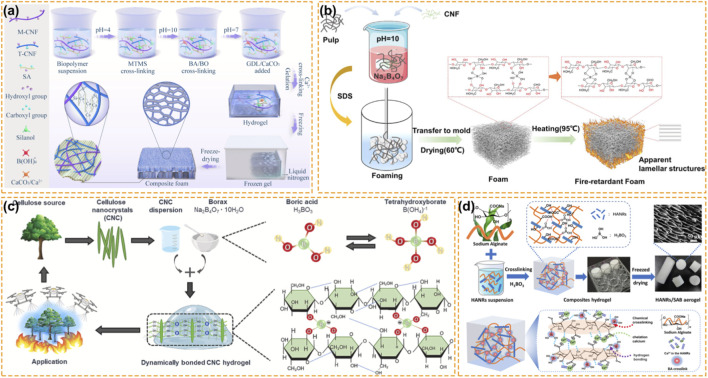 Figure 5
Peer Reviews
No public reviews on file for this paper yet. If you reviewed it on a platform where reviews are public (OpenReview, ICLR, NeurIPS, ICML), you can paste yours below so the community can read it here.
Videos
No videos yet. Explain this paper in a talk, walkthrough, or lecture? Add one.
Taxonomy
TopicsFlame retardant materials and properties · Plant Micronutrient Interactions and Effects · Advanced Cellulose Research Studies