Stressing the limits of capillary blood in anti-doping analysis: perspectives on alkylamine-like stimulants and carbonic anhydrase II inhibitors in result management
Isabelle Karine da Costa Nunes, Mariana Vaz Carneiro, Felipe Alves Gomes de Oliveira, Ana Carolina Dudenhoeffer Carneiro, Carina de Souza Anselmo, Christian Farias Trajano, Monica Costa Padilha, Henrique Marcelo Gualberto Pereira

TL;DR
This paper explores using capillary blood as a better alternative to urine for detecting doping substances, showing it can improve interpretation of results for certain drugs.
Contribution
The study introduces capillary blood via VAMS as a complementary matrix for anti-doping analysis, offering improved detection context for substances with complex pharmacokinetics.
Findings
Capillary blood detection of isometheptene showed a shorter detection window than urine, aiding in distinguishing in-competition use.
Capillary blood analysis of brinzolamide and dorzolamide provided more consistent detectability compared to urine.
Capillary blood could not definitively differentiate between permitted ophthalmic use and prohibited administration routes.
Abstract
The establishment of an anti-doping rule violation extends beyond the mere detection of a prohibited substance. Current interpretation criteria rely primarily on urinary concentration estimates, which may be misleading due to high interindividual variability or pharmacokinetics characteristics of doping agents. This study investigates the potential of capillary blood collected through volumetric absorptive microsampling (VAMS) as a complementary matrix to urine for supporting results management in doping control. Comparative concentration-time profiling in urine and capillary blood was performed using isometheptene, a stimulant subject to minimum reporting limits (MRLs), and the carbonic anhydrase II inhibitors dorzolamide and brinzolamide as model compounds. For isometheptene, capillary blood detection closely mirrored urinary findings at early time points but exhibited a markedly…
Genes, proteins, chemicals, diseases, species, mutations and cell lines named across the full text — each resolved to its canonical identifier and authoritative record.
Click any figure to enlarge with its caption.
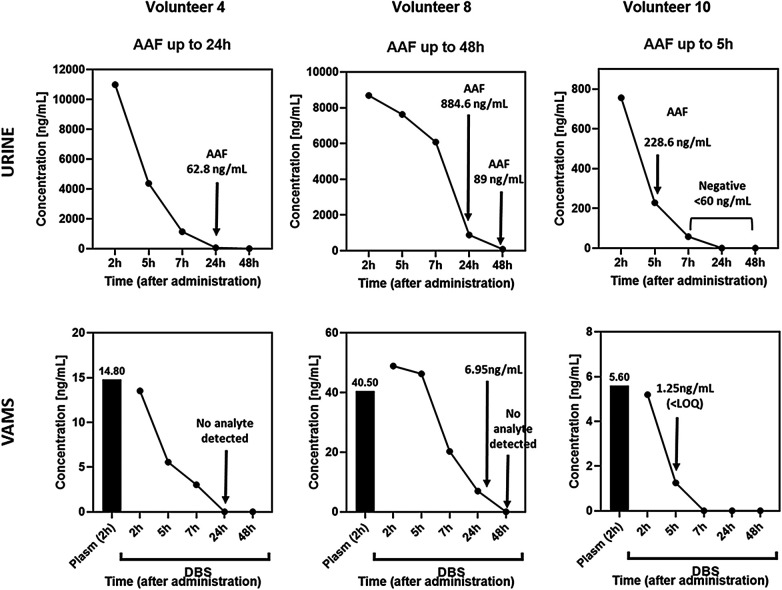 Figure 1
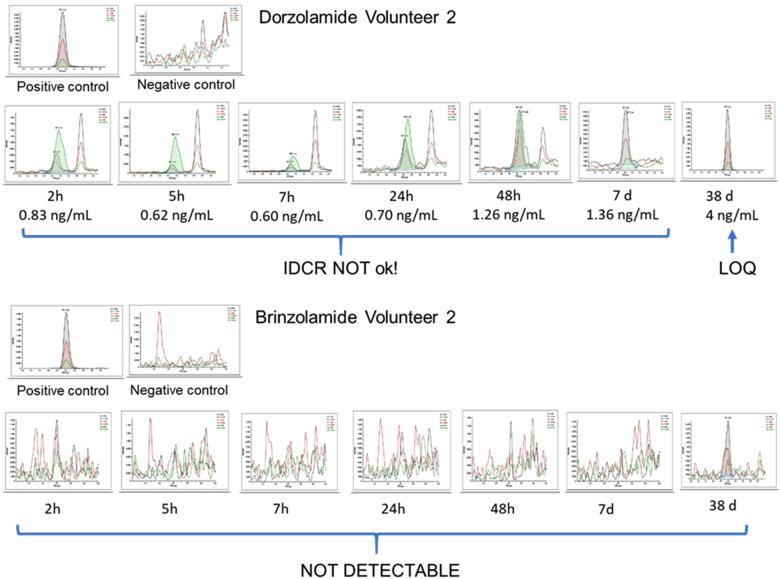 Figure 2
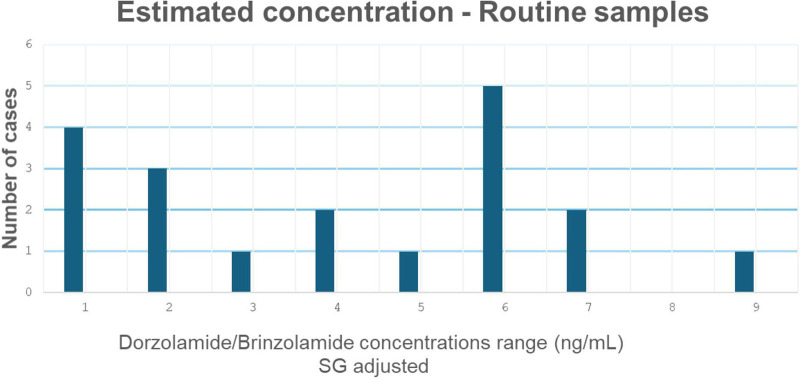 Figure 3
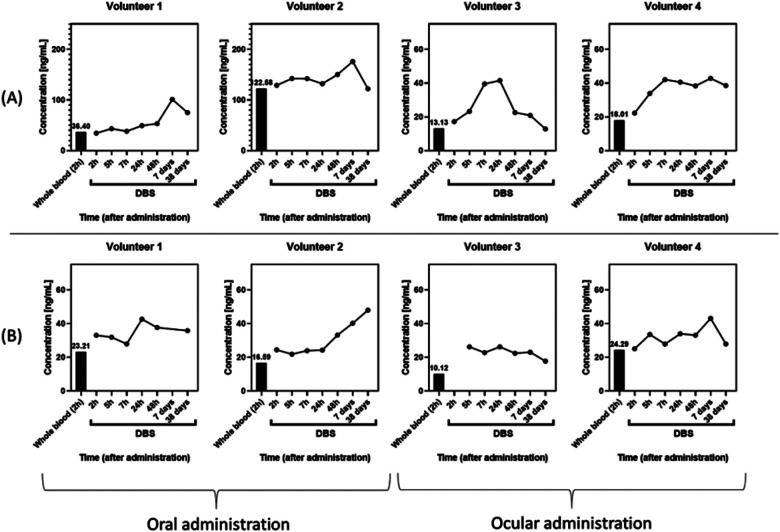 Figure 4
Peer Reviews
No public reviews on file for this paper yet. If you reviewed it on a platform where reviews are public (OpenReview, ICLR, NeurIPS, ICML), you can paste yours below so the community can read it here.
Videos
No videos yet. Explain this paper in a talk, walkthrough, or lecture? Add one.
Taxonomy
TopicsHormonal and reproductive studies · Erythropoietin and Anemia Treatment · Doping in Sports