JUNO-coated beads as a functional assay to capture and characterize fertilization-competent human sperm
Paula Cots-Rodríguez, Xinyin Wang, Mirian Sanchez-Tudela, Karen K Siu, Patrick Yip, Emilio Gómez, Jeffrey E Lee, Julieta G Hamze, Maria Jiménez-Movilla

TL;DR
A new assay using JUNO-coated beads captures sperm that can fertilize eggs, showing vitrification preserves sperm quality better than slow freezing.
Contribution
Develops a functional JUNO-bead assay to capture and characterize fertilization-competent sperm with DNA integrity.
Findings
JUNO-beads selectively bind acrosome-reacted sperm with intact DNA.
Vitrified sperm show higher JUNO-bead binding and DNA integrity than slow-frozen sperm.
The assay classifies sperm into low- and high-binding capacity groups validated by the hamster test.
Abstract
Can human fertilization-competent spermatozoa be captured through their ability to bind the oocyte receptor JUNO? JUNO-coated beads, which mimic the oocyte geometry, selectively bound acrosome-reacted spermatozoa with intact DNA, revealing that vitrification preserves functional sperm binding while slow cryopreservation increases non-specific interactions. It is well established that sperm must undergo the acrosome reaction and expose the receptor IZUMO1 on the sperm head to bind specifically to JUNO on the oolemma. Studying the spermatozoa that reaches and engages with the oolemma, however, remains highly challenging due to the technical difficulty of recovering these sperm at the site of the molecular interaction. Bead-based models that contain oocyte receptors have therefore emerged as a powerful approach to functionally assess sperm–oocyte interactions, with promising applications…
Genes, proteins, chemicals, diseases, species, mutations and cell lines named across the full text — each resolved to its canonical identifier and authoritative record.
Click any figure to enlarge with its caption.
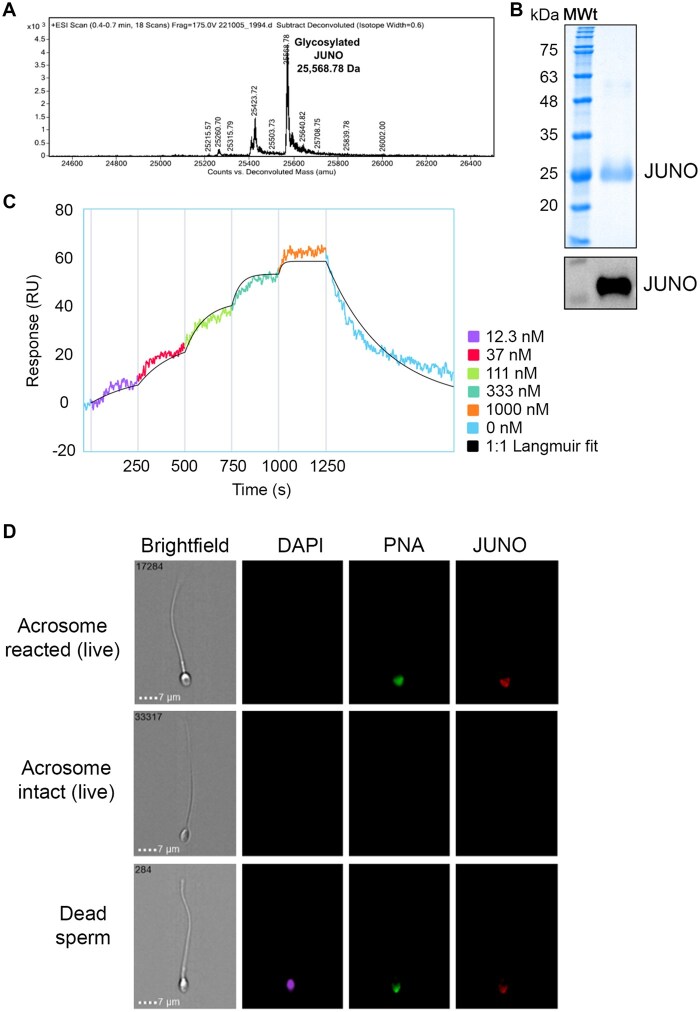 Figure 1
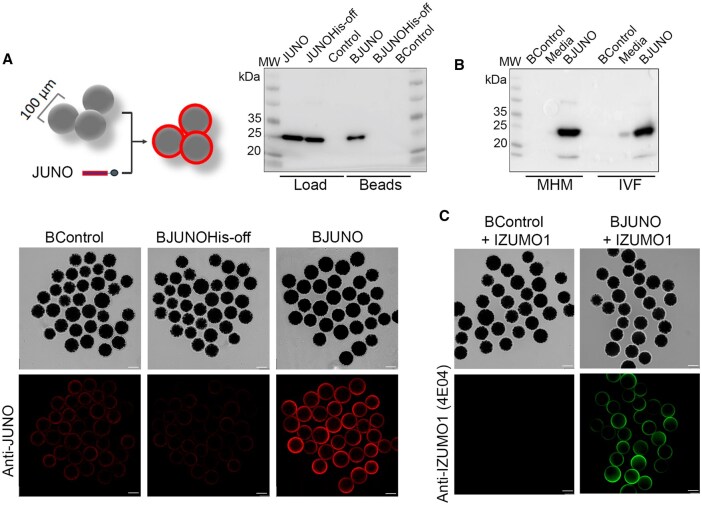 Figure 2
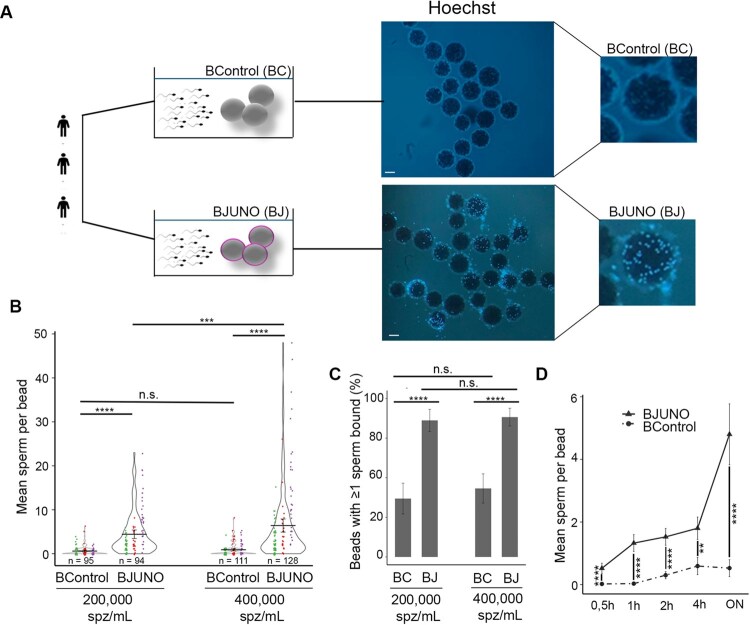 Figure 3
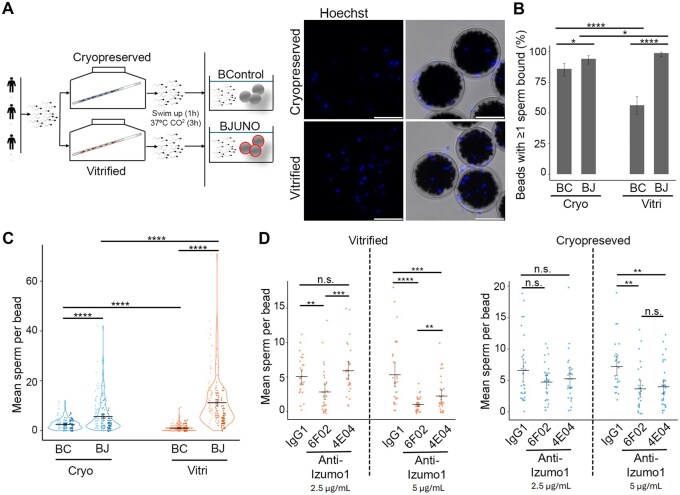 Figure 4
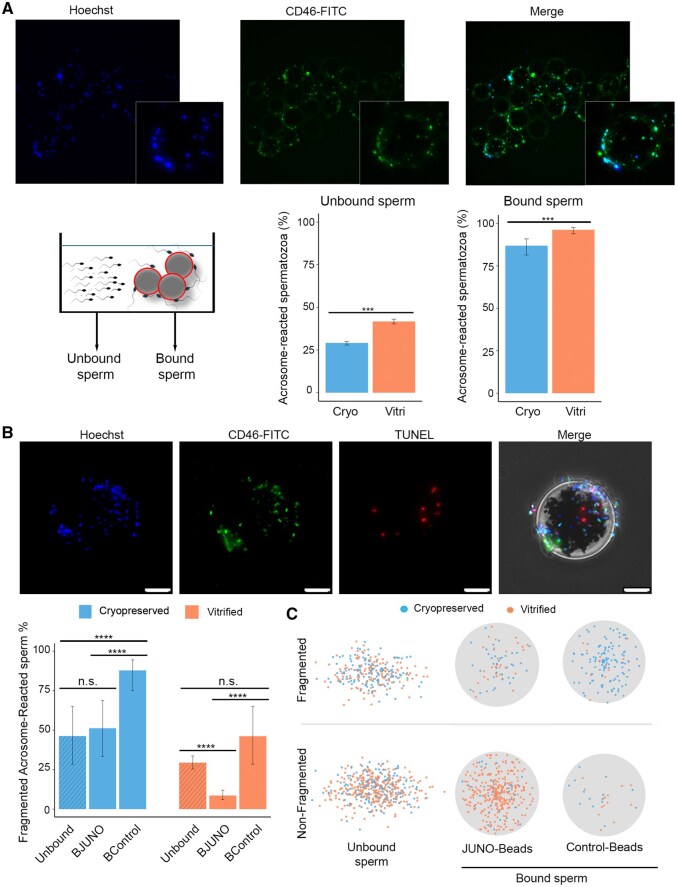 Figure 5
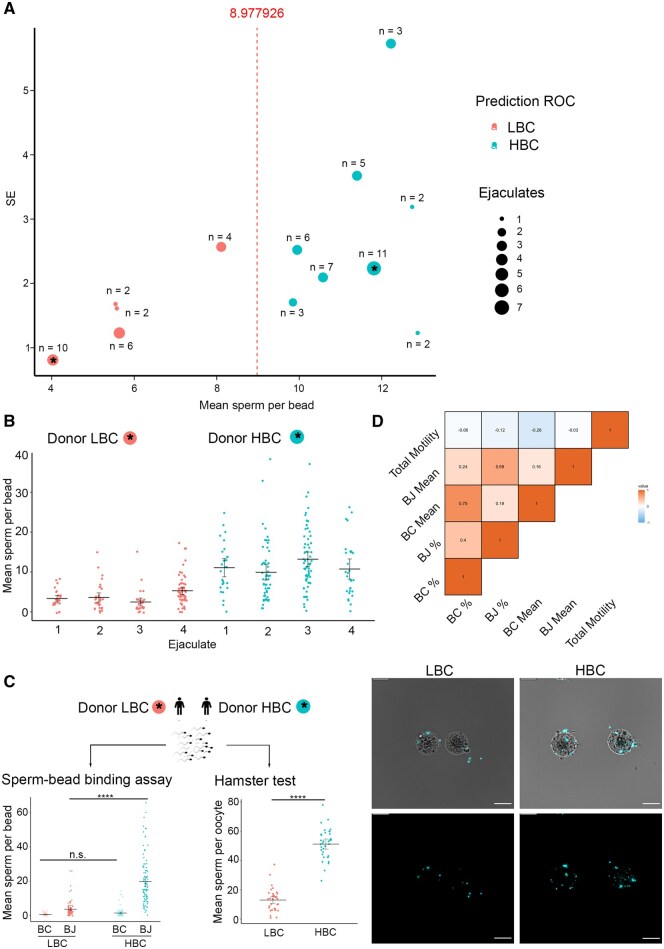 Figure 6
Peer Reviews
No public reviews on file for this paper yet. If you reviewed it on a platform where reviews are public (OpenReview, ICLR, NeurIPS, ICML), you can paste yours below so the community can read it here.
Videos
No videos yet. Explain this paper in a talk, walkthrough, or lecture? Add one.
Taxonomy
TopicsSperm and Testicular Function · Reproductive Biology and Fertility · Ovarian function and disorders