Resolving widespread and endemic dinoflagellates (Symbiodiniaceae) mutualistic with Indo‐Pacific octocorals reveals differences in specificity based on host phylogeny
Caleb C. Butler, Kira E. Turnham, Andy Hess, Todd C. LaJeunesse

TL;DR
This study identifies five new species of dinoflagellates that form mutualistic relationships with soft corals in the Indo-Pacific, revealing patterns in their distribution and host specificity.
Contribution
The paper formally describes five new Cladocopium species and highlights differences in symbiont specificity based on host phylogeny and transmission mode.
Findings
Four new Cladocopium species are associated with Sarcophytidae hosts that horizontally acquire symbionts.
C. fabriciae and C. peratum are widespread, while C. zanzibariense and C. belauense are restricted to specific regions.
C. bilineaum is found in both Pacific and Indian Oceans and is linked to hosts with different transmission modes.
Abstract
Endosymbionts in the dinoflagellate family Symbiodiniaceae can form mutualisms with a diverse array of host invertebrates, constituting a widespread and ecologically important family. While those associated with reef‐building corals (order Scleractinia) have received considerable research attention, the diversity and ecology of zooxanthellae from soft coral hosts (Octocorallia) have remained understudied and unappreciated. To address this lack of understanding, octocoral zooxanthellae were sampled across the Indo‐Pacific and genetic, morphological, ecological, and geographic evidence were utilized to formally characterize five new species in the genus Cladocopium. Four species were associated with hosts in the family Sarcophytidae that horizontally acquire their endosymbionts. Of these new species, C. fabriciae sp. nov. and C. peratum sp. nov. are widespread across the Indo‐Pacific…
Genes, proteins, chemicals, diseases, species, mutations and cell lines named across the full text — each resolved to its canonical identifier and authoritative record.
Click any figure to enlarge with its caption.
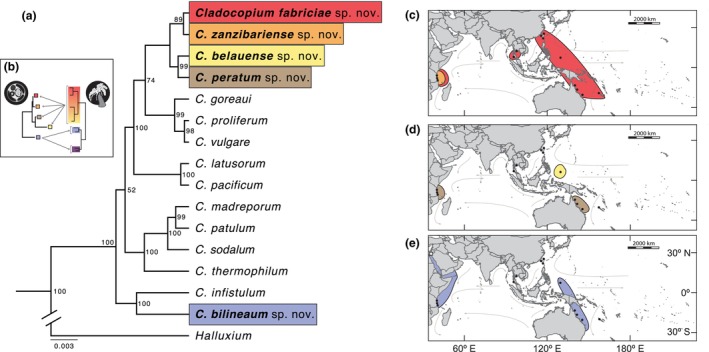 Figure 1
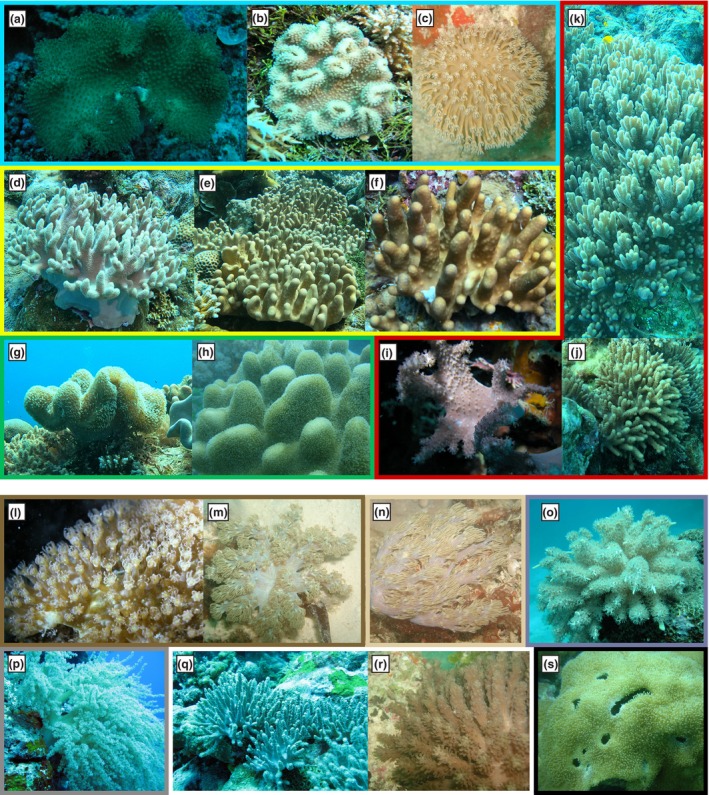 Figure 2
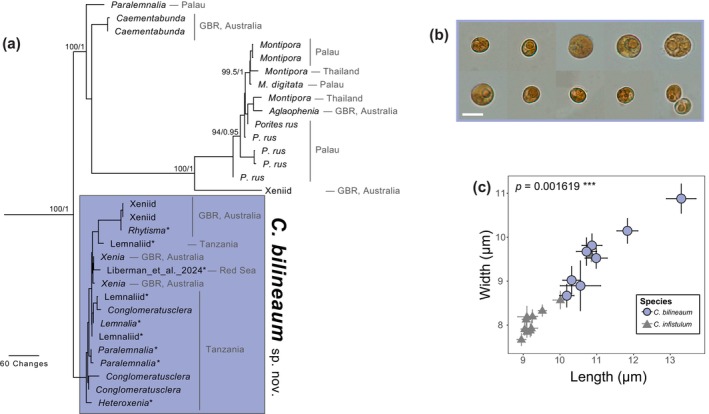 Figure 3
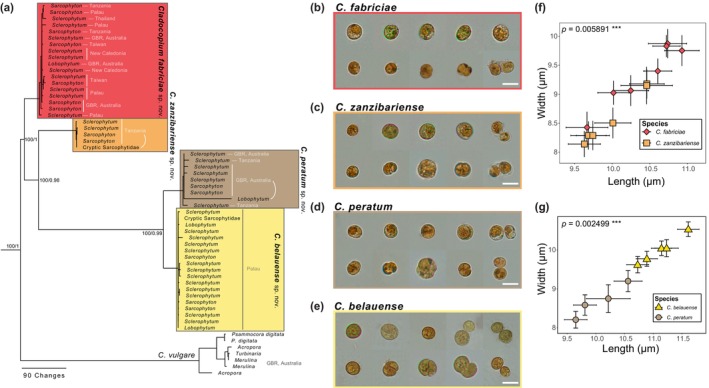 Figure 4
Peer Reviews
No public reviews on file for this paper yet. If you reviewed it on a platform where reviews are public (OpenReview, ICLR, NeurIPS, ICML), you can paste yours below so the community can read it here.
Videos
No videos yet. Explain this paper in a talk, walkthrough, or lecture? Add one.
Taxonomy
TopicsCoral and Marine Ecosystems Studies · Protist diversity and phylogeny · Marine Biology and Ecology Research