Unboxing Electronic Flashcards: An Introduction to the Design Elements of Anki for Medical Education (DEAME) Framework
Emily A. Balczewski, Philip D. Barrison, Asavari Rajpurkar, Kirsten Fiestan, Pratik S. Vadlamudi, Matthew Sparling, Zach Landis-Lewis, Alexandra H. Vinson

TL;DR
This paper introduces a new framework for describing the design of electronic flashcards used in medical education, enabling clearer communication and better practices.
Contribution
The paper introduces the DEAME framework, a terminology system for electronic flashcard design in medical education.
Findings
The DEAME Framework includes seven categories and 48 codes for describing electronic flashcard design elements.
The framework extends The New Taxonomy of Educational Objectives to describe knowledge types and thinking processes in flashcards.
The framework supports multimedia, metadata, question formulation, and student-centered design in electronic flashcards.
Abstract
Electronic flashcards (EFs) have rapidly ascended in popularity as an active learning resource among medical learners. Despite their significant popularity, no unifying terminologies exist to support clear practices and communication about the design of EFs between learners, educators, and researchers. This study proposes a framework extending The New Taxonomy of Educational Objectives (NT) to offer a robust terminology for describing EF design. Thirteen hundred EFs from six popular undergraduate medical education decks were sampled and qualitatively analyzed using a multi-phase design and flexible approach to thematic analysis. Through an iterative process of induction, deduction, and reconciliation, general design dimensions (“categories”) and specific design elements (“codes”) of EFs were identified. These categories and codes were organized into a unifying framework with…
Genes, proteins, chemicals, diseases, species, mutations and cell lines named across the full text — each resolved to its canonical identifier and authoritative record.
Click any figure to enlarge with its caption.
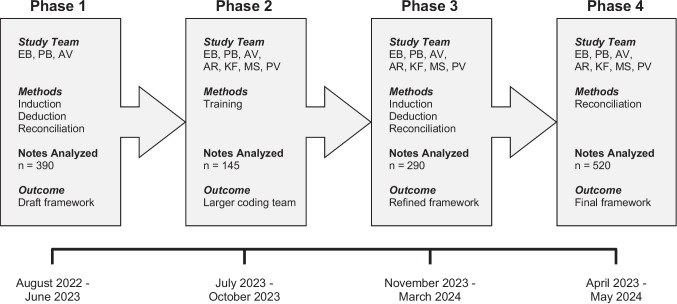 Figure 1
Peer Reviews
No public reviews on file for this paper yet. If you reviewed it on a platform where reviews are public (OpenReview, ICLR, NeurIPS, ICML), you can paste yours below so the community can read it here.
Videos
No videos yet. Explain this paper in a talk, walkthrough, or lecture? Add one.
Taxonomy
TopicsVisual and Cognitive Learning Processes · Innovative Teaching Methods · Online and Blended Learning