The Doctor of Physical Therapy Admission Test (DPTAT): A Vision for a Primary Care, Doctoring Profession
Nathan J. Savage

TL;DR
This paper proposes a new admissions test for physical therapy programs to better predict student success and readiness for the profession.
Contribution
The paper introduces the DPTAT, a profession-specific admissions test aligned with modern physical therapy demands.
Findings
The DPTAT aims to improve admissions by predicting DPT program performance and licensure success.
It aligns with cognitive, affective, and psychomotor demands of modern physical therapy practice.
The test is designed to support the profession's role as primary care providers.
Abstract
The Doctor of Physical Therapy Admission Test (DPTAT) is a profession-specific instrument being proposed to address the limitations of traditional admissions metrics for predicting DPT program performance and national licensure examination success. By aligning with key cognitive, affective, and psychomotor demands of contemporary physical therapist education and clinical practice, including the emergence as primary care providers, the DPTAT seeks to identify candidates most likely to succeed in doctoral education and enter the profession. This Commentary outlines the theoretical rationale and validation strategies of the proposed DPTAT within the broader context of medical education and the demands of modern healthcare systems.
Genes, proteins, chemicals, diseases, species, mutations and cell lines named across the full text — each resolved to its canonical identifier and authoritative record.
Click any figure to enlarge with its caption.
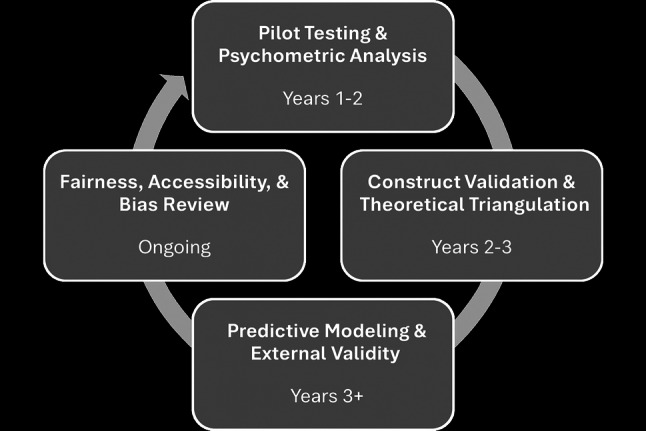 Figure 1
Peer Reviews
No public reviews on file for this paper yet. If you reviewed it on a platform where reviews are public (OpenReview, ICLR, NeurIPS, ICML), you can paste yours below so the community can read it here.
Videos
No videos yet. Explain this paper in a talk, walkthrough, or lecture? Add one.
Taxonomy
TopicsMedical Education and Admissions · Innovations in Medical Education · Cardiac, Anesthesia and Surgical Outcomes