Protocol of the randomized double blind sham controlled AddVNS study of transcutaneous vagus nerve stimulation mechanisms in depression
Evangelos Kokolakis, Iven-Alex von Mücke-Heim, Julius C. Pape, Norma C. Grandi, Angelika Erhardt, Philipp G. Sämann, Victor Spoormaker, Nadine Gogolla, Elisabeth B. Binder, Peter Falkai

TL;DR
This study investigates how transcutaneous vagus nerve stimulation (tVNS) works in treating depression using a comprehensive, controlled trial with detailed biological and psychological measurements.
Contribution
The AddVNS study is the most comprehensive investigation of tVNS effects in depression using a multimodal and longitudinal approach.
Findings
tVNS is being tested as a non-invasive alternative to invasive vagus nerve stimulation for depression.
The study uses deep phenotyping to explore biological and psychological effects of tVNS.
Data collection includes neuroimaging, multiomic investigations, and continuous monitoring over six weeks.
Abstract
Depression is among the most prevalent mental disorders worldwide, carrying one of the highest burden of disease among all mental disorders. While invasive vagus nerve stimulation has been approved for treatment-resistant depression for decades, its clinical use is limited by surgical risks and heterogeneous clinical efficacy. Transcutaneous auricular VNS (tVNS) may offer a non-invasive alternative, but to date it remains experimental due to limited high-quality evidence, unclear biological mechanisms of action, and rudimentary knowledge on optimal stimulation parameters. To address these gaps, we initiated the AddVNS study. The AddVNS study (Add-on tVNS in depression) is a monocentric, exploratory, prospective, randomized, double-blind, sham-controlled interventional trial conducted at the Max Planck Institute of Psychiatry’s research hospital. Adult patients with a depressive episode…
Genes, proteins, chemicals, diseases, species, mutations and cell lines named across the full text — each resolved to its canonical identifier and authoritative record.
Click any figure to enlarge with its caption.
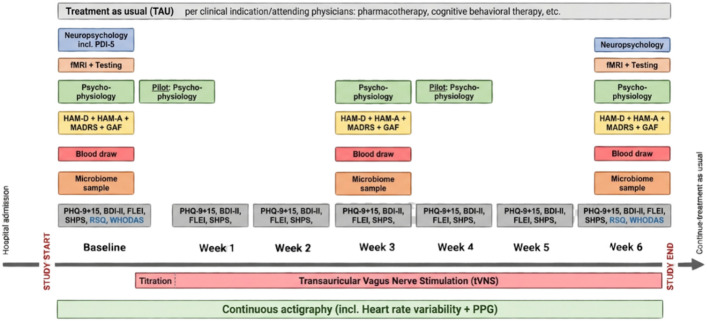 Figure 1
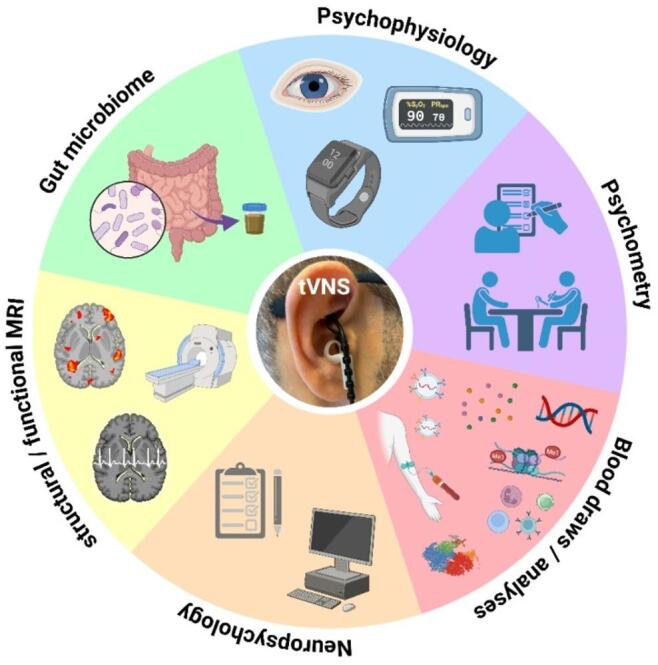 Figure 2
Peer Reviews
No public reviews on file for this paper yet. If you reviewed it on a platform where reviews are public (OpenReview, ICLR, NeurIPS, ICML), you can paste yours below so the community can read it here.
Videos
No videos yet. Explain this paper in a talk, walkthrough, or lecture? Add one.
Taxonomy
TopicsVagus Nerve Stimulation Research · Neurological disorders and treatments · Nicotinic Acetylcholine Receptors Study