High-pressure synthesis of U2[CO3]3 and U[CO3]2 as potential host phases for uranium in the Earth’s mantle
Dominik Spahr, Lkhamsuren Bayarjargal, Elena Bykova, Maxim Bykov, Gabriel L. Murphy, Philip Kegler, Victor Milman, Nico Giordano, Björn Winkler

TL;DR
Scientists synthesized two uranium carbonates under high pressure, suggesting they could store uranium in Earth's mantle and contribute to heat generation.
Contribution
The discovery of two new uranium carbonate compounds and their potential role as uranium hosts in the Earth's mantle.
Findings
U2[CO3]3 and U[CO3]2 were synthesized under lower mantle conditions using a diamond anvil cell.
U2[CO3]3 contains trivalent uranium, while U[CO3]2 contains tetravalent uranium.
These carbonates could act as host phases for uranium in carbon-rich mantle lithologies.
Abstract
It is well established that a significant amount of heat produced in the Earth’s mantle is due to the decay of uranium. However, uranium cannot be incorporated in large amounts into the most common mantle minerals. Here, we suggest that carbonates could be host phases for uranium in carbon-rich mantle lithologies. Two anhydrous uranium carbonates, U2[CO3]3 and U[CO3]2, were simultaneously synthesized by a reaction of UO2 with CO2 in a laser-heated diamond anvil cell at 20(1) GPa and 1800(200) K. Their crystal structures were obtained from synchrotron-based single crystal diffraction data and reproduced by density functional theory-based calculations. In U2[CO3]3 trivalent uranium cations are present, while uranium is four-valent in U[CO3]2. The synthesis of U2[CO3]3 and U[CO3]2 is a significant extension of the chemistry of uranium compounds and we provide a straightforward synthesis…
Genes, proteins, chemicals, diseases, species, mutations and cell lines named across the full text — each resolved to its canonical identifier and authoritative record.
Click any figure to enlarge with its caption.
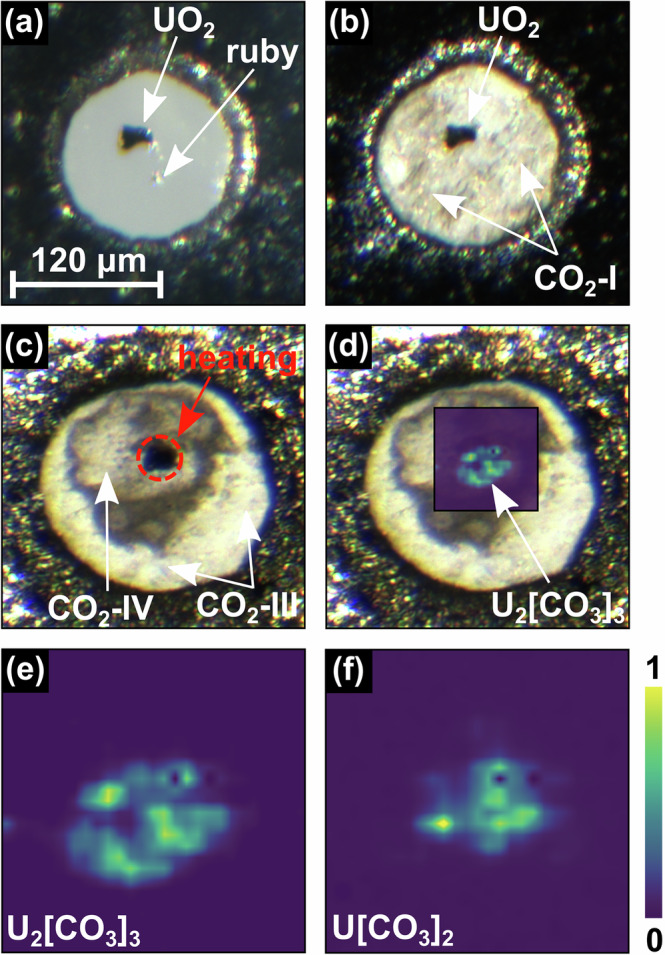 Figure 1
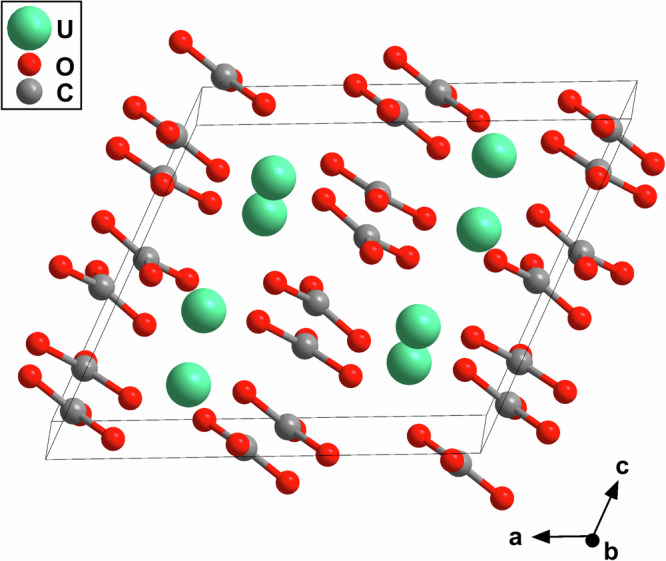 Figure 2
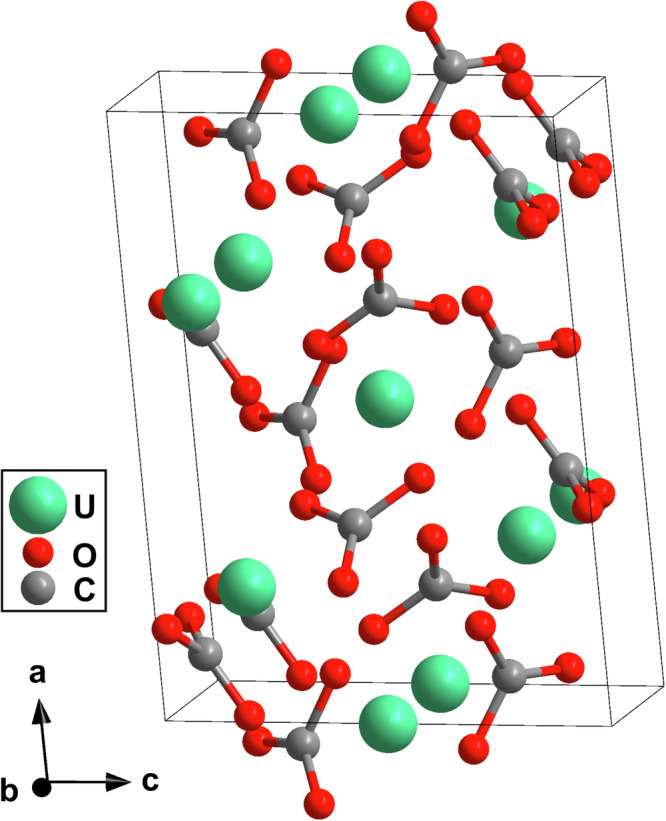 Figure 3
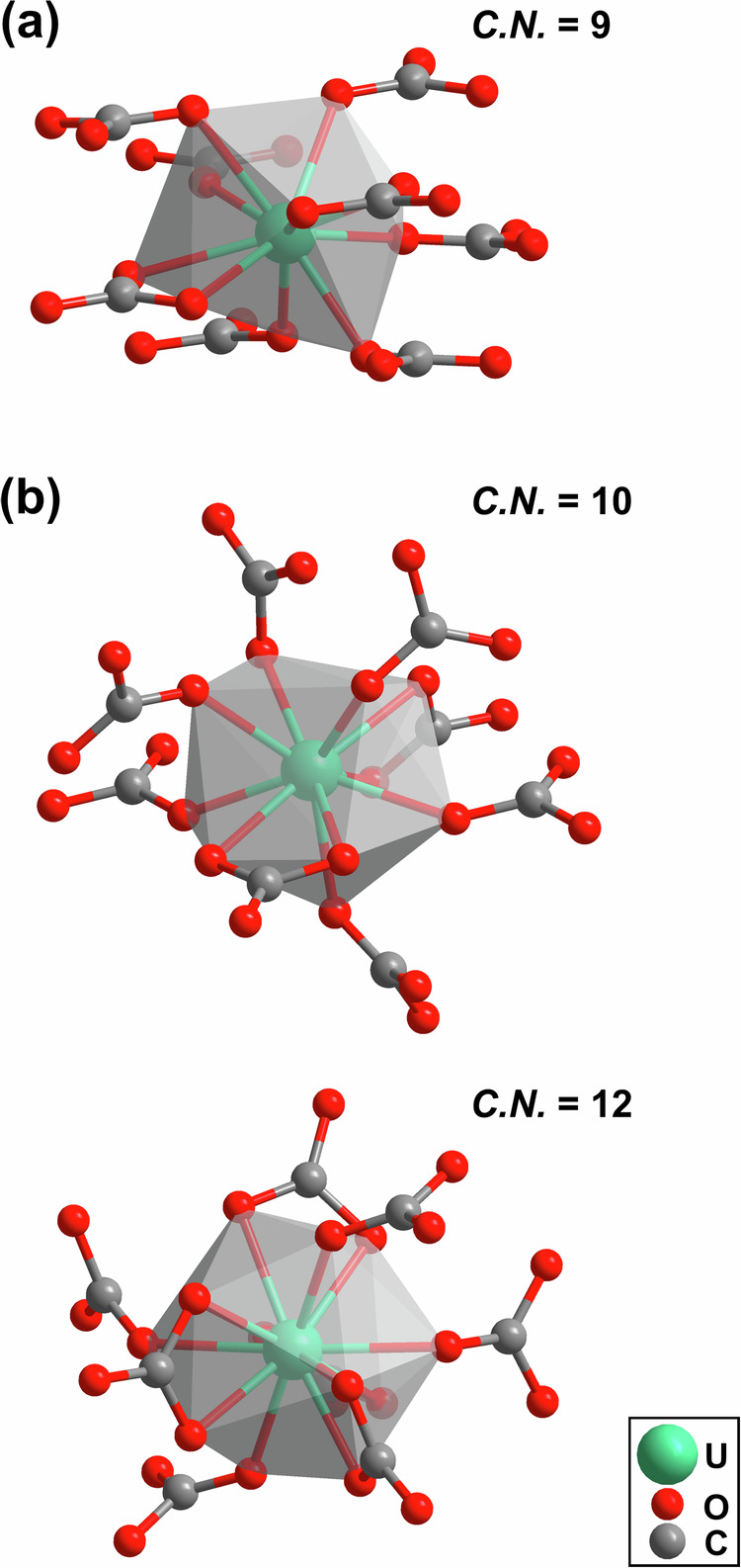 Figure 4
Peer Reviews
No public reviews on file for this paper yet. If you reviewed it on a platform where reviews are public (OpenReview, ICLR, NeurIPS, ICML), you can paste yours below so the community can read it here.
Videos
No videos yet. Explain this paper in a talk, walkthrough, or lecture? Add one.
Taxonomy
TopicsHigh-pressure geophysics and materials · Nuclear Materials and Properties · Rare-earth and actinide compounds