Efficient sampling of large-scale transition pathways and intermediate conformations in sub-mesoscopic protein complexes
Domenico Scaramozzino, Byung Ho Lee, Laura Orellana

TL;DR
The paper introduces eBDIMS2, a new algorithm for simulating protein conformational changes in large complexes, enabling efficient exploration of transition pathways.
Contribution
eBDIMS2 is a quasi-linear algorithm for simulating large-scale protein transitions, enabling desktop-level simulation of megadalton complexes.
Findings
eBDIMS2 enables simulation of complex transitions in megadalton protein assemblies like ATP synthases on a desktop.
The algorithm's pathways align with experimental intermediates and enhanced molecular dynamics simulations.
eBDIMS2 integrates elastic networks with Brownian dynamics for sub-mesoscopic systems.
Abstract
Protein conformational changes are the cornerstone of biological function. While conformers captured experimentally represent metastable states, the pathways connecting them have been elusive for experiments and simulations alike. Nowadays, cryogenic Electron Microscopy is providing rich structural data on proteins trapped in different states for increasingly large systems, but these are out of scope for most computational methods which exhibit an N2 dependence on size. Based on our previous eBDIMS algorithm, here we present eBDIMS2, an optimized version with quasi-linear size dependence, able to simulate on a desktop computer particularly complex transitions for megadalton protein assemblies, like the rotary motion of ATP synthases. Not only eBDIMS2 pathways spontaneously visit experimental intermediates but also overlap with enhanced and microsecond Molecular Dynamics simulations…
Genes, proteins, chemicals, diseases, species, mutations and cell lines named across the full text — each resolved to its canonical identifier and authoritative record.
Click any figure to enlarge with its caption.
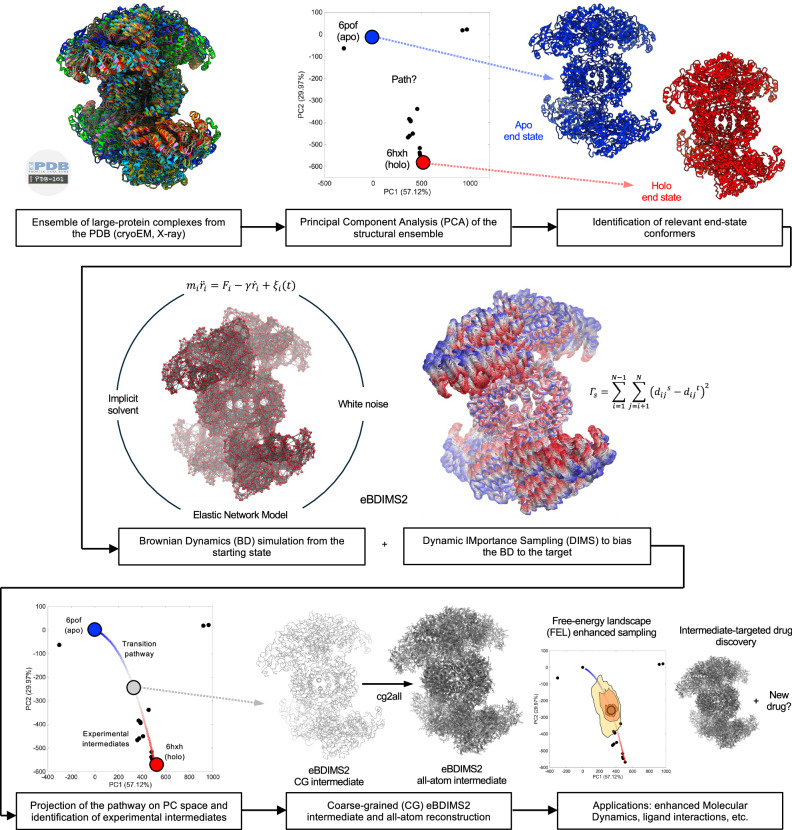 Figure 1
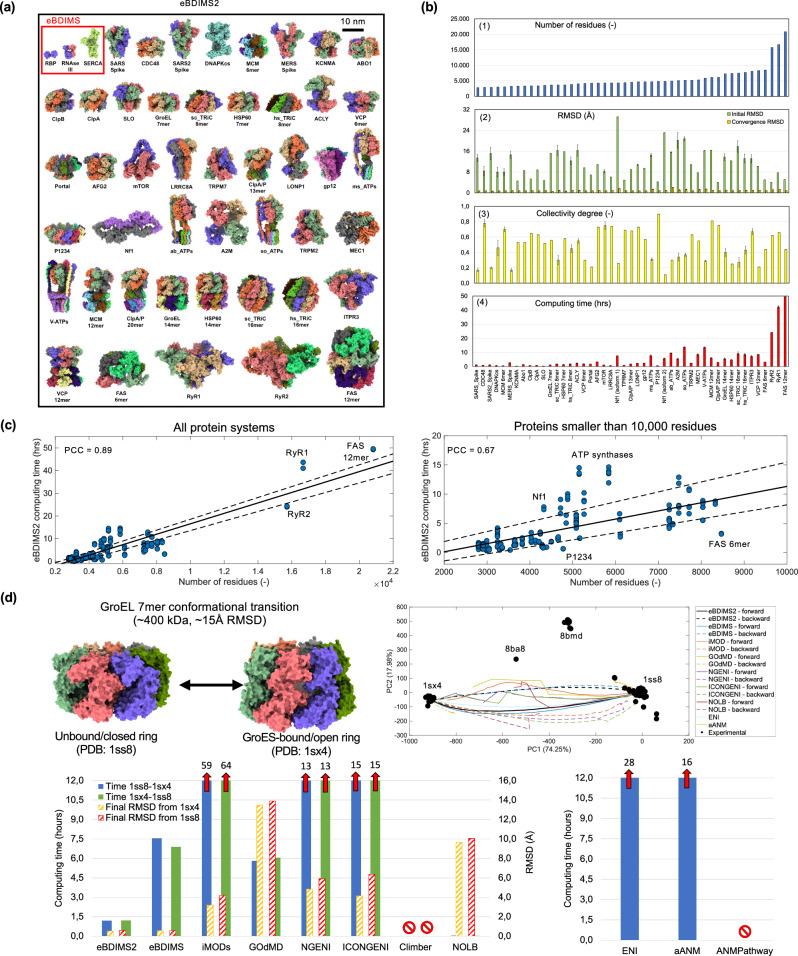 Figure 2
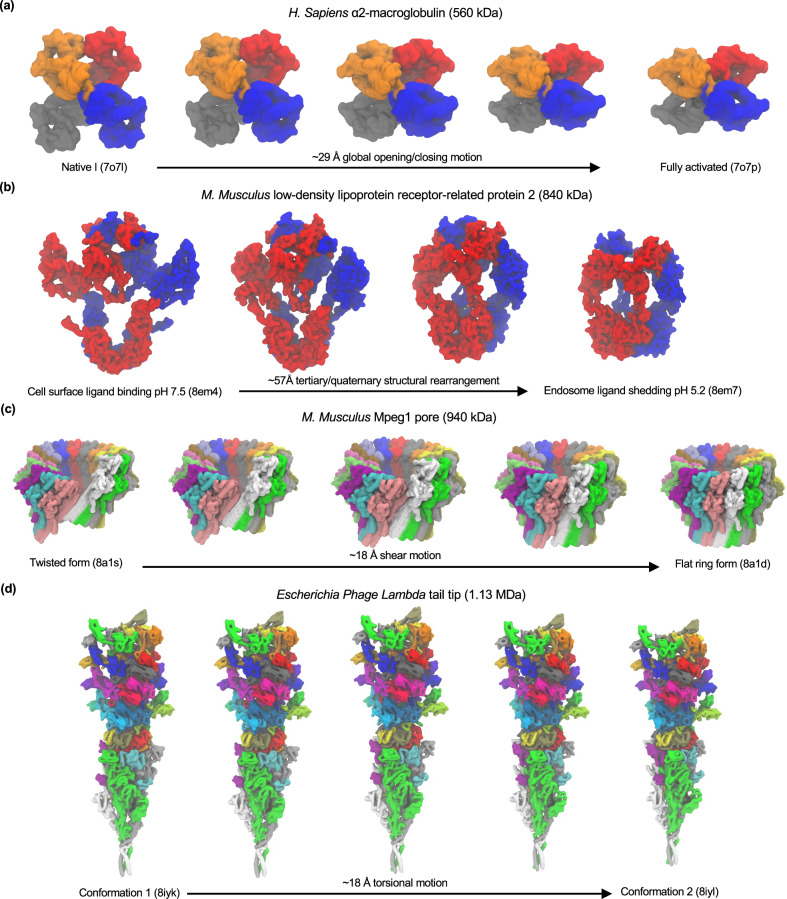 Figure 3
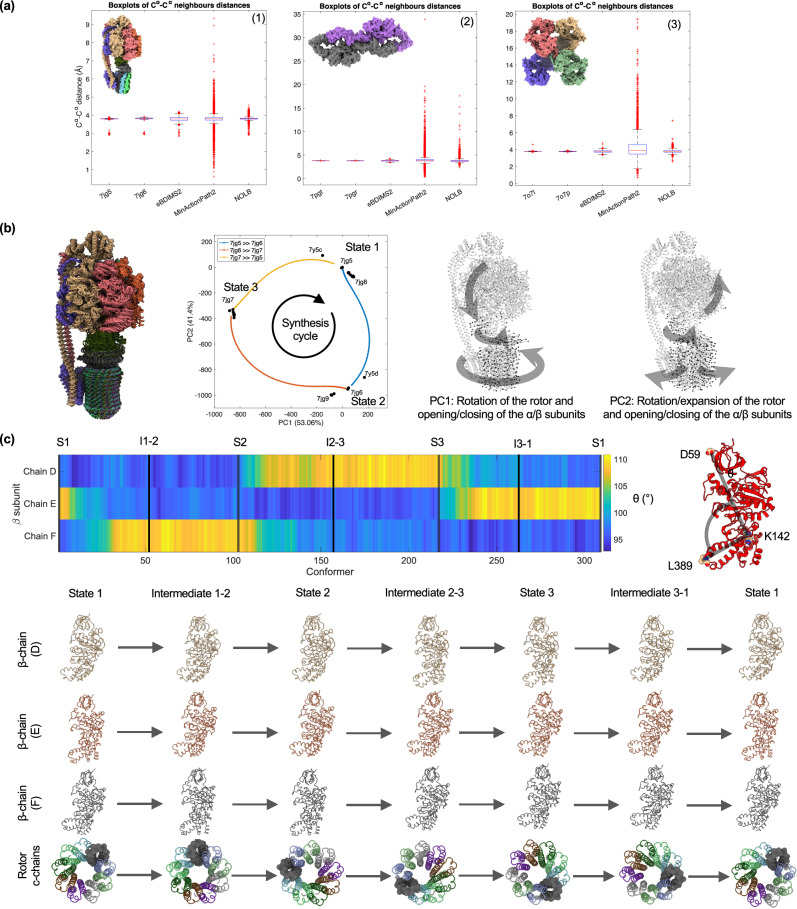 Figure 4
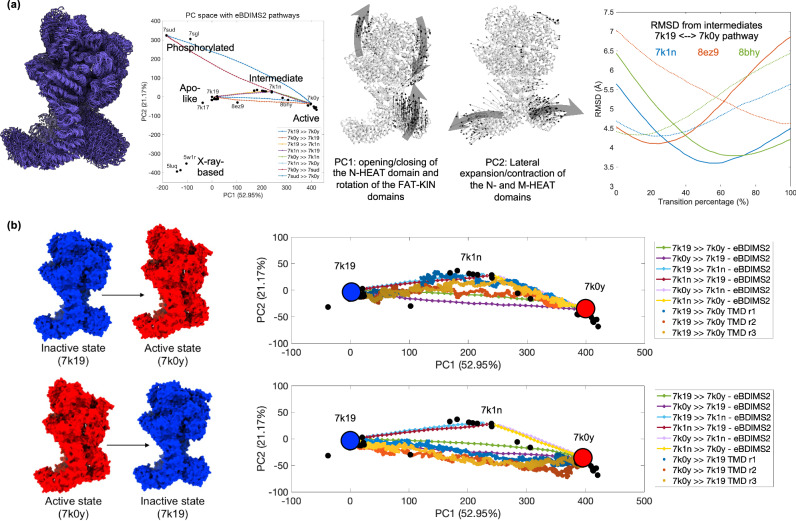 Figure 5
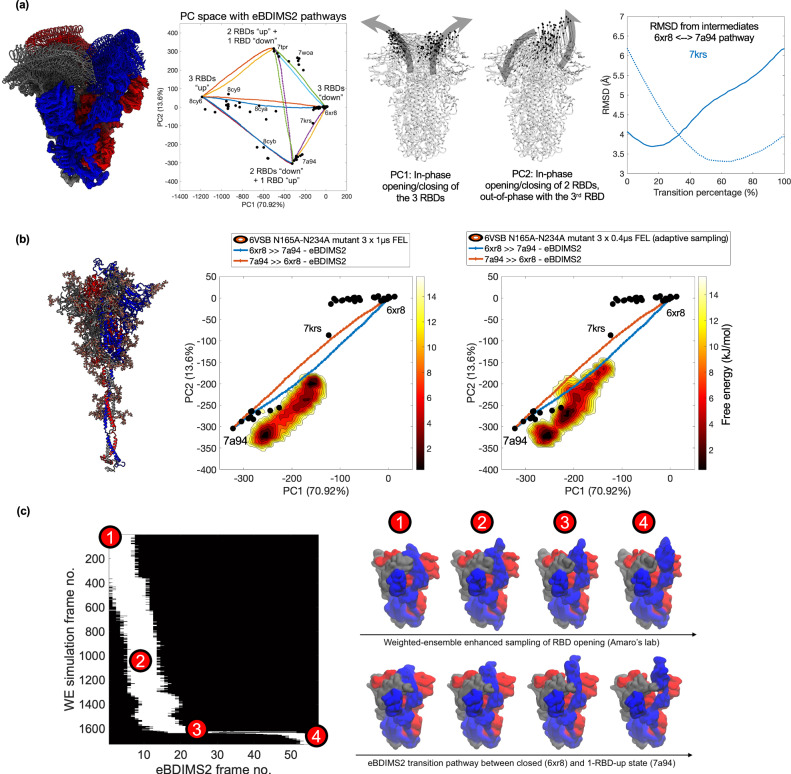 Figure 6
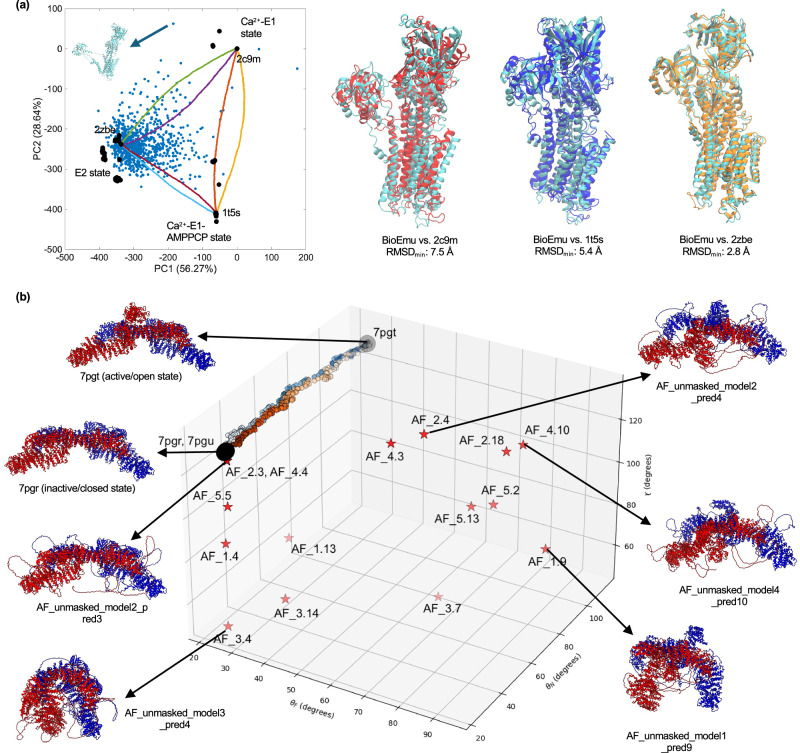 Figure 7
Peer Reviews
No public reviews on file for this paper yet. If you reviewed it on a platform where reviews are public (OpenReview, ICLR, NeurIPS, ICML), you can paste yours below so the community can read it here.
Videos
No videos yet. Explain this paper in a talk, walkthrough, or lecture? Add one.
Taxonomy
TopicsAdvanced Electron Microscopy Techniques and Applications · ATP Synthase and ATPases Research · Force Microscopy Techniques and Applications