Neural responses to virtual avatars are shaped by user preference and personality traits
Ayumi Takemoto, Motoaki Sugiura

TL;DR
This study shows how brain activity differs when people prefer certain virtual avatars, linking these differences to personality traits and neural regions.
Contribution
The study identifies specific brain regions and personality traits associated with avatar preference in human-computer interaction.
Findings
The left middle temporal gyrus (MTG) showed higher activity for selected avatars.
Right superior frontal gyrus (SFG) and left middle cingulate gyrus (MCG) activity negatively correlated with openness scores in selected avatars.
Neural responses during avatar evaluation are linked to individual personality differences and selection outcomes.
Abstract
This study aimed to investigate individual differences’ effects on brain activity in selected and non-selected avatars for re-engagement. The development of some applications for human–computer interaction has accelerated over the past decade. To develop a human–computer communication system using virtual avatars without losing the user’s interest and attention, this study revealed differences in the neural mechanisms underlying the perception of virtual avatars between avatars with which users want to converse again (selected avatars) and those with which they do not (non-selected avatars). Forty-two individuals were recruited; they watched two videos in sequence in which each virtual avatar greeted them, and they then reported which avatars they wanted to talk to again. Meanwhile, brain activities were recorded by functional magnetic resonance imaging (fMRI). After the fMRI recording,…
Genes, proteins, chemicals, diseases, species, mutations and cell lines named across the full text — each resolved to its canonical identifier and authoritative record.
Click any figure to enlarge with its caption.
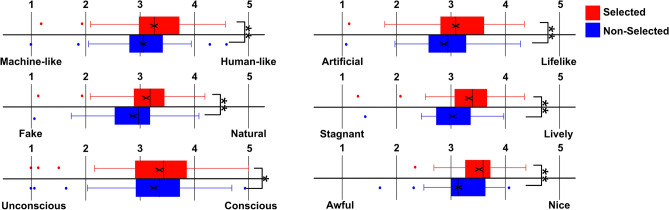 Figure 1
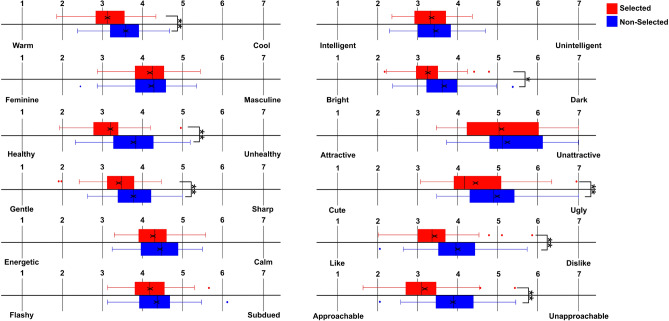 Figure 2
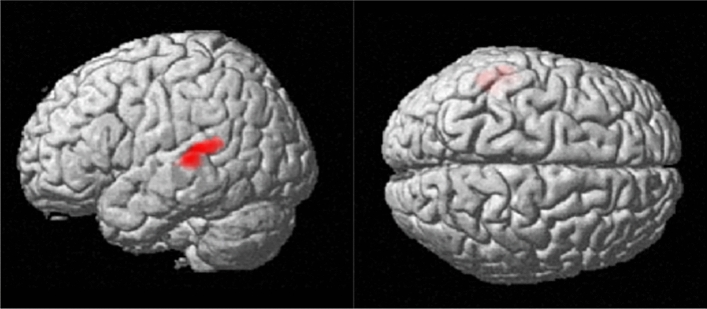 Figure 3
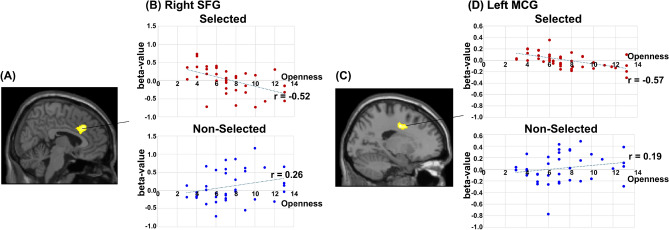 Figure 4
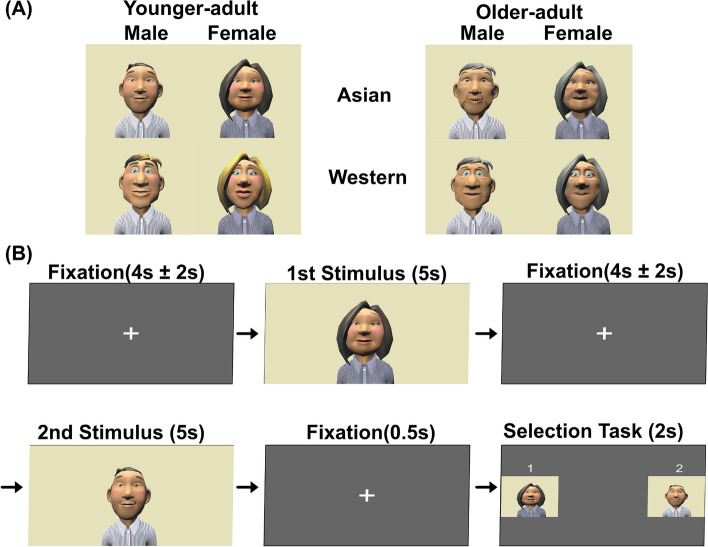 Figure 5
Peer Reviews
No public reviews on file for this paper yet. If you reviewed it on a platform where reviews are public (OpenReview, ICLR, NeurIPS, ICML), you can paste yours below so the community can read it here.
Videos
No videos yet. Explain this paper in a talk, walkthrough, or lecture? Add one.
Taxonomy
TopicsVirtual Reality Applications and Impacts · Action Observation and Synchronization · Social Robot Interaction and HRI