Rupture access to hydrous minerals controls aftershocks in subduction zones
Thanushika Gunatilake, Taras Gerya, James A. D. Connolly, Stephen A. Miller

TL;DR
This paper explains how the structure of subduction zones and the presence of hydrous minerals influence the number of aftershocks following major earthquakes.
Contribution
The study introduces a new mechanism linking slab hydration, rupture geometry, and aftershock productivity in subduction zones.
Findings
Earthquakes with rich aftershock sequences occur in regions with serpentinized peridotite and hydrated oceanic crust.
Flat-slab regions with oblique ruptures produce fewer aftershocks due to reduced access to hydrous minerals.
Slab geometry and rupture orientation control fluid production, which drives aftershock activity globally.
Abstract
Aftershock productivity varies widely among subduction-zone earthquakes of similar magnitude. We investigate how slab hydration and rupture geometry modulate access to hydrous minerals and the generation of pressurized fluids from co-seismic frictional heating along the interface between subducting slabs and overriding plates. We describe ten large and major earthquakes (Mw > 6.8) that generated thousands of aftershocks (Mw > 4), and eleven nearby earthquakes of similar magnitude that generated few, if any, aftershocks. Kinematic and petrological constraints reveal that earthquakes producing rich aftershock sequences ruptured along slab interfaces containing serpentinized peridotite and hydrated oceanic crust. By contrast, earthquakes with few aftershocks occurred in flat-slab regions where rupture planes were oblique to the hydrated interface (intraslab events). Oblique rupture reduces…
Genes, proteins, chemicals, diseases, species, mutations and cell lines named across the full text — each resolved to its canonical identifier and authoritative record.
Click any figure to enlarge with its caption.
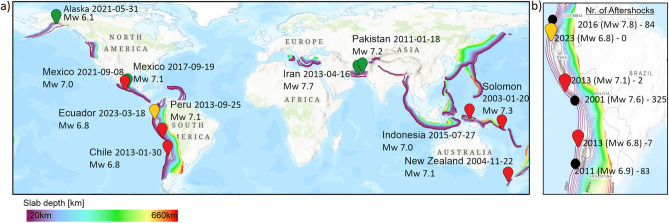 Figure 1
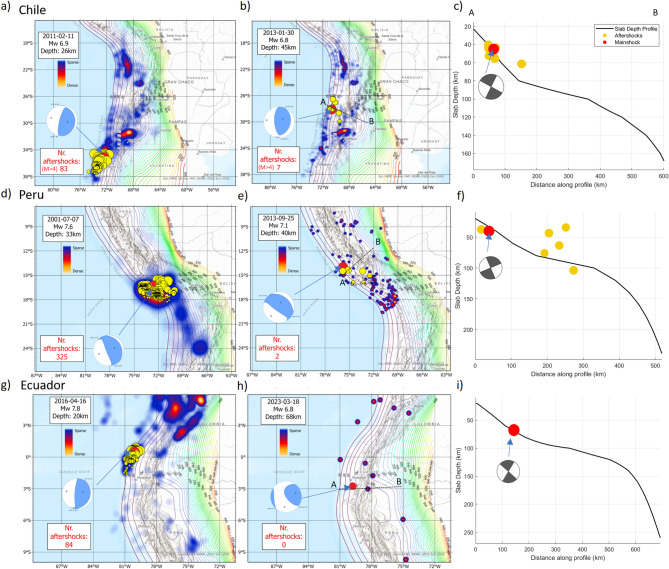 Figure 2
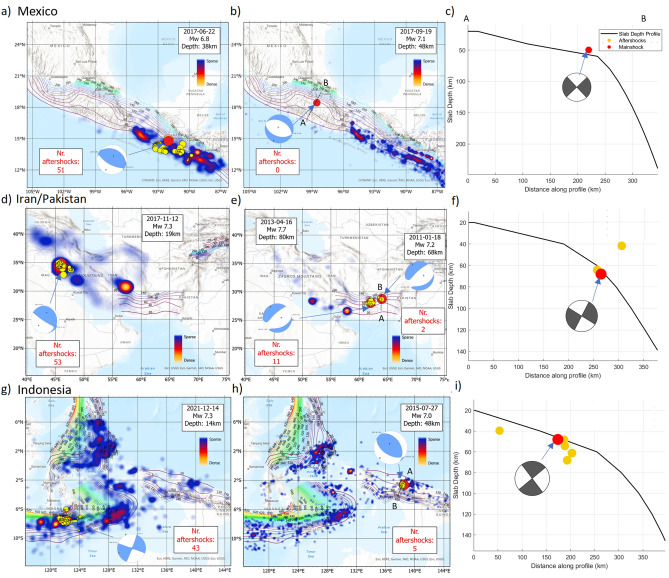 Figure 3
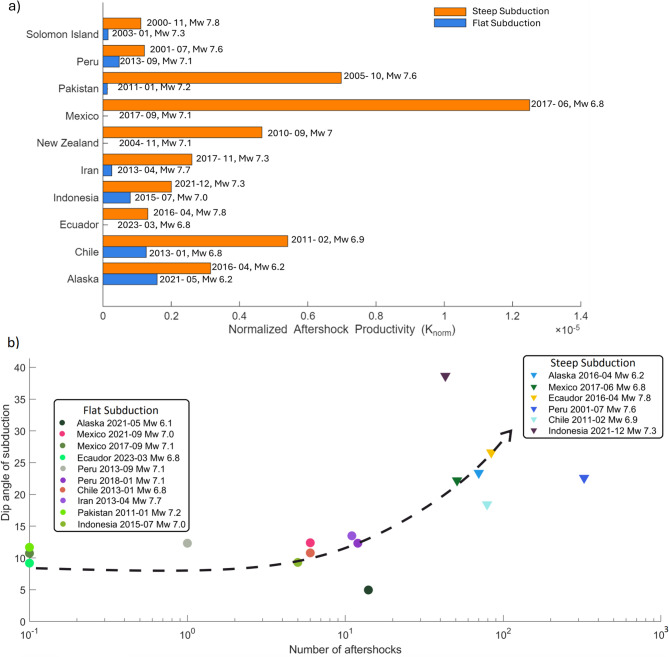 Figure 4
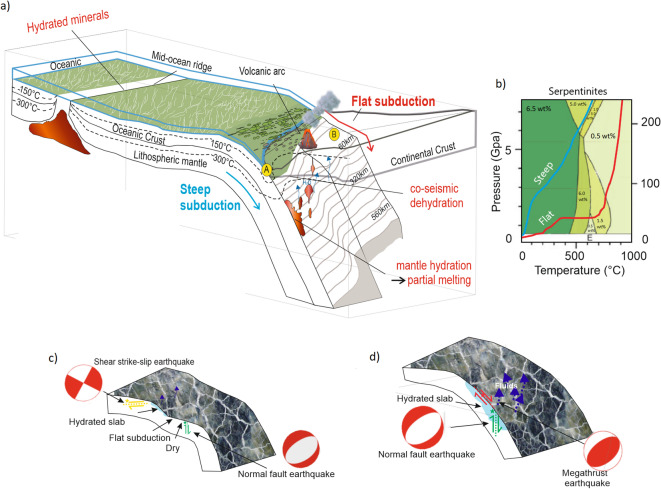 Figure 5
Peer Reviews
No public reviews on file for this paper yet. If you reviewed it on a platform where reviews are public (OpenReview, ICLR, NeurIPS, ICML), you can paste yours below so the community can read it here.
Videos
No videos yet. Explain this paper in a talk, walkthrough, or lecture? Add one.
Taxonomy
Topicsearthquake and tectonic studies · Geological and Geochemical Analysis · High-pressure geophysics and materials