Altered tear fluid protein expression in persons with mild cognitive impairment
Virve Kärkkäinen, Toni Saari, Minna Rusanen, Hannu Uusitalo, Ville Leinonen, Bernd Thiede, Anne M. Koivisto, Kai Kaarniranta, Tor P. Utheim

TL;DR
This study found changes in tear fluid proteins in people with mild cognitive impairment, suggesting tears could help detect early signs of memory disorders.
Contribution
The study identifies altered tear fluid proteins in mild cognitive impairment, offering new potential biomarkers for early diagnosis of neurodegenerative diseases.
Findings
33 tear fluid proteins related to oxidative stress, clearance, cytoskeleton, and inflammation were altered in MCI patients.
Altered proteins suggest cellular stress and may indicate increased risk for Alzheimer's or memory disorders.
Tear fluid shows promise as a non-invasive source for early diagnostic biomarkers in neurodegenerative diseases.
Abstract
Tear fluid (TF) is a protein-rich fluid reported to reflect pathophysiological changes in several neurodegenerative diseases, including Alzheimer's disease. TF proteins are increasingly being considered as putative biomarker candidates to help in the diagnosis of disease. However, little information is available on TF protein changes in persons with mild cognitive impairment (MCI). This study aimed to determine alterations in the expression of proteins in TF collected from persons with MCI compared with cognitively healthy controls. We analyzed data from 54 study participants, including 34 controls (mean age, 71 years; mean Mini-Mental State Examination [MMSE] score ± standard deviation, 28.9 ± 1.4) and 20 persons with MCI (mean age, 71 years; mean MMSE score, 27.1 ± 1.9). All participants underwent cognitive, neurological, and ophthalmological examinations. TF was collected using…
Genes, proteins, chemicals, diseases, species, mutations and cell lines named across the full text — each resolved to its canonical identifier and authoritative record.
Click any figure to enlarge with its caption.
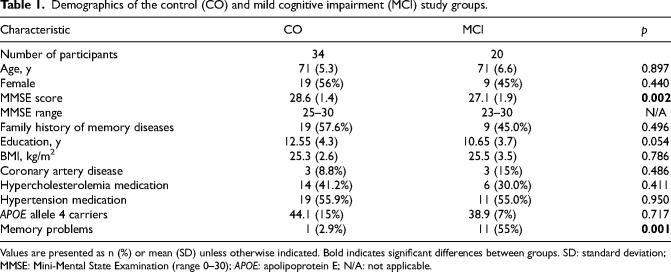 Figure 1
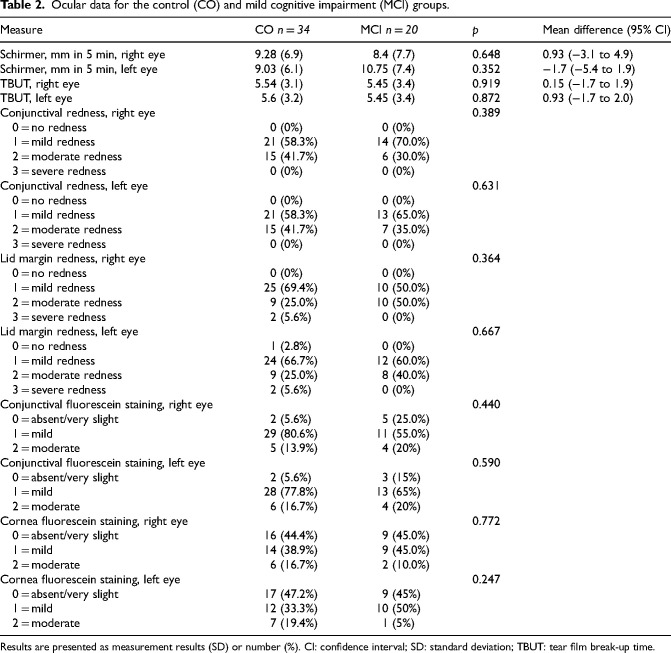 Figure 2
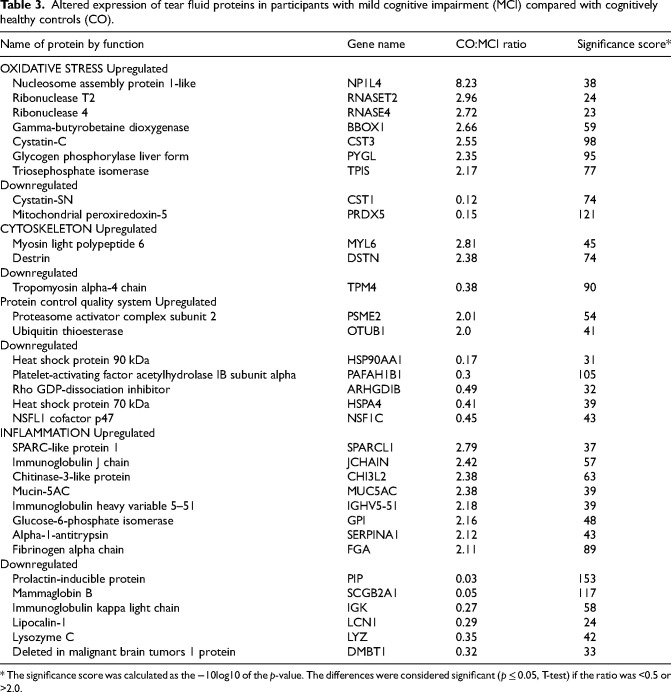 Figure 3
Peer Reviews
No public reviews on file for this paper yet. If you reviewed it on a platform where reviews are public (OpenReview, ICLR, NeurIPS, ICML), you can paste yours below so the community can read it here.
Videos
No videos yet. Explain this paper in a talk, walkthrough, or lecture? Add one.
Taxonomy
TopicsOcular Surface and Contact Lens · Salivary Gland Disorders and Functions · Glaucoma and retinal disorders