The Prevalence and Correlates of Child Sexual Offending Behaviours and Attitudes Among Men in Australia, the United Kingdom, and the United States: Study Methodology
Tyson Whitten, Michael Salter, Delanie Woodlock

TL;DR
This study outlines a survey methodology to understand the prevalence and factors related to child sexual offending behaviors and attitudes among men in Australia, the UK, and the US.
Contribution
The study introduces a novel international survey methodology with census-matched quotas to assess child sexual exploitation behaviors and attitudes.
Findings
The survey retained 4,918 participants across three countries with demographics matching census benchmarks.
Prevalence of online child sexual exploitation behaviors was comparable to other non-clinical community samples.
The study highlights limitations such as potential selection bias and the need for future research in non-English and low-income countries.
Abstract
This paper describes the methodology for an online survey of the prevalence and factors associated with interest and behaviours towards children among men aged 18 years or older from the general Australian, U.K., and U.S. adult male populations. The study collected data on demographic characteristics, health issues, social support, childhood adversity, and patterns of technology and internet use, as well as attitudes and behaviours relating to online and offline child sexual exploitation and abuse (CSEA). Surveys were administered through Prime Panels using census-matched quotas. Data were subsequently weighted via iterative proportional fitting. Of the 7,343 people who consented to participate in the survey, 4,918 were retained (Australia = 1,939; United Kingdom = 1,506; United States = 1,473). The demographic characteristics for the weighted samples were comparable to the Australian,…
Genes, proteins, chemicals, diseases, species, mutations and cell lines named across the full text — each resolved to its canonical identifier and authoritative record.
Click any figure to enlarge with its caption.
 Figure 1
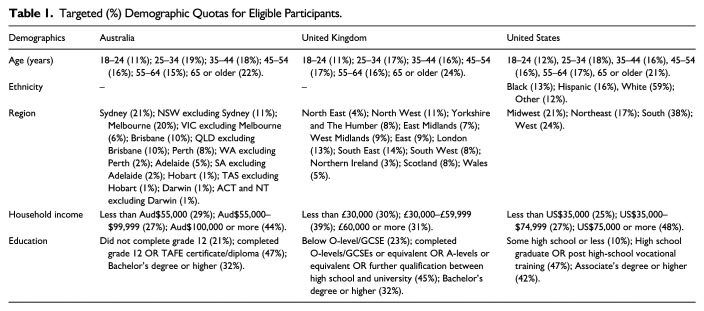 Figure 2
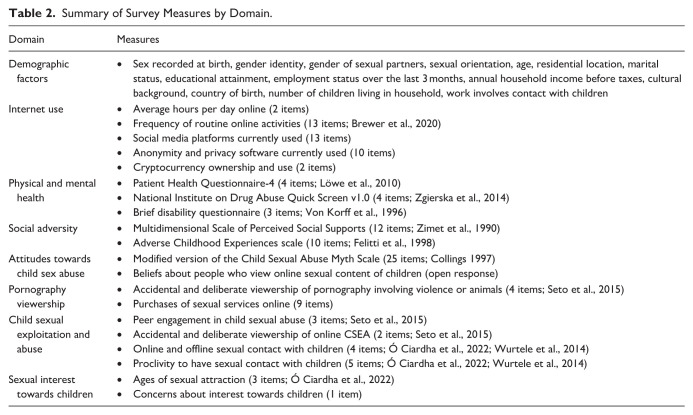 Figure 3
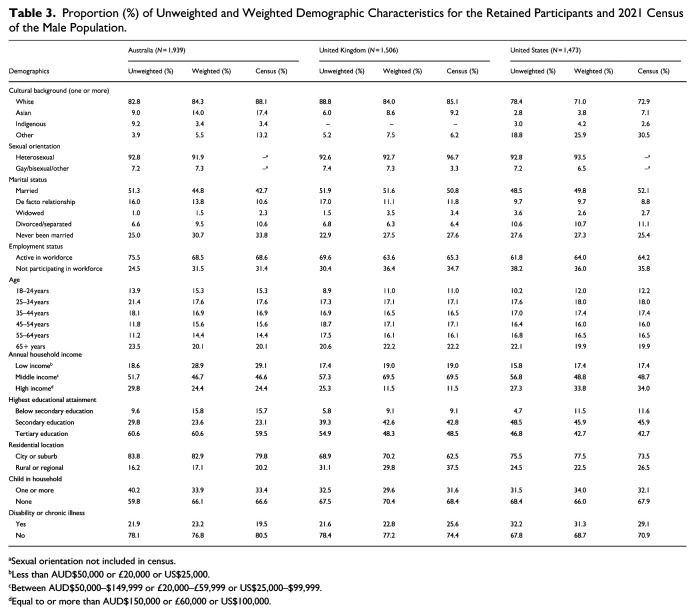 Figure 4
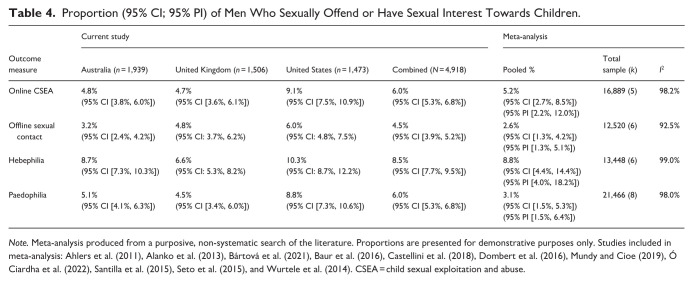 Figure 5
 Figure 6
Peer Reviews
No public reviews on file for this paper yet. If you reviewed it on a platform where reviews are public (OpenReview, ICLR, NeurIPS, ICML), you can paste yours below so the community can read it here.
Videos
No videos yet. Explain this paper in a talk, walkthrough, or lecture? Add one.
Taxonomy
TopicsSex work and related issues · Psychopathy, Forensic Psychiatry, Sexual Offending · Sexuality, Behavior, and Technology