Incidence of altered proteins in the aging brain: Implications for biological diagnostic markers
Irina Alafuzoff, Sylwia Libard

TL;DR
This study examines how often altered proteins linked to Alzheimer's disease appear in aging brains and their potential as diagnostic markers.
Contribution
The study provides new insights into the frequency of Alzheimer's-related protein changes in older individuals and their detectability in biological fluids.
Findings
Alzheimer's disease neuropathological changes (ADNC) were detected in 64% of subjects, increasing with age.
28% of subjects showed ADNC at levels potentially detectable in cerebrospinal fluid, including many non-demented individuals.
Most subjects with ADNC had other brain pathologies, complicating the link between specific protein changes and cognitive decline.
Abstract
In aging-related neurodegeneration, therapeutic interventions directed at defined protein targets have been launched. A key step has been developing diagnostic biological markers, followed by immunotherapy. These steps have been achieved for amyloid-β protein (Aβ). To evaluate, based on brain pathology, how frequently Aβ would be detectable in blood or cerebrospinal fluid in older individuals. We assessed brain tissue from 1825 deceased subjects, 20% of whom were demented. We examined the presence of Aβ, hyperphosphorylated τ (HPτ), Transactive DNA-binding protein 43 (TDP-43), and α-synuclein (αS) using immunohistochemistry. The extent of these alterations was assessed following current consensus criteria. The combination of Aβ/HPτ, constituting Alzheimer's disease neuropathological change (ADNC), was detected in 64% of subjects, increasing significantly (Pearson's Chi-Square p =…
Genes, proteins, chemicals, diseases, species, mutations and cell lines named across the full text — each resolved to its canonical identifier and authoritative record.
Click any figure to enlarge with its caption.
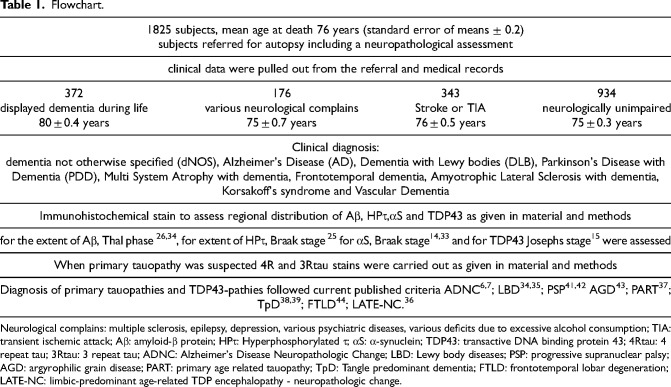 Figure 1
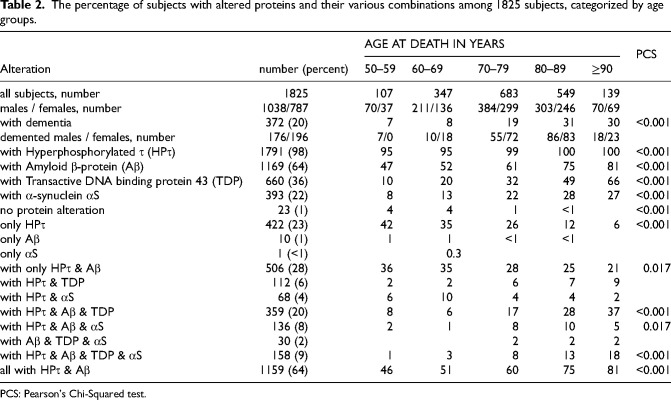 Figure 2
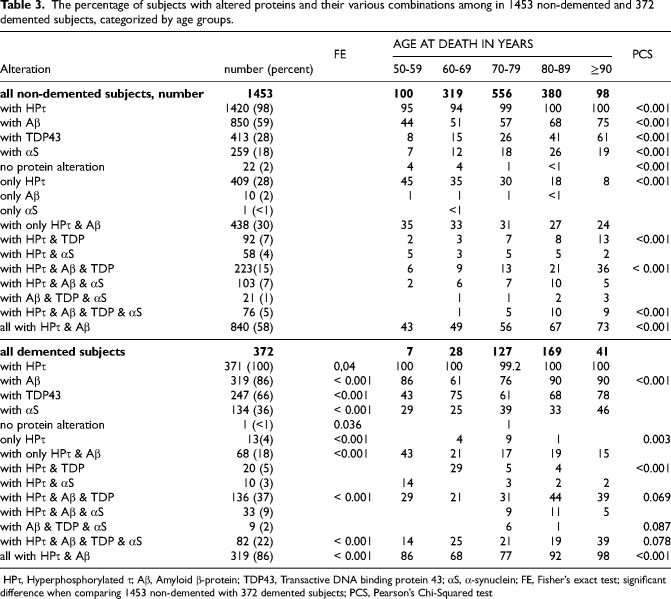 Figure 3
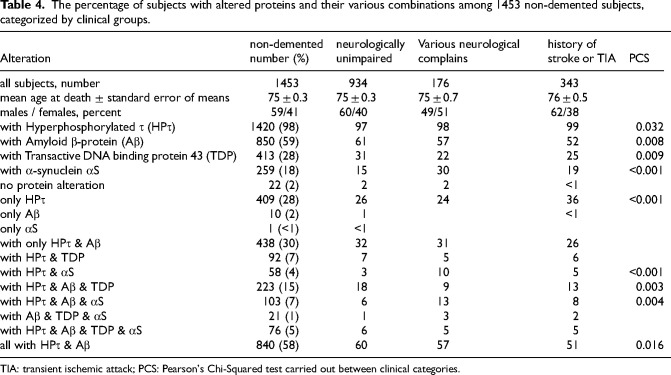 Figure 4
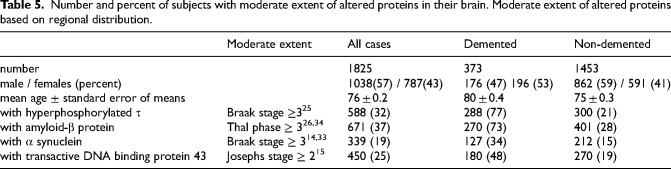 Figure 5
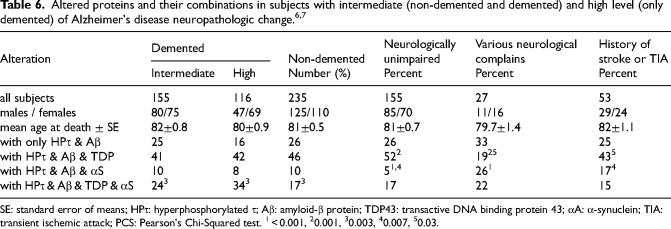 Figure 6
Peer Reviews
No public reviews on file for this paper yet. If you reviewed it on a platform where reviews are public (OpenReview, ICLR, NeurIPS, ICML), you can paste yours below so the community can read it here.
Videos
No videos yet. Explain this paper in a talk, walkthrough, or lecture? Add one.
Taxonomy
TopicsAlzheimer's disease research and treatments · Amyotrophic Lateral Sclerosis Research · Parkinson's Disease Mechanisms and Treatments