Identifying the Demographic and Internet Use Characteristics of Technology-Facilitated Child Sex Offenders Operating in the Australian, U.S. and U.K. General Population
Michael Salter, Tyson Whitten, Delanie Woodlock, James Stevenson, Syimah Mat Rani, Deborah Fry

TL;DR
This study compares the demographics and online behaviors of technology-facilitated child sex offenders in Australia, the U.S., and the U.K., finding higher rates in the U.S. and common traits like working with children and heavy online sexual activity.
Contribution
The study provides novel population-level insights into technology-facilitated child sex offenders, comparing demographic and internet use patterns across three countries.
Findings
Technology-facilitated child sex offending rates were highest in the U.S. (10.9%) compared to Australia (7.5%) and the U.K. (7.0%).
Offenders were more likely to work with children, be employed, married, and have higher education levels.
Online offenders showed increased sexual activity online, including paying for sexual content and viewing violent pornography.
Abstract
Research on technology-facilitated child sex offenders outside of forensic and clinical samples is scarce but necessary to inform prevention, early intervention, and investigation. This article describes and compares the demographic characteristics and internet use habits of technology-facilitated child sex offenders sourced from three quota-based samples comparable to the Australian (n = 1,945), U.S. (n = 1,473), and U.K. (n = 1,506) adult male population. The odds (99% CI) of technology-facilitated child sex offending, relative to non-offenders, were calculated for demographic factors (e.g. age, sexual orientation, and number of children in household), hours per day spent online, frequency of engagement in common online behaviours (e.g. sending emails, online messaging, and private video chatting), use of social media platforms (e.g. Facebook, Twitter, and Snapchat), online…
Genes, proteins, chemicals, diseases, species, mutations and cell lines named across the full text — each resolved to its canonical identifier and authoritative record.
Click any figure to enlarge with its caption.
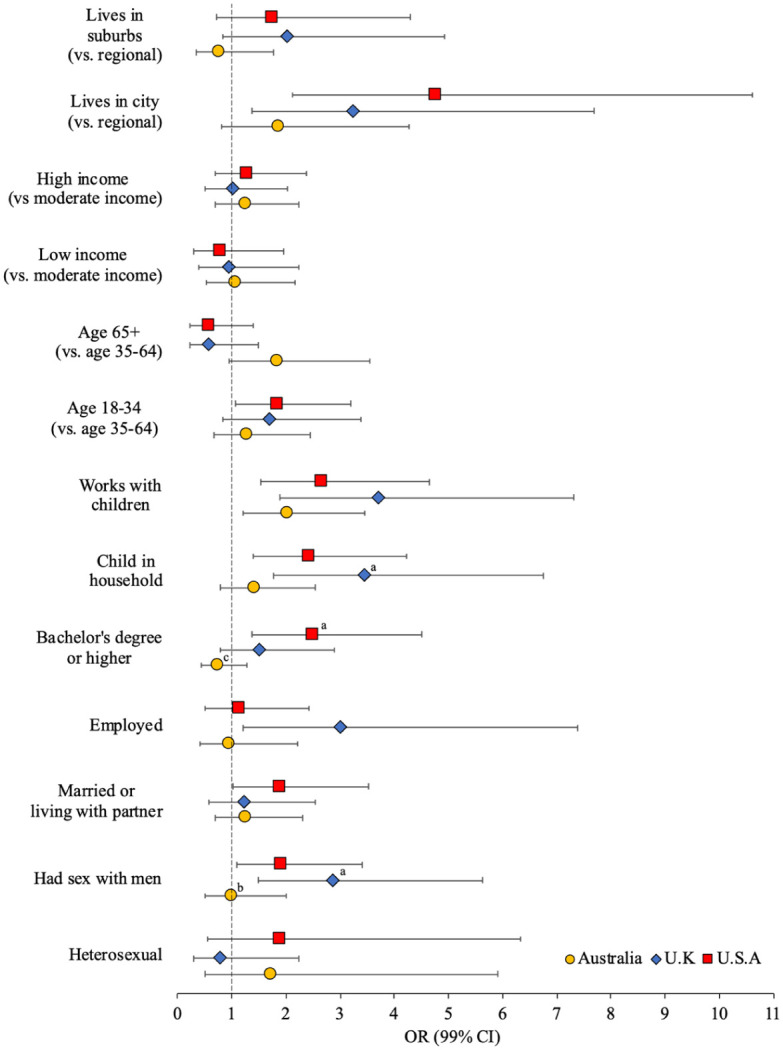 Figure 1
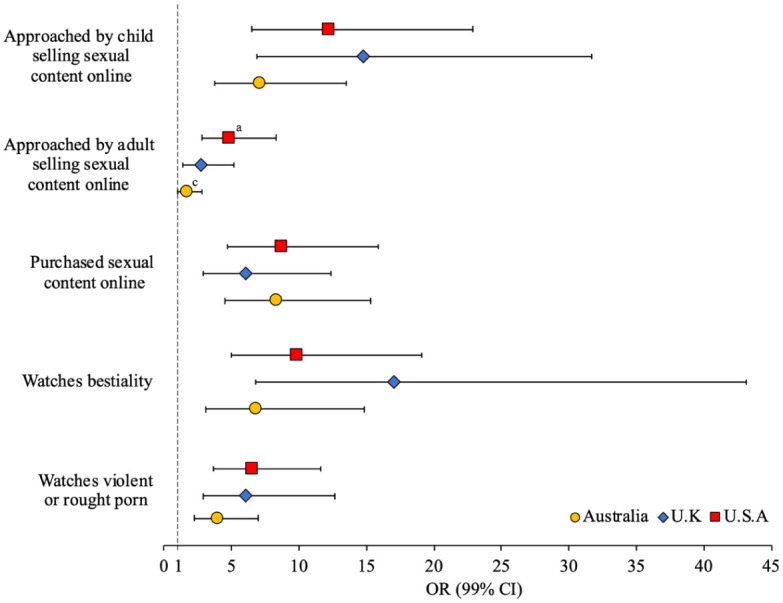 Figure 2
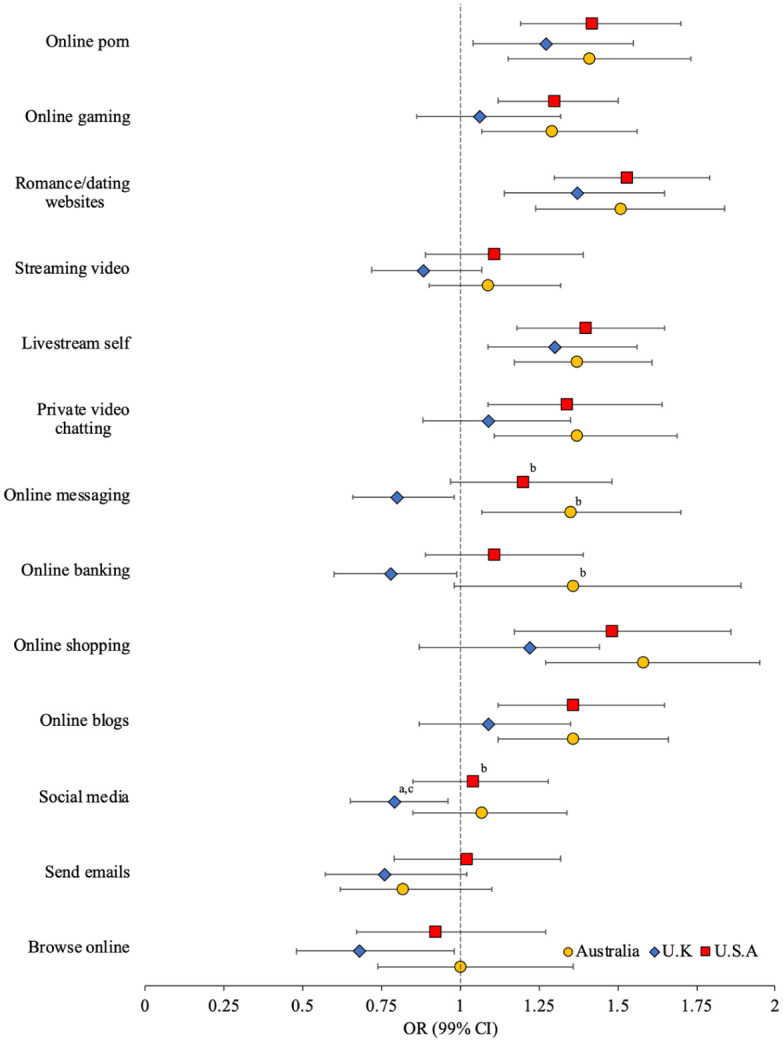 Figure 3
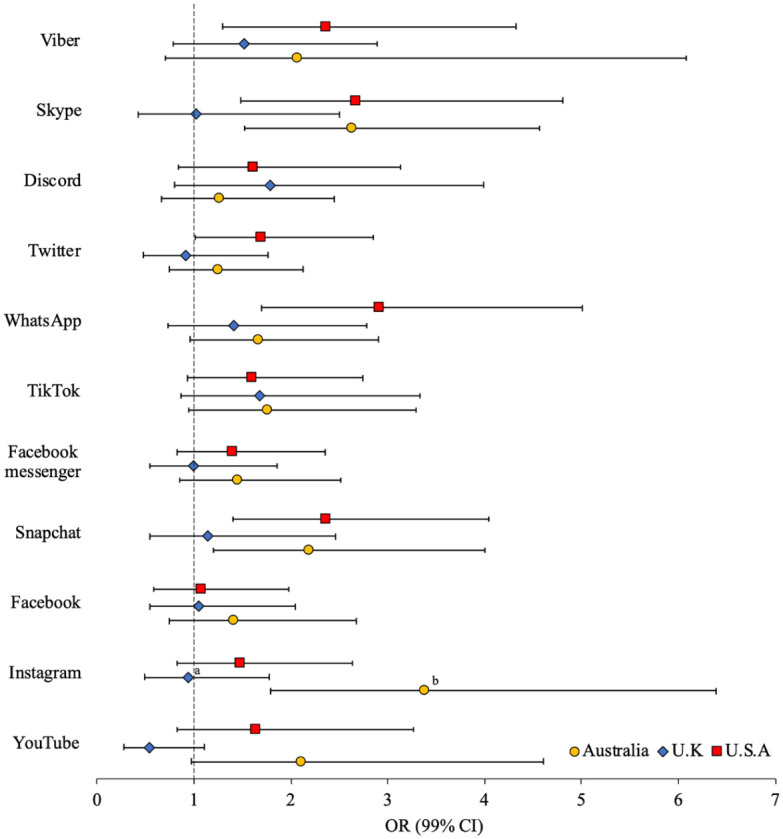 Figure 4
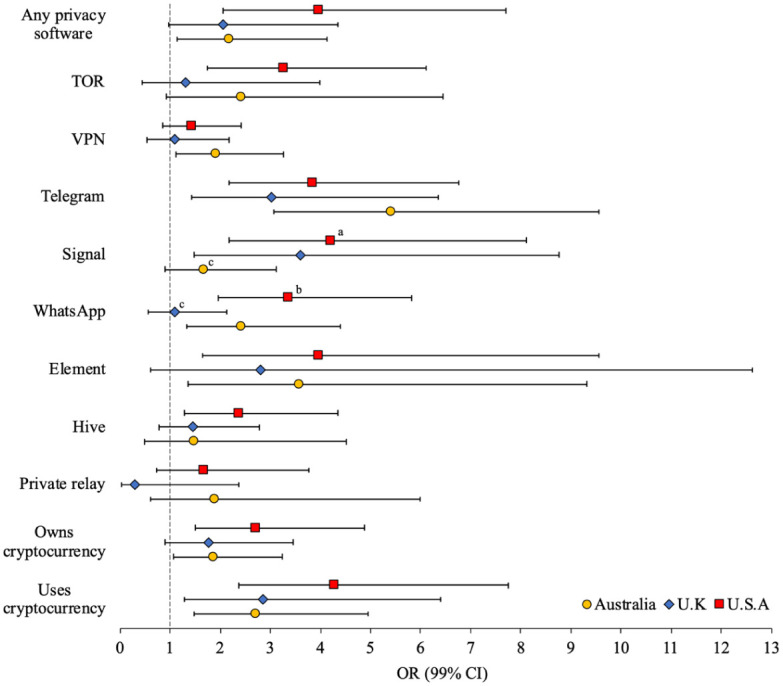 Figure 5
 Figure 6
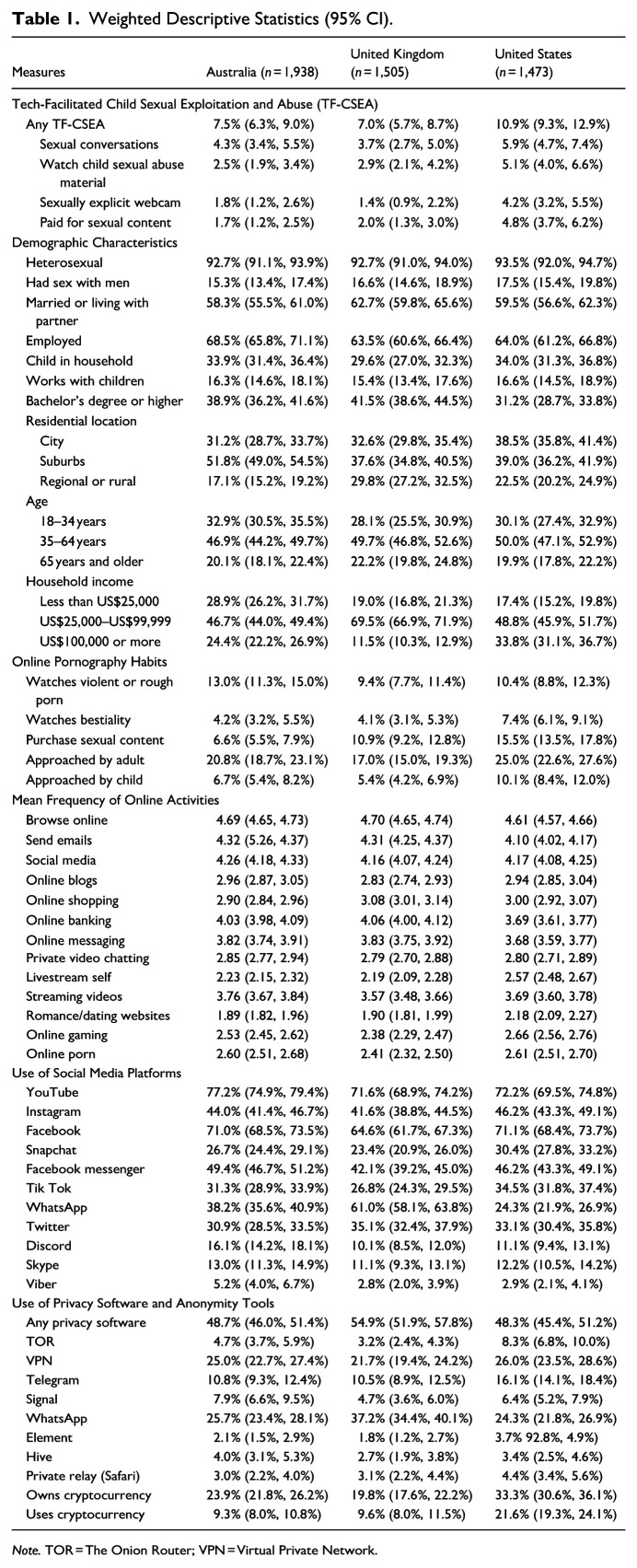 Figure 7
Peer Reviews
No public reviews on file for this paper yet. If you reviewed it on a platform where reviews are public (OpenReview, ICLR, NeurIPS, ICML), you can paste yours below so the community can read it here.
Videos
No videos yet. Explain this paper in a talk, walkthrough, or lecture? Add one.
Taxonomy
TopicsPsychopathy, Forensic Psychiatry, Sexual Offending · Sexuality, Behavior, and Technology · Criminal Justice and Corrections Analysis