Intensity-dependent lipidomic dynamic regulation following acute swimming exercise
Jiayu Qian, Baile Wu, Zhongxun Ren, Chunxue Tang, Zihan Fan, YanYan Zhang, Lijun Shi

TL;DR
This study shows that high-intensity swimming exercise causes more significant changes in blood lipids compared to moderate exercise, offering insights into how exercise intensity affects health at the molecular level.
Contribution
The study identifies specific intensity-dependent lipid biomarkers and dynamic patterns in serum lipid responses to different swimming exercise intensities.
Findings
HIIT swimming caused 1.49- to 2.87-fold more serum lipid downregulation than MICT despite similar energy expenditure.
Five intensity-dependent lipid biomarkers were identified, including PC32:2, LPA18:2, and three TAGs containing 18:2.
HIIT preferentially mobilized shorter-chain, saturated TAGs, and lipid recovery dynamics were intensity-dependent.
Abstract
Exercise intensity critically determines health benefits, yet the underlying molecular mechanisms remain incompletely characterized. This study systematically compared the effects of high-intensity interval training (HIIT) versus moderate-intensity continuous training (MICT) swimming on serum lipidomics. In a randomized controlled trial (ChiCTR2400089036, registered on 30/08/2024, n = 42 healthy students), blood samples were collected at baseline, 0-, 15-, and 30-minutes post-exercise, followed by comprehensive lipidomics analysis. HIIT swimming induced 1.49- to 2.87-fold more extensive serum lipid downregulation than MICT, despite matched energy expenditure. We identified five robust intensity-dependent biomarkers: PC32:2, LPA18:2, and three 18:2-containing triacylglycerols (TAGs). Clustering analysis further revealed three distinct hierarchical patterns of lipid dynamic changes.…
Genes, proteins, chemicals, diseases, species, mutations and cell lines named across the full text — each resolved to its canonical identifier and authoritative record.
Click any figure to enlarge with its caption.
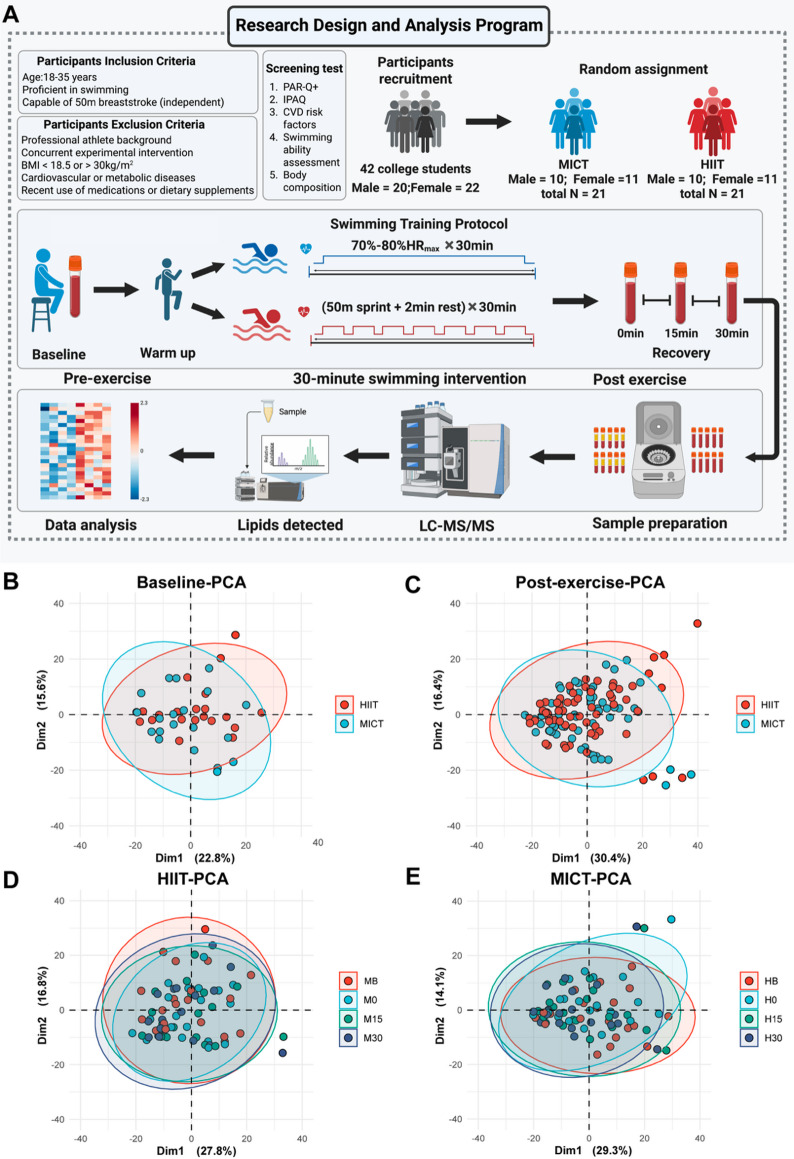 Figure 1
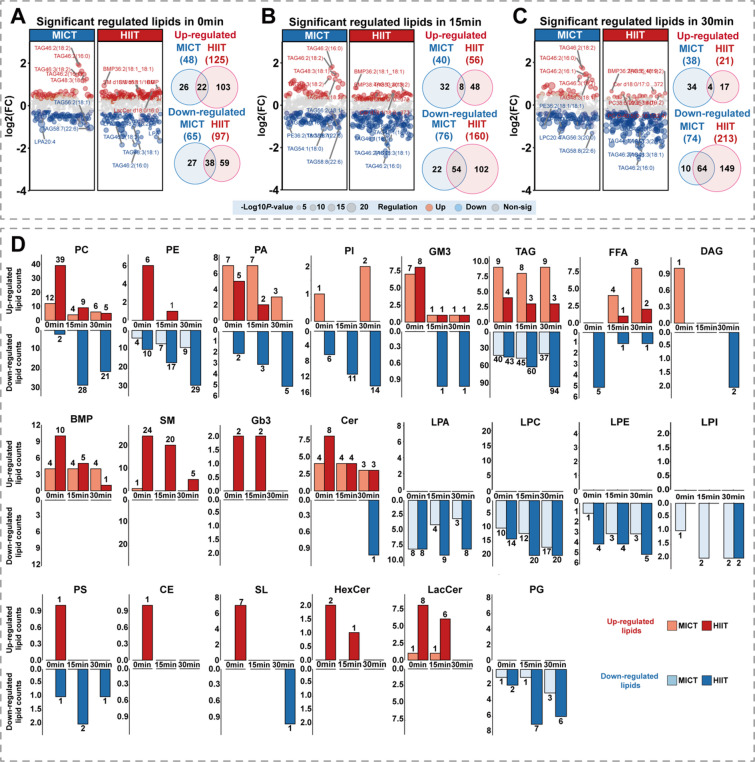 Figure 2
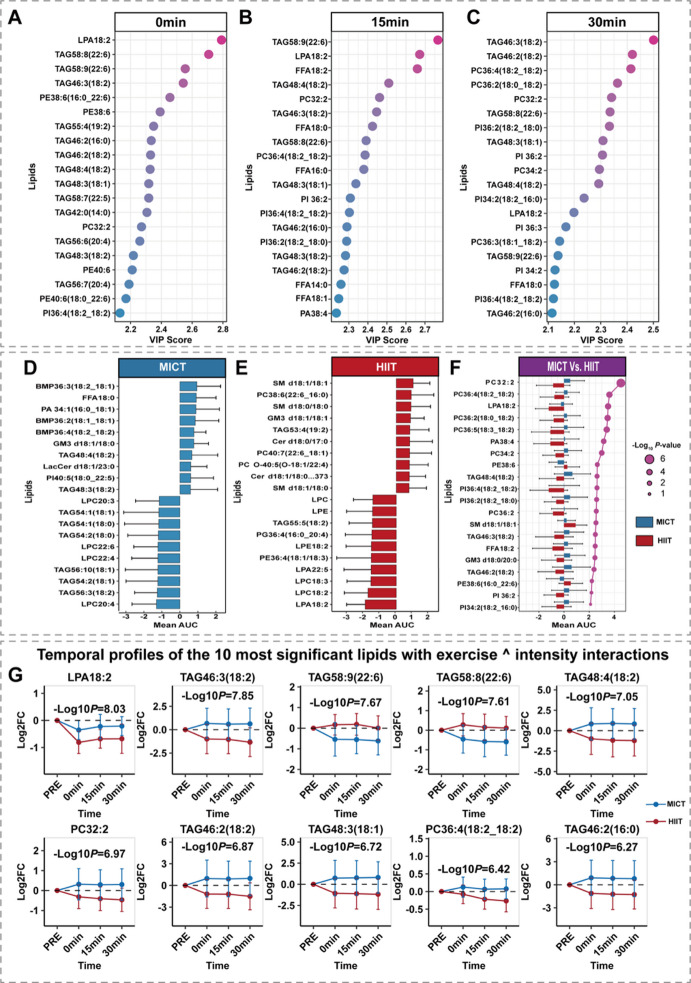 Figure 3
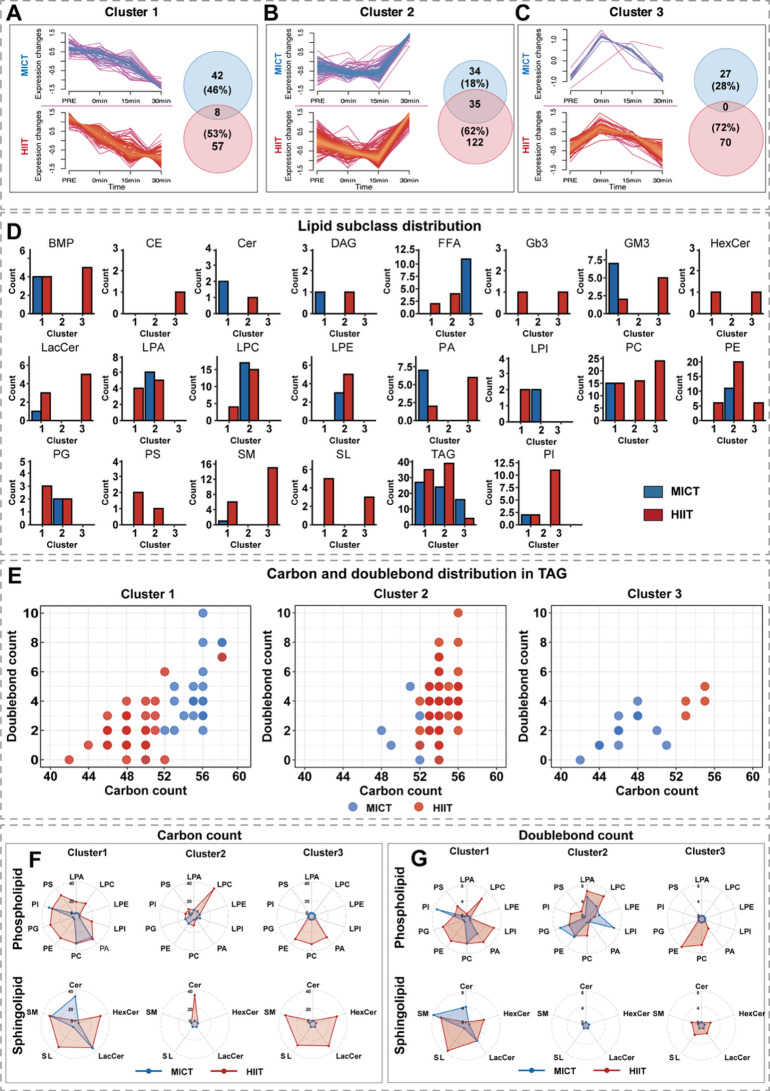 Figure 4
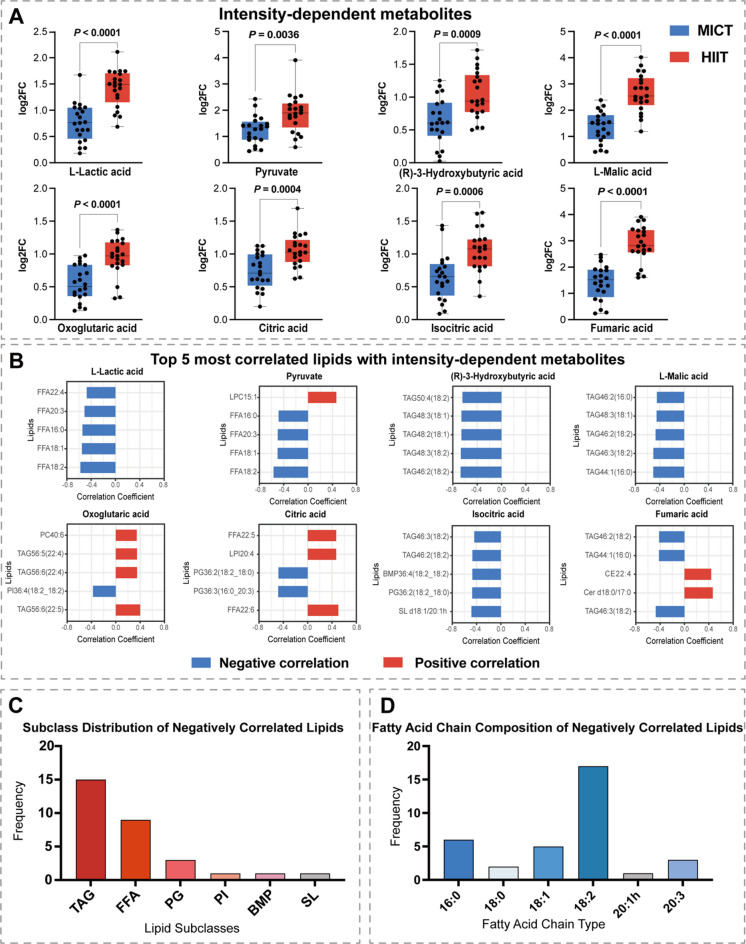 Figure 5
Peer Reviews
No public reviews on file for this paper yet. If you reviewed it on a platform where reviews are public (OpenReview, ICLR, NeurIPS, ICML), you can paste yours below so the community can read it here.
Videos
No videos yet. Explain this paper in a talk, walkthrough, or lecture? Add one.
Taxonomy
TopicsMetabolomics and Mass Spectrometry Studies · Exercise and Physiological Responses · Fatty Acid Research and Health