Integrative bioinformatics and molecular analysis revealed the roles of mTOR/S6K Axis, CASC15, and miR-30a-3p in laryngeal squamous cell carcinoma
Najmeh parvaz, Payam Mohammadi, Maryam Lotfi, Mohammad Elahimanesh, Mohammad Reza Hajizadeh, Masoomeh Bakhshandeh, Mohammad Shabani, Mohammad Najafi

TL;DR
This study identifies key genes and RNA molecules involved in laryngeal cancer progression, suggesting potential targets for treatment.
Contribution
The study reveals the mTOR/S6K axis, CASC15, and miR-30a-3p as novel molecular players in laryngeal squamous cell carcinoma.
Findings
mTOR and S6K genes are significantly upregulated in laryngeal cancer tissues.
miR-30a-3p is downregulated and inversely correlated with mTOR and S6K.
CASC15 is upregulated and positively correlated with mTOR and S6K.
Abstract
Dysregulation of signaling pathways contributes substantially to the initiation and progression of laryngeal squamous cell carcinoma (LSCC). This study aimed to elucidate the mTOR and S6 kinase (S6K) gene expression levels, clinical significance, interplay of the mTOR/ S6K axis, miR-30a-3p, and the long non-coding RNA CASC15 in LSCC using bioinformatics tools. RNA-seq datasets (TCGA and GEO) were analyzed through bioinformatics and network-based tools to identify candidate pathways, miRNAs, and lncRNAs using R and Cytoscape. mTOR, S6K, miR-30a-3p, and CASC15 gene expression levels and mTOR and S6K protein values were measured in paired tumor (n = 54) and adjacent normal tissues (n = 54) using RT-qPCR and western blotting, respectively. Network analysis predicted that the mTOR/S6K regulatory axis is associated with miR-30a-3p and CASC15. The mTOR (p < 0.01), S6K (p < 0.0001), and CASC15…
Genes, proteins, chemicals, diseases, species, mutations and cell lines named across the full text — each resolved to its canonical identifier and authoritative record.
Click any figure to enlarge with its caption.
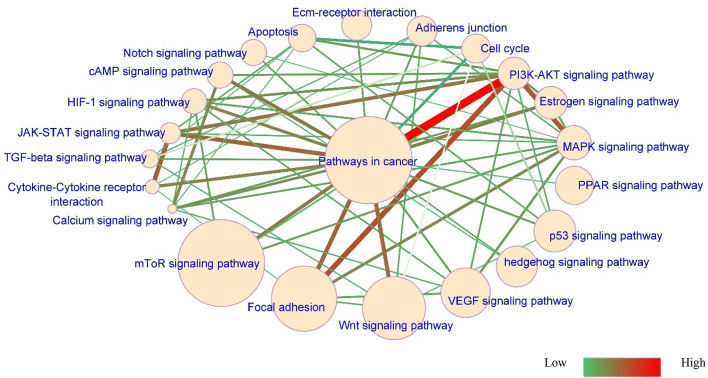 Figure 1
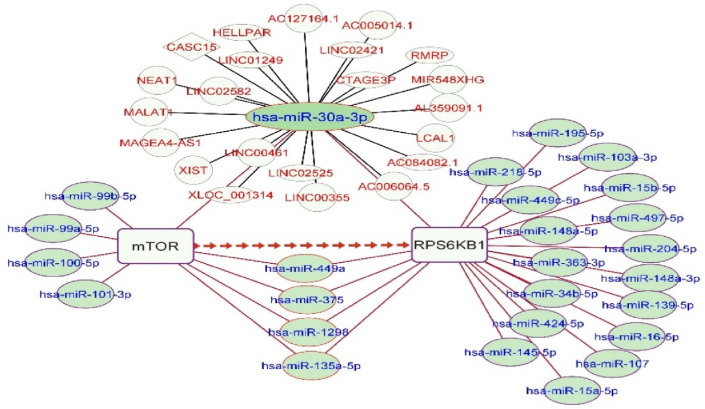 Figure 2
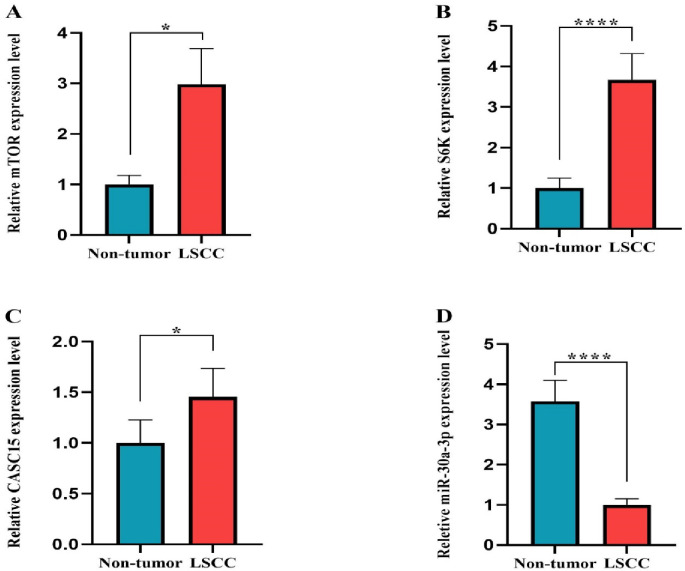 Figure 3
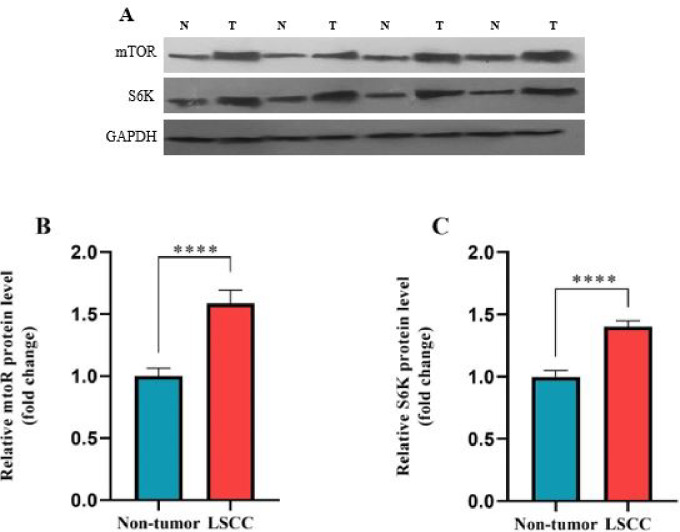 Figure 4
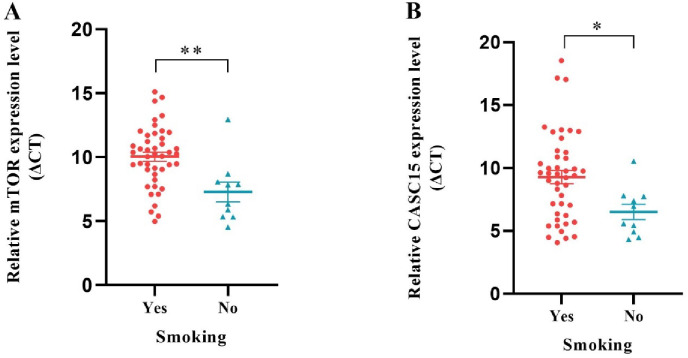 Figure 5
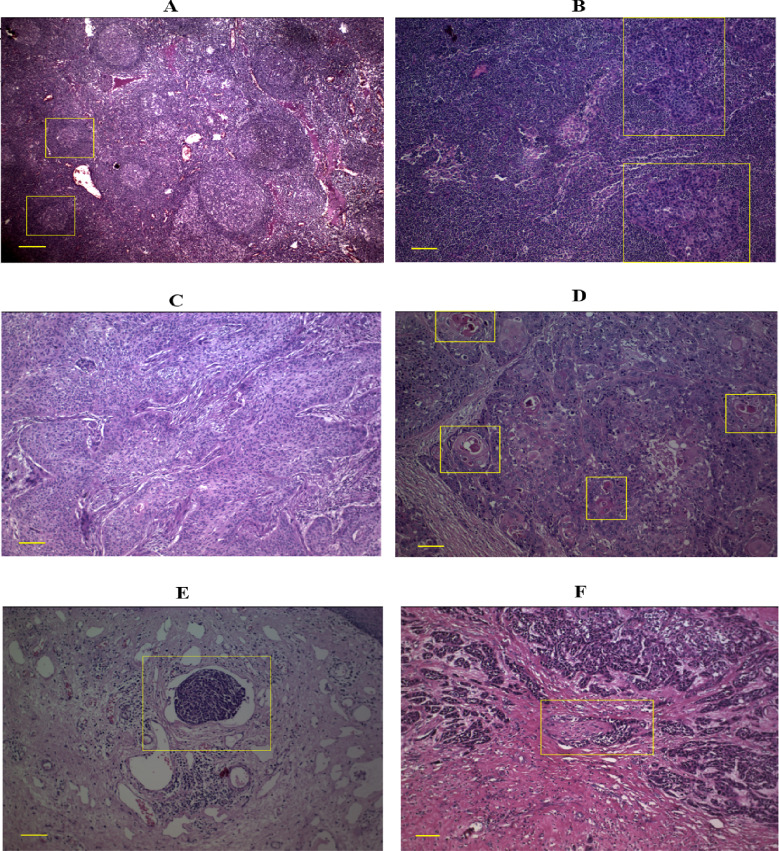 Figure 6
Peer Reviews
No public reviews on file for this paper yet. If you reviewed it on a platform where reviews are public (OpenReview, ICLR, NeurIPS, ICML), you can paste yours below so the community can read it here.
Videos
No videos yet. Explain this paper in a talk, walkthrough, or lecture? Add one.
Taxonomy
TopicsCancer-related molecular mechanisms research · MicroRNA in disease regulation · PI3K/AKT/mTOR signaling in cancer