Quantitative ex vivo assessment of target temperature and ablation duration for protocol optimization of microwave ablation procedures with mr thermometry
Luigi Nardone, Alexander Sheng Ming Tan, Pierre Bour, Matthias Philipp Fabritius, Elif Öcal, Vanessa Franziska Schmidt, Mingming Wu, Laura Maria Bauer, Valéry Ozenne, Jens Ricke, Max Seidensticker, Olaf Dietrich

TL;DR
This study evaluates how target temperature and ablation duration affect MRI thermometry quality during microwave ablation in bovine livers, finding that lower temperatures improve image quality but reduce ablation volume.
Contribution
The study introduces a controlled ex vivo framework to optimize microwave ablation protocols using MR thermometry and identifies temperature-duration combinations that balance image quality and lesion size.
Findings
Lower target temperatures (60°C) with moderate ablation durations (7:30 min) yield the highest MRI thermometry quality.
Ablation areas correlate strongly with macroscopic necrosis, but lesion volumes decrease at lower temperatures.
A staged two-level approach is suggested to balance thermometry quality and ablation volume in clinical workflows.
Abstract
To quantitatively assess the influence of target temperature and ablation duration on the quality of proton resonance frequency shift (PRFS)-based MR thermometry during microwave ablation (MWA) in a controlled ex vivo model, and to identify parameter ranges associated with improved thermometry performance. Thirty-two MWAs were performed in 10 ex vivo bovine livers in a 1.5-tesla MRI system with multi-slice volumetric real-time thermometry yielding temperature and thermal dose maps. The experiments were conducted twice using all combinations of four target temperatures (60; 80; 100; 120 °C) and four ablation times (5:00; 7:30; 10:00; 15:00 min). Thermometry quality was rated on a 5‑point Likert scale. Ablation areas were compared with histopathology (hematoxylin and eosin, H&E; and nicotinamide adenine dinucleotide, NADH‑diaphorase) and correlated using Spearman coefficients. Likert…
Genes, proteins, chemicals, diseases, species, mutations and cell lines named across the full text — each resolved to its canonical identifier and authoritative record.
Click any figure to enlarge with its caption.
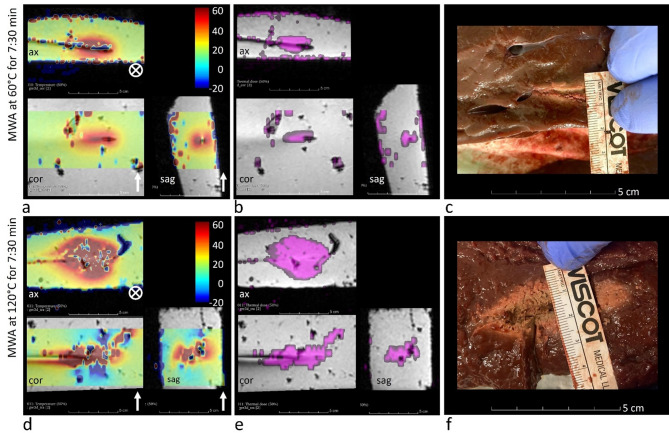 Figure 1
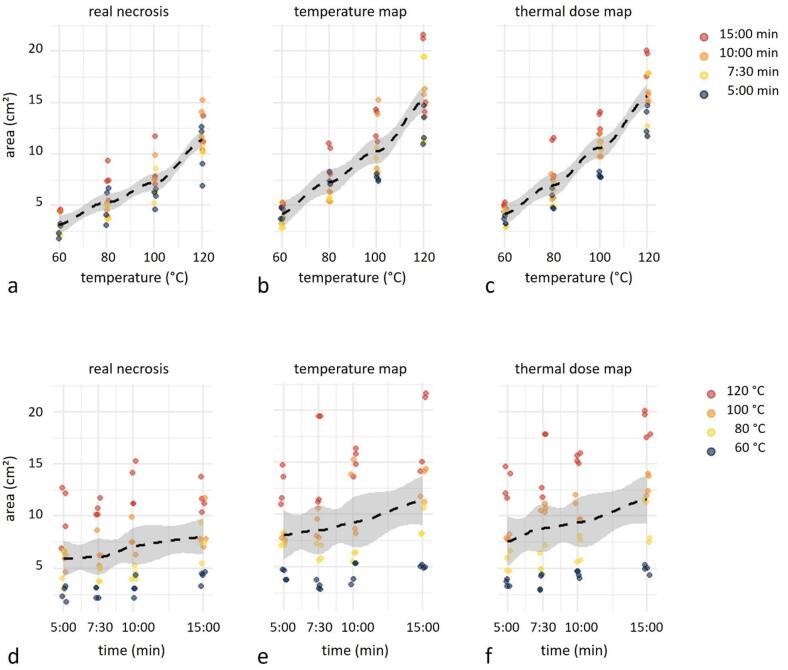 Figure 2
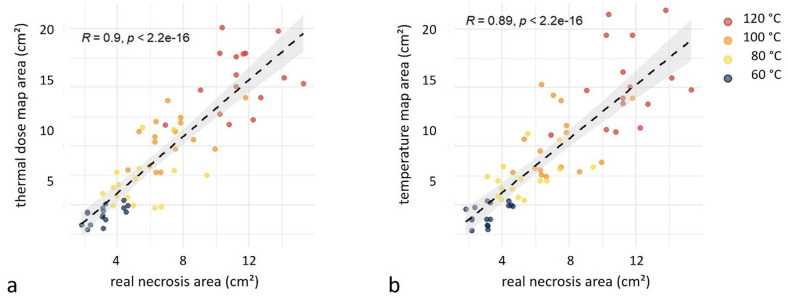 Figure 3
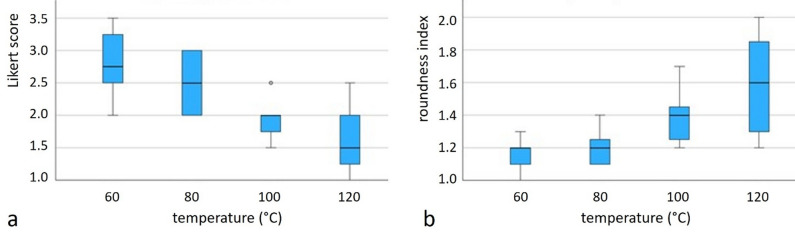 Figure 4
Peer Reviews
No public reviews on file for this paper yet. If you reviewed it on a platform where reviews are public (OpenReview, ICLR, NeurIPS, ICML), you can paste yours below so the community can read it here.
Videos
No videos yet. Explain this paper in a talk, walkthrough, or lecture? Add one.
Taxonomy
TopicsHepatocellular Carcinoma Treatment and Prognosis · Ultrasound and Hyperthermia Applications · Advanced MRI Techniques and Applications