The role of Clostridium butyricum and its metabolites in modulating gut mucosal immunity: implications for viral infections and inflammatory diseases
Shaoju Qian, Siyu Li, Keyan Ye, Shuao Lu, Xiaoming Sha, Danqiong Zhang, Zhishan Xu, Xiangfeng Song, Ruixue Li

TL;DR
This review explores how Clostridium butyricum and its metabolites boost gut immunity, offering potential treatments for viral and inflammatory diseases.
Contribution
The paper introduces a new 'gut-centric hypothesis' linking probiotic action to antiviral immunity through C. butyricum.
Findings
C. butyricum enhances mucosal immunity via short-chain fatty acids and interferon induction.
The bacterium modulates inflammasome signaling and regulatory immune populations.
It shows therapeutic promise for viral infections and inflammatory conditions.
Abstract
With global viral emergence and increasing antiviral resistance, there is an urgent need for innovative immunomodulatory strategies. Gut microbiota modulation has gained attention as a promising therapeutic approach. Clostridium butyricum (C. butyricum) plays a pivotal role in shaping microbial composition, preserving intestinal barrier integrity, and enhancing mucosal immunity. Its major metabolites, short-chain fatty acids (SCFAs), further strengthen mucosal defenses and exert antiviral and anti-inflammatory effects. This review proposes a unified “gut-centric hypothesis” that intestinal barrier integrity, microbial homeostasis, and mucosal immune balance collectively determine the host’s resilience to viral invasion and inflammation. The collective findings delineate a mechanistic axis whereby C. butyricum orchestrates antiviral and anti-inflammatory immunity through the induction of…
Genes, proteins, chemicals, diseases, species, mutations and cell lines named across the full text — each resolved to its canonical identifier and authoritative record.
Click any figure to enlarge with its caption.
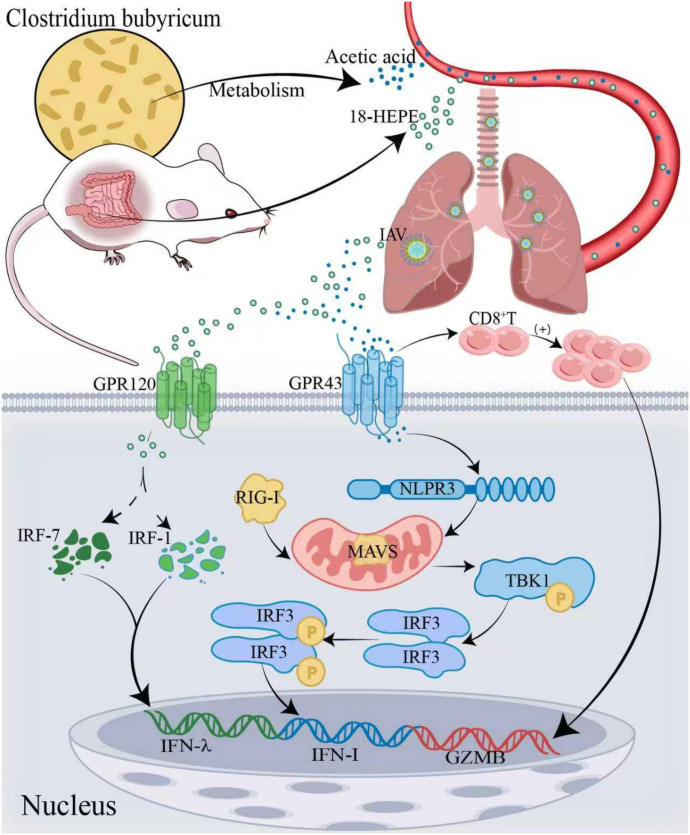 Figure 1
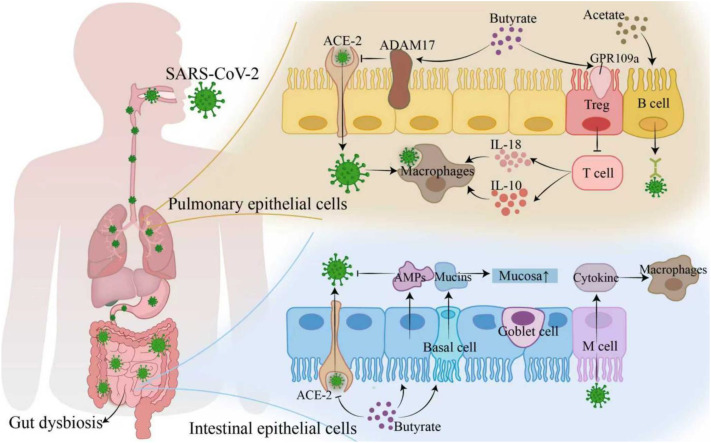 Figure 2
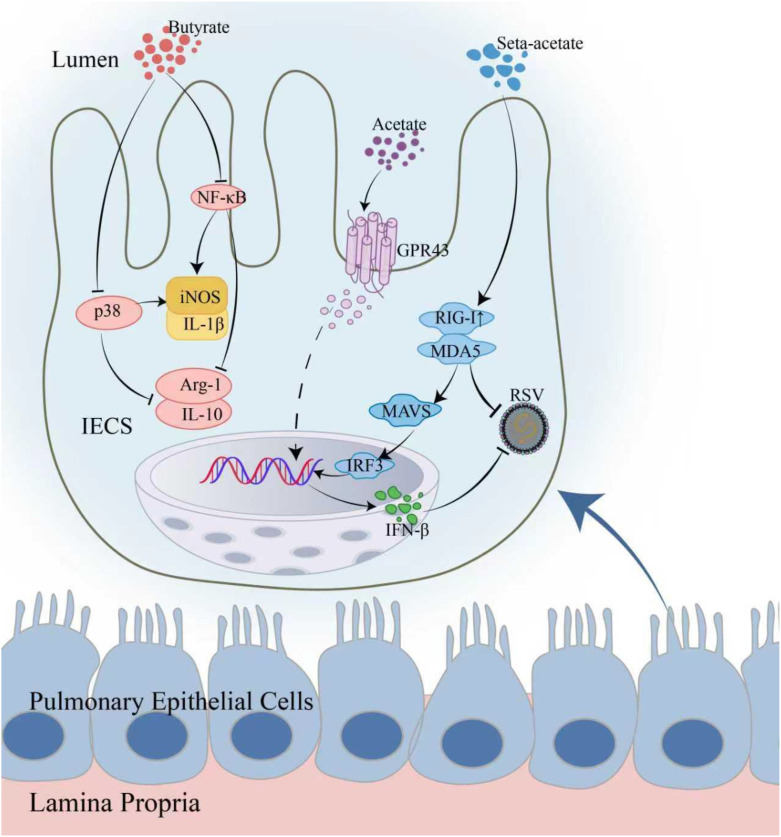 Figure 3
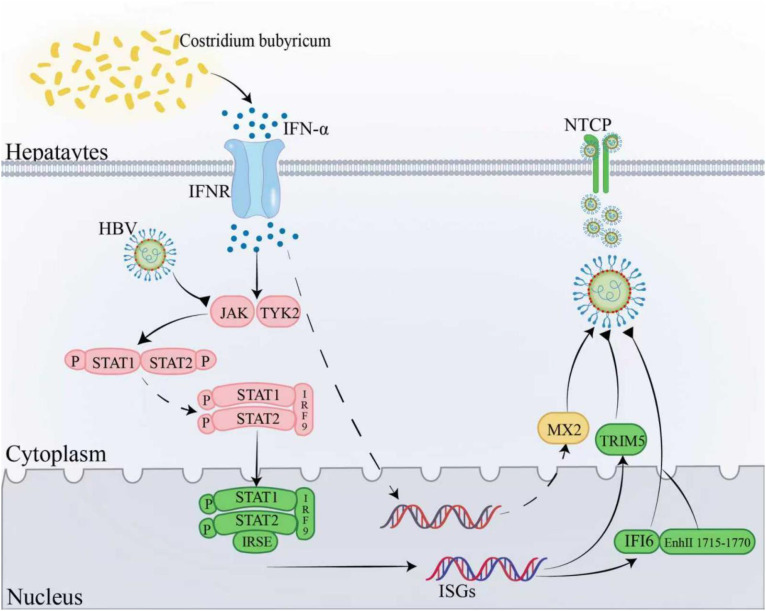 Figure 4
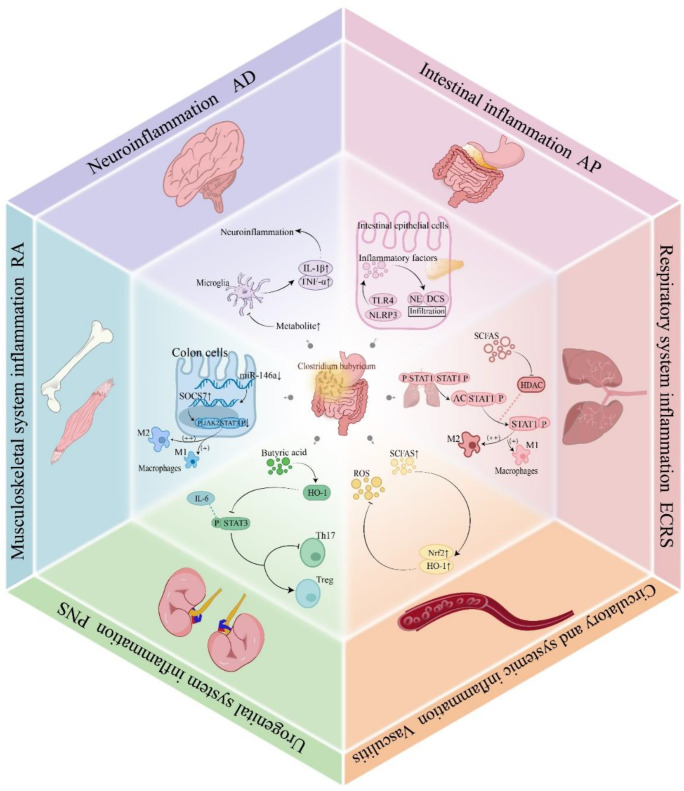 Figure 5
| Probiotics, prebiotics, and SCFAs | Experimental subjects | Dosage of probiotics, prebiotics, and SCFAs | Virus type | Results | Reference |
|---|---|---|---|---|---|
|
| Mice | 500 mg/kg/day | Influenza virus | Mice supplemented with | ( |
| Acetate, Propionate, and Butyrate | 1-day-old SPF Chickens | Sodium acetate (80 mM), Sodium propionate (10 mM), and Sodium butyrate (20 mM) | Fowl adenovirus-4 (FAdV-4) | Chickens supplemented with SCFAs showed significantly higher survival rates during acute viral infection compared to the control group. Additionally, the number of activated T cells and MHC II-expressing monocytes increased. | ( |
| Butyrate | Mice | Sodium butyrate (200 mg/kg) | Bovine viral diarrhea virus (BVDV) | Butyrate treatment significantly reduced BVDV RNA levels in the duodenum, jejunum, spleen, and liver while significantly increasing the expression of ZO-1 mRNA and protein induced by BVDV. | ( |
|
| Gilthead seabream (~5 g average weight) | 1 × 10⁴ cfu/g added to the diet and 1 × 10⁶ cfu/L added to water | Carp herpesvirus (CaHV) | The experimental group with | ( |
| Acetate, Propionate, and Butyrate | Pigs | 500 μM acetate, propionate, and butyrate | Porcine Epidemic Diarrhea Virus (PEDV) | The supplementation with SCFAs significantly reduced viral load and upregulated the expression of IFN and ISGs. | ( |
|
| Mice | 1 × 10⁸ CFU/mL, 200 μL/day | Respiratory Syncytial Virus (RSV) | The | ( |
| High-fiber diet + Acetate, Propionate, or Butyrate (one of them) | Mice | Final concentration 200 mM in drinking water | Respiratory Syncytial Virus (RSV) | The group supplemented with SCFAs had significantly lower viral loads and lung inflammation compared to the control group, with increased IFN-β levels. | ( |
| Sodium butyrate (SB), Sodium propionate (SPr), and Sodium acetate (SAc) | Horses | 0.5 or 5 mM SB, SPr, and SAc | Equine Herpesvirus 1(EHV1) | The group supplemented with short-chain fatty acids showed reduced innate immune responses in the upper respiratory tract post-EHV1 infection and decreased adhesion of blood-derived monocytes and T lymphocytes to horse endothelial cells. | ( |
| Butyrate | Mice | 20 mmol/L sodium butyrate | Human papillomavirus (HPV) | HPV16E6/E7 immortalized keratinocytes treated with butyrate had significantly extended survival times and improved cell differentiation compared to the control | ( |
| Inulin (dietary fiber) | Mice | 30% inulin supplementation | Influenza virus | The group supplemented with inulin showed reduced respiratory inflammation, vascular damage, and subsequent hemorrhage, with activated CD8 T-cells enhancing antiviral immunity compared to the control group. | ( |
| Sodium butyrate, Sodium propionate, Sodium acetate mixture | Mice | 67.5 mM Sodium butyrate (Sigma 303410), 40 mM Sodium acetate (Sigma S2889), and 25.9 mM Sodium propionate (Sigma P1880) | SARS-CoV-2 | The mixture of butyrate, propionate, and acetate significantly reduced the expression of ACE2 in the gut and lungs and inhibited nasal infections. Additionally, it improved coagulopathy associated with SARS-CoV-2. | ( |
| Probiotic, prebiotic, and SCFA types | Experimental subjects | Dosage of probiotic, prebiotic, and SCFAs | Type of inflammation | Results | Reference |
|---|---|---|---|---|---|
| Butyrate | Mice infected with | Butyrate (80–140 mM) | Colitis | Mice supplemented with butyrate showed a significant increase in body weight compared to the control group, a reduction in intestinal epithelial cell proliferation, and an increase in the expression of the Muc2 gene in the gut. | ( |
| Synbiotic containing | Mice | 10 CFU of Butyrivibrio fibrisolvens and 70 mg/kg COSs daily | Inflammatory Bowel Disease (IBD) | The experimental group showed significantly enhanced colon length, reduced inflammatory markers, and increased expression of tight junction proteins compared to the control group. Additionally, it reduced ROS levels and increased SCFA levels. | ( |
|
| Mice | 200 μL Butyrivibrio fibrisolvens for 6 weeks | Primary Nephrotic Syndrome (PNS) | The treatment group showed improvements in weight loss, a decrease in 24-hour urinary protein levels, and correction of renal dysfunction in PNS mice. | ( |
|
| Mice | Supplemented with 108 CFU/mL of Butyrivibrio fibrisolvens for 20 days | Colitis | Compared to the control group, the experimental group showed a significant reduction in inflammatory responses. IL-6 and IL-1β mRNA expressions were significantly elevated, while MUC2 expression was reduced. The cell composition was also altered, with a decrease in macrophages, dendritic cells (DCs), and mast cells. | ( |
|
| Mice | 1 × 10⁷ CFU/200 μL PBS once daily for 7 days | Endometritis | After administration, there was a significant reduction in erythema induced by | ( |
| Clostridium butyric acid live bacterial capsules | NAFLD patients | 400 mg Butyrivibrio fibrisolvens live capsule orally three times daily in addition to oral Rosuvastatin for 6 months | Hepatitis | The combined treatment group showed significant reductions in total cholesterol (TC), triglycerides (TG), free fatty acids (FFA), total bilirubin (TBIL), and direct bilirubin (DBIL). | ( |
|
| Mice | 200 μL CB suspension every other day for 60 days | Vasculitis | Compared to the control group, the treatment group showed a significant increase in butyrate levels in blood vessels, a reduction in ROS levels, and an increase in Nrf2 and HO-1 levels. | ( |
|
| Mice | 9.6 × 10⁸ CFU/kg/day | Pancreatitis | Compared to the control group, | ( |
| Sodium Butyrate | Mice | 500 mg/kg/day via oral gavage | Rheumatoid Arthritis (RA) | Compared to the control group, the intervention group showed significantly higher levels of butyrate in the blood and altered macrophage polarization, with a reduction in M1 phenotype and an increase in M2 macrophages. | ( |
|
| Mice | 0.2 mL daily by oral gavage | Allergic Airway Inflammation | The treatment group showed a significant reduction in airway inflammatory cell abundance and eosinophil recruitment, improving autophagy in lung cells of allergic mice. | ( |
Peer Reviews
No public reviews on file for this paper yet. If you reviewed it on a platform where reviews are public (OpenReview, ICLR, NeurIPS, ICML), you can paste yours below so the community can read it here.
Videos
No videos yet. Explain this paper in a talk, walkthrough, or lecture? Add one.
Taxonomy
TopicsGut microbiota and health · Probiotics and Fermented Foods · Clostridium difficile and Clostridium perfringens research
Introduction
1
Clostridium butyricum, an anaerobic bacterium that produces butyrate and forms spores, is vital for gut health. Prazmowski first isolated it from the intestinal tract of pigs in 1880 due to its unique metabolic properties (1). C. butyricum produces short-chain fatty acids (SCFAs) via the butyrate kinase (buk) pathway, which are primary metabolites formed by the bacterial fermentation of dietary fiber in the gut (1, 2). These metabolites protect intestinal health and promote bile acid metabolism, influencing the host’s health status (3). As a key probiotic, C. butyricum is widely used in Japan, South Korea, China, and other regions. It plays a crucial role in balancing gut microbiota, enhancing immunity, and preventing gut-related diseases (1).
Recent interest has grown in the potential of C. butyricum and SCFAs in combating viruses and alleviating inflammation. The gut, as the body’s largest immune organ, maintains mucosal immune homeostasis, defends against external threats, and oversees self-surveillance. C. butyricum modulates the activity of mucosal immune cells and inflammatory factors, alleviating inflammatory responses and enhancing defense against viral infections. It strengthens the body’s ability to defend against pathogens and fosters immune tolerance. Additionally, C. butyricum directly combats viral infections by inhibiting viral invasion and replication. SCFAs primarily exert effects through gene and protein regulation, suppressing histone deacetylases to modulate virus-related gene expression and enhance interferon production. By activating G-protein-coupled receptors, they refine the functions of intestinal dendritic cells, macrophages, and other immune cells, amplifying both antiviral and anti-inflammatory responses, thus playing a pivotal role in mucosal immunity.
This review proposes the “gut-centric hypothesis”, highlighting the role of C. butyricum in regulating gut immunity. C. butyricum is a promising drug target that enhances intestinal barrier function and modulates type I/III interferon responses, providing strategies against emerging viruses. Its dual activity in antiviral and anti-inflammatory responses underscores its potential in clinical treatments. This research offers a new perspective for foundational studies in mucosal immunology and has broad applications in developing interventions for mucosal immunity, addressing viral infections, and treating inflammatory diseases.
While C. butyricum’s role in gut immunity has been noted, several areas require further exploration. This review addresses critical gaps: the mechanisms of C. butyricum in gut mucosal immunity, its specific applications in viral infections and inflammatory diseases, and its potential as an antiviral and anti-inflammatory therapeutic bacterium.
Antiviral functions and inflammation alleviation of C. butyricum and its key metabolites
2
C. butyricum is known for its production of SCFAs and its ability to adjust host immune and metabolic functions. This review explores how C. butyricum and its SCFAs induce intestinal mucosal immunity in antiviral defense and alleviate inflammation, focusing on their effects on gut microbiota, barrier function, immune regulation, inflammatory signaling pathways, and antiviral responses.
C. butyricum and its key metabolites regulate gut microbiome
2.1
As a probiotic, C. butyricum’s primary function is to regulate intestinal health. It modulates intestinal mucosal immunity by influencing gut microbiota and enhancing its defensive function. It promotes the growth of beneficial bacteria, especially those with high butyryl-CoA gene content, and inhibits pathogenic species proliferation (4). SCFAs lower the pH in the intestinal lumen, inhibit harmful bacteria proliferation, and optimize microbiome structure (4). The increase in Lactobacillus and Bifidobacterium was observed in mouse models supplemented with C. butyricum, further validating their role in regulating the gut ecosystem. C. butyricum regulates bile acid levels to inhibit the proliferation and cytotoxin production of Clostridioides difficile. It also competes with Helicobacter pylori for adhesion sites on gastric epithelial cells, effectively suppressing its growth (5, 6). Furthermore, C. butyricum significantly inhibits multiple pathogenic bacteria, including Staphylococcus aureus, Vibrio cholerae, Shigella flexneri, and Salmonella spp, by secreting antimicrobial peptides (7–10). It also prevents infections caused by enterohemorrhagic Escherichia coli (7).
On a molecular level, C. butyricum modulated gut microbiota structure by inhibiting Wnt/β-catenin pathways (9). This resulted in two primary outcomes: inhibition of pathogenic bacteria and bile acid-metabolizing strains, and increased proliferation of SCFA-producing microbial communities.
C. butyricum and its key metabolites modulate the intestinal barrier
2.2
The intestinal barrier is essential for mucosal immunity. When the barrier is compromised, bacteria and toxins can enter the bloodstream, triggering autoimmune and inflammatory responses. C. butyricum and its metabolites enhance intestinal barrier function, preventing pathogens from penetrating the intestinal epithelium and strengthening mucosal immune defense. Butyric acid, the primary energy source for intestinal epithelial cells, promotes metabolism and repair, enhances stress tolerance, and stabilizes barrier function (1). SCFAs upregulated tight junction proteins such as ZO-1, occludin, and cadherin by inducing local hypoxia and activating hypoxia-inducible factor, reinforcing intercellular junctions (11, 12). Additionally, SCFAs improved the transmembrane resistance of epithelial cells by activating the AMPK pathway and reducing apoptosis via the PI3K/Akt signaling pathway (13). Butyrate also stimulated mucin secretion in goblet cells and activate the MAPK pathway, contributing to improved infection resistance (14).
Gut-immune axis: C. butyricum and its key metabolites regulate immune cell differentiation and function
2.3
The gut-immune axis connects gut microbiota, the intestinal immune system, and systemic immune responses. C. butyricum influences the intestinal mucosal immune response against viruses and inflammation by modulating T cells, B cells, and dendritic cells function and differentiation. It promotes regulatory T cells differentiation, and modulates T and B cell function. Administration of C. butyricum in mouse models significantly enhanced Treg differentiation and abundance. SCFAs promoted Treg differentiation and stimulated IL-22 production by CD4^+^T cells via G protein-coupled receptor 41 and HDAC function, boosting immune modulation (15, 16). These findings indicate that SCFAs contribute to anti-infection immunity by influencing T-cell differentiation. SCFAs also directly modulated T-cell differentiation and participated in cell-specific immunity. Butyrate did not inhibit FoxP3^+^ T cells but impeded the proliferation of CD4^+^ T cells, likely due to its immunomodulatory specificity or ability to regulate genes associated with lymphocyte differentiation (17). Additionally, butyrate enhanced immunomodulation by combining GPR43-induced granzyme B (GZMB) (18).
C. butyricum significantly impacts B-cell maturation. SCFAs promote metabolic pathways, including acetyl-coenzyme A biosynthesis, oxidative phosphorylation, glycolysis, and fatty acid biosynthesis (19). As an HDAC inhibitor, SCFAs upregulate the genes related to B-cell differentiation, such as Aicda and Prdm1, thereby supporting B-cell differentiation and maturation (19). This reduces circulating IgE levels, alleviating allergic reactions while supporting antibody production and adaptive immune responses (20). SCFAs also regulate the intestinal mucosal immune response by modulating the differentiation, maturation, and activation of various immune cells, including dendritic cells, macrophages, and T cells, through the TLR2 pathway. By inhibiting HDAC activity, SCFAs induce the production of B10 cells with anti-inflammatory functions. These mechanisms are crucial for maintaining intestinal mucosal immune homeostasis and combating inflammation.
C. butyricum and its key metabolites modulate inflammation-related pathways
2.4
Inflammatory factors play a critical role in intestinal mucosal immunity. C. butyricum modulates the intestinal immune response by regulating inflammatory factor expression, preventing excessive inflammation, and protecting the gut from pathogen invasion. C. butyricum and SCFAs regulate inflammatory factors through the NF-κB and TLR4 signaling pathways. The inflammatory process is key in the onset and progression of many pathological conditions. Activating TLR4 enhances anti-inflammatory cytokines generation, such as IL-10, while inhibiting pro-inflammatory mediators like IL-1β and IL-6. C. butyricum facilitates retinol metabolism, increasing retinoic acid levels to further alleviate inflammatory responses (21). By promoting prostaglandin E2 (PGE2) synthesis and inhibiting matrix metalloproteinase-9 (MMP-9) expression, SCFAs improve infection-induced immunopathological states (22). Inhibiting mast cell degranulation also alleviates respiratory inflammation and reduces tissue damage.
SCFAs significantly decrease the release of pro-inflammatory chemokines, including CCL3, CCL4, CCL5, CXCL9, CXCL10, and CXCL11, impairing immune cell migration to inflammation sites. Butyrate reduces LPS-induced pro-inflammatory cytokine expression by inhibiting key TLR4 pathway molecules, such as TRAF6, TRAF3, and IRF3 (23–26). Butyric acid also reduces NF-κB activation by downregulating TRAF6, further inhibiting pro-inflammatory cytokines transcription.
C. butyricum and its key metabolites interact with viruses and inflammatory processes
2.5
The mucosal immune system combats pathogens entering the body. C. butyricum and its metabolites activate intestinal mucosal immune responses, enhancing the gut’s defense against viruses while modulating inflammation. C. butyricum promotes interferon production, activates the NF-κB pathway to inhibit inflammatory signaling molecules, and replicates various RNA and DNA viruses (27, 28). Furthermore, C. butyricum’s antiviral and anti-inflammatory effects depend on the key components within its metabolites—SCFAs. These limit viral spread by regulating JAK and IRF pathways and inhibiting endothelial cell adhesion molecule expression, thereby enhancing host immune defense (29, 30). They also modulate intestinal immune cells to inhibit inflammation and maintain host immune homeostasis.
Antiviral mechanisms of C. butyricum and its key metabolites
3
Influenza virus
3.1
Influenza viruses are classified into four types based on nucleoproteins and matrix proteins: A, B, C, and D (31). The subtypes of Influenza A that primarily infect humans are H1N1 and H_3_N_2_, while the lineages of Influenza B viruses are Victoria and Yamagata. Recently, C. butyricum has gained attention as an agent against influenza viruses.
Oral administration of C. butyricum alleviated inflammation caused by the influenza virus in a murine model, potentially due to FFAR3 and fatty acid β-oxidation pathway stimulation that enhances CD8^+^ T cells activity (32). C. butyricum can directly modulate intestinal mucosal immunity, enhancing the antiviral activity of CD8^+^T cells by binding to GPR43 and inducing Acetyl-CoA production (33). These processes increase oxidative phosphorylation, glycolysis, and other metabolic functions. Interferons play a central role in the intestinal mucosal immune response. C. butyricum upregulates IFN-λ production by inducing the ω-3 fatty acid 18-hydroxy eicosapentaenoic acid (18-HEPE), which activates G protein-coupled receptor 120(GPR120) and interferon regulatory factors (IRF-1 and IRF-7) (34, 35). IFN-λ interacts with the IFNLR1 on the cell surface to activate the JAK-STAT pathway, initiating antiviral gene expression. The proteins encoded by these genes inhibit viral replication and prevent viral assembly and release. Additionally, IFN-λ inhibits macrophage infection and enhances the host immune response (36). The Acetate-GPR43-NLRP3-MAVS-IFN-I pathway was proposed as a potential target for treating respiratory viral infections (37). (Figure 1) Acetate salts can also elevate IFN-β levels, enhancing antiviral capabilities (38). The inhibitory effect of butyrate on the influenza virus was confirmed by a positive correlation between butyrate levels and lymphocyte ratio, as well as MxA(GPR120) expression, and negatively with viral load (39). Acetate also reduced influenza viral load by enhancing anti-inflammatory mediators.
Mechanisms of C. butyricum against the influenza virus. Oral administration of C. butyricum in mice induces the production of ω-3 fatty acid 18-hydroxy eicosapentaenoic acid (18-HEPE), which activates GPR120 and IRF-1/-7, promoting the production of IFN-λ in lung epithelial cells and enhancing the ability to combat influenza. The metabolite acetate binds to GPR43, promoting CD8+ T cell generation and stimulating GZMB secretion. Through binding with the GPR43 receptor and in the presence of NLRP3, acetate enhances the virus RNA-triggered MAVS aggregation, promoting IRF3 activation and IFN-I production, thereby inhibiting the influenza virus spread.18-HEPE: 18-hydroxy-eicosapentaenoic acid; GPR120, G protein-coupled receptor 120; IRF-1/-7, Interferon regulatory factors 1/-7; IFN-λ, Interferon-λ; GPR43, G protein-coupled receptor 43; CD8+ T cells, CD8+ T lymphocytes; GZMB, Granzyme B; NLRP3, NOD-like receptor family pyrin domain-containing protein 3; MAVS, Mitochondrial antiviral-signaling protein; IRF3, Interferon regulatory factor 3; IFN-I, Type I interferons.
SARS-CoV-2
3.2
SARS-CoV-2, a respiratory virus, also impacts the gastrointestinal tract. The metabolites of C. butyricum are crucial in combating SARS-CoV-2 infection. SARS-CoV-2 infection causes a leaky gut and systemic inflammation. Butyrate, an energy source for intestinal epithelial cells, restores intestinal barrier integrity by promoting tight junction proteins like Claudin-1 and Occludin. It enhances intestinal barrier function and boosts immune defense against viruses by promoting Mucin and antimicrobial peptide secretion from goblet cells (40). Clinical research confirms that calcium butyrate improves gut microbiota dysbiosis in SARS-CoV-2 patients, reduces secondary infections, and decreases virus-induced respiratory damage (41).
SARS-CoV-2 infections often involve a cytokine storm, releasing large amounts of pro-inflammatory cytokines and causing systemic inflammation (42). Butyrate impeded the release of pro-inflammatory cytokines by binding to the G protein-coupled receptor 109a(GPR109a), activating regulatory Tregs and inhibiting overactive T cell responses (16, 40, 43), thus regulating intestinal mucosal immunity and alleviating systemic inflammation.
It also activates M2-type macrophages, increasing the anti-inflammatory factor IL-10 and decreasing pro-inflammatory factor IL-6 levels. Additionally, propionate inhibits the overactivation of pro-inflammatory signaling pathways and HDAC activity, attenuating the cytokine-mediated systemic inflammatory response.
Butyrate and acetate inhibit viral replication and enhance host immunity through various mechanisms. Butyrate hinders SARS-CoV-2 binding to the angiotensin-converting enzyme 2 (ACE2) receptor by upregulating Adam17, which prevents the virus from entering host cells (43, 44), thereby enhancing the defensive function of the intestinal immune system. Besides, butyrate directly inhibited SARS-CoV-2 replication by downregulating HMGB1 expression (43). Additionally, it also upregulated the intracellular expression of IRF7 and interferon receptor through calmodulin phosphatase-binding protein-1 and the TLR signaling pathway, enhancing host resistance to the virus (45, 46). Acetate stimulated B cells to produce specific antibodies against SARS-CoV-2, further inhibiting virus transmission (Figure 2).
Mechanisms of C. butyricum-derived butyrate against SARS-CoV-2. In lung epithelial cells, butyrate upregulates t Adam17, inhibiting SARS-CoV-2 binding to the ACE-2 receptor and preventing viral entry. It also regulates Treg cells via the GPR109a receptor, suppressing excessive T-cell activation and reducing inflammatory factors IL-10 and IL-18. In intestinal epithelial cells, butyrate promotes mucus (Mucins) and antimicrobial peptides (AMPs) secretion by goblet cells, protecting the intestinal barrier. Adam17, A disintegrin and metalloproteinase 17; ACE-2, Angiotensin-converting enzyme 2; GPR109a, G protein-coupled receptor 109a; Treg, Regulatory T cells; IL-10, Interleukin-10; IL-18, Interleukin-18; Mucins, Mucins; AMPs, Antimicrobial peptides.
Human immunodeficiency virus
3.3
HIV is a global public health concern due to its immunoinhibition and destruction of CD4^+^T cells. Although antiretroviral therapy(ART) can inhibit viral load effectively, complete eradication of HIV remains challenging. C. butyricum has gained attention for its ability to modulate intestinal immunity and inflammatory response.
C. butyricum inhibits microbial translocation due to HIV infection by reducing harmful bacteria. It replenished lost CD4^+^ T cells after HIV infection, which enhanced intestinal immune function (47). SCFAs, which are the key metabolites, also play an important role in immune response. Specifically, propionate mitigated HIV-induced immune system destruction through Th1 and Th17 cell inhibition and facilitates regulatory Treg development, preserving immune homeostasis and reducing chronic inflammation. Acetate reduced inflammation by inhibiting neutrophil migration (48). Additionally, C. butyricum induces the production of type I interferon and increases the expression of antiviral proteins. For example, APOBEC family proteins and bone marrow stromal antigen 2 (BST-2) proteins inhibited HIV replication through gene mutation and inhibiting viral release. Type I interferon not only counteracted the HIV-mediated immune escape response but also enhanced the antiviral response of plasmacytoid dendritic cells (PDCs). This improves the immune response in HIV-infected patients.
However*, C. butyricum* also exerts a detrimental effect on HIV. Butyrate may accelerate the progression of HIV infection by inhibiting HDAC activity and promoting HIV-1 gene expression. Furthermore, acetate significantly decreased the release of α-defensin, an active anti-HIV molecule, in older women, weakening the immune system’s ability. Thus, the influence of C. butyricum on HIV is dual: it modulates intestinal immunity and induces interferon production, while potentially promoting viral progression under certain conditions.
Herpes simplex virus type 2
3.4
Herpes Simplex Virus Type 2 is a common pathogen that causes recurring diseases. As a beneficial gut bacterium, C. butyricum improves the skin and mucosa’s microenvironment, enhancing barrier integrity and immune function and protecting against viral invasion. It hampers HSV-2 replication in vitro. Lactic acid, a metabolite of C. butyricum, inhibits the envelope fusion glycoproteins of HSV-2 by altering environmental pH, thus preventing the virus’s entry and spread (49). It also strengthens the body’s ability to combat viral infections by releasing IFNs and pro-inflammatory cytokines (50). Additionally, C. butyricum regulates immune cell proportions by promoting regulatory Treg generation and reducing Th1 and Th17 activation, which inhibits HSV-2 spread and reduces tissue damage caused by infection (27).
Respiratory syncytial virus
3.5
RSV is a seasonal virus that severely affects children under two years of age, leading to viral bronchiolitis. C. butyricum helps combat the virus through various mechanisms. It protects the gut barrier by reducing dysbiosis and improving gut function disrupted by RSV infection, thus indirectly alleviating lung inflammation. It reduced the severity of lung inflammation and decreased tissue damage by modulating the gut-lung axis. Studies showed that the risk of RSV infection is significantly reduced in allogeneic hematopoietic cell transplant recipients (allo-HCT) with higher levels of butyrate-producing bacteria (51). In animal experiments, butyrate enhanced anti-inflammatory and repair capabilities by reducing inflammatory cell infiltration in the lungs and promoting macrophage polarization toward the M2 phenotype (52). Acetate downregulated pro-inflammatory factors iNOS and IL-1β, and upregulated anti-inflammatory factors Arg-1 and IL-10. Propionate induces type-I interferon-β production and up-regulates antiviral ISGs by GPR43, thereby inhibiting RSV replication and spread. Acetate activated the GPR43 receptor to promote IFN-β production and strengthen host antiviral defenses in lung epithelial cells (53). It also enhanced host recognition of RSV RNA by upregulating RIG-I expression, inhibiting viral replication, and decreasing viral load (54) (Figure 3).
Mechanisms of C. butyricum metabolites against RSV infection. In lung epithelial cells, butyrate inhibits the NF-κB and p38 signaling pathways, downregulating pro-inflammatory factors iNOS and IL-1β, while upregulating the expression of anti-inflammatory factors Arg-1 and IL-10, effectively alleviating inflammation induced by RSV infection. Acetate activates the GPR43 receptor, inducing the production of IFN-β and enhancing the host’s antiviral capability. Additionally, acetate can directly inhibit viral replication by upregulating the expression of RIG-I, and by triggering MAVS aggregation, it induces the production of interferons to exert antiviral effects.NF-κB, Nuclear factor kappa B; p38, p38 signaling pathway; iNOS, Inducible nitric oxide synthase; IL-1β, Interleukin-1β; Arg-1, Arginase-1; IL-10, Interleukin-10; GPR43, G protein-coupled receptor 43; IFN-β, Interferon-β; RIG-I, Retinoic acid-inducible gene I protein; MAVS, Mitochondrial antiviral-signaling protein; IRF3, Interferon regulatory factor 3.
Hepatitis B virus
3.6
Approximately 296 million people are infected with HBV, a major cause of liver cirrhosis and hepatocellular carcinoma. Probiotic therapy has been recognized as an adjunctive therapy to treat liver diseases related to HBV, due to its effects on regulating gut flora and improving liver function. Recent studies show that C. butyricum can enhance liver function and alleviate symptoms in HBV-induced cirrhosis (55).
Sodium butyrate reduced LPS entry into the bloodstream and inhibited the TLR4-mediated increase in intestinal epithelial permeability, which preserved intestinal barrier integrity (56). Simultaneously, C. butyricum alleviated chronic liver inflammation and immune dysregulation caused by HBV infection by regulating inflammatory factors. Additionally, it induced the production of type I interferons, activating the expression of ISGs and the antiviral protein TRIM5 (57). After binding to its receptor, type I interferons activate the JAK/STAT signaling pathway, which in turn activates the IFI6 gene (58). The activated IFI6 can downregulate HBV gene expression and inhibit its replication. HBV infection is known to generate excessive superoxide radicals in host cells, leading to oxidative stress. However, extracellular polysaccharides of C. butyricum possess strong antioxidant properties, protecting DNA from damage (59). It is important to note that interferon-induced MX2 and IFIT3 promote HBV replication in some cases (60) (Figure 4). Current research is insufficient and lacks clinical trials; further investigation into the specific mechanisms of C. butyricum in HBV infection and its clinical efficacy is needed.
Mechanisms of C. butyricum against HBV infection. C. butyricum stimulates IFN-α production upon binding to its receptor and activates the JAK/STAT signaling pathway. This will trigger a cascade of events that induces the expression of ISGs and the synthesis of the antiviral protein TRIM5. Furthermore, C. butyricum can activate the IFI6 gene, which interacts with the EnhII/Cp promoter region (nt1715-1770), inhibiting HBV replication. However, under certain circumstances, interferon-induced MX2 may paradoxically facilitate HBV replication. IFN-α, Interferon-alpha; JAK/STAT pathway, Janus kinase/signal transducer and activator of transcription pathway; ISGs, Interferon-stimulated genes; TRIM5, Tripartite motif-containing protein 5; IFI6, Interferon-induced protein 6; EnhII/Cp promoter, Enhancer II/core promoter; MX2, Myxovirus resistance protein 2.
Other viruses
3.7
Previous sections discussed the antiviral activities of C. butyricum against specific viruses. It also exhibits antiviral activities against other viruses. The following discussion presents the antiviral activities of C. butyricum against additional viral infections, focusing on immune regulation and viral replication inhibition.
Sodium butyrate activates the GPR109a receptor and regulates the PERK-eIF2α signaling pathway, inhibiting ERS-mediated apoptosis (61). This mechanism is crucial in RV infection, protecting cells from virus-induced apoptosis and providing potential intervention points for RV prevention and control. C. butyricum modulates interferon-related factors to inhibit BVDV replication (62). It also inhibited PEDV replication through the NF-κB pathway, induced interferon production and downstream ISGs, thereby enhancing antiviral potency (63). Apart from that, C. butyricum inhibited the replication of NDV efficiently in vitro (27). C. butyricum’s antiviral action also involves immune regulation. SCFAs that C. butyricum produces activate the gut-liver axis immune pathway to regulate CD8 T-cell expression and enhance the host’s immune response against FAdV-4 (64). They also caused T lymphocytes and monocytes to adhere to endothelial cells to increase the immunological defenses of the body against EHV-1 (29). During the primary stage of CAHV infection, C. butyricum induced a strong immune response, enhancing Longfin tuna survival rates (29). Clinical studies demonstrated that C. butyricum significantly reduces the risk of lower respiratory tract viral infections in patients undergoing allo-HCT (51). C. butyricum, its key metabolic product SCFAs, and prebiotics exert distinct effects on various viruses in animal experiments. However, clinical trials are still lacking to confirm these findings in humans (Table 1).
Alleviating inflammatory diseases: mechanisms of C. butyricum and its metabolites
4
Digestive system inflammatory diseases
4.1
Inflammatory bowel disease (IBD) involves inflammatory lesions in the rectum and colon. C. butyricum helps alleviate colitis. Mice treated with C. butyricum showed reduced inflammatory cell infiltration and less damage to the mucus layer in the colon compared to the control group. It also significantly decreased intestinal pathogens like Shigella and Escherichia coli (68). High concentrations of butyrate (80–140 mM) reduced epithelial cell proliferation in colitis mice and enhanced tissue repair (69). Additionally, C. butyricum inhibited TLR2 signaling and IL-17 secretion, improving the local mucosal immune response and providing protection against intestinal inflammation.
C. butyricum shows potential therapeutic benefits of in liver inflammation, particularly in hepatitis and steatohepatitis. Gut-liver immune modulation has emerged as a promising approach in probiotic therapy for liver diseases. In a mouse model of steatohepatitis, the treatment with C. butyricum resulted in a significant reduction in inflammatory responses (70). The levels of inflammatory factors decreased significantly, while the butyrate content in the gut increased markedly. This result was confirmed in clinical trials with NAFLD patients (71). Additionally, C. butyricum alleviates gut microbiota imbalance in NAFLD patients, reduces blood lipid levels, alleviates liver fibrosis, and mitigates liver function damage.
Acute pancreatitis (AP) is a common abdominal inflammatory disease. In mouse models, C. butyricumcan prevent AP, possibly by inhibiting neutrophil and dendritic cell infiltration in the pancreas. It also inhibits the TLR4 signaling pathway and the formation of the NLRP3 inflammasome (72). Gut microbiota analysis in mice confirmed C. butyricum’s beneficial effects on gut-pancreas axis homeostasis, showing a significant reduction in Desulfovibrionaceae and increased abundances of Verrucomicrobiaceae, Clostridiaceae, and Lactobacillaceae.
Respiratory system inflammatory diseases
4.2
Upper respiratory tract inflammation, exemplified by eosinophil-dominated chronic sinusitis, is characterized by as type 2 inflammation with an increase in eosinophils, as well as elevated production of type 2 cytokines such as IL-5 and IL-13. Butyrate inhibits the production of type 2 cytokines in nasal polyp-derived cells (73). This may be achieved by inhibiting IL-6 and TNF-α production, leading to macrophage polarization toward the M2 type. In the future, C. butyricum may serve as a potential therapeutic target for ECRS.
For lower respiratory tract inflammation, such as allergic bronchitis, and pneumonia. C. butyricum treatment significantly alleviates allergic airway inflammation and mucus secretion in allergic mice (74). Among the administration routes, aerosol delivery is the most effective, potentially enhancing T cell differentiation and inhibiting NLRP3 inflammasome signaling pathways.
Urogenital system inflammatory diseases
4.3
Chronic endometritis is linked to an imbalance in the female reproductive tract microbiota and pathogenic infections. Staphylococcus aureus is a common pathogen, and C. butyricum can inhibit its growth, thereby reducing tissue damage and inflammatory responses (75). Primary nephrotic syndrome (PNS) is a prevalent glomerular disease in children. The C. butyricum treatment group showed significant improvements in body weight and inflammatory responses. Butyrate, a metabolite of C. butyricum, is crucial for Treg cell differentiation. The balance between Th17 and Tregs is key in managing PNS-induced inflammation, suggesting that C. butyricum may mitigate the immune-inflammatory response in PNS by regulating the Th17/Tregs balance (76).
Musculoskeletal system inflammatory diseases
4.4
Rheumatoid arthritis, osteoarthritis, and gouty arthritis are common forms of arthritis characterized by bone destruction and joint degeneration. In mouse models, C. butyricum alleviated RA, potentially by producing butyrate to reduce IL-17-producing cells or by inhibiting HDAC2 in osteoclasts and HDAC8 in T cells, thus decreasing bone destruction (77, 78). C. butyricum reduced ACLT-induced bone destruction and loss (79). Additionally, it can inhibit the production of IL-1β, TNF-α, and cartilage-degrading matrix metalloproteinase-3 (MMP-3), blocking cartilage degradation, which may help in OA prevention and treatment. We observed that macrophage polarization levels correlated with the severity of gout (80). C. butyricum regulates macrophage polarization to counteract gouty arthritis by inhibiting miR-146a expression.
Circulatory and systemic inflammatory diseases
4.5
Vasculitis is a group of autoimmune diseases characterized by inflammation and necrosis of blood vessel walls. In a diabetic mouse model, supplementation with C. butyricum increases the level of its metabolite butyrate, activates the Nrf2 signaling pathway, and upregulates the HO-1 pathway, thereby reducing oxidative stress and alleviating HG-induced vascular inflammation (81). In studies of sepsis, C. butyricum stimulates intestinal epithelial cell proliferation and improves intestinal tissue damage. Intravenous administration of butyrate markedly reduces HMGB1 mRNA levels in rat tissues, alleviating the inflammatory response and protecting septic organs.
Neuroinflammatory diseases
4.6
Experimental autoimmune encephalomyelitis (EAE) is a chronic central nervous system autoimmune disease. Administration of C. butyricum significantly reduced neuropathological inflammation in the lumbar spinal cord. Compared to the control group, lymphocyte infiltration and myelin damage were both reduced (82). Furthermore, the incidence of physical disability was significantly lower in the C. butyricum treatment group (83). Similarly, in an Alzheimer’s disease (AD) mouse model, treatment with C. butyricum inhibited the phosphorylation of NF-κB p65 in Aβ-induced BV2 microglial cells, thus alleviating microglia-mediated neuroinflammation (Figure 5). C. butyricum produces distinct effects in different models of inflammatory diseases (Table 2).
Mechanisms of C. butyricum in inflammatory diseases. C. butyricum colonizes the intestine and produces short-chain fatty acids that inhibit phosphorylation of the STAT1 signaling pathway, activate the Nrf2/HO-1 antioxidant pathway, downregulating the expression of miR-146a, prohibiting the overactivation of microglia, reducing inflammatory cell infiltration, and promoting M2 polarization of macrophages. These mechanisms provide regulatory effects on inflammatory diseases across six major systems, including the respiratory, circulatory, urogenital, musculoskeletal, neural, and digestive. STAT1, Signal Transducer and Activator of Transcription 1; Nrf2, Nuclear factor erythroid 2-related factor 2; HO-1, Heme oxygenase-1; miR-146a, MicroRNA-146a; IFN-α, Interferon-alpha.
Discussion
5
C. butyricum has significant potential in combating viruses and inflammation by regulating intestinal mucosal immunity. It induces interferon production, inhibits viral invasion and replication, and regulates inflammatory factors, demonstrating a powerful anti-infective effect. These mechanisms suggest that C. butyricum influences systemic immune responses through gut microbiota modulation, supporting the gut-immune axis and highlighting the gut’s role in overall health and disease.
We propose the “gut-centric hypothesis,” suggesting that the integrity of the intestinal barrier, gut microbiota balance, and optimal mucosal immune status are key components in the body’s response to viral invasion and inflammation mitigation. This serves as the basis for targeting probiotics in treating viral and inflammatory infections via the gut.
The antiviral impacts of C. butyricum and SCFAs depend on viral type and environmental conditions. For instance, butyrate modulates the immune response to HIV but can also increase HIV-1 and BZLF1 gene expression, activate latent viruses, and accelerate disease progression by inhibiting HDAC activity (86). Additionally, SCFAs inhibit the CXCR2 receptor, preventing CD4^+^T cell accumulation at infection sites and weakening host immunity (87, 88). High concentrations of SCFAs impair neutrophil responses to HIV by reducing the secretion of antimicrobial peptides, α-defensins, and chemokines, delaying the release of neutrophil extracellular traps (NETs) (48).
SCFAs have a dual role in regulating inflammation. They reduce the production of monocyte chemoattractant protein-1 (MCP-1) and LPS-induced IL-10 in human monocytes without affecting other cytokine and chemokine secretion, exerting an anti-inflammatory effect (89, 90). Conversely, they activate the NLRP3 inflammasome, promoting a pro-inflammatory response in inflammatory contexts. This dual effect may relate to differences in cell types and pathological environments (91).
Not all C. butyricum species are beneficial bacteria. Pathogenic C. butyricum strains include those producing botulinum neurotoxin E (BoNT/E), associated with infant botulism and adult intestinal botulism, and the minority strain MIYAIRI 588, which causes bacteremia in patients, a phenomenon potentially linked to genomic mutations (92–94).Some C. butyricum strains are associated with neonatal necrotizing enterocolitis (CB1002) (95).
Conclusions and future perspectives
6
This review highlights the potential applications of C. butyricum and its metabolites in fighting viruses and reducing inflammation. C. butyricum induces interferon production and significantly inhibits viral invasion and inflammation, showing promise as a clinical probiotic for enhancing intestinal immunity against infections.
There is substantial evidence supporting the use of C. butyricum in treating viral infections and inflammation; however, its mechanisms of action and role in modulating the gut-immune axis need further investigation. Probiotic therapy can restore a healthy mucosal immune status in the gut, facilitating effective responses to viral invasion and inflammation. Future research should focus on large-scale clinical trials to evaluate the efficacy and safety of C. butyricum in various viral infections, particularly gut and respiratory infections. Additionally, further investigation into the regulatory mechanisms of C. butyricum on the host immune system is necessary, especially regarding how different doses and ratios impact the intestinal barrier and immune status. Exploring combinations of C. butyricum with existing antiviral and anti-inflammatory drugs may optimize treatment strategies.
Currently, the application of C. butyricum faces several challenges, such as limited viral specificity and a y narrow antimicrobial spectrum. Clinical dosing is difficult to control, and it should be inactivated when used in combination with antibiotics. Efficacy varies among individuals, storage conditions are demanding, it is prone to inactivation at room temperature, and large-scale clinical trials are lacking. However, these limitations present opportunities for future research. By exploring these areas, we can advance the clinical application of C. butyricum in antiviral therapy and enhance our understanding of its regulatory mechanisms in intestinal immunity, supporting the development of effective and safe probiotic therapies for viral prevention and inflammation modulation.
The reference list from the paper itself. Each links out to its DOI / PubMed record.
- 1Stoeva MK Garcia-So J Justice N Myers J Tyagi S Nemchek M . Butyrate-producing human gut symbiont, Clostridium butyricum, and its role in health and disease. Gut Microbes. (2021) 13:1–28. doi: 10.1080/19490976.2021.1907272, PMID: 33874858 PMC 8078720 · doi ↗ · pubmed ↗
- 2Zhang D Jian YP Zhang YN Li Y Gu LT Sun HH . Short-chain fatty acids in diseases. Cell Commun Signal. (2023) 21:212. doi: 10.1186/s 12964-023-01219-9, PMID: 37596634 PMC 10436623 · doi ↗ · pubmed ↗
- 3Yang Q Zaongo SD Zhu L Yan J Yang J Ouyang J . The potential of clostridium butyricum to preserve gut health, and to mitigate non-AIDS comorbidities in people living with HIV. Probiotics Antimicrob Proteins. (2024) 16:1465–82. doi: 10.1007/s 12602-024-10227-1, PMID: 38336953 · doi ↗ · pubmed ↗
- 4Miao RX Zhu XX Wan CM Wang ZL Wen Y Li YY . Effect of Clostridium butyricum supplementation on the development of intestinal flora and the immune system of neonatal mice. Exp Ther Med. (2018) 15:1081–6. doi: 10.3892/etm.2017.5461, PMID: 29434698 PMC 5772968 · doi ↗ · pubmed ↗
- 5Erawijantari PP Mizutani S Shiroma H Shiba S Nakajima T Sakamoto T . Influence of gastrectomy for gastric cancer treatment on faecal microbiome and metabolome profiles. Gut. (2020) 69:1404–15. doi: 10.1136/gutjnl-2019-319188, PMID: 31953253 PMC 7398469 · doi ↗ · pubmed ↗
- 6Takahashi M Taguchi H Yamaguchi H Osaki T Kamiya S . Studies of the effect of Clostridium butyricum on Helicobacter pylori in several test models including gnotobiotic mice. J Med Microbiol. (2000) 49:635–42. doi: 10.1099/0022-1317-49-7-635, PMID: 10882089 · doi ↗ · pubmed ↗
- 7Ma M Zhao Z Liang Q Shen H Zhao Z Chen Z . Overexpression of p EGF improved the gut protective function of Clostridium butyricum partly through STAT 3 signal pathway. Appl Microbiol Biotechnol. (2021) 105:5973–91. doi: 10.1007/s 00253-021-11472-y, PMID: 34396488 · doi ↗ · pubmed ↗
- 8Zhao X Yang J Ju Z Wu J Wang L Lin H . Clostridium butyricum Ameliorates Salmonella Enteritis Induced Inflammation by Enhancing and Improving Immunity of the Intestinal Epithelial Barrier at the Intestinal Mucosal Level. Front Microbiol. (2020) 11:3389/fmicb.2020.00299. doi: 10.3389/fmicb.2020.00299, PMID: 32180765 PMC 7059641 · doi ↗ · pubmed ↗