Implementation of active therapeutic hypothermia across a regional transport network for infants transferred for neonatal encephalopathy
Aarti Mistry, Nora Imolya, Jack Fletcher, Dharmapuri Sobithadevi, Davina Sham, Benjamin James Baucells, Julia Edwards, Arthi Lakshmanan, Andrew Currie, Andrew Leslie, Shalini Ojha, Don Sharkey

TL;DR
This study shows that using active cooling during transport and at referring hospitals helps infants with brain injury reach the right temperature faster and improves outcomes.
Contribution
The study demonstrates that implementing active therapeutic hypothermia in transport and referring centers improves temperature management for infants with HIE.
Findings
Active cooling during transport reduced time to reach target temperature by 73 minutes compared to passive cooling.
Initiating active cooling at referring centers further reduced time to target temperature by 89 minutes.
More infants achieved target temperature within 6 hours with active cooling, and fewer were overcooled.
Abstract
The aim of this study was to evaluate the introduction of servo-controlled therapeutic hypothermia (TH) by a regional transport service and referring centres for infants with hypoxic ischaemic encephalopathy (HIE). The primary objective was to compare the time to reach 33–34 °C target temperature (TT). This is a retrospective cohort study of neonatal transfers for TH across a large UK regional network from 2011 to 2021. Three cohorts were identified for comparison, defined by the setting of TH initiation: referring ‘Base’ centre or during ‘Transport’ and by the TH method: passive(Pass) or active(Act). A total of 315 infants were included. The TransportAct (n = 128) cohort achieved TT significantly earlier (280 min) than the TransportPass (n = 155) cohort (353 min, P < 0.001), with 84% vs 46% (OR 6.3, 95% Cl 3.3–11.8, P < 0.0001) achieving this within 6 h of birth. Introduction of…
Genes, proteins, chemicals, diseases, species, mutations and cell lines named across the full text — each resolved to its canonical identifier and authoritative record.
Click any figure to enlarge with its caption.
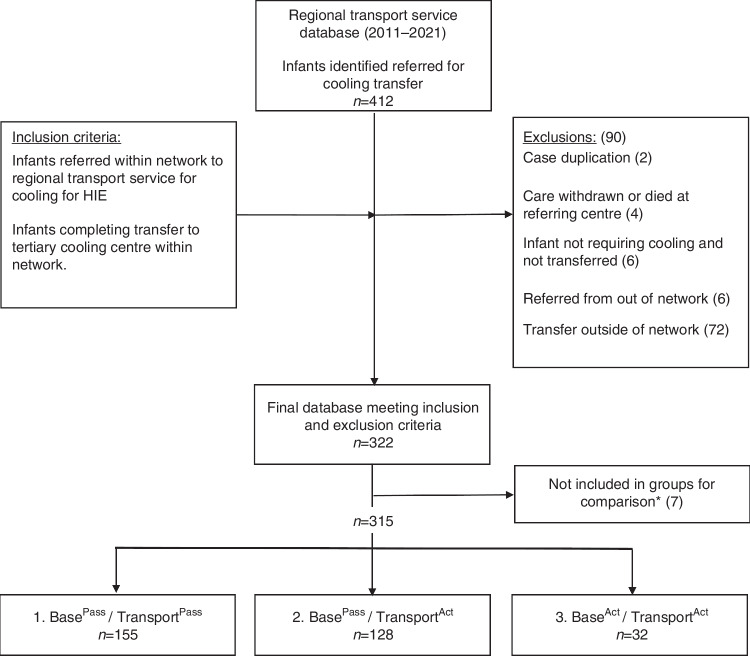 Figure 1
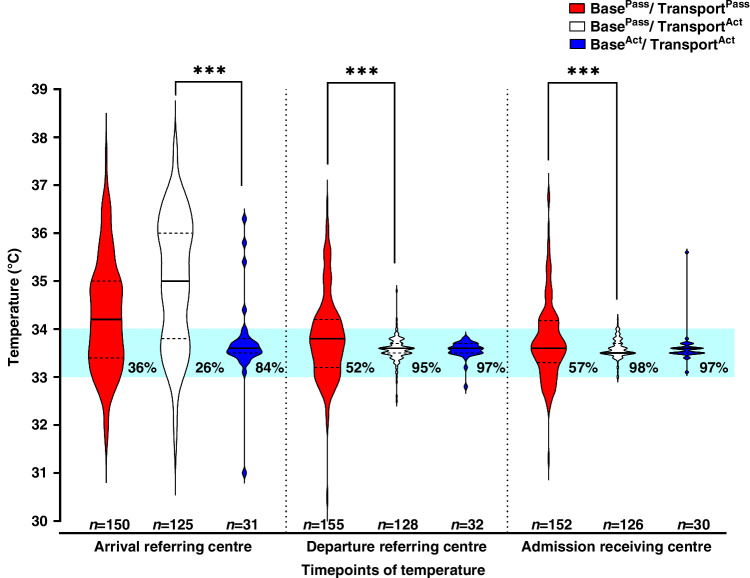 Figure 2
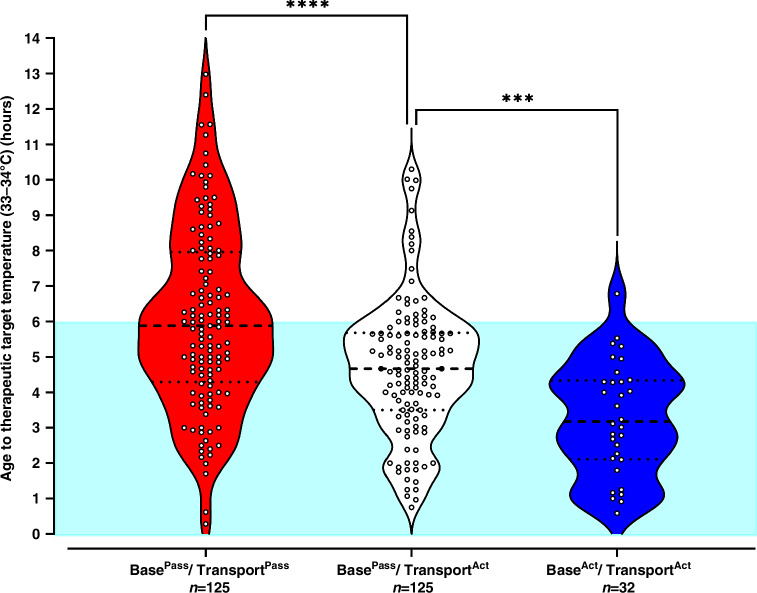 Figure 3
Peer Reviews
No public reviews on file for this paper yet. If you reviewed it on a platform where reviews are public (OpenReview, ICLR, NeurIPS, ICML), you can paste yours below so the community can read it here.
Videos
No videos yet. Explain this paper in a talk, walkthrough, or lecture? Add one.
Taxonomy
TopicsNeonatal and fetal brain pathology · Neonatal Respiratory Health Research · Neuroscience of respiration and sleep
Introduction
Hypoxic ischaemic encephalopathy (HIE) is a major cause of term brain injury globally with an incidence of 1–2/1000 live births.^1^ In the UK, approximately 500 infants per year with HIE require inter-hospital transfer for centralised intensive care with therapeutic hypothermia (TH).^2^ For infants with moderate/severe HIE, TH between 33 and 34 °C improves survival without disability when commenced within 6 h of birth, known as ‘the therapeutic window’.^3,4^
Active TH provided by a servo-controlled device is the optimal method for delivering TH^5^ compared to passive cooling,^6^ where there is a greater risk of overcooling (<33 °C) and potential harm.^7,8^ Servo-controlled TH is usually provided by neonatal intensive care units (NICUs), i.e. tertiary cooling centres, often resulting in passive cooling initially for infants with HIE born in non-cooling centres.
The safety and effectiveness of servo-controlled TH during neonatal transport^9–12^ has resulted in UK transport services adopting its use ahead of other countries.^2,13,14^ Infants with HIE born in non-cooling centres are at greater risk of poorer neurological outcomes compared to inborn infants.^15,16^ Globally, there is significant variability in the pathway of care for these infants, making it challenging for them to receive optimal treatment within 6 h.^13,17,18^ These disparities are a consequence of centralisation of neonatal care, regional variations in access to equipment, healthcare infrastructure, and geographical barriers.^13,18,19^
In the UK, the national HIE framework recommends that all levels of maternity/neonatal units should have access to servo-controlled TH equipment at birth, to enable earlier TH initiation.^20^ However, marked regional variation in the provision of active TH at birth exists.^21^ It is unclear if differences in the provision of active TH affect HIE therapeutic targets, transport metrics and short-term NICU outcomes for infants transferred for HIE. Understanding the impact of transport on infants requiring transfer for HIE and their thermoregulatory management were both identified as top ten neonatal transport research priorities.^22^
Our study aimed to understand how the implementation of servo-controlled TH by a regional transport service and adoption by referring centres affect important TH metrics. The primary objective was to compare the time to reach the 33–34 °C target temperature (TT). Secondary objectives explored the impact on transport process metrics and short-term infant outcomes.
Methods
Population
The Trent Perinatal and Central Neonatal Network (TPCNN) consists of 14 neonatal units; four NICUs (level 3) providing active TH, five Local Neonatal Units (level 2) and five Special Care Baby Units (level 1) (Supplementary File, Fig. 1). The CenTre Neonatal Transport Service provide transfer services across this network, undertaking 1298–1660 transfers per year, of which 2–3.3% are infants with HIE (Supplementary File, Table 1).
CenTre Neonatal Transport Service commenced use of servo-controlled TH devices in 2015; prior to this, infants were passively cooled in line with the procedure used in the TOBY trial.^23^ In 2016 and 2019, two Level 2 units switched from passive cooling to servo-controlled TH devices. The regional transport service and referring centres used the CritiCool servo-controlled TH device with the infant CureWrap (Belmont Medical Technologies, Billerica, Massachusetts). Changes in utilisation of dedicated crews and ambulances over the study period are outlined in Supplementary File, Table 2. Transfers of infants with HIE were considered as time-critical requiring team mobilisation within 60 min from base following referral.^14,24^
Infants referred for cooling transfer from April 2011 to March 2021 were identified from the routinely recorded transport database, and duplicated records were removed. All infants referred within TPCNN to the regional transport service for cooling transfer and completed transfer to a TPCNN cooling centre for ongoing management for HIE were included. The clinical decision to commence cooling was made by the referring centre and reviewed by the transport team on arrival. The referring centres and transport team followed a regional guideline to ensure that the infant met diagnostic criteria defined in the TOBY trial^23^ for initiating TH and for continuing TH treatment for HIE, warranting transfer to a regional cooling centre for ongoing care. The regional TH protocol includes that all infants ≥36 weeks gestation should be discussed for cooling transfer, and infants between 34 and 35 + 6 weeks gestation may be considered for cooling transfer at the discretion of the accepting tertiary cooling centre team.^25^
Infants not completing transfer, as cooling was no longer indicated after transport team assessment or the infant died before transfer, were excluded, along with infants referred from or completing transfer to a cooling centre outside of the TPCNN. Infants were split into one of three cohorts based on the combination of cooling method at their Base hospital (referring centre) and during Transport, with either passive^(Pass)^ or active^(Act)^ TH:
Cohort (1) Base^Pass^/Transport^Pass^ (passive TH by both referring centre and transport);
Cohort (2) Base^Pass^/Transport^Act^ (passive TH by referring centre/active TH by transport);
Cohort (3) Base^Act^/Transport^Act^ (active TH by both referring centre and transport team).
Data collection
The change in access to active TH in the TPCNN resulted in this evaluation to understand the impact on the care pathway for infants with HIE. The service evaluation was registered with the University Hospitals of Leicester clinical audit department. The transport and tertiary team leads agreed to undertake infant data collection and co-developed the data collection proforma. Anonymised data were collected from routinely recorded clinical data in the transport database and local electronic record as detailed in Supplementary File, Table 3.
Infant characteristics included demographics, antenatal, intrapartum and resuscitation details. The primary objective was to establish the time to reach TT and achievement within 6h of age and TT at each stage of the transport pathway. Secondary objectives centred around transport team metrics including mobilisation and stabilisation times. Infant management and short-term outcomes on the NICU were also collected, definitions are outlined in the Supplementary File, Table 3. Standard magnetic resonance imaging (MRI) protocols were used consisting of T1, T2 and diffusion-weighted imaging (DWI) and reported locally by paediatric radiologists.
Statistical analysis
The final database was analysed using Stata SE V18 (StataCorp, College Station, Texas). Data returned as ‘unknown’ or incomplete were classified as ‘missing data’. Statistical significance was calculated using Chi-squared test and odds ratios (ORs) with 95% confidence intervals (Cls). For non-parametric, continuous data, a two-tailed Mann–Whitney test was used to compare medians. Statistical significance was defined as P < 0.05 and all data were unadjusted. Comparisons were made between cohorts 1 and 2 and between cohorts 2 and 3. Missing data were reported as a percentage of the total denominator for all cohorts combined.
Results
A total of 394 infants were referred from within the TPCNN of which 322 were included in the analysis (Fig. 1). Exclusions included 10 infants who did not complete transfer and 72 who were transferred outside of the TPCNN network.Fig. 1. Consort table of inclusion and exclusion criteria.Regional network refers to the infant referred within the Trent Perinatal and Central Neonatal Network. Three groups for comparison defined: (1) Base^Pass^/Transport^Pass^ (passive therapeutic hypothermia (TH) by both the referring centre and Transport team), (2) Base^Pass^/Transport^Act^ (passive TH by referring centre and Active TH by transport team), (3) Base^Act^/Transport^Act^ (active TH by both referring centre and Transport team). *Infants did not meet the definitions of the final predefined groups for comparison.
Of the 322 infants, the median age of referral to the transport service was 131 min (interquartile range (IQR) 88–190). Irrespective of the method of TH, 212 (67.7%) achieved TT within 6 h, and 245 (77.9%) arrived at the cooling centre within TT.
On admission to the cooling centre, 263 (81.9%) completed 72 h of TH. Of the 58 infants who did not complete full TH treatment, 22 died, 30 were considered to have mild HIE and 6 required significant cardiorespiratory support, leading to discontinuation of TH.
For the cohort analyses, seven infants were excluded as they did not fit into the defined groups, leaving 315 infants for comparison (Fig. 1 and Table 1). A total of 283 infants received Base^Pass^ prior to transport, of which 155 received Transport^Pass^ and 128 received Transport^Act^; 32 infants received both Base^Act^ and Transport^Act^. Six infants, two in each comparison group, were 34 + 0–35 + 6 weeks gestational age. The median transfer distances across comparison groups ranged between 34.4 and 52.5 km, with no difference observed between groups (Supplementary File, Table 4).Table 1. Infant characteristics of three cohorts: (1) Base^Pass^/Transport^Pass^, (2) Base^Pass^/Transport^Act^ and (3) Base^Act^/Transport^Act^.Infant characteristics(1) Base^Pass^/Transport^Pass^ n = 155; n (%)(2) Base^Pass^/Transport^Act^ n = 128; n (%)(3) Base^Act^/Transport^Act^ n = 32; n (%)Missing n (%)Median (IQR) gestation (weeks)40 (38, 41)39 (38, 40)40 (37.5, 40)–Median (IQR) birth weight (g)3395 (2835, 3770)3280 (2785, 3680)3360 (3018, 3523)–Sex (female)76 (49.0)56 (43.8)15 (46.9)–Singleton146 (94.2)121 (94.5)31 (96.9)–Referring centre SCBU (Level 1)81 (52.3)60 (46.8)0– LNU (Level 2)67 (43.2)66 (51.6)27 (84.4) NICU (Level 3)7 (4.5)2 (1.6)5 (15.6)Antenatal risk factors IUGR27 (17.4)22 (17.2)5 (15.6)– Large for gestational age19 (12.3)18 (14.1)3 (9.4)– Reduce fetal movements15 (10.6)11 (8.7)4 (12.5)14 (4.4) Preeclampsia/PET10 (6.9)5 (3.9)1 (3.1)11 (3.5) Gestational/IDDM2 (1.4)13 (10.2)5 (15.6)16 (5.1) Antepartum haemorrhage^a^20 (13.3)17 (13.3)4 (12.5)5 (1.6) Maternal infection^b^25 (18.4)12 (9.8)6 (18.8)24 (7.6) PROM30 (20.6)14 (11.3)6 (18.8)13 (4.1)Mode of delivery Normal vaginal delivery41 (26.6)42 (32.8)6 (18.8)1 (0.32) Instrumental34 (22.1)19 (14.8)6 (18.8) EL-LSCS not in labour3 (1.9)5 (3.9)16 (50) EM-LSCS not in labour23 (14.9)21 (16.4)2 (6.3) EM-LSCS in labour53 (34.4)41 (32.0)2 (6.3)Presentation at birth Cephalic133 (88.7)106 (86.9)25 (80.7)12 (3.8) Breech/other17 (11.3)16 (13.1)6 (19.3)Onset of labour None22 (14.3)23 (18.0)4 (12.5)1 (0.32) Spontaneous103 (66.9)73 (57.0)19 (59.4) Induced29 (18.8)32 (25.0)9 (28.1)Intrapartum events Shoulder dystocia9 (6)12 (9.8)3 (9.4)11 (3.5) Cord prolapse4 (2.7)7 (5.7)1 (3.1)12 (3.8) Malposition16 (10.6)10 (8.1)5 (15.6)9 (2.9) Failure to progress20 (13.7)13 (10.7)3 (9.7)17 (5.4) Fetal distress in labour73 (53.3)59 (52.7)14 (45.2)35 (11.1) Fetal bradycardia60 (44.4)57 (51.8)17 (54.8)39 (12.4) Significant meconium55 (36.2)42 (33.6)8 (25)6 (1.9)Resuscitation None6 (3.9)2 (1.6)1 (3.1)– Mask ventilation45 (29)44 (34.4)14 (43.8)– Intubation104 (67.1)82 (64.1)17 (53.1)– Chest compression56 (36.4)44 (34.4)8 (25)1 (0.32) Drugs— adrenaline17 (11)12 (9.4)4 (12.5)1 (0.32) Apgar @ 1 min, Median (IQR)2 (1, 3)2 (1, 4)2 (0, 2)9 (2.9) Apgar @ 5 min5 (3, 6)4 (3, 6)4 (3, 5)9 (2.9) Apgar @ 10 min6 (4, 8)6 (4, 7)6 (4, 7)37 (11.7) Cord venous pH, Median (IQR)7.10 (6.94, 7.22)7.15 (7.02, 7.28)7.11 (6.90, 7.28)51 (16.9)NICU management No respiratory support^c^25 (16.1)20 (15.6)8 (25)– Non-invasive ventilation^d^5 (3.2)02 (6.3)– Mechanical ventilation125 (80.7)108 (84.4)22 (68.5)– Days of ventilation, Median (IQR)3 (2, 5)3 (2, 5)4 (3, 5)– Inotropes57 (36.8)45 (35.2)7 (21.9)– Anticonvulsants54 (35.1)44 (34.4)9 (28.1)1 (0.32)Reported grade of HIE Mild53 (34.4)35 (27.1)14 (43.8)1 (0.32) Moderate65 (42.2)59 (46.1)10 (31.3) Severe36 (23.4)33 (25.8)8 (25) Other diagnosis01 (0.78)0Missing n (%) denominator of n = 315. Definitions of infant variables can be found within the Supplemental File, Table 3.SCBU Special Care Baby Unit (Level 1), LNU Local Neonatal Unit (Level 2), NICU Neonatal Intensive Care Unit (Level 3), IUGR intrauterine growth restriction, PROM prolonged rupture of membrane greater than 18 h, PET preeclampsia toxaemia, EM-LSCS emergency caesarean section, EL-LSCS elective caesarean section, HIE hypoxic ischaemic encephalopathy.^a^Antepartum haemorrhage includes placental issues of praevia or abruption.^b^Maternal infection—chorioamnionitis, UTI, maternal presumed sepsis, maternal pyrexia >38.5 °C.^c^No respiratory support includes nasal cannula oxygen.^d^CPAP and high flow.
Temperature outcomes
Temperature on arrival of the transport team at referring Base^Pass^ centres for Cohorts 1 and 2 were similar with overall 31.3% (86/275) of babies in the TT range (Fig. 2). Compared to the Base^Pass^ infants, significantly more Base^Act^ infants (83.9%, 26/31) were in the TT range when the transport team arrived (OR 11.4, 95% Cl 4.0–32.7, P < 0.001).Fig. 2. Violin plot of infants transferred for cooling and their temperature at transport team arrival and departure from the referring centre and admission to the receiving cooling centre.Percentage of infants in the therapeutic target temperature (TT) range (33–34 °C), which is depicted by the shaded area in blue. ***P < 0.001. Temperature data at each time point were not available for a small number of infants and are reflected in the relevant group numbers.
Implementation of Transport^Act^ resulted in significantly more infants departing the referring centre in the TT range with 95.3% (122/128) of infants vs 51.6% (80/155) with Transport^Pass^ (OR 19.1, 95% Cl 7.0–51.9, P < 0.0001). Fewer Transport^Act^ infants departed overcooled at <33 °C (2.3%, 3/128) compared with Transport^Pass^ (14.2%, 22/155) (OR 0.15, 95% Cl 0.1-0.5, P < 0.001). On arrival at the receiving centre, 98.4% (124/126) of Transport^Act^ infants were in TT on admission to the receiving cooling centre compared with only 57.2% (87/152) of Transport^Pass^ infants (OR 46.3, 95% Cl 9.0–237.9, P < 0.0001).
With the implementation of transport servo-controlled TH, the median age to TT significantly improved from 353 min (IQR 258–478) for Base^Pass^/Transport^Pass^ to 280 min (IQR 210–341) for Base^Pass^/Transport^Act^ infants (P < 0.0001, Fig. 3), resulting in 84.4% (108/128) vs 46.3% (68/147) achieving TT within 6 h of age (Table 2). The introduction of Base^Act^ further reduced the age to TT by 89 min with a median age of 191 min (IQR 127–260, P < 0.001). Of the 32 infants who received Base^Act^/Transport^Act^, 31 (96.9%) achieved TT within 6 h and were significantly more likely to achieve TT within 3 h of birth compared to infants receiving Base^Pass^/Transport^Act^ (Table 2).Fig. 3. Violin plot of age to therapeutic target temperature (TT) of 33–34 °C is reached for cohorts (1) Base^Pass^/Transport^Pass^, (2) Base^Pass^/Transport^Act^ and (3) Base^Act^/Transport^Act^.Blue shaded area depicts the 6-h ‘therapeutic window’ from birth. Mann–Whitney test is used to compare cohorts. ***P < 0.001, ****P < 0.0001. Missing values:32/315(10.2%). One data point graphically not presented in cohort (1) Base^Pass^/Transport^Pass^, Age to TT value of 1339 min.Table 2. Key transport metrics for cohorts.Transport outcomes/metrics(1) Base^Pass^/Transport^Pass^ n = 155(2) Base^Pass^/Transport^Act^ n = 128(3) Base^Act^/Transport^Act^ n = 321 vs 22 vs 3Missing n (%)OR (95% Cl)P valueOR (95% Cl)P valueInfant age (min), median (IQR) At referral129 (73, 195)125 (88, 166)189 (138, 258)–0.86–<0.00013 (1.0) At the departing transport base223 (153, 290)180 (139, 231)243 (222, 369)–<0.01–<0.0001– Arriving at the baby281 (215, 362)250 (200, 306)320 (283, 443)–<0.01–<0.0001– Departure with a baby447 (370, 545)435 (370, 540)505 (406, 590)–0.89–0.04– On admission to the tertiary cooling centre510 (418, 611)498 (419, 616)563 (453, 647)–0.91–0.11–Transfer metrics (min), median (IQR) Mobilisation70 (43, 115)45 (32, 80)59 (40, 134)–<0.001–0.043 (1.0) Response135 (95, 185)115 (95, 151)125 (99, 183)–0.04–0.123 (1.0) Stabilisation145 (105, 200)175 (125, 238)110 (93, 203)–<0.01–<0.01–Target temperature reached, n (%)<3 h of age17 (13.5)24 (19.2)14 (43.8)1.52 (0.77, 3.01)0.223.27 (1.39, 7.69)<0.0132 (10.2)<6 h of age68 (46.3)108 (84.4)31 (96.9)6.27 (3.34, 11.77)<0.00015.74 (0.72, 45.41)0.068 (2.5)Transfer management, n (%) No respiratory support40 (25.8)27 (21.1)15 (46.9)0.77 (0.44, 1.34)0.353.30 (1.43, 7.64)<0.01– Non-invasive ventilation5 (3.2)01 (3.1)–0.04–0.04– Mechanical ventilation113 (72.9)101 (78.9)16 (50)1.39 (0.80, 2.42)0.240.27 (0.11, 0.62)0.001– Inotropes38 (24.5)22 (16.4)3 (9.4)0.60 (0.33, 1.09)0.090.53 (0.15, 1.91)0.32– Nitric oxide6 (3.9)6 (4.7)01.22 (0.38, 3.89)0.73–0.21– Seizure/anticonvulsants^a^68 (44.7)46 (35.4)11 (34.4)0.68 (0.42, 1.10)0.120.95 (0.42, 2.16)0.91–Comparisons between cohorts 1 and 2 and between cohorts 2 and 3 are presented. For categorical and binary outcomes, chi-square and odds ratios (ORs) and 95% confidence intervals (Cls) are presented. For non-parametric continuous data, Mann–Whitney test is used for comparison. Statistical significance is defined as P < 0.05. Missing n (%) based on denominator n = 315. Definitions: mobilisation time is the period from referral to departure from the transport base. Response time is the period from referral to arrival at the referring centre. Stabilisation time is the period from arrival and departure from the referring centre.^a^Includes seizures clinical or electrical or use of anticonvulsants prior to transfer.
Transport process metrics and infant outcomes
Following the introduction of active cooling for transport, teams were quicker mobilising and departing with a 43 min reduction in age to departing base (Table 2). Transport^Act^ transfers had a median increase in stabilisation time of 30 min. Compared with Transport^Pass^, Transport^Act^ resulted in absolute 38.1% increase in the number of infants achieving TT within 6 h of age.
The introduction of Base^Act^ was associated with a significant increase in the median age of referral, with transport teams arriving at the referring centre at a later age, with no significant changes in median mobilisation and response times. Significantly more infants receiving Base^Act^ reached TT within 3 h of age and had a reduction in stabilisation time of 65 min compared with Base^Pass^/Transport^Act^ cohort, although fewer required respiratory support. There were no differences in important short-term NICU infant outcomes across the three cohorts (Table 3).Table 3. Infant outcomes across three cohorts.Infant outcomes(1) Base^Pass^/Transport^Pass^ n = 155(2) Base^Pass^/Transport^Act^ n = 128(3) Base^Act^/Transport^Act^ n = 321 vs 22 vs 3Missing n (%)OR (95% Cl)P valueOR (95% Cl)P valueNICU management, n (%) No respiratory support25 (16.1)20 (15.5)8 (25)0.96 (0.51, 1.83)0.901.80 (0.70, 4.60)0.21– Mechanical ventilation125 (80.7)108 (84.4)22 (68.8)1.29 (0.69, 2.42)0.410.41 (0.17, 1.00)0.04– Days of ventilation^a^, Median (IQR)3 (2, 5)3 (2, 5)4 (3, 5)–0.41–0.68– Inotropes57 (36.8)45 (35.2)7 (21.9)0.93 (0.57, 1.52)0.780.52 (0.21, 1.30)0.15– Completed cooling 72 h121 (78.6)108 (84.4)27 (84.4)1.49 (0.8, 2.75)0.200.99 (0.34, 2.88)0.991 (0.3) Intended to complete cooling136 (88.3)121 (94.5)28 (87.5)2.29 (0.92, 5.7)0.070.4 (0.11, 1.49)0.161 (0.3) Seizures58 (37.4)54 (42.5)9 (28.1)1.22 (0.76, 1.97)0.410.54 (0.23, 1.26)0.15– Anti-convulsant54 (35.1)44 (34.4)9 (28.1)0.97 (0.59, 1.58)0.900.75 (0.32, 1.76)0.501 (0.3) Brain injury on MRI67 (49.3)49 (41.2)17 (58.6)0.72 (0.44, 1.19)0.192.02 (0.88, 4.67)0.096 (2.1)^c^ Day MRI performed, Median (IQR)6 (4, 9)6 (5, 9)5 (4, 5)–0.99–<0.00121 (8.0)^c^Discharge destination, n (%) Died17 (11)12 (9.4)3 (9.4)–0.89–0.86– Home135 (87.1)113 (88.3)29 (90.6) Hospice/other3 (1.9)3 (1.6)0 Length of stay^b^, Median (IQR)9 (7, 12)10 (8, 13)9 (7, 14)–0.22–0.413 (1.1)^d^ Oral feeds at discharge^b^127 (94.1)102 (87.9)26 (89.7)0.45 (0.18, 1.14)0.081.19 (0.32, 4.47)0.793 (1.0)^d^Survival outcomes, n (%) Survival at discharge138 (89)116 (90.6)29 (90.6)1.19 (0.55, 2.59)0.661.00 (0.26, 3.79)1.00– Survival with no brain injury69 (50.7)68 (57.1)12 (41.4)1.3 (0.79, 2.13)0.300.53 (0.23, 1.22)0.136 (2.1)^c^ Survival with no seizures95 (61.3)70 (54.3)22 (68.8)0.76 (0.47, 1.23)0.261.82 (0.79, 4.19)0.15–Comparison made between cohorts 1 and 2 and between cohorts 2 and 3. For categorical and binary outcomes, chi-squared and odds ratios (ORs) and 95% confidence intervals (Cls) are presented. For non-parametric continuous data, Mann–Whitney test was used. Statistical significance is defined as P < 0.05. Missing n (%) based on denominator n = 315.^a^Infants who only received mechanical ventilation.^b^Infants who survived at discharge.^c^Number of MRI scans performed.^d^Number of infants survived at discharge.
Discussion
Across a large regional network, the implementation of servo-controlled active TH by transport teams significantly improves the hypothermic management of infants with HIE, in particular the attainment of TT within 6 h of birth. When this is combined with active TH at the referring centre, there is an even greater improvement in hypothermic management. Importantly, at the point of transfer, there was almost a sevenfold reduction in the number of infants who were overcooled compared to those for whom only passive cooling was available. Overall, active TH at the referring centre and during transport was associated with earlier TH, leading to more infants reaching TT sooner and more than 95% starting the transport journey in the desired target range.
Delivering optimal treatment to infants with HIE born in non-cooling centres and requiring transfer is a global challenge, and understanding the impact of transport on these infants is a research priority.^22^ Servo-controlled TH devices are now used by all UK transport teams^26^ but use is more variable in other developed countries.^13,14,18^ Our study shows active TH during transport is associated with a significant reduction in the age to TT and a greater proportion achieving this within 6 h, bridging the gap for infants previously exposed to prolonged periods of suboptimal passive cooling^6,12^ who were required to await admission to a cooling centre for active TH.^21^ Despite this, we still observe a proportion of infants not reaching TT within 6 h of birth. Transport factors that may contribute to the delay achieving TT include age of referral and availability of a dedicated ambulance and team to enable faster mobilisation and timely arrival to the referring centre.^27^ These elements are important, along with the method of TH being delivered by transport teams. Our data suggest the use of active TH at birth centres may help mitigate some of these factors by reducing the time pressure on transport teams to arrive within the therapeutic window of 6 h, particularly in situations when transport teams may not be available to despatch immediately. Whilst we observed shorter stabilisation times in referral centres with active TH, we cannot say for certain that this relates to this change in practice or if other factors are also involved, as this cohort of infants required less invasive ventilation, which may have reduced turnaround times.
Delivery of active TH in referring hospitals may offer better neuroprotection by enabling earlier initiation of TH, with more infants reaching TT within 3 h of age. Earlier TH within 3 h of birth has been associated with greater neuroprotection, compared with later initiation (3–6 h), with animal studies reporting less neuronal loss,^28–30^ and observational human studies suggesting improved motor development and fewer seizures.^31,32^ Seizures in the context of HIE are associated with poorer outcomes.^33,34^ We did not observe significant differences in the number of infants with seizures or survival without seizures in infants receiving Base^Act^, probably due to the small number of infants in this group.
The UK national HIE framework recommends all maternity/neonatal centres to have immediate access to servo-controlled TH.^20^ A recent study found 39% of UK births lacked this access at their birth centre and so relied on transport teams or cooling centres to initiate TH, with marked variation across regions.^21^ Gradual improvement in access has been observed, driven through quality improvement initiatives such as ‘Time=Brain’^35,36^; however, to standardise care for all infants requires further investment.
We show that access to TH equipment in both settings is an essential part of delivering efficient and optimal thermoregulatory care for infants transferred for HIE. This should be in parallel with education and training to support early identification and referral to transport teams to prompt discussion and guide decision-making. This approach is feasible in the UK, due to the neonatal healthcare and transport infrastructure^2,37^ and with the majority of transfers undertaken by road ambulance with a journey time under 2 h.^17^ For services covering larger geographical regions, with different transport modalities, or in settings with different healthcare infrastructure, limited neonatal expertise and resources at referring centres, this may be a less viable process.^13,14,18^
Strengths
This is the first large regional study of how stepwise implementation of active TH by transport and referring centres impacts achievement of HIE TH targets, thermoregulatory management and important transport metrics. Previous studies have either focused just on TH during transport or were small cohorts or single centred^.^^10,11,38,39^ This regional analysis of HIE management provides supportive evidence towards the recommendations outlined in the national HIE framework published after this study period.^20^
Limitations
The retrospective nature of the study limits our ability to control for data entry errors, incomplete records, missing data and potential reporting bias. To minimise these, we used standardised proformas and definitions and validated the returned data to check for inaccuracies.
Due to the small numbers within the comparison groups, our analysis did not adjust for potential confounders, and we did not observe any significant differences in short-term infant outcomes. A larger national study would be necessary to confirm any associations between improved thermal management and its impact on long-term neurodevelopmental outcomes and cost-effectiveness. Furthermore, a formal health economic evaluation and estimation of resource utilisation would be important to consider in future studies but is beyond the scope of this report.
The variability in MRI timing and reporting by different clinicians across centres could lead to inconsistencies in the reporting of scan findings.^40,41^ MRIs performed beyond day 7 of life can reduce the sensitivity of identifying hypoxic brain injury, especially on DWI and T2 scans.^41,42^ Paediatric radiologists reported the scans, but as a pragmatic service evaluation, we did not standardise the reports to any published scoring system.
Importantly, because of the retrospective nature of the study, we could not account for variations in clinical practice over time and across neonatal centres. We also could not assess whether the environmental exposures of ambulance transfer added additional stress to these high-risk infants or if being born in a non-cooling centre modifies the treatment effect of TH.
Conclusion
Implementation of active TH by transport and referring centres optimises the delivery of TH for infants treated for HIE who require transfer, most notably through earlier initiation and greater achievement of TT within 6 h of age. Investment in TH provision training and education to address disparities in TH care could potentially reduce brain injury and ease time pressures associated with HIE transfers for transport services. A larger national study validating our findings and associations with neurological outcomes could provide additional evidence for our study towards supporting national HIE recommendations.
Supplementary information
Supplementary File
The reference list from the paper itself. Each links out to its DOI / PubMed record.
- 1Shipley, L., Gale, C. & Sharkey, D. Trends in the incidence and management of hypoxic-ischaemic encephalopathy in the therapeutic hypothermia era: a national population study. Arch. Dis. Child. Fetal Neonatal Ed. 106, 529–534 (2021).10.1136/archdischild-2020-32090233685945 · doi ↗ · pubmed ↗
- 2Leslie, A. et al. Tracking national neonatal transport activity and metrics using the UK Neonatal Transport Group dataset 2012–2021: a narrative review. Arch. Dis. Child. Fetal Neonatal Ed. 109, 460–466 (2024).10.1136/archdischild-2023-32553238272658 · doi ↗ · pubmed ↗
- 3Jacobs, S. E. et al. Cooling for newborns with hypoxic ischaemic encephalopathy. Cochrane Database Syst. Rev. CD 003311 (2013).10.1002/14651858.CD 00331114583966 · doi ↗ · pubmed ↗
- 4National Institute for Health and Care Excellence. Therapeutic hypothermia with intracorporeal temperature monitoring for hypoxic perinatal brain injury. https://www.nice.org.uk/guidance/ipg 347/resources/therapeutic-hypothermia-with-intracorporeal-temperature-monitoring-for-hypoxic-perinatal-brain-injury-pdf-1899867578267077 (2010).
- 5Hagan, J. L. Meta-analysis comparing temperature on arrival at the referral hospital of newborns with hypoxic ischemic encephalopathy cooled with a servo-controlled device versus no device during transport. J. Neonatal Perinat. Med. 14, 29–41 (2021).10.3233/NPM-20046432741783 · doi ↗ · pubmed ↗
- 6Lee, K. S. et al. Practice variations for therapeutic hypothermia in neonates with hypoxic-ischemic encephalopathy: an international survey. J. Pediatr. 274, 114181 (2024).10.1016/j.jpeds.2024.11418138950817 · doi ↗ · pubmed ↗
- 7Shipley, L., Mistry, A. & Sharkey, D. Outcomes of neonatal hypoxic-ischaemic encephalopathy in centres with and without active therapeutic hypothermia: a nationwide propensity score-matched analysis. Arch. Dis. Child. Fetal Neonatal Ed. 107, 6–12 (2021).10.1136/archdischild-2020-32096634045283 · doi ↗ · pubmed ↗
- 8UK-NTG, Devon, C. & Jackson, A. UK Neonatal Transport Group Dataset. https://www.bapm.org/pages/ntg-dataset (2023).