Encapsulating Textiles with Dynamic Covalent Networks for Sustainable and Efficient Oil Spill Cleanup
Changyi You, Ping Yu, Haiyue Wang, Qirui Huang, Wei Hong, Cai Liu, Qinchao Sun, Yan Wang, Youwei Ma, Zuming Hu

TL;DR
This paper introduces a new type of oil-absorbing textile that can be chemically recycled, making oil spill cleanup more sustainable and efficient.
Contribution
The novelty lies in combining dynamic imine networks with fabrics to create recyclable, high-performance oil sorbents.
Findings
Textile composites show up to 28.5-fold oil sorption capacity relative to their weight.
Coated fabrics exhibit 8.6-fold increased mechanical strength and 123° water contact angle.
The dynamic coating allows full recyclability without loss of material quality.
Abstract
The development of high‐performance sorbents for oil spill remediation is highly desirable, which now calls for the integration of sustainable design in the context of advancing a circular materials economy. Here, we report a class of textile composites prepared through encapsulating industrially relevant fabrics with dynamic imine networks, which combine exceptional oil removal efficiency with intrinsic chemical recyclability. The dynamic imine networks are synthesized via a one‐pot polycondensation of terephthalaldehyde, isophorone diisocyanate, and a trifunctional amine cross‐linker. When coated onto fabrics such as PET, nylon, cotton, and polyimide, the resulting composites exhibit significant improvements in mechanical strength (8.6‐fold increase in stress at break), surface hydrophobicity (water contact angle of 123° compared to 0°), antifouling resistance, and oil sorption…
Genes, proteins, chemicals, diseases, species, mutations and cell lines named across the full text — each resolved to its canonical identifier and authoritative record.
Click any figure to enlarge with its caption.
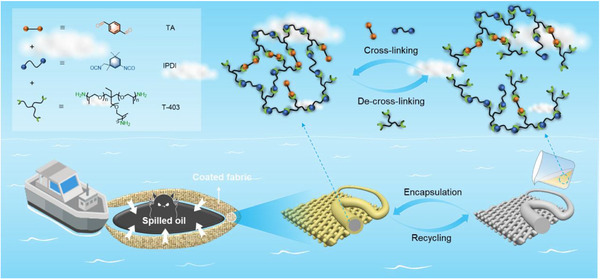 SCHEME 1
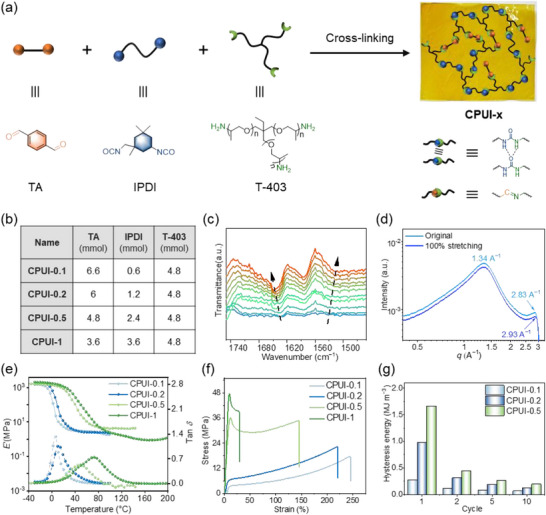 FIGURE 1
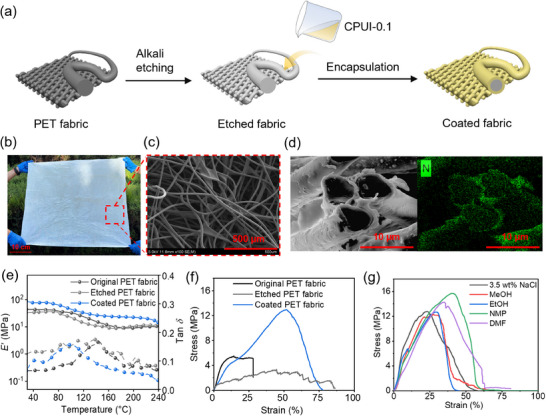 FIGURE 2
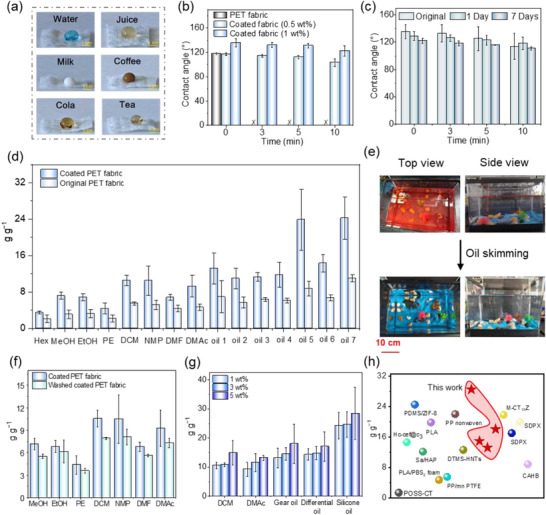 FIGURE 3
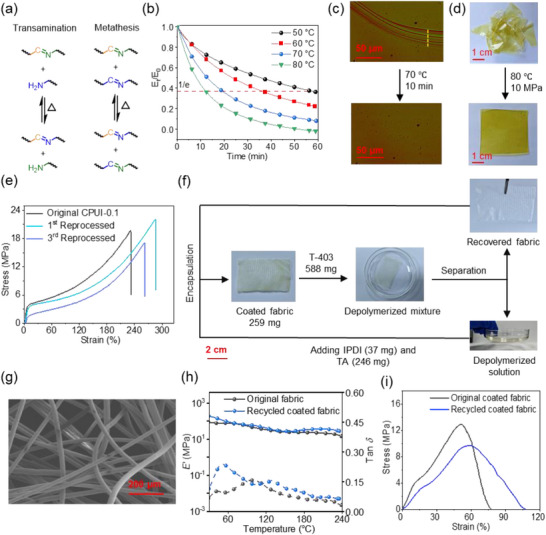 FIGURE 4
Peer Reviews
No public reviews on file for this paper yet. If you reviewed it on a platform where reviews are public (OpenReview, ICLR, NeurIPS, ICML), you can paste yours below so the community can read it here.
Videos
No videos yet. Explain this paper in a talk, walkthrough, or lecture? Add one.
Taxonomy
TopicsSurface Modification and Superhydrophobicity · Polymer composites and self-healing · Hydrogels: synthesis, properties, applications
Introduction
1
Oil spills remain a serious global environmental threat, releasing millions of tons of petroleum into marine ecosystems annually as a result of offshore drilling accidents, tanker collisions, pipeline leaks, and natural disasters such as storms or earthquakes [1, 2]. According to the International Tanker Owners Pollution Federation Limited (ITOPF), over 5.8 million tons of crude oil have been spilled into the oceans from 1970 to 2022 [3]. It includes the gruesome Deepwater Horizon oil spill accident in 2010, leading to an estimated 280k tons of oil spill into the Gulf of Mexico [4]. These events spread rapidly over vast ocean regions, disrupting marine food chains, smothering coastal habitats, and introducing toxic hydrocarbons that can persist in the environment for decades [5, 6, 7]. Existing remediation techniques, including mechanical recovery (e.g., booms and skimmers), in situ burning, chemical dispersal, sorption, and membrane technology, show some effects, but they sometimes face limitations in efficiency, selectivity, environmental compatibility, or scalability, particularly under challenging sea and weather conditions [8, 9, 10, 11, 12, 13, 14]. Thus, developing oil spill cleanup techniques/materials that can simultaneously address these limitations is highly desirable and yet scientifically demanding.
Textile sorbents have emerged as promising materials for rapid and selective oil–water separation, since they integrate lightweight flexibility, high surface area, and engineered surface chemistry together [15, 16, 17]. Their excellent performance is usually rooted in coating with external hydrophobic polymers, as most textiles are intrinsically hydrophilic, exhibit limited oil uptake capacity, and degrade over prolonged exposure to saltwater, UV irradiation, and waves [18]. Indeed, polymer coatings can impart superhydrophobicity, oleophilicity, and enhanced durability to textile sorbents [19, 20]. The excellent durability typically necessitates the architecture of the coatings in cross‐linking networks, which show superior chemical stability and mechanical resilience than their linear counterparts [21]. However, the use of such cross‐linked architectures introduces end‐of‐life management challenges: their chemical inertness hampers the recyclability of their composites with textiles, resulting in substantial plastic waste and economic losses [22, 23].
Recent advancement in dynamic covalent networks (DCNs)—which are accessed by engineering dynamic covalent bonds (DCBs) to cross‐linked polymer networks through either de‐novo synthesis or post‐polymerization modification—provides an effective solution to the end‐of‐life recycling of thermosetting polymers [24, 25, 26]. The DCBs can undergo dissociative and/or associative exchange reactions, allowing the depolymerization and reprocessing of DCNs upon exposure to some stimuli (such as heat and light), which subsequently facilitate the recovery or reuse of their constituent components [27, 28, 29, 30, 31]. The DCBs reported so far include, but not limited to, imines [32, 33, 34, 35, 36, 37, 38], vinylogous urethanes [39, 40, 41, 42, 43, 44, 45], enamide [29, 46, 47, 48], dioxaborolanes [49, 50], and tri/diketoenamines [51, 52, 53, 54]. Among them, imine bonds (Schiff bases), first reported by Hugo Schiff in 1864, have garnered considerable attention in the synthesis of DCNs over the past two decades due to their good balance of chemical robustness and reversibility, coupled with high synthetic accessibility [32]. These attributes, in principle, unlock the potential of dynamic imine chemistry to access chemically robust and yet recyclable coatings for textile sorbents, even on an industrial scale, thereby contributing to a circular materials economy.
Despite the significant potential, to our knowledge, the marriage of dynamic imine chemistry and textile coating so far remains largely unexplored. To fill the gap, we here develop a new type of dynamic imine network‐coated textile composites that integrate high oil removal capability and chemical recyclability together. The dynamic imine networks are synthesized through one‐pot polycondensation of terephthalaldehyde (TA), isophorone diisocyanate (IPDI), and amine‐terminated trimethylolpropane tris[poly(propylene glycol)] (T‐403) (Scheme 1). The polymer networks produced are a class of cross‐linked poly(urea–imine)s (CPUIs), and they exhibit tunable thermal, mechanical, and thermomechanical properties through adjusting the feed ratios of the starting materials. Further coating them on industrially relevant polyethylene terephthalate (PET) fabrics through impregnation, the resulting composites show a core–shell structure, improved mechanical strength, and robustness as compared to the uncoated fabrics. Encapsulation also imparts significant enhancements in surface hydrophobicity and oil removal performance, with stabilized water contact angles reaching 130° (compared to 0° for uncoated PET) and 1.6–2.7‐fold increases in oil sorption capacity (OSC). The coated fabrics are excellent at removing industrial oils across a wide range of temperatures between 10 and 50 °C (Scheme 1), showing OSC values of 3.4–16.3 g g^−1^. This approach is versatile and readily extends to other fabrics, including nylon, cotton, and polyimide, enhancing their OSC by 40–1520%. Moreover, owing to the dynamic nature of the imine linkages, the textile sorbents are chemically recyclable through the exchange reaction with the amine functionality of T‐403, allowing the separation and reuse of both the fabrics and the CPUIs (Scheme 1).
Illustration of the preparation of a textile composite by encapsulating a fabric with dynamic imine networks, synthesized from the polymerization of TA, IPDI, and T‐403, the application in marine oil spill cleanup, and the chemical recycling of the encapsulated fabric.
Results and Discussion
2
Synthesis and Characterization of Cross‐Linked Poly(Urea–Imines)
2.1
A series of CPUI networks (CPUI‐x) were synthesized by polymerizing TA, IPDI, and T‐403 in one pot (Figure 1a), with the molar feed ratio (x) of IPDI to TA as 0.1, 0.2, 0.5 and 1, while keeping the amount of amine functionality equal to the sum of aldehyde and isocyanate groups (formulations shown in Figure 1b). The reactions lead to the formation of both imine and urea linkages, as evidenced by the emergence of vibration bands at 1634 and 1558 cm^−1^, ascribed to the stretching of ─C═N─ and ─C═O─, respectively, in the FTIR spectra of CPUI‐0.1 (Figure S1a). The rationale of introducing urea motifs to the imine polymer networks arises from their propensity to form hydrogen bonds and resonance‐induced high stability [25, 47], which potentially contribute to the improvement in both performance and stability of CPUI‐x. Upon increasing the IPDI content, more urea bonds form (Figure S1b).
(a) Illustration of the synthesis of CPUI‐x networks by polymerization of TA, IPDI, and T‐403. (b) Recipes used in the synthesis of CPUI‐x. (c) Temperature‐variable FTIR spectra of CPUI‐1 in the spectrum region between 1450–1750 cm−1. (d) WAXS profiles of the original CPUI‐0.1 and the stretched CPUI‐0.1 at 100% strain. (e) DMA traces and (f) stress–strain curves of CPUI‐x films. (g) Hysteresis energies of the first, second, fifth, and tenth cycles of CPUI‐0.1/0.2/0.5 films during cyclic tensile testing at a maximum strain of 10%.
The presence of hydrogen bonding in CPUI‐x was examined by subjecting CPUI‐1 to temperature‐variable FTIR from 40 to 150 °C. The vibration peaks at 1634 and 1530 cm^‒1^ ascribed to the ─C═O─ stretching and N─H bending of urea, undergo blue and red shifts, respectively (Figure 1c), which strongly support that hydrogen bonds exist in the networks and are gradually dissociated at elevated temperatures. Moreover, Atomic Force Microscopy (AFM) analysis of the samples reveals the formation of phase separation in CPUI‐0.1 and CPUI‐1, with the latter displaying more uniformly distributed domains (Figures S2 and S3). Further observation of CPUI‐0.1 using Wide‐Angle X‐ray Scattering (WAXS) shows that it exhibits two sharp Bragg peaks at q* = 1.34 and 2.83 A^‒1^ (Figure 1d), corresponding to periodicities (D) of ca. 0.47 and 0.22 nm (calculated as D = 2π/q*), respectively. Their formations are probably induced by π–π stacking interactions of TA units and hydrogen bonding among urea moieties [55, 56].
The thermal properties of CPUI‐x were then evaluated by Thermogravimetric Analyses (TGA) and Differential Scanning Calorimetry (DSC). TGA curves reveal that all samples exhibit excellent thermal stability, with 5% decomposition temperatures (T 5%) of 325–335 °C (Figure S4). The difference lies in the residual char ratio above 600 °C; As the value x increases from 0.1 to 1, the char ratio of CPUI‐x gradually decreases from 25% to 8%, which we attribute to the reduced aryl ring content in the networks. Meanwhile, their glass transition temperature (T g) increases from 21 °C of CPUI‐0.1 first to 29 °C of CPUI‐0.2, then to 44 and 66 °C of CPUI‐0.5 and CPUI‐1, respectively (Figure S5). The enhanced T g probably results from the more restricted chain mobility in the networks featuring a larger amount of urea bonds, which form more hydrogen bonds.
We next investigated the thermomechanical properties of CPUI‐x films by Dynamic Mechanical Analysis (DMA). All films exhibit a discernible decline in storage modulus (E’) between 6 and 73 °C, in agreement with the appearance of a peak in the tan δ plots, which is associated with the polymers’ T g (Figure 1e). Both the onset of E’ decline and the tan δ peak shift to a higher temperature with increasing urea content (i.e., higher x values). For example, it is 6 °C for CPUI‐0.1 and slightly increases to 13 °C for CPUI‐0.2, prior to reaching 41 and 73 °C of CPUI‐0.5 and CPUI‐1, respectively (Figure 1e). This result demonstrates an increase in T g, aligning well with the trend found in the DSC analysis (Figure S5). Following the T g‐induced decline in E’, a rubbery regime appears in all CPUI‐x films, indicative of their cross‐linked network structure. Within the regime, the E’ values converge to approximately 2.5 MPa across all samples, suggesting comparable cross‐link densities ν e regardless of composition (Figure 1e). Following the theory of rubber elasticity [42], calculation on ν e shows that they are 3.7×10^2^, 3.1×10^2^, 4.1×10^2^, and 3.1×10^2^ mol m^‒3^ for the CPUI‐x films with x = 0.1, 0.2, 0.5, and 1 in sequence.
The mechanical properties of CPUI‐x were first studied by uniaxial tensile testing (Figure 1f). Distinct differences in tensile behavior are observed between low‐ and high‐IPDI‐content samples; CPUI‐0.1/0.2 samples present non‐linear stress–strain curves with strains at break of 220–246%, characteristic of elastomeric behavior, while CPUI‐0.5/1 films display plastic‐like tensile behavior, featuring an initial elastic regime, yielding at 10% strain, followed by plastic deformation (Figure 1f). Further analysis shows that increasing the value x results in increased stress at break but compromised strain at break; Upon increasing x from 0.1 to 1, the stress at break first sees a slight increase from 17 MPa of CPUI‐0.1 to 22 MPa of CPUI‐0.2, then significantly rises to 34 MPa of CPUI‐0.5 and finally to 39 MPa of CPUI‐1 (Figure 1f). Concurrently, the strain at break decreases from 246% of CPUI‐0.1 to 29% of CPUI‐1 (Figure 1f). These trends are attributed to enhanced hydrogen‐bonding interactions, which strengthen the networks at the expense of chain mobility. Two additional networks featuring only imine or urea motifs were synthesized as the control samples (Figure S6a–c). Among them, the pure polyimine networks are weaker than CPUI‐0.1 in terms of both stress and strain at break (Figure S6d), while the pure polyurea networks are too brittle to be measurable by tensile testing. Such comparisons indicate that the joint presence of imine or urea linkages contributes to the good mechanical robustness of the CPUI‐x networks. This is further corroborated by the result that well balance of composition of these two chemical motifs leads to a high toughness of 44 MJ m^‒3^ seen in the CPUI‐0.5 network (Figure S7). Moreover, WAXS was used to observe the stretched CPUI‐0.1 at 100% strain and shows that the scattering peak at q* = 1.34 A^‒1^, probably resulting from hydrogen‐bonded urea packing [57, 58], remains unchanged whereas the domain at q* = 2.83 A^‒1^ slightly shifts to 2.93 A^‒1^ (Figure 1d), indicating a minor decrease in D from 0.22 to 0.21 nm under tensile loading.
We then subjected CPUI‐x to cyclic tensile testing (Figure S8), in which the samples were repeatedly stretched and released to a maximum strain of 10% for 10 cycles. All films exhibit a pronounced hysteresis loop during the first cycle, followed by progressive narrowing in subsequent cycles (Figure S8). Integration of the enclosed area of the hysteresis loop allowed us to calculate the hysteresis energy (ΔW) of CPUI‐x for each cycle, which quantifies the energy dissipated per cycle (Figure 1g). The results demonstrate that ΔW in the first cycle is the largest for each CPUI‐x sample, ranging between 0.3 and 1.7 MJ m^‒3^, and increases with higher x values, suggesting greater energy dissipation probably due to increased hydrogen‐bond interactions. In the second cycle, ΔW decreases substantially relative to the first one, from 0.3, 1.0, and 1.7 MJ m^−3^ for CPUI‐0.1, CPUI‐0.2, and CPUI‐0.5, respectively, to 0.1, 0.3, and 0.4 MJ m^−3^. Further cycling to the fifth and tenth repetitions results in only minor reductions in ΔW (Figure 1g), indicating stabilization of the network's energy dissipation behavior.
Preparation and Characterization of CPUI‐0.1‐Coated PET Fabrics
2.2
After successfully synthesizing the CPUI‐x networks, we next investigated their application in the preparation of textile composites through a straightforward impregnation approach. PET fabrics with diameters of 13–21 µm were selected as the representative. As shown in Figure 2a, they were first etched by sodium hydroxide (1.25 wt.%) at 75 °C for 2 h before soaking in 1 wt.% CPUI‐0.1 precursor solution for 12 h and subsequent drying at 80 °C overnight (Figure 2a). The initial alkali‐etching treatment is to create more carboxylate and hydroxyl groups on the fiber surface—a treatment that is widely adopted to prepare fiber composites—, and that possibly enhances the interfacial adhesion with the coating through hydrogen‐bonding interactions [59, 60, 61]. The choice of CPUI‐0.1 as the coating substrate is rooted in its high hydrophobicity, as reflected by its largest water contact angles as compared to other CPUI‐x networks (Figure S9). The process is scalable and can produce CPUI‐0.1‐coated PET fabrics with a large size, good flexibility, and light weight (Figure 2b; Figures S10 and S11). Scanning Electron Microscopy (SEM) and Polarized Optical Microscopy (POM) analyses reveal that the porous network structure of the PET fabrics is well‐preserved after coating (Figure 2c), but the fiber surfaces turn from smooth to rough (Figures S12 and S13), suggesting non‐uniform deposition of CPUI‐0.1. The fiber composite exhibits a core–shell structure with the shell thickness of 1.2–1.9 µm (Figure S14), as confirmed by SEM and Energy Dispersive X‐ray Spectroscopy (EDX) (Figure 2d).
(a) Illustration of the preparation of a CPUI‐0.1‐coated PET fabric through first etching PET fabric using alkali, followed by encapsulation of the etched fabric with CPUI‐0.1 solution. (b) Photograph and (c) SEM image of a coated PET fabric. (d) SEM (left) and EDX (right) images of the cross‐section of the coated PET fibers. (e) DMA traces and (f) stress–strain curves of the original, alkali‐etched, and coated PET fabrics. (g) Stress–strain curves of the coated PET fabrics after immersion in salty water or various solvents for 24 h.
The thermal properties of CPUI‐0.1‐coated PET fabrics were studied by TGA analysis and compared with those of etched fabrics (Figure S15). The two fabrics exhibit a similar T 5% of ca. 420 °C, but differ in the final char ratio above 700 °C, with the higher value (25% vs 13%) seen in the coated fabric as compared to the etched one (Figure S15). DMA was then used to evaluate the thermomechanical properties of the fabrics before and after the alkali etching and encapsulation treatments (Figure 2e). The original PET fabric exhibits a E’ decline and a tan δ peak at 144 °C, which is shifted to a lower temperature of 114 °C after the etching treatment (Figure 2e), indicative of decreased T m due to partial hydrolysis of PET. Upon encapsulation, although the T m still sees a decrease to 98 °C, the E’ is significantly enhanced across the measured temperature range; For example, they are 44 and 34 MPa at 40 °C for the original and etched PET fabrics, respectively, and increase to 77 MPa of the coated one (Figure 2e). This highlights the critical role of the CPUI‐0.1 coating in improving the thermomechanical performance of PET fabrics.
The mechanical properties of the original, etched, and coated PET fabrics were analyzed by tensile testing (Figure 2f). The stress–strain curves show that the original PET fabric exhibits a low stress at break of 5.1 MPa, which becomes even weaker and decreases to 1.5 MPa following alkali etching (Figure 2f). In contrast, encapsulation with 1 wt.% CPUI‐0.1 solution leads to a significant increase in stress at break to 12.9 MPa, representing 2.5‐ and 8.6‐fold improvements relative to the original and etched fabrics, respectively (Figure 2f). During tensile deformation, we found that the fibers at the edges of the original and etched PET fabrics are torn apart first, generating cracks that propagate transversely into the interior (Figure S16a,b). By comparison, the coated fabric maintains structural integrity prior to its breakage (Figure S16c). These observations indicate that the CPUI‐0.1 coating serves as a binder, integrating discrete fibers into a cohesive network, thereby preventing premature cracking and substantially enhancing mechanical strength. Impressively, such high strength enabled the coated fabric of a size of 9.57 cm × 2.4 cm × 0.15 cm (l × w × h) to hold a 15 kg water bottle and even a 54 kg person without failure (Figure S17).
The mechanical resilience of the coated fabrics was tested by first immersing them in saline water and various organic solvents, including methanol, ethanol, NMP, and DMF for 24 h, followed by drying at 70 °C to remove the solvents. Tensile testing was performed after each treatment, and the resulting stress–strain curves were compared with those of the untreated coated fabric (Figure 2g; Figure S18). The results demonstrate that exposure to these solvents, either with or without drying, has minimal impact on the mechanical performance, as evidenced by the comparable stress and strain at break (Figure 2g; Figure S18), reflecting the excellent mechanical robustness of the materials. It further indicates that our coating strategy is effective in ensuring good environmental resistance to the textiles, which is one of the foundational pillars toward their application in complex and harsh marine conditions.
Hydrophobicity, Antifouling, and Oil Removal Capabilities of Coated PET Fabrics
2.3
We next explored the potential of the coated fabrics as sorbents for marine oil removal, which in essence requires the materials to be superhydrophobic and oleophilic. The hydrophobicity was initially assessed by placing droplets of various aqueous solutions—including dyed water, juice, milk, coffee, cola, and tea—onto the fabric surfaces (Figure 3a). In all cases, the droplets display a near‐spherical shape without spreading, indicating excellent water repellency (Figure 3a). Further analysis using contact angle measurements shows that 0.5 wt.% CPUI‐0.1‐coated fabric exhibits an initial contact angle (0 min) of 117°, comparable to that of neat PET fabric (Figure 3b). However, prolonging the contacting time to 3 min leads to the disappearing of the droplet on the neat fabric, yet only a slight decrease of the contact angle to 114° for the coated material. The contact angle still reaches a value of 104° after an additional 7 min contact, demonstrating sustained non‐wetting behavior (Figure 3b). Increasing the coating concentration to 1 wt.% further enhances hydrophobicity, with a contact angle of 136° at 0 min, and a retained value of 123° after 10 min (Figure 3b). Intriguingly, measured at the same time, the contact angles of the coated fabrics, regardless of the coating concentration, both exceed that of a CPUI‐0.1 film (Figure S19). We attribute the higher values to the presence of the mesh‐like architecture and roughened fiber surfaces in the coated fabrics (Figures S12 and S13).
(a) Photographs of various aqueous droplets standing on coated PET fabrics. (b) Variation of contact angles over time of the original and CPUI‐0.1‐coated PET fabrics. (c) Variation of contact angles over time of the original, and the 1 wt.% CPUI‐0.1‐coated PET fabrics after the exposure to 85 %RH at 25 °C for 1 or 7 days (as indicated). (d) Histogram of the OSC of the original and CPUI‐0.1 (1wt.%)‐coated PET fabrics toward organic solvents and industrial oils (as indicated), with the oil 1 to 7 corresponding to gear oil, hydraulic oil, brake fluid, automatic transmission fluid, lubricant, differential oil, and silicone oil in sequence. (e) Photographs showing the changes of hexane‐polluted water in a tank before (top) and after (bottom) treatment with a coated PET fabric, with the top and side views shown on the left and right sides, respectively (as indicated). Hexane is stained by Sudan red for illustration. (f) Histogram of the OSC of the CPUI‐0.1 (1wt.%)‐coated PET fabric before and after being treated by simulated waving for 6 h. (g) Histogram of the OSC of the CPUI‐0.1‐coated PET fabrics, with the coating concentration of 1, 3, or 5 wt.%. (h) Comparison in OSC toward DCM, DMAc, differential, and silicone oils among the CPUI‐0.1 (5wt.%)‐coated PET fabrics and other recently reported sorbents.
The impact of moisture on the hydrophobicity of the coated fabrics was explored by exposing a 1 wt% CPUI‐0.1‐coated fabric to a high‐humidity environment (85 %RH) for 1 and 7 days, followed by contact angle measurements. As shown in Figure 3c, the initial contact angle (0 min) decreases slightly from 136° to 129° and 122° after 1 and 7 days, respectively. However, after 10 min contact time, the three samples exhibit similar contact angles, all around 115° (Figure 3c), demonstrating the retainment of the excellent hydrophobicity, and that high moisture has a negligible impact on the surface properties of the coated fabrics. The superhydrophobicity further imparts notable antifouling resistance to the materials, which is evidenced by several qualitative experiments. These include when we either poured stained water onto a coated fabric or immersed it inside coffee, neither of them caused significant contamination to the fabrics (Figure S20 and Videos S1 and S2). In stark contrast, identical treatments on uncoated PET fabrics result in obvious staining and contamination (Figure S20 and Videos S1 and S2), highlighting the protective effect of the CPUI‐0.1 coating.
The oil removal capability of the fabrics was determined by measuring the weight of a 2 cm × 2 cm (l × w) fabric before and after its immersion in various organic solvents and industrial oils for 2 min. The oil sorption capability (OSC) was then calculated by the equation: OSC = (W f −W i)/W i, where W i and W f represent the initial and final weights of the fabric, respectively. As shown in Figure 3d, neat PET fabrics exhibit OSC values of 2–11 g g^−1^, with the lowest and highest sorption observed for hexane and silicone oil (oil 7), respectively. Upon soaking in 1 wt.% of CPUI‐0.1 solution, the coated fabrics see improvements in OSC toward all tested liquids, reaching 1.6–2.7 folds those of the uncoated fabrics. Among them, the highest improvement is seen in the removal of lubricants (oil 5), where the coated fabric absorbs 23.9 times its own weight, compared to only 8.7 times for the uncoated PET (Figure 3d). Moreover, the coated fabric far outperforms the neat CPUI‐0.1 film in removing the same oils, with the latter only showing OSC values of 0.1–3.4 g g^−1^ (Figure S21), suggesting the significance of fabric texture in oil removal. Further comparisons with the neat polyimine‐ and polyurea‐coated PET fabrics at the coating concentration of 1 wt.% reveal that they exhibit comparable OSC values in removing DCM and DMAc, while CPUI‐0.1‐coated sample exceeds in absorbing industrial oils (Figure S22).
The coated fabrics show effectiveness in removing both heavy and light oils, no matter whether the oils float on or sink below water. This is reflected in two experiments when we used coated fabrics to approach DCM and hexane in their mixture with water, both solvents were absorbed into the fabrics within 5 s, with the materials residing in the same layer to the solvents (Videos S3 and S4). However, without the CPUI‐0.1 coating, the fabrics fail to remove either solvent under identical conditions (Videos S3 and S4). These preliminary results encouraged us to address more practical issues. Specifically, 90 mL of dyed hexane was combined with 7 L of water in a fish tank with a dimension of 31 cm × 18 cm × 20 cm (l × w × h) (Figure 3e, top). A 35 cm × 35 cm (l × w) coated fabric was then used to skim the hexane. After three passes, totaling 35 s of treatment, the tank was effectively cleaned (Figure 3e, bottom; Video S5). To further optimize the oil sorption process, we then utilized the coated fabric as a filler material for continuous oil separation from water with the assistance of a vacuum pump operating at 0.05 MPa. Using this technique, 4.3 g of coated PET fabric is able to separate 700 mL of hexane from 7 L of water within 70 s (Video S6). In contrast, the same weight of unmodified PET fabric reaches its capacity when extracting only 100 mL of hexane under identical pumping conditions (Video S7). These findings support the practical applicability of the coated fabrics for rapid oil removal in realistic scenarios.
To assess the potential impact of waving, commonly seen in the oceans, on the coated fabrics, we first simulated waves by dropping water onto the fabric at a flow rate of 1.5 L min^−1^ from a height of ca. 25 cm for 6 h (Figure S23) [62]. The OSC of the treated fabric was further examined and compared with that of the untreated sample (Figure 3f); It shows that such treatment indeed reduces the oil removal capability, but only moderately, by less than 20%. Temperature also fluctuates from time to time in marine environments. Its impact was evaluated by measuring the OSC of the coated fabrics at different temperatures, including 10 °C, 25 °C, and 50 °C (Figure S24). Upon increasing the temperature, the OSC of the coated fabrics toward all oils tested first sees a decrease followed by an increase. For example, the OSC toward NMP is 16 g g^−1^ at 10 °C, decreasing to 10 g g^−1^ at 25 °C, then increasing to 13 g g^−1^ at 50 °C. The relatively high performances achieved at 10 and 50 °C are probably attributed to the reduced oil viscosity at the low temperature [63] and the enhanced polymer chain mobility at the high temperature [64], respectively.
The above results strongly support that coating with CPUI‐0.1 helps PET fabrics to remove oils more efficiently. We next sought to further optimize the performance by increasing the coating concentration. Indeed, soaking in higher concentrations of CPUI‐0.1 allows to increase OSC toward various oils (Figure 3g); The OSC values are 10–24 g g^−1^ for the fabric soaked in 1 wt.% CPUI‐0.1, and slightly rise to 11–25 g g^−1^ upon increasing the concentration to 3 wt.%, which further increase to 15–29 g g^−1^ when the concentration is 5 wt.%. This corresponds to the absorption of up to 29 folds the material's own weight toward oil. Encouraged by these results, we benchmarked the 5 wt.% CPUI‐0.1‐coated PET fabrics against other polymeric sorbents recently reported in the literature, including (coated) textiles [65, 66, 67, 68, 69, 70], particles [71, 72], and foams [73, 74, 75, 76, 77, 78, 79]. The comparison (Figure 3h; Table S2) reveals that our coated fabrics can rival and even surpass most state‐of‐the‐art sorbents in OSC, underscoring their superior oil uptake capability and strong potential for practical deployment.
The versatility of the coating strategy in the synthesis of high‐performance textile sorbents was explored by extending its application to nylon, polyimide, and cotton fabrics. Clearly, after the encapsulation with CPUI‐0.1 at the 1 wt.% concentration, all three coated fabrics see improvements in OSC, increasing by 40%–1520% in comparison to their uncoated counterparts (Figures S25–S27). Particularly, the neat nylon fabric exhibits negligible affinity for DCM, with an OSC of only 0.22 g g^−1^, and after coating with CPUI‐0.1, which significantly increases to 3.67 g g^−1^—signifying an over 16‐fold improvement (Figure S25). These findings reflect that our CPUI coatings are effective in improving the oil removal performance of diverse textile substrates.
Recycling of CPUIs and their Coated PET Fabrics
2.4
Having confirmed the excellent performance, including strong mechanical resilience, superhydrophobicity, and excellent OSC of our textile sorbents, we next explored their recyclability, which is rooted in the dynamic nature of imine bonds. The imine bonds can undergo transamination with free amines and bond metathesis between themselves (Figure 4a) [29, 37, 38]. These dynamic exchange processes enable CPUIs to reorganize their network structures under thermal conditions—a property not attainable in conventional thermosetting polymers [26]. Such a feature can be further translated to thermally repairing, reprocessing, and depolymerizing CPUIs for either prolonging their service life or enabling efficient material recovery and reuse.
(a) Transamination (left) and metathesis (right) reactions involving the exchange of an imine with an amine or another imine, respectively. (b) Stress relaxation curves of CPUI‐0.1 as a function of time. (c) Optical microscopy images of a scratched CPUI‐0.5 film being healed at 70 °C for 10 min. (d) Photographs showing the reprocessing of CPUI‐0.1 from small pieces into a new film by compression molding. (e) Stress–strain curves of the original, the first, and the third reprocessed CPUI‐0.1 films. (f) Photographs showing chemical recycling of a coated PET fabric, involving depolymerization with T‐403, separation of the fabric and the depolymerized solution, followed by encapsulation of the recovered fabric with the repolymerized polymer solution. (g) SEM image of the recovered PET fabric. (h) DMA traces and (i) stress–strain curves of the original and resynthesized coated PET fabrics.
The network rearranging ability of CPUI‐x was initially assessed by stress relaxation experiments conducted at 50 °C–80 °C (Figure 4b; Figure S28a). Both CPUI‐0.1 and CPUI‐0.2 exhibit efficient stress dissipation under thermal treatment, with faster relaxation observed at higher temperatures. (Figure 4b; Figure S28a). For example, the relaxation time (τ), at which the stress is dissipated to 1/e of its initial value, is 56 min at 50 °C for CPUI‐0.1, significantly decreasing to 19 min at 70 °C. Further increasing the temperature to 80 °C leads to the decrease in τ to only 12 min (Figure 4b). Arrhenius plots of ln(τ) against 1/T allowed us to calculate the activation energy (E a) for the stress relaxation (Figure S28b). CPUI‐0.1 and CPUI‐0.2 show close E a values of 50 and 57 kJ mol^‒1^, respectively. We attribute the slightly lower E a in CPUI‐0.1 to its larger content of imine linkages (Figure 1b), which promotes more rapid network rearrangement and flowability.
The thermal repairability of CPUI‐x was evaluated by first scratching a CPUI‐0.5 film in a width of ca. 20 µm. The scratched film was subsequently heated at 70 °C, and the scratch disappears after 10 min, as observed by optical microscopy (Figure 4c), indicating the good repairability upon thermal treatment. We then explored the weldability of CPUI‐x networks by fabricating a plastic bag from two rectangular CPUI‐0.1 films with a size of 8 cm × 5 cm (l × w). A smaller PET sheet was placed between the films, with their edges overlapped along three sides (∼50 mm width). The assembly was clamped and heated at 100 °C for 1 h, yielding a welded bag with the final dimension of 7.5 cm × 4.5 cm (l × w). The bag is capable of holding both solid and liquid contents without leakage (Figure S29). These two properties provide the opportunity to maintain the structural integrity of CPUI‐x materials after their accidental damage, thereby extending their functional lifetime.
Besides these, the recyclability of CPUI‐x was also investigated through thermal reprocessing and amine‐induced depolymerization. As shown in Figure 4d, small pieces of CPUI‐0.1 were compression‐molded at 80 °C under 10 MPa for 10 min, which successfully furnished a new film. The processes were repeated three times, and the first‐ and third‐time reprocessed films were subjected to tensile testing, with the results compared with that of the original material (Figure 4e). After three reprocessing cycles, the film retains excellent mechanical performance, with stress and strain at break values of 17 MPa and 260%, respectively, confirming their high reprocessability. The second recycling approach involves first depolymerizing small pieces of CPUI‐0.1 (359 mg) through the reaction with newly added T‐403 (1408 mg) at 60 °C, followed by the repolymerization with additional IPDI (89 mg) and TA (590 mg) (Figure S30). The processes regenerated a CPUI‐0.1 film, tensile testing analysis of the film shows good mechanical recovery in comparison to the original one (Figure S31).
Among these strategies, the depolymerization/repolymerization protocols are highly relevant in recycling composites, since the depolymerization can transform cross‐linked networks into either linear or branch derivatives, which unlocks the potential to separate the polymer matrixes from the composite fillers through selective solvent dissolution [26, 28, 38, 80, 81]. To verify this, in the final part of our work, we endeavored to recycle the coated PET fabric following similar procedures to the recycling of CPUI‐0.1. Specifically, 588 mg of T‐403 was added to 259 mg of coated PET fabric and heated at 60 °C to depolymerize the coating (Figure 4f). After 1 h, the fabric color changed from light yellow to off‐white, and SEM analysis reveals a smooth fiber surface (Figure 4g), both suggesting the removal of the coating. The fabric was then taken out and socked in the liquid mixture, obtained by the addition of 37 mg of IPDI and 246 mg of TA to the depolymerized solution (Figure 4f). Subsequent curing the soaked fabric at 70 °C produced a new coated PET fabric with the rough fiber surface (Figure S32), whose performance and properties were analyzed by DMA, tensile testing, and contact angle, and oil sorption measurements (Figure 4h,i; Figures S33 and S34). No distinct variations were observed between the original and recycled coated PET fabrics, demonstrating the effectiveness of the chemical recycling method in the reuse of our textile sorbents.
Conclusions
3
In conclusion, we have presented a new type of textile sorbents by encapsulating commercially available fabrics, including PET, nylon, cotton, and polyimide, with dynamic imine networks, which are synthesized through a one‐pot polycondensation of terephthalaldehyde, isophorone diisocyanate, and a trifunctional amine cross‐linker. Following encapsulation, the textile composites exhibit improved thermal, thermomechanical, and mechanical properties as compared to both pristine and alkali‐etched fabrics. Specifically, these include an increased char ratio at 700 °C (25% vs 13%), a 2.3‐fold increase in E’ at 40 °C (77 vs 34 MPa), and an 8.6‐fold improvement in stress at break (12.9 vs 1.5 MPa) after the etched PET fabric was socked in 1 wt.% of CPUI‐0.1 solution. The coating also imparts superhydrophobicity and antifouling resistance. A representative 1 wt.% CPUI‐0.1‐coated PET fabric displays a water contact angle of 136° and resists fouling from dyed and contaminated aqueous solutions, in stark contrast to neat PET fabrics that were readily wetted or stained. Importantly, the encapsulation with CPUI‐0.1 endows these fabrics with excellent oil removal capability, increasing OSC by 40%–1520% depending on the oil and fabric types, coating concentration, and temperature. The most significant improvement was observed for nylon fabrics, where the OSC toward DCM increases from 0.22 g g^−1^ to 3.67 g g^−1^ after coating, an over 16‐fold enhancement. Of the same importance is the chemical recyclability of the CPUI coatings enabled by the dynamic imine chemistry. It allows the textile sorbents to be selectively depolymerized by an amine cross‐linker, recovering both the fabric substrates and the depolymerized coating solutions. Subsequent repolymerization and re‐coating refurnish the composites, which retain their mechanical strength, hydrophobicity, and oil sorption performance. Overall, the coated fabrics reported here are poised for rapid deployment, and the “encapsulation with dynamic covalent networks” strategy offers a versatile and sustainable platform in designing high‐performance, next‐generation textile sorbents, both contributing to a circular materials economy.
Conflict of Interest
The authors declare no conflict of interest.
Supporting information
Supporting File 1: advs73431‐sup‐0001‐SuppMat.pdf.
Supporting File 2: advs73431‐sup‐0002‐Video S1.mp4.
Supporting File 3: advs73431‐sup‐0003‐Video S2.mp4.
Supporting File 4: advs73431‐sup‐0004‐Video S3.mp4.
Supporting File 5: advs73431‐sup‐0005‐Video S4.mp4.
Supporting File 6: advs73431‐sup‐0006‐Video S5.mp4.
Supporting File 7: advs73431‐sup‐0007‐Video S6.mp4.
Supporting File 8: advs73431‐sup‐0008‐Video S7.mp4.
The reference list from the paper itself. Each links out to its DOI / PubMed record.
- 1Y. Dong , Y. Liu , C. Hu , I. R. Mac Donald , and Y. Lu , “Chronic Oiling in Global Oceans,” Science 376 (2022): 1300–1304, https://www.science.org/doi/10.1126/science.abm 5940 35709269 10.1126/science.abm 5940 · doi ↗ · pubmed ↗
- 2“Oil Spills: Microorganisms to the Rescue?,” Nature Reviews Microbiology 8 (2010): 462, https://www.nature.com/articles/nrmicro 2404.10.1038/nrmicro 240421394963 · doi ↗ · pubmed ↗
- 3J. Li , Z. Zhuang , and Z. Xu , “Understanding the Impact of Marine Oil Spill on Corporate Performance for Improving Oil Spill Claims System,” Marine Policy 168 (2024): 106298, https://www.sciencedirect.com/science/article/pii/S 0308597 X 24002963?via%3Dihub.
- 4L. Harris , “Oil Spills 101: Everything You Need to Know,” Pollution (2023), https://www.ecowatch.com/oil‐spill‐facts‐ecowatch.html.
- 5O. Hettithanthri , T. B. T. Nguyen , T. Fiedler , et al., “A Review of Oil Spill Dynamics: Statistics, Impacts, Countermeasures, and Weathering Behaviors,” Asia‐Pacific Journal of Chemical Engineering 19 (2024): 3128, https://onlinelibrary.wiley.com/doi/10.1002/apj.3128.
- 6I. Berenshtein , C. B. Paris , N. Perlin , M. M. Alloy , S. B. Joye , and S. Murawski , “Invisible oil beyond the Deepwater Horizon Satellite Footprint,” Science Advances 6 (2020): aaw 8863, https://www.science.org/doi/10.1126/sciadv.aaw 8863?rss=1.10.1126/sciadv.aaw 8863 PMC 701568032095516 · doi ↗ · pubmed ↗
- 7B. Q. Huynh , L. H. Kwong , M. V. Kiang , et al., “Public Health Impacts of an Imminent Red Sea Oil Spill,” Nature Sustainability 4 (2021): 1084–1091, https://www.nature.com/articles/s 41893&021‐00774‐8?utm_source=xmol&utm_medium=affiliate&utm_content=meta&utm_campaign=DDCN_1_GL 01_metadata.10.1038/s 41893-021-00774-8PMC 868280634926834 · doi ↗ · pubmed ↗
- 8K. Yan , F. Zhao , L. Pan , Y. Jiang , Y. Shi , and G. Yu , “High‐Throughput Clean‐Up of Viscous Oil Spills Enabled by a Gel‐Coated Mesh Filter,” Nature Sustainability 6 (2023): 1654–1662, https://www.nature.com/articles/s 41893‐023‐01217‐2.