No more than three PlpE non-overlapping epitopes trigger significant antibody production in individuals vaccinated with the Pasteurella multocida epitope-chimeric proteins
Binbin Geng, Banghui Zhou, Ziyi Zhang, Guojun Jiang, Weifeng Zhu

TL;DR
This study finds that only up to three non-overlapping PlpE epitopes in chimeric proteins can trigger significant antibody responses in vaccinated individuals.
Contribution
The study quantifies the maximum number of functional non-overlapping PlpE epitopes per vaccinated individual, guiding epitope-focused vaccine design.
Findings
The average number of effective PlpE epitopes in vaccinated individuals did not exceed three.
Incorporating more epitopes into chimeric proteins initially increased but then decreased effective epitope count.
Findings suggest epitope competition limits functional epitopes in vaccine design.
Abstract
Current vaccine research still confronts multiple challenges, and epitope-focused vaccine design serves as an effective technical approach to address these issues. Antigens harbor multiple epitopes; however, the number of epitopes capable of triggering significant antibody responses in vaccinated individuals remains undefined. This study aimed to determine the number of non-overlapping epitopes—designated “effective epitopes” hereafter—that trigger significant antibody production in vaccinated individuals when presented in distinct PlpE epitope-chimeric proteins. Herein, chimeric proteins incorporating varying numbers of PlpE non-overlapping B-cell epitopes were generated. By analyzing serum antibody responses in vaccinated individuals, we defined the quantitative characteristic of PlpE-derived effective epitopes. The total number of PlpE effective epitopes in vaccinated individuals was…
Genes, proteins, chemicals, diseases, species, mutations and cell lines named across the full text — each resolved to its canonical identifier and authoritative record.
Click any figure to enlarge with its caption.
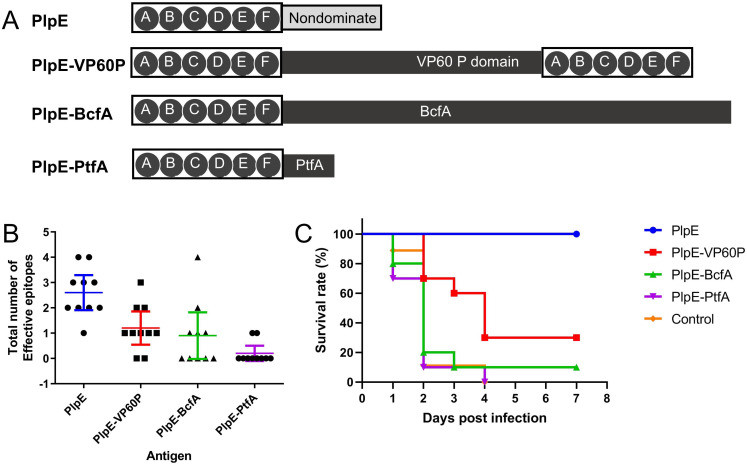 Fig 1
Fig 1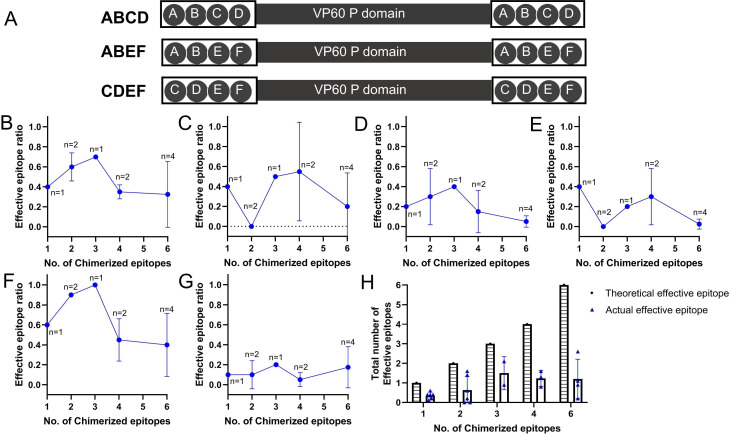 Fig 2
Fig 2- —Hebei Natural Science Foundation
Peer Reviews
No public reviews on file for this paper yet. If you reviewed it on a platform where reviews are public (OpenReview, ICLR, NeurIPS, ICML), you can paste yours below so the community can read it here.
Videos
No videos yet. Explain this paper in a talk, walkthrough, or lecture? Add one.
Taxonomy
TopicsMicrobial infections and disease research · vaccines and immunoinformatics approaches · Virology and Viral Diseases
OBSERVATION
In both human and veterinary medicine, vaccines play an indispensable role in controlling infectious diseases, effectively reducing the morbidity and mortality associated with these illnesses. Nevertheless, current vaccine research continues to confront challenges, such as the scarcity of effective protective antigens (1), high pathogen variability (2), antibody-dependent enhancement of infection (3), and co-infection pressure (4). Genetic engineering vaccines enable rational vaccine design, which is anticipated to overcome the limitations of traditional vaccines and holds broad development potential (5, 6).
Epitope-focused vaccine design constitutes an effective technical approach to enhancing the efficacy of genetic engineering vaccines (7). This approach has facilitated the development of novel vaccines, including multi-epitope vaccines (8), epitope-chimeric vaccines (9), universal vaccines (10), and dominant epitope-modified vaccines (11). However, few studies have investigated epitope-epitope relationships to date. While immunodominance has been employed to describe relationships between B-cell and T-cell epitopes (12), quantitative research in this area is scarce. We hypothesize that inter-epitope competition on an antigen results in only a small subset of non-overlapping epitopes (distinct antigenic sites) being capable of triggering significant antibody responses in each vaccinated individual. In subsequent sections of this manuscript, non-overlapping epitopes capable of eliciting significant antibody responses will be referred to as “effective epitopes.”
Pasteurella species (predominantly Pasteurella multocida) cause pasteurellosis in animals and infections in humans. Pasteurellosis is endemic, leading to animal mortality, impaired animal growth, and reduced feed conversion efficiency—resulting in substantial losses to the livestock and poultry industries (13). Pasteurella multocida primarily infects humans via animal bites or scratches, leading to meningitis, sepsis, and other pathologies (14, 15). PlpE is a good protective antigen of P. multocida, and its denatured form (i.e., linear epitopes) alone confers sufficient immune protection. In previous work, we identified six non-overlapping linear epitopes of P. multocida PlpE using epitope scanning method and successfully generated PlpE epitope-chimeric protein vaccines (9, 16). Herein, we generated a panel of PlpE epitope-chimeric proteins and determined the number of PlpE effective epitopes in vaccinated individuals.
The gene encoding the PlpE immunodominant region (harboring six linear epitopes) was fused (16) to genes encoding protective antigens of other pathogens (Table S1), and inclusion bodies were obtained following expression in Escherichia coli engineering strains (Fig. 1A; Fig. S1). The proteins chimerized with PlpE included the P domain of Rabbit Hemorrhagic Disease Virus (RHDV) VP60 (9), Bordetella bronchiseptica BcfA (17), and P. multocida PtfA (18). Full-length PlpE can be considered a specialized chimeric protein comprising the PlpE immunodominant and non-immunodominant regions.
PlpE six-epitope chimeric proteins and their effective epitopes. (A) Schematic of the primary structure of full-length PlpE and its epitope-chimeric proteins. ABCDEF denotes the PlpE immunodominant region, which harbors six linear epitopes (A, B, C, D, E, and F). (B) Number of PlpE effective epitopes in each vaccinated individual. (C) Survival of mice in each antigen-immunized group following challenge with Pasteurella multocida.
Female KM mice (4–6 weeks old, 10 per group) were immunized with inclusion bodies (100 μg per mouse) solubilized in 8 M urea (to ensure that only linear epitopes trigger immune responses). The animal experiment was performed according to protocols approved by the Hebei Provincial Animal Care and Use Committee (approval No. 2024013). Complete Freund’s adjuvant was used for primary immunization, and incomplete Freund’s adjuvant for booster immunizations, with a 4-week interval between doses. Serum samples were collected 10 days post-second immunization. Peptide enzyme-linked immunosorbent assay (ELISA) (16) was used to quantify PlpE effective epitopes across vaccinated individuals. The results demonstrated that only a small subset of PlpE epitopes elicited significant antibody responses in each individual (Fig. 1B). The total number of effective epitopes per individual was 2.6 (95% confidence interval [95% CI]: 1.909–3.201) for full-length PlpE and 1.2 (95% CI: 0.5426–1.857), 0.9 (95% CI: 0–1.820), and 0.2 (95% CI: 0–0.5016) for PlpE-VP60P, PlpE-BcfA, and PlpE-PtfA, respectively.
Our results showed that the total number of effective epitopes in PlpE epitope-chimeric proteins did not exceed three per vaccinated individual—even though the number of incorporated epitopes in these proteins reached 6. The scaffold protein component of the chimeric protein may itself harbor immunodominant epitopes (19), which compete with PlpE epitopes within the chimeric protein. B cells specific to distinct epitopes compete for T helper (Th) cells and antigens during activation and maturation—leading to mutual interference when these epitopes trigger antibody production, and booster immunization enhances this competition (20, 21). This competition results in a lower total number of effective epitopes in PlpE epitope-chimeric proteins—compared to full-length PlpE—in vaccinated individuals.
Immunized mice were challenged via subcutaneous injection with the field virulent P. multocida strain X7 (Cps1: L1) (1,000 CFU, 40 × median lethal dose [LD50]) and monitored for 7 days for clinical signs or mortality. Reduced numbers of effective epitopes impaired the immune protective efficacy of PlpE epitope-chimeric protein antigens, resulting in significantly lower immune protective efficacy of the chimeric epitopes compared to the full-length PlpE group (Log-rank test, P < 0.05; all the statistical power was more than 0.89, Fig. 1C). The reduced number of effective epitopes likely underlies the lower efficacy of PlpE chimeric antigen vaccines compared to full-length PlpE reported in the previous work (9).
Beyond the competition between scaffold protein immunodominant epitopes and PlpE epitopes, a competitive relationship also exists between distinct PlpE epitopes—impacting immune efficacy of PlpE chimeric protein. We generated a series of chimeric proteins incorporating subsets of PlpE non-overlapping epitopes. Among these, 4-epitope chimeric proteins (Fig. 2A; Table S2; Fig. S2) were generated herein, whereas 3-epitope, 2-epitope, and 1-epitope chimeric proteins were generated in prior studies (16). Following two immunizations, mouse serum samples were collected to detect antibodies targeting non-overlapping PlpE epitopes.
Chimeric proteins with varying numbers of PlpE non-overlapping epitopes and their effective epitopes. (A) 4-PlpE non-overlapping epitope chimeric proteins generated herein. A, B, C, D, E, F denote PlpE epitopes A, B, C, D, E, and F. (B–G) Effective epitope ratio changes of PlpE epitopes in vaccinated individuals as the number of PlpE non-overlapping epitopes in the chimeric protein increased. B to G, PlpE epitopes A to F; The effective epitope ratio = The number of vaccinated individuals in whom the epitope triggers a significant antibody response/the total number of vaccinated individuals. (H) Total number of PlpE effective epitopes in proteins chimeric with varying numbers of non-overlapping PlpE epitopes. The total number of PlpE effective epitopes = Sum of the effective epitope ratios of the PlpE epitopes contained in the chimeric protein.
With an increase in the number of PlpE epitopes in the chimeric protein, the effective epitope ratio for each epitope exhibited a trend of initial increase followed by a decrease (excluding epitope F, which consistently shows low immunogenicity) (Fig. 2B through G; Table S3). The chimeric protein with PlpE epitope A, C, and E exhibited the highest total number of PlpE effective epitopes, 2.1 (95% CI: 1.572–2.628). The initial increase in effective epitopes indicates that a greater number of chimeric epitopes favors competition against scaffold protein epitopes. The subsequent decrease in effective epitopes suggests that inter-epitope competition among PlpE epitopes is intensifying. Ultimately, competition between chimerized epitopes themselves and between chimerized epitopes and scaffold protein epitopes results in the number of PlpE effective epitopes in the chimeric antigen not exceeding 3 (Fig. 2H).
A study investigating B-cell epitopes of virus-like particles demonstrated that while the antigen harbors 10 non-overlapping epitopes, only 2–4 of these epitopes are responsible for generating over 95% of monoclonal antibodies in vaccinated individuals (22). Other studies focused on identifying non-overlapping epitopes via antibodies similarly suggest that the number of effective epitopes of an antigen in an individual is very limited (23, 24). Thus, we propose that the conclusions of this study can be extended to other antigens: in a vaccinated individual, the total number of non-overlapping epitopes that significantly trigger antibody responses is limited (no more than 4, like full-length PlpE). This epitope trait may represent a key factor limiting vaccine efficacy.
In conclusion, it was found that the total number of PlpE effective epitopes in PlpE chimeric proteins does not exceed three per vaccinated individual. To our knowledge, this is the first report exploring the number limit of effective epitopes in epitope-chimeric proteins in vaccinated individuals—a finding that should be taken into account in rational vaccine design. The number of exogenous epitopes grafted for constructing novel vaccines should not be excessive, and consideration should be paid to the competitive relationships both among the chimerized epitopes themselves and between the chimerized epitopes and those on the scaffold protein.
The reference list from the paper itself. Each links out to its DOI / PubMed record.
- 1Scalsky R, Dwivedi A, Stabler TC, Mbambo G, Ouattara A, Lyke KE, Takala-Harrison S, Silva JC. 2025. Whole-genome sieve analysis: identification of protective malaria antigens by leveraging allele-specific vaccine efficacy. Vaccine (Auckl) 50:126783. doi:10.1016/j.vaccine.2025.12678339923546 · doi ↗ · pubmed ↗
- 2Law MC, Chiu PKF. 2024. Global COVID-19 vaccine hesitancy among elderly: a systematic review. Vaccine X 21:100584. doi:10.1016/j.jvacx.2024.10058439669214 PMC 11635704 · doi ↗ · pubmed ↗
- 3Parra-González M, Nájera-Maldonado L, Peralta-Cuevas E, Gutierrez-Onofre AJ, Garcia-Atutxa I, Villanueva-Flores F. 2025. Overcoming dengue vaccine challenges through next-generation virus-like particle immunization strategies. Front Cell Infect Microbiol 15:1614805. doi:10.3389/fcimb.2025.161480540589870 PMC 12206880 · doi ↗ · pubmed ↗
- 4Mohamad A, Zamri-Saad M, Amal MNA, Al-Saari N, Monir MS, Chin YK, Md Yasin I-S. 2021. Vaccine efficacy of a newly developed feed-based whole-cell polyvalent vaccine against vibriosis, streptococcosis and motile aeromonad septicemia in Asian seabass, Lates calcarifer. Vaccines (Basel) 9:368. doi:10.3390/vaccines 904036833920311 PMC 8069360 · doi ↗ · pubmed ↗
- 5Soleymani S, Tavassoli A, Housaindokht MR. 2022. An overview of progress from empirical to rational design in modern vaccine development, with an emphasis on computational tools and immunoinformatics approaches. Comput Biol Med 140:105057. doi:10.1016/j.compbiomed.2021.10505734839187 · doi ↗ · pubmed ↗
- 6Wang Z, Wang D, Chen J, Gao F, Jiang Y, Yang C, Qian C, Chi X, Zhang S, Xu Y, Lu Y, Shen J, Zhang C, Li J, Zhou L, Li T, Zheng Q, Yu H, Li S, Xia N, Gu Y. 2024. Rational design of a cross-type HPV vaccine through immunodominance shift guided by a cross-neutralizing antibody. Sci Bull Sci Found Philipp 69:512–525. doi:10.1016/j.scib.2023.12.02138160175 · doi ↗ · pubmed ↗
- 7Correia BE, Bates JT, Loomis RJ, Baneyx G, Carrico C, Jardine JG, Rupert P, Correnti C, Kalyuzhniy O, Vittal V, et al.. 2014. Proof of principle for epitope-focused vaccine design. Nature 507:201–206. doi:10.1038/nature 1296624499818 PMC 4260937 · doi ↗ · pubmed ↗
- 8Pan X, Guo X, Shi J. 2024. Design of a novel multiepitope vaccine with CTLA-4 extracellular domain against Mycoplasma pneumoniae: a vaccine-immunoinformatics approach. Vaccine (Auckl) 42:3883–3898. doi:10.1016/j.vaccine.2024.04.09838777697 · doi ↗ · pubmed ↗