Navigating the Crisis: A Cross-Sectional Survey Analysis of Resident Doctors’ Experiences of Specialty Training and Employment in Today’s NHS
Barbara Dorgan, Rachel Elliott, Stephen J Dorgan

TL;DR
This study explores the challenges faced by UK resident doctors in specialty training and employment within the NHS, highlighting emotional strain and high attrition rates.
Contribution
The paper provides new insights into the systemic issues affecting resident doctors' career progression and mental well-being in the NHS.
Findings
Only 39% of resident doctors secured specialty or higher training posts.
65% reported missing out on advertised roles due to recruitment system failures.
Over one-fifth of respondents left the NHS or medicine due to these challenges.
Abstract
Objective: To examine resident doctors' experiences of training conditions, career opportunities, workforce perceptions, and emotional strain in the NHS's current specialty training and local recruitment pathways. Design: A cross-sectional, anonymous survey of UK resident doctors conducted via an online questionnaire. Quantitative and qualitative data on employment status, training opportunities, recruitment processes, and emotional well-being, from both the anonymous survey and NHS datasets, were collected and analysed via descriptive statistics and thematic analysis. Setting: The NHS faces a deepening crisis. The demand for doctors continues to rise, yet qualified resident doctors encounter increasing barriers to entering specialty training or gaining secure employment. Participants: A total of 288 UK resident doctors received the survey in June and July 2025. Participation was…
Genes, proteins, chemicals, diseases, species, mutations and cell lines named across the full text — each resolved to its canonical identifier and authoritative record.
Click any figure to enlarge with its caption.
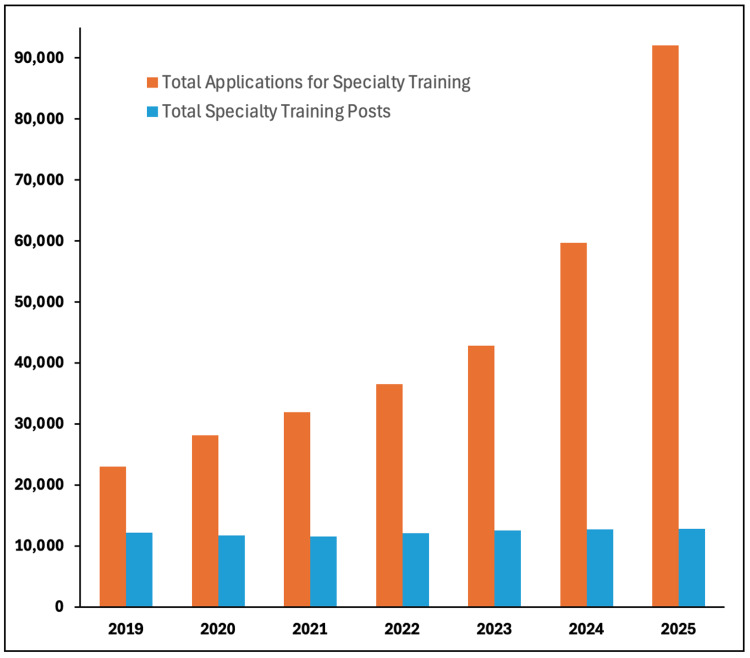 Figure 1
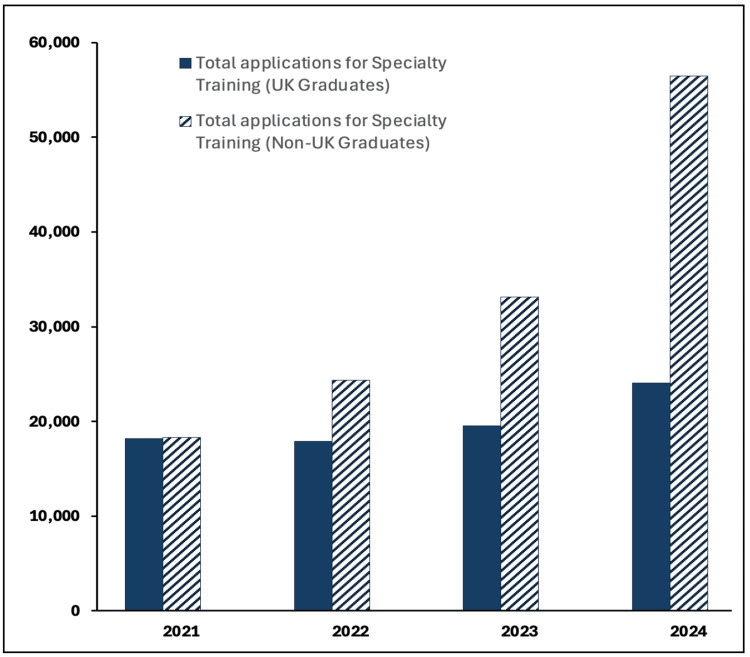 Figure 2
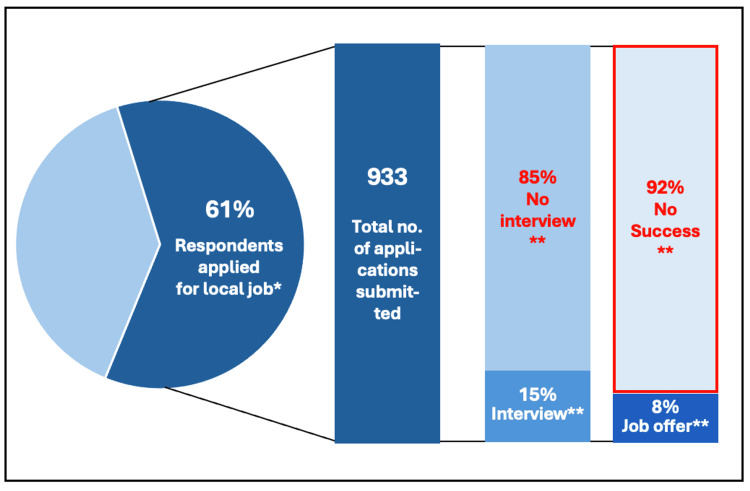 Figure 3
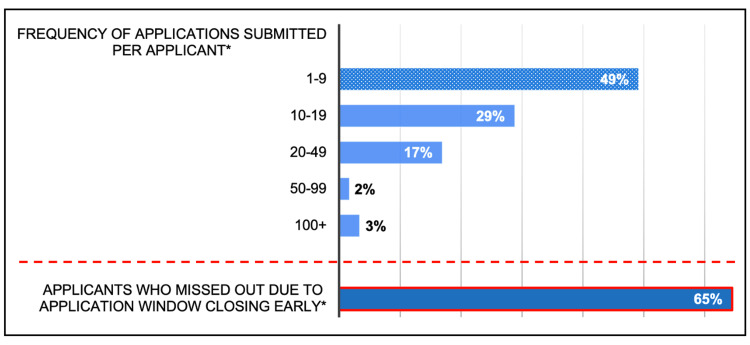 Figure 4
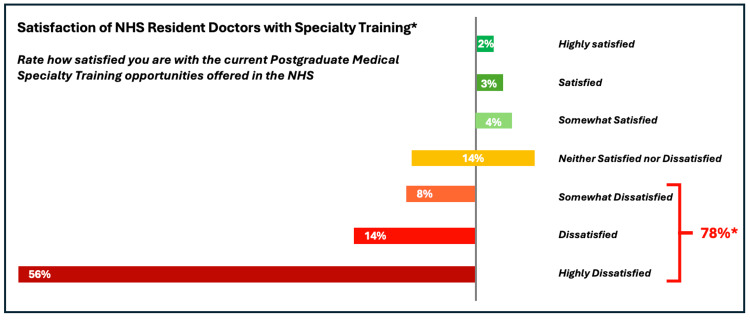 Figure 5
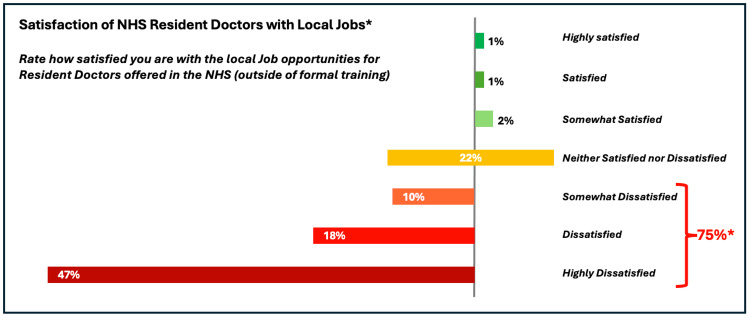 Figure 6
| Online questionnaire | |
| Question 1: What best captures your current role*? *NB: At time when survey was conducted, 10 June and 20 July 2025 | |
| Available responses Question 1: | FY1 |
| FY2 | |
| In Postgraduate Specialty Training role, e.g. IMT, CT Surgery, GP Trainee, Other Specialty Trainee | |
| In Higher Specialty Training role (ST3 and above) | |
| Locally Employed Doctor, e.g. JCF, on fixed term contract (FY3 and above) | |
| Locally Employed Doctor, e.g. SCF, on fixed term contract (ST3 and above) | |
| Locum Doctor - SHO/FY3 and above (full time Locum Doctor only, not in addition to other fixed term contract or training posts) | |
| Locum Doctor - SpR/ST3 and above (full time Locum Doctor only, not in addition to other fixed term contract or training posts) | |
| Working within the NHS, but in a non-clinical or mixed role, such as Research or Teaching Fellow | |
| Working in private sector in the UK (as a doctor) | |
| Working in private sector in the UK (in a non-clinical role) | |
| Working abroad as a doctor | |
| Working abroad in a non-clinical role | |
| Other: | |
| Question 2: Please select what best describes your role from September 2025 (either confirmed or most likely) | |
| Available responses Question 2: | FY1 |
| FY2 | |
| In Postgraduate Specialty Training role, e.g. IMT, CT Surgery, GP Trainee, Other Specialty Trainee | |
| In Higher Specialty Training role (ST3 and above) | |
| Locally Employed Doctor, e.g. JCF, on fixed term contract (FY3 and above) | |
| Locally Employed Doctor, e.g. SCF, on fixed term contract (ST3 and above) | |
| Locum Doctor - SHO/FY3 and above (full time Locum Doctor only, not in addition to other fixed term contract or training posts) | |
| Locum Doctor - SpR/ST3 and above (full time Locum Doctor only, not in addition to other fixed term contract or training posts) | |
| Working within the NHS, but in a non-clinical or mixed role, such as Research or Teaching Fellow | |
| Working in private sector in the UK (as a doctor) | |
| Working in private sector in the UK (in a non-clinical role) | |
| Working abroad as a doctor | |
| Working abroad in a non-clinical role | |
| Other: | |
| Question 3: Have you ever applied to any of the NHS specialty training programs outside of the Foundation Program? | |
| Available responses Question 3: | If YES, please indicate how many training programs in total you have applied for over the years/recruitment cycles. Answer: ___________________ |
| If NO, go straight to Question 10 | |
| Question 4: Have you applied to any specialty training programs for entry in 2025? | |
| Available responses Question 4: | If YES, tick all that apply: |
| IMT1 | |
| IMT3 | |
| Surgery Core CT1 | |
| Psychiatry Core CT1 | |
| ACCS/Anaesthetics CT1 | |
| GP Training ST1 | |
| Paediatrics ST1 | |
| Obs and Gynae ST1 | |
| Other Run Through Programmes (ST1) | |
| Higher Specialty Training (ST3 and above) | |
| Other:___________________ | |
| If NO, go straight to Question 7 | |
| Question 5: If YES to Question 4, please indicate how many applications resulted in shortlisting/ interviews for entry in 2025 | |
| Answer: ___________________ | |
| Question 6: If you have been shortlisted / interviewed, please indicate how many resulted in a training place offer for entry in 2025 | |
| Answer: ___________________ | |
| Question 7: Did you apply to any specialty training programs for entry in 2024? | |
| Available responses Question 7: | If YES, tick all that apply: |
| IMT1 | |
| IMT3 | |
| Surgery Core CT1 | |
| Psychiatry Core CT1 | |
| ACCS/Anaesthetics CT1 | |
| GP Training ST1 | |
| Paediatrics ST1 | |
| Obs and Gynae ST1 | |
| Other Run Through Programmes (ST1) | |
| Higher Specialty Training (ST3 and above) | |
| Other:___________________ | |
| If NO, go straight to Question 10 | |
| Question 8: If YES to Question 7, please indicate how many applications resulted in shortlisting/ interviews for entry in 2024 | |
| Answer: ___________________ | |
| Question 9: If you have been shortlisted / interviewed, please indicate how many resulted in a training place offer for entry in 2024 | |
| Answer: ___________________ | |
| Question 10: Have you applied or tried to apply for a NHS fixed term contract or permanent job, e.g. LED, JCF or SCF roles or Trust Grade Jobs over the last two years, 2023 to 2025? | |
| Available responses Question 10: | If YES, please answer the next questions 11 to 14 |
| If NO, go straight to Question 15 | |
| Question 11: If YES to Question 10, please fill in the number of jobs you were interested in (or closest estimate), but for which you could NOT submit an application, as the job application window closed early / before the advertised deadline | |
| Answer: ___________________ | |
| Question 12: If YES to Question 10, please fill in the total number of applications you have submitted (or closest estimate) | |
| Answer: ___________________ | |
| Question 13: If YES to Question 10, please fill in how many (or closest estimate) of these submitted applications resulted in an interview/ shortlisting | |
| Answer: ___________________ | |
| Question 14: If YES to Question 10 and you have been interviewed/shortlisted for a job, please indicate how many resulted in a job offer. Otherwise leave blank. | |
| Answer: ___________________ | |
| Question 15: Rate how satisfied you are with the current Postgraduate Medical Specialty Training opportunities offered in the NHS | |
| Rate from 1 to 10: ____________ with 1=Highly dissatisfied, 2=Very dissatisfied, 3=Dissatisfied, 4=Somewhat dissatisfied, 5=Slightly more dissatisfied but generally neutral, 6=Slightly more satisfied but generally neutral, 7=Somewhat satisfied, 8=Satisfied, 9=Very dissatisfied, 10=Highly satisfied | |
| Question 16: Rate how satisfied you are with the current Resident Doctor Job opportunities (outside of training programs) offered in the NHS | |
| Rate from 1 to 10: ____________ with 1=Highly dissatisfied, 2=Very dissatisfied, 3=Dissatisfied, 4=Somewhat dissatisfied, 5=Slightly more dissatisfied but generally neutral, 6=Slightly more satisfied but generally neutral, 7=Somewhat satisfied, 8=Satisfied, 9=Very dissatisfied, 10=Highly satisfied | |
| Question 17: Please describe in a few words how the current Postgraduate Medical Specialty Training and wider resident doctor job situation in the NHS makes you feel | |
| Answer: _________________________________________________________________ | |
| Please provide some further info about your Medical Training and select as applicable (optional): | |
| Available responses: | I am a UK Medical School Graduate (UK national) |
| I am a UK Medical School Graduate (non-UK national) | |
| I am an International Medical Graduate (UK national) | |
| I am an International Medical Graduate (non-UK national) | |
| Other: ___________________ | |
| What year did you graduate from Medical School? | |
| Answer: ____________________ | |
| When did you or will you complete your Foundation Training / FY2? | |
| Year/Month: _________________ | |
| June-July 2025 | After Sept. 2025 | |||
| n | Percentage* | n | Percentage* | |
| UK medical school graduates: | ||||
| UK nationals | 83 | 81% | 83 | 81% |
| Non-UK nationals | 8 | 8% | 8 | 8% |
| Non-UK medical school graduates: | ||||
| UK national | 2 | 2% | 2 | 2% |
| Non-UK national | 7 | 7% | 7 | 7% |
| No information given: | 2 | 2% | 2 | 2% |
| Role: | ||||
| Foundation Year 1 | 3 | 3% | 0 | 0% |
| Foundation Year 2 | 18 | 18% | 3 | 3% |
| Postgraduate speciality training | 22 | 22% | 34 | 33% |
| Higher speciality training | 4 | 4% | 6 | 6% |
| Locally employed doctor | 29 | 28% | 21 | 21% |
| Locum doctor | 14 | 14% | 17 | 17% |
| Doctor working abroad | 11 | 11% | 13 | 13% |
| Non-clinical role | 1 | 1% | 2 | 2% |
| Full-time student | 0 | 0% | 2 | 2% |
| Other: | 0 | 0% | 4 | 4% |
| Year | Graduated Medical School | Completed Foundation Training | ||
| n | Percentage* | n | Percentage* | |
| 2017 and earlier | 6 | 6% | 6 | 6% |
| 2018 | 2 | 2% | 1 | 1% |
| 2019 | 5 | 5% | 1 | 1% |
| 2020 | 5 | 5% | 0 | 0% |
| 2021 | 11 | 11% | 5 | 5% |
| 2022 | 54 | 53% | 4 | 4% |
| 2023 | 16 | 16% | 12 | 12% |
| 2024 | 3 | 3% | 51 | 50% |
| 2025 | 0 | 0% | 18 | 18% |
| 2026 | 0 | 0% | 4 | 4% |
| Speciality training | Recruitment Cycle Year | |||
| 2024 | 2025 | |||
| n | % | n | % | |
| Total individuals applying for a speciality training role* | 41 | 40% | 52 | 51% |
| Total speciality training applications made in-year | 60 | n/a | 79 | n/a |
| Applications made that resulted in: | ||||
| An interview** | 38 | 63% | 38 | 48% |
| A training post offer** | 26 | 43% | 29 | 37% |
| No offer of a training post** | 34 | 57% | 50 | 63% |
| Key Theme | What doctors report | Representative Quotes |
| Emotional strain and mental health | Feeling broken, emotionally exhausted and on the edge of giving up medicine; suffering deteriorating mental health. | “I feel mentally and emotionally exhausted from trying to progress in the NHS.” |
| “Frustrated and powerless, undervalued and left out cold, soul and confidence destroying. Had to stop applying as too detrimental for my mental health.” | ||
| “Hopeless, anxious, looking into other careers.” | ||
| “Scared and worried about future, helpless, trapped.” | ||
| “Repeated rejections have made me feel broken, anxious, and on the edge of giving up medicine.” | ||
| “It’s an absolute scandal. My mental health has suffered massively, my confidence as a doctor is shattered to pieces, I won’t be able to continue in medicine.” | ||
| Perception of being undervalued and not worthy of investment in future | Feeling undervalued and replaceable, seeing little investment in their future, and viewing medicine as a questionable career choice. | “Undervalued. doctors are treated as numbers, not people with lives.” |
| “I feel invisible, undervalued, and replaceable.” | ||
| “Demoralised, unwanted, frustrated. Working so hard in a broken system and having to face the fact, the same system can’t facilitate your ongoing training.” | ||
| “It is difficult not to feel disheartened and like I have made a mistake in choosing this career.” | ||
| “To be exiting F2 without a formal job despite so many applications is so discouraging and just makes me feel so ready to leave medicine now.” | ||
| “Tricked, lied to, used and discarded.” | ||
| Job insecurity and extreme competition | Impossible to secure training posts, unrealistic competition ratios and lack of career progression. | “It feels nearly impossible to get a training post; the process is overly competitive and demoralising.” |
| “It’s extremely disheartening to work so hard and not feel appreciated and be anxious about getting to the next stage of training.” | ||
| “Undervalued, exploited, hopeless. Increased competition ratios every year with no attempt to fix it.” | ||
| “It makes me feel that there is little hope for entering speciality training and very frustrated that I have invested so much time, energy and money into a career that is supposed to offer job security & career progression but has done quite the opposite.” | ||
| “Uncertain, uneasy without any job security. So-called lifeline learning without lifelong work!” | ||
| “Frustrated, upset and feel stuck at my current level as I’m unable to progress in training.” | ||
| Broken by process and “survivors’ guilt” | Even if successful, doctors feel demotivated and broken by the toll it took, the need to settle for less desirable opportunities and the guilt in seeing other colleagues’ struggles. | “I am in training but I despair for those locked out and facing unemployment.” |
| “I have taken a CT1 surgical job that will require more than an hour commute each way. I am doing two specialities that I have no interest in pursuing further and will leave me struggling to find an ST3 post I want to train in.” | ||
| “It feels bleak that despite having two Cambridge degrees and 3 years experience as a doctor working more than full time hours I am grateful to be in a job that I would have no interest in applying for outside of a national training programme.” | ||
| “It was so difficult to get into ST1, and I felt so disrespected throughout the whole process I ended up turning down my offer and decided to stay in New Zealand where you feel wanted and valued and supported in your career.” | ||
| Systemic issues and mismanagement | A lack of workforce planning, a mismatch of roles and jobs meeting the demand from doctors, prioritisation of service provision over education. | “Complex, multi-faceted but compounded by short-sighted workforce planning, coalescing in a minefield for all.” |
| “Hopeless. There are rota gaps in every speciality and hospital and there are competent residents willing to do those jobs, yet the recruitment system means that those gaps go unfilled.” | ||
| “Too much service provision in training posts and no training.” | ||
| “Demoralised, it’s sad to see people unemployed despite having understaffed working conditions.” | ||
| “Rotational training is awful. Training is more about service provision. Rotas are heavy with out of hours work. Departments not taking pride in trainees.” | ||
| “Training is at times fragmented and often training and teaching opportunities are missed due to poor staffing and pressures on the NHS.” | ||
| Overwhelmed recruitment systems | Overburdened, failing recruitment systems, not fit for purpose and seen as unfair, untransparent and not selecting for the best candidates. | “I have been unable to even hear back from fellow jobs when applying, yet my CV / level is perfect for some of these jobs.” |
| “Bots are causing a lot of issues. Jobs are advertised, hundreds of applications are received, but very few if any are from people suited to the post advertised.” | ||
| “Definition of madness. Does not choose the best/most suitable doctors, you have to pay to play and rewards pen pushers.” | ||
| “Many changes especially in IMT recruitment over the last 6 years have meant that many resident doctors are now struggling to get into training and even risk of being unemployed, which is extremely disheartening and disappointing.” | ||
| Missed opportunity and inequity | Displacement of local graduates, recruitment not giving sufficient weight to relevant clinical experience, expensive upskilling requirements. | “Bottlenecks, underfunding and political short-sightedness are threatening the future of healthcare.” |
| “International recruitment has unintentionally displaced competent local graduates.” | ||
| “Frustrated at the NHS’ desperation for doctors and yet the lack of training opportunities for UK graduates. This makes no sense to me at all.” | ||
| “After all this work and perceived rota gaps, nothing is being done to help the right people get in the right jobs.“ | ||
| “It is very costly to get to the next step through all the courses etc required to demonstrate ‘commitment to specialty’.” | ||
| “Too much extra-curricular non-clinical CV work required to achieve a core training place!” | ||
| Exodus from the NHS and medicine | Intent to leave the NHS or the UK, migrating to countries with better conditions. Conflicted about choices and feeling forced into them. | “Many of us are looking abroad or outside of medicine for job security, appreciation, respect, and to preserve our overall mental wellbeing.” |
| “Desperate. I feel as if I have no choice but to leave the UK, despite wanting to stay.” | ||
| “Like leaving medicine. Grad med was a total waste of time resulting in financial insecurity and stress without any job satisfaction.” | ||
| “I am considering non-medical career paths but am finding it hard to fully commit to this, having trained so long to become a doctor. I also feel guilty for leaving. On the one hand, I want to help patients and fiercely believe in the NHS’ core principles, but on the other, I need to protect myself as I cannot work in the NHS without it breaking me.” |
Peer Reviews
No public reviews on file for this paper yet. If you reviewed it on a platform where reviews are public (OpenReview, ICLR, NeurIPS, ICML), you can paste yours below so the community can read it here.
Videos
No videos yet. Explain this paper in a talk, walkthrough, or lecture? Add one.
Taxonomy
TopicsDiversity and Career in Medicine · Healthcare professionals’ stress and burnout · Healthcare Systems and Challenges
Introduction
In recent years, the landscape for specialty medical training and employment of resident doctors in the NHS has shifted dramatically. Despite growing evidence of the urgent need to expand the medical workforce, many resident doctors are unable to progress in their careers and access training opportunities or secure local employment to meet service needs.
The NHS remains under severe strain. Over 7.3 million patients remain on NHS waiting lists [1], and public satisfaction with the NHS is at its lowest level in over 40 years [2]. Persistent rota gaps leave 10s of thousands of shifts unfilled [3], and workforce burn-out is increasingly common [4]. While there is both a growing supply and a clear demand for more doctors, the current employment market structures appear unable of matching the supply of doctors with the demand.
A key driver of the mismatch is the shortage of training and non-training posts for resident doctors. While applications to Specialty Training have increased almost 300% since 2019, the number of training positions have increased by only 5% over the same period [5]. This imbalance has led to widespread frustration, with some groups, such as Foundation Year 1 (FY1) doctors, voting for industrial action in response to the lack of available positions to progress their careers [6].
Relatively recent policy changes have further compounded the issue. The removal of the Resident Labour Market Test (RLMT) and the expansion of UK medical school output [7] sought to address a medical workforce shortage across the NHS. However, without a dramatic and rapid increase in specialty training capacity, these two policy changes risk exacerbating the situation, worsening both competition and attrition amongst resident doctors wishing to work in the NHS and progress in their careers.
This study presents findings from a cross-sectional survey conducted in mid-2025. It examines the experiences, challenges, and perceptions of resident doctors navigating specialty training and longer-term employment pathways within the NHS.
An earlier version of this article was posted to the medRxiv preprint server on December 9th, 2025, at https://doi.org/10.64898/2025.12.07.25341779
Materials and methods
Survey design and distribution
A 17-item online questionnaire (Table 1) was developed to collect both quantitative and qualitative data. The survey included closed questions and free-text comment sections to capture the experiences and perceptions of resident doctors at different stages of their training and employment journey. The only eligibility criteria were being (or having been) a NHS resident or foundation programme doctor within the last four years. This was validated by sending the survey link to purely clinical and work-related doctors’ WhatsApp Groups from years 2022-2025. Participants included UK and international medical graduates, both within and outside formal training programmes, working in the UK or overseas. The survey link using Google Docs was distributed via these WhatsApp groups to a total of 288 recipients between 10 June and 20 July 2025. Participation was voluntary, and no incentives were offered.
Data collection and analysis
Quantitative survey responses were analysed descriptively. Free-text comments were examined using an inductive thematic analysis approach to identify recurring patterns, sentiments, and emerging themes. Two researchers independently reviewed responses to enhance consistency, and any discrepancies were resolved through consensus and discussion.
To put the survey data in context, we performed a secondary analysis of publicly available NHS workforce and training data for the period 2019-2025 [8,9]. The published data is in a very detailed format and too granular; it required extensive data aggregation and analysis by the authors before it could be used.
Data availability
The data generated during the research and analysis are not available publicly but are available from the corresponding author on a reasonable request.
Strengths and limitations of this study
This study provides timely evidence on resident doctors’ experiences of current NHS training and employment pathways during a period of unprecedented competition. A mixed-methods approach, combining survey data with qualitative analysis and publicly available NHS workforce datasets, strengthens the depth and contextual relevance of the findings.
Selection bias is possible, as doctors with negative experiences may have been more likely to participate. This is compounded by convenience sampling via WhatsApp groups overrepresenting early-career doctors (with a high proportion of UK graduates). A resulting sampling bias limits generalisability to all 79,000 resident doctors. There is a reliance on self-reporting for some of the data on non-training employment opportunities with possible recall-bias. This had to be accepted as unavoidable as further validation by external sources was outside of the scope of this work. The design of the study limits its inference of causality, which is neither proven nor modelled, as this would be beyond the scope of this study. Any causality inferred from the context is intended by the authors to be suggestive.
Ethics
All data were collected anonymously. No personally identifiable information was recorded. The research involved health care staff, recruited by virtue of their professional role. Respondents were fully informed in advance about the purpose of the study and provided implied consent by voluntarily completing the survey. The study did not involve patients or access to identifiable health records.
Ethical approval was not required under NHS Health Research Authority guidance.
Guidelines
STROBE reporting guidelines [10] were used when drafting and revising this manuscript and the STROBE reporting checklist [11] was completed prior to submission.
Results
Respondent demographics
A total of 102 surveys were completed, giving an overall response rate of 35% (N=288). Table 2 summarises survey participants’ demographics and roles at the time of the survey (June/July 2025) and future roles from September 2025, with additional detail about their level of experience provided in Table 3. Most respondents (80%, N=102) were resident doctors who graduated medical school between 2021 and 2023 and completed their Foundation Training Programme between 2023 and 2025. The majority (89%, N=102) were graduates of UK medical schools. Overall, 39% (N=102) expected to hold a formal Specialty Training post in Autumn 2025, with 33% (N=102) in Postgraduate Specialty Training, an increase from 22% (N=102) the previous year, and 6% (N=102) of respondents in Higher Specialty Training, up from 4% (N=102) in the previous year.
More than half of respondents (58%, N=102) remained outside formal training pathways. 21% (N=102) reported working as Locally Employed Doctors, down from 28% (N=102) the previous year, while 17% (N=102) were working as locum doctors, up from 14% (N=102). Over one in five respondents (21%, N=102) reported leaving the NHS altogether, an increase from 12% (N=102) the previous year. Of the 21% (N=102) leaving the NHS, 13% (N=102) were leaving the UK, while 8% (N=102) indicated they would no longer work as doctors after September 2025.
Specialty training opportunities
Table 4 shows the overall share of respondents applying for Specialty Training increased from 40% (N=102) in 2024 to 51% (N=102) in 2025. However, success rates in securing a training role or an interview declined. In 2025, 63% (N=79) of applications failed to result in a training position compared with 57% (N=60) in 2024, and less than half (48%, N=79) of applications resulted in an interview in 2025, down from 63% (N=60) the previous year.
Figure 1 illustrates the widening gap between the number of Speciality Training applications and the number of available posts. Between 2019 and 2025, the number of applications increased by 299% (from 23,040 to 91,999), while the number of training posts rose by only 5% from 12,175 to 12,833 [8].
NHS England: Speciality training applications and available posts, 2019-2025 Data aggregation and analysis by authors. Data source: Health Education England. Competition Ratios 2021-2025 [8]
Figure 2 shows that the recent rise in Specialty Training applications is largely driven by non-UK graduates. Applications from non-UK graduates increased by 208%, from 18,335 in 2021 to 56,453 in 2024, while UK-graduate applications have seen a much more moderate increase of 32%, from 18,195 to 24,068 over the same period [9].
Specialty training applications by country of qualification, 2021-2024Data aggregation and analysis by authors. Data source: Health Education England. Equality and diversity recruitment data 2021-2024 [9]
Non-training employment opportunities
The secondary impact of limited specialty training post availability upon the wider job market appears significant. Over the past two years, 61% (N=102) of respondents applied for local trust-based roles, submitting a total of 933 applications between them. Only 15% (N=933) of those applications were put forward for an interview, and just 8% (N=933) of those applications resulted in a job offer. Overall, 92% (N=933) of applications submitted for a local post were unsuccessful and did not result in any position (Figure 3).
Local trust-based job application success/failure rates, 2023-2025Analysis of online questionnaire completed by resident doctors in June / July 2025 for this survey Applications submitted over the last two years, 2023-2025; N=62** N=933*
Competition for these local trust-based roles was intense. Over half of those applying for trust-based roles (51%, N=62) submitted 10 or more applications between 2023 to 2025, with 3% (N=62) of respondents submitting over 100 applications. In addition, almost two-thirds (65%, N=62) of those applying for trust-based roles reported missing out on one or more advertised posts because the online application window closed prematurely, i.e., ahead of the advertised deadline, preventing them from applying; the total number of missed opportunities is reported as 386 times by the respondents (Figure 4).
Frequency of applications for local trust-based roles, 2023-2025Analysis of online questionnaire completed by resident doctors in June / July 2025 for this surveyApplications submitted over the last two years, 2023-2025; N=62*
Satisfaction levels with training and job opportunities
In total, 78% (N=102) of resident doctors were unhappy (highly dissatisfied, dissatisfied, somewhat dissatisfied) with current Specialty Training opportunities (Figure 5).
Satisfaction of NHS resident doctors – Specialty Training, 2025Analysis of online questionnaire completed by resident doctors in June / July 2025 for this surveyN=102Method: Semantic Mapping for visualisation in Likert-Scale bars. Original 10-point scale with 1=Completely dissatisfied, 2=Very dissatisfied, 3=Dissatisfied, 4=Somewhat dissatisfied, 5=Slightly more dissatisfied but generally neutral, 6=Slightly more satisfied but generally neutral, 7=Somewhat satisfied, 8=Satisfied, 9=Very dissatisfied, 10=Completely satisfied was mapped to 7-Point Likert Label based on intended meaning rather than exact spacing using the following conversion: 1-2 to Highly Dissatisfied (1), 3 to Dissatisfied, 4 to Somewhat Dissatisfied (3), 5-6 to Neutral (4), 7 to Somewhat Satisfied (5), 8 to Satisfied (6), 9-10 to Highly Satisfied (7)*
There was similar dissatisfaction with employment outside formal training, with 75% (N=102) of respondents unhappy with available NHS job opportunities (Figure 6).
Satisfaction of NHS resident doctors – Local jobs, 2025Analysis of online questionnaire completed by resident doctors in June / July 2025 for this surveyN=102Method: Semantic Mapping for visualisation in Likert-Scale bars. Original 10-point scale with 1=Completely dissatisfied, 2=Very dissatisfied, 3=Dissatisfied, 4=Somewhat dissatisfied, 5=Slightly more dissatisfied but generally neutral, 6=Slightly more satisfied but generally neutral, 7=Somewhat satisfied, 8=Satisfied, 9=Very dissatisfied, 10=Completely satisfied was mapped to 7-Point Likert Label based on intended meaning rather than exact spacing using the following conversion: 1-2 to Highly Dissatisfied (1), 3 to Dissatisfied, 4 to Somewhat Dissatisfied (3), 5-6 to Neutral (4), 7 to Somewhat Satisfied (5), 8 to Satisfied (6), 9-10 to Highly Satisfied (7)*
Qualitative sentiment analysis
To complement the quantitative data, participants were asked: “Please describe in a few words how the current Postgraduate Medical Specialty Training and wider Resident Doctor job situation in the NHS makes you feel?”
Eighty-eight respondents (86%, N=102) provided free-text comments, which were analysed thematically. The thematic insights are structured around identified key themes, reports, and selected illustrative quotes from respondents and summarised in Table 5.
The qualitative analysis identified a high prevalence of negative emotions with clear implications for morale and well-being. Three dominant emotional categories emerged: 1) ‘fear’, reflected in reports of anxiety, worry, insecurity, and uncertainty; 2) ‘sadness’, encompassing feelings of hopelessness, despair, and being undervalued; and 3) ‘anger’ often intertwined with frustration.
Discussion
Our findings demonstrate a clear employment crisis for resident doctors in the NHS, which has been developing over the past six years. Three interrelated factors underpin the current situation: (1) the number of Specialty Training posts has remained largely static; (2) applications for training posts have risen sharply; and (3) recruitment processes are overwhelmed and inadequate.
Over half of survey respondents are currently outside formal training roles due to increased competition for those roles. In the 2025 recruitment cycle, 63% (N=79) of applicants failed to secure any training post, compared with 53% (N=60) in 2024, and fewer than half (48%, N=79) were invited to interview in 2025, down from 63% (N=60) previously. These findings indicate that the selection process is under significant strain, a trend likely to continue unless substantial reforms are implemented.
The lack of training posts is not a new phenomenon. Between 2013 and 2020, there were approximately 2.5 applicants per specialty training post annually [8]. The removal of the Resident Labour Market Test in 2020 contributed to a sharp rise in competition, increasing applicants per post from 1.9 in 2019 to 7.2 in 2025, largely driven by a tripling of applications from non-UK graduates. Non-UK graduates now account for 70% of all applications [9], overwhelming a recruitment system that is unable to process the now 92,000 applications for fewer than 13,000 available posts [5,8].
Poorly conceived solutions to manage the explosion in training post applications have made the situation even worse. For example, in Internal Medicine, available training posts have remained static at approximately 1,600 annually since 2015, while interview capacity is limited to around 4,000 [12]. To manage the huge number of applications, interview candidates are selected based upon self-scoring exercises with minimal verification. In fact, applicants are instructed to not provide supporting evidence, unless specifically requested, which they are assured is “highly unlikely” [13]. Other Specialty Trainings such as GP Training or Psychiatry have eliminated interviews entirely. These measures, while intended to manage workloads, risk diluting selection rigour and potentially compromising patient care.
The lack of training posts and the growing number of doctors unable to secure Speciality Training roles is increasing competition for non-training roles. More than half of respondents applying for local posts submitted over 10 applications, and some submitted over 100, yet success rates remain low. Fewer than one in 12 applicants secured a local role, with inadequate recruitment processes being reported as one of the key drivers of this challenging situation.
Automated systems now prioritise application speed over experience. Two-thirds of all respondents (65%, N=62) applying for such local jobs reported missing out on roles because the application window closed earlier than advertised, and before they could apply. Increasingly, automated ‘bots’ are immediately applying for roles online as soon as they are advertised despite the applicants being wholly unqualified. In one example from the survey, applications for a role closed automatically after just one and a half hours rather than the advertised three weeks, despite 90% (N=500) of the applications received being substandard. These automated systems effectively exclude highly qualified candidates and undermine any argument that a more competitive labour market will improve candidate quality [14].
These system inefficiencies drive a substantial loss of public investment. The £230,000 taxpayers spend to educate and train each doctor [15] is lost when skilled resident doctors leave the NHS due to poor workforce planning and failing training and employment pathways. Our findings of high attrition rates of 21% (N=102) aligns with more current studies, such as the Royal College of Physicians’ 2025 Study reporting 35% (N= >500 and <1202) of doctors do not plan on working in the NHS in five years’ time [16].
Our survey highlights the broader impact on resident doctors’ morale and wellbeing. Over three-quarters of respondents reported dissatisfaction with both Specialty Training and wider job opportunities, even though 39% (N=102) of the cohort held a Specialty Training post in September 2025. This suggests widespread frustration with the effort required and complexity of recruitment processes. Free-text responses reveal pervasive negative emotions of anxiety, stress, hopelessness, and frustration. These emotions indicate significant psychological distress amongst respondents and appear to contribute to burnout and demoralisation within the workplace. Doctors report struggling with managing both time-consuming application processes and excessive demands by recruiters to demonstrate non-clinical achievements, possibly undermining their ability to recuperate and provide the best patient care.
Together, these observed associations highlight significant challenges and emotional burden experienced by resident doctors navigating current NHS training and employment pathways.
While policy makers have acknowledged the crisis, and the Chief Medical Officer for England has recommended an overhaul of medical training [17], implementation is unlikely to occur quickly enough to support the current cohort of resident doctors. Without urgent reform, workforce attrition, low morale, and ultimately compromised patient care are likely to continue.
Conclusions
This study identifies a growing workforce challenge within the NHS, particularly among resident doctors. Competition for Specialty Training posts remains intense, with many applicants reapplying in later cycles, placing further strain on recruitment systems. Current processes struggle to manage the volume of applications while maintaining fairness and transparency, contributing to declining morale and well-being among doctors. These systemic pressures now threaten the stability of the medical workforce and the effectiveness of patient care. Urgent and coordinated reform is essential to expand training capacity, strengthen recruitment systems, and ensure the NHS retains and fully utilises its skilled doctors for the future.
The reference list from the paper itself. Each links out to its DOI / PubMed record.
- 1NHS waiting list hits two-year low as staff work to 'turn the tide' 6 2025 2025 https://www.england.nhs.uk/2025/06/nhs-waiting-list-hits-two-year-low-as-staff-work-to-turn-the-tide/
- 2Public satisfaction with the NHS and social care in 2024 (BSA): results from the British Social Attitudes survey Taylor B Lobont C Dayan M Merry L Jefferies D Wellings D 2025 https://www.kingsfund.org.uk/insight-and-analysis/reports/public-satisfaction-nhs-social-care-in-2024-bsa
- 3BMA investigation finds more than 32,000 doctors' shifts unfilled in hospitals in London in six months 3 2025 2025 https://www.bma.org.uk/bma-media-centre/boris-johnson-s-covid-inquiry-evidence-was-a-masterclass-in-double-speak-says-bma-1
- 4NHS workforce in a nutshell 11 2025 Buckingham N 2025 https://www.kingsfund.org.uk/insight-and-analysis/data-and-charts/nhs-workforce-nutshell
- 5Competition ratios: hundreds of doctors compete for some specialty training posts, show "scandalous" NHS data BMJ Bowie K 03902025 http://doi.org/10.1136/bmj.r 198110.1136/bmj.r 198140973434 · doi ↗ · pubmed ↗
- 6First year resident doctors in England vote to strike over job shortages BMJ O'Dowd A 03912025 https://doi.org/10.1136/bmj.r 211510.1136/bmj.r 211541057163 · doi ↗ · pubmed ↗
- 7Escalating competition in NHS: implications for healthcare quality and workforce sustainability Postgrad Med J Ferreira T 36136510020243820433210.1093/postmj/qgad 131 · doi ↗ · pubmed ↗
- 8Competition ratios 10 2025 2025 https://medical.hee.nhs.uk/medical-training-recruitment/medical-specialty-training/competition-ratios