Phylogenomic insights from the complete chloroplast genome of Berchemiella wilsonii var. pubipetiolata H. Qian (Rhamnaceae) from Zhejiang
Yingchao Dai, Dongbin Li, Hong Zhu

TL;DR
This paper reports the first complete chloroplast genome of a rare plant species from China, offering insights into its evolution and conservation.
Contribution
The study provides the first assembled chloroplast genome for Berchemiella wilsonii var. pubipetiolata, supporting phylogenomic and conservation research.
Findings
The chloroplast genome is 160,317 bp long with a typical quadripartite structure and 37.20% GC content.
Phylogenetic analysis confirms its close relationship to B. wilsonii.
The genome includes 131 genes, such as 84 mRNA, 37 tRNA, and 8 rRNA genes.
Abstract
Berchemiella wilsonii var. pubipetiolata H. Qian, a member of the Rhamnaceae family, is endemic to mountainous regions in two eastern Chinese provinces. Here, we present the first assembly of its chloroplast (cp) genome, which exhibits a typical quadripartite structure, spans 160,317 bp long and has a 37.20% GC content. Genome annotation identified 131 genes, including 84 messenger RNA (mRNA) genes, 37 transfer RNA (tRNA) genes, and eight ribosomal RNA genes. Phylogenetic analysis confirms its close relation to B. wilsonii, thereby providing valuable genomic resources for conservation efforts and evolutionary studies of East Asian Berchemiella species.
Genes, proteins, chemicals, diseases, species, mutations and cell lines named across the full text — each resolved to its canonical identifier and authoritative record.
Click any figure to enlarge with its caption.
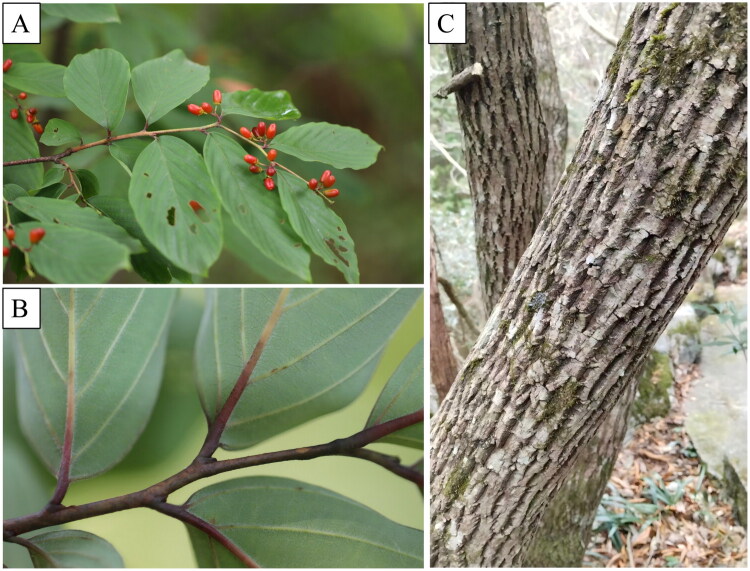 Figure 1
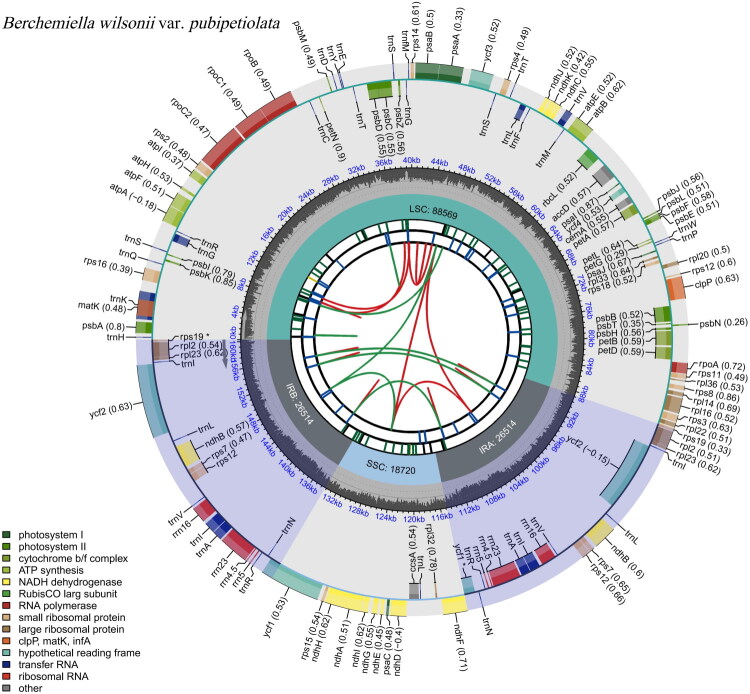 Figure 2
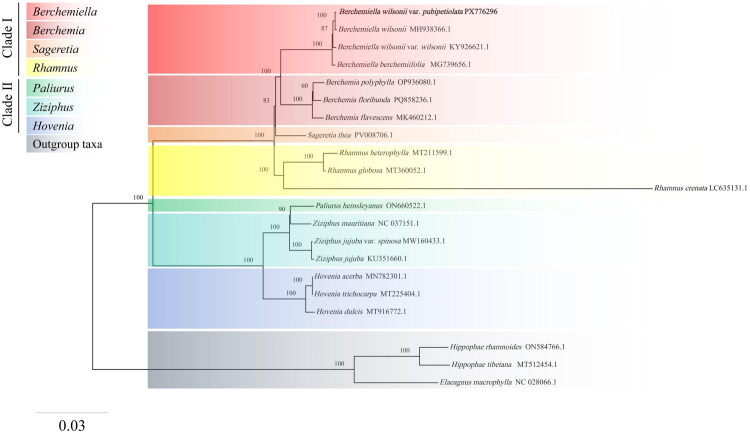 Figure 3
- —Zhejiang Provincial Natural Science Foundation of China
Peer Reviews
No public reviews on file for this paper yet. If you reviewed it on a platform where reviews are public (OpenReview, ICLR, NeurIPS, ICML), you can paste yours below so the community can read it here.
Videos
No videos yet. Explain this paper in a talk, walkthrough, or lecture? Add one.
Taxonomy
TopicsGenomics and Phylogenetic Studies · Algal biology and biofuel production · Plant Diversity and Evolution
Introduction
Berchemiella wilsonii var. pubipetiolata H. Qian 1988, as a variant of Berchemiella wilsonii (C. K. Schneid.) Nakai 1923. This species is only found in two disjunct regions: the north-eastern Dabie Mountain in Anhui Province and the western Tianmu Mountain in Zhejiang Province. Given its restricted distribution, B. wilsonii var. pubipetiolata has been designated as a Zhejiang Provincial Key Protected Species. Beyond its status as a protected species, B. wilsonii var. pubipetiolata holds significant economic and ornamental value due to its high-density timber, decorative red fruiting inflorescences, and unique bark patterns. Scientifically, its distinct drupe and seed morphology are critical for understanding taxonomic boundaries and evolutionary transitions within Rhamnaceae (Wei et al. 2014).
Current research primarily focuses on its population structure, dynamic characteristics (Hu et al. 2005; Pang et al. 2025) and genetic diversity. Specifically, studies using AFLP markers have explored its genetic variation (Kang et al. 2006; Kang et al. 2008). Chloroplast (cp) genomes have been widely recognized as powerful tools for phylogenetic inference, DNA barcoding, genome evolution study, and species conservation strategies (Wen et al. 2021; Zhu and Li 2024). However, little research has been conducted on its genome, particularly those involving the cp genome. To clarify the taxonomic and evolutionary relationships within the genus Berchemiella, we sequenced and assembled the complete cp genome of B. wilsonii var. pubipetiolata, and conducted comparative genomics analyses to characterize its genomic features and phylogenetic position. These findings provide valuable insights for future studies on phylogenetic and genetic diversity within Berchemiella species.
Materials and methods
Plant materials
Fresh leaves of B. wilsonii var. pubipetiolata were collected from Shilin, Zhejiang Qingliangfeng National Nature Reserve, Hangzhou, Zhejiang Province, China (coordinates: 30.1096°N, 118.9012°E; altitude: 904 m) in July 2025 (Figure 1). Varietal authentication was performed based on validated morphological descriptors from original diagnosis by Qian (1988) and the Flora of China (Chen and Schirarend 2007). Specifically, this variety is distinguished from the original variety (B. wilsonii var. wilsonii) by its petioles and the abaxial surface of the leaf blades being densely covered with short pubescence, whereas the original variety is typically glabrous or nearly so. The specimen was deposited in the Herbarium of Zhejiang Academy of Forestry (HZJAF, contact: Hong Zhu, Email: [email protected]) under the voucher number HZ2025-QLF-03.
Photographs of Berchemiella wilsonii var. pubipetiolata showing typical morphological characteristics. (A) Red fruiting inflorescence; (B) abaxial leaf surface; (C) gray vertically cracked bark. The photo was taken by the corresponding author, Hong Zhu. The species is characterized by the abaxial surface of leaves being densely covered with short pubescence and pubescent petioles, which distinguishes it from the original variety.
DNA extraction and sequencing, genome assembly, and annotation
Total genomic DNA was extracted using a plant DNA kit (Tiangen Biotech, Beijing, China). The quality and integrity of the extracted DNA were initially evaluated via agarose gel electrophoresis. Subsequently, the DNA was sheared into fragments using ultrasonication. Libraries were constructed and subjected to quality control, after which qualified samples were sequenced using the Illumina NovaSeq 6000 platform (San Diego, CA) with paired-end sequencing (PE150). Raw reads were processed for quality filtering using fastp v. 0.23.4 (Chen 2023) and followed by genome assembly with SPAdes v. 3.10.1 (Bankevich et al. 2012). Organelle genome annotation was conducted using GetOrganelle v.1.7.7.1 (Jin et al. 2020). The circular cp genome and cis/trans-splicing gene maps were generated using CPGView (Liu et al. 2023).
Phylogenetic analysis
For phylogenetic reconstruction, the cp genome sequences of 17 related taxa were retrieved from the GenBank database. These taxa belong to the family Rhamnaceae and include three species from the genus Berchemiella Nakai, three from Berchemia Neck. ex DC., one from Sageretia Brongn., three from Rhamnus L., one from Paliurus Mill., three from Ziziphus Mill., and three from Hovenia Thunb. Additionally, Hippophae rhamnoides, H. tibetana, and Elaeagnus macrophylla were selected as outgroup taxa for phylogenetic analysis. Complete plastome sequences were utilized using the program MAFFT v. 7.429 (Katoh et al. 2019) with circular sequences adjusted to the same starting position. Phylogenetic analysis was performed using software RAxML v. 8.2.12 (Stamatakis 2014) to construct a maximum-likelihood (ML) tree. The analysis was conducted under the GTR substitution model with 1000 bootstrap replicates to evaluate node support.
Results
After quality control, the obtained Clean Data contained 21,928,011 reads and 6,578,403,300 bases, with Q20 and Q30 being 98.72% and 95.39%, respectively. The total length of this cp genome is 160,317 bp, with an average sequencing depth of 1418.15× and GC content of 37.20% (Figure 2, Figure S1). A large single-copy (LSC: 88,569 bp), a small single-copy (SSC: 18,720 bp), and a pair of identical inverted repeats (IRs: 26,514 bp) regions made up the typical quadripartite structure of the genome. The base compositions of the cp genome were uneven (31.04% A, 18.93% C, 18.27% G, and 31.76% T). A total of 131 unique genes were annotated, including 37 transfer RNA (tRNA) genes, eight ribosomal RNA (rRNA) genes, 84 messenger RNA (mRNA) genes, and two pseudogenes (rps19 and ycf1). Specifically, 15 genes harbored a single intron (including ndhA, ndhB, petB, petD, atpF, rpl16, rpl2, rps16*, rpo*C1, trnA-UGC, trnG-UCG, trnI-GAU, trnK-UUU, trnL-UAA, and trnV-UAC), while three genes (rps12, clpP, and ycf3) contained two introns. Thirteen cis-splicing genes and one trans-splicing gene, rps12 with three unique exons, were identified (Figures S2 and S3). Additionally, the cp genome sequence of B. wilsonii var. pubipetiolata has been deposited in the NCBI database under the accession number PX776296.
The CPGview-generated circular map of the cp genome of Berchemiella wilsonii var. pubipetiolata features six default annotation tracks. The first track, radiating outward from the center, displays dispersed repeats, including direct (D) and palindromic (P) repeats, represented by red and green arcs, respectively. The second track depicts long tandem repeats as short blue bars, while the third track shows short tandem repeats or microsatellites using color-coded bars of varying lengths. The fourth track delineates the genome’s structural organization, comprising the small single-copy (SSC), inverted repeat (IRa and IRb), and large single-copy (LSC) regions. The fifth track illustrates the GC content across the genome, and the sixth track presents genes color-coded according to their functional categories. Codon usage bias, where present, is indicated in parentheses following gene names. Genes transcribed in the clockwise direction are positioned on the inner side of the track, whereas those transcribed counterclockwise are located on the outer side. A legend detailing the functional classification of genes is provided in the lower left corner.
Based on cp genomes, a phylogenetic tree was reconstructed for 18 species within the family Rhamnaceae (Figure 3). The topological structure of the phylogenetic tree showed that all species could be divided into two major clades. The first clade (clade I) included species from the genera Berchemiella, Berchemia, Sageretia, and Rhamnus, while the second clade (clade II) contained species from Paliurus, Ziziphus, and Hovenia. B. wilsonii var. pubipetiolata was positioned at the tip of Berchemiella clade, sharing the closest phylogenetic relationship with its congener. It also indicated that B. wilsonii var. pubipetiolata clustered together with B. wilsonii with high support (BS value = 100). Besides, the Berchemiella clade is monophyletic and sister to the Berchemia clade.
Maximum-likelihood (ML) phylogenetic tree of B. wilsonii var. pubipetiolata (shown in bold font; GenBank accession number PX776296) with 20 other taxa (designating Hippophae rhamnoides, H. tibetana, and Elaeagnus macrophylla as outgroup taxa) was constructed based on the complete cp genome sequence. Nodal values represent ML bootstrap (BS) values. The phylogram without species names was placed in the top left corner, with the distance bar implied by the ML method. The sources of plastid genome data are as follows: B. wilsonii MH938366.1 (Li et al. 2019), B. wilsonii var. wilsonii KY926621.1 (Wang et al. 2018), B. berchemiifolia MG739656.1 (Cheon et al. 2018), B. polyphylla OP936080.1, B. floribunda PQ858236.1, B. flavescens MK460212.1 (Zhu et al. 2019), Sageretia thea PV008706.1, Rhamnus heterophylla MT211599.1 (Li, Chen, Chen 2020), R. globosa MT360052.1 (Xie et al. 2020), R. crenata LC635131.1 (Wang and Yang 2021), Paliurus hemsleyanus ON660522.1, Ziziphus mauritiana NC_037151.1, Z. jujuba var. spinosa MW160433.1, Ziziphus jujuba KU351660.1 (Ma et al. 2017), Hovenia acerba MN782301.1 (Yin et al. 2020), H. trichocarpa MT225404.1 (Li, Ye, Bi 2020), H. dulcis MT916772.1 (Liu et al. 2021), Hippophae rhamnoides ON584766.1, and H. tibetana MT512454.1, Elaeagnus macrophylla NC_028066.1 (Choi et al. 2015).
Discussion and conclusions
Berchemiella is a genus endemic to East Asia; however, the phylogenetic relationships of Berchemiella and its closely related genera, such as Berchemia, remained controversial (Wei et al. 2014). Furthermore, the taxonomic boundaries within Berchemiella are still unclear due to lack of phylogenomic evidence (Wang et al. 2018; Li et al. 2019). For instance, the variety B. wilsonii var. pubipetiolata has been described solely based on a single morphological character (Qian 1988). Consequently, insufficient genomic sequence data have hindered a comprehensive understanding of the phylogeny and species identification within Berchemiella. In this study, the complete cp genome of B. wilsonii var. pubipetiolata was successfully assembled and annotated for the first time. The results confirm its close phylogenetic affinity with B. wilsonii and reveal the evolutionary relationship between the genera Berchemiella and Berchemia. This study provides new cp genome resources for B. wilsonii var. pubipetiolata and will be valuable for taxonomic revision, conservation strategies, and population genetic studies of Rhamnaceae in the future.
Supplementary Material
Clean copy of manuscript.doc
Supplementary Materials.doc
The reference list from the paper itself. Each links out to its DOI / PubMed record.
- 1Bankevich A et al. 2012. SP Ades: a new genome assembly algorithm and its applications to single-cell sequencing. J Comput Biol. 19(5):455–477. 10.1089/cmb.2012.002122506599 PMC 3342519 · doi ↗ · pubmed ↗
- 2Chen S. 2023. Ultrafast one-pass FASTQ data preprocessing, quality control, and deduplication using fastp. Imeta. 2(2):e 107. 10.1002/imt 2.10738868435 PMC 10989850 · doi ↗ · pubmed ↗
- 3Chen YL, Schirarend C. 2007. Rhamnaceae. In: Wu ZY, Raven PH, Hong DY, editors. Flora of China, vol 12, Hippocastanaceae through Theaceae. Missouri Botanical Garden Press. p 130–131.
- 4Cheon K-S, Kim K-A, Yoo K-O. 2018. The complete chloroplast genome sequence of Berchemia berchemiifolia (Rhamnaceae). Mitochondrial DNA B Resour. 3(1):133–134. 10.1080/23802359.2018.143106833474094 PMC 7800589 · doi ↗ · pubmed ↗
- 5Choi KS, Son O, Park S. 2015. The chloroplast genome of Elaeagnus macrophylla and trn H duplication event in Elaeagnaceae. PLOS One. 10(9):e 0138727. 10.1371/journal.pone.013872726394223 PMC 4579063 · doi ↗ · pubmed ↗
- 6Hu LL, Jiang MX, Dang HS, Huang HD. 2005. Community studies on the status of the endangered plant, Berchemiella wilsonii var. pubipetiolata, using interspecific association analysis. Chin J Plant Ecol. 29(2):258. 10.17521/cjpe.2005.0033 · doi ↗
- 7Jin JJ et al. 2020. Get Organelle: a fast and versatile toolkit for accurate de novo assembly of organelle genomes. Genome Biol. 21(1):241. 10.1186/s 13059-020-02154-532912315 PMC 7488116 · doi ↗ · pubmed ↗
- 8Kang M, Wang J, Huang H. 2008. Demographic bottlenecks and low gene flow in remnant populations of the critically endangered Berchemiella wilsonii var. pubipetiolata (Rhamnaceae) inferred from microsatellite markers. Conserv Genet. 9(1):191–199. 10.1007/s 10592-007-9324-0 · doi ↗