Periodic acid-promoted methylenation of imidazoheteroarenes: a green approach using ethylene glycol as a C1 source
Marcelo S. Franco, Matheus Y. G. Watanabe, Jhefferson S. Guilhermi, Brunno S. Souza, Sumbal Saba, Jamal Rafique, Antonio L. Braga

TL;DR
A green chemistry method uses ethylene glycol to create methylenated imidazoheteroarenes with high efficiency and low waste.
Contribution
A metal-free, scalable, and environmentally sustainable methylenation method using ethylene glycol as a C1 source.
Findings
The method achieves up to 97% yields in regioselective bis-heterocycle formation.
The process is scalable with 70% yield at 5.5 mmol scale.
The reaction uses water as a solvent and follows green chemistry principles.
Abstract
Herein, we describe an environmentally sustainable methodology for the methylenation of C3(sp2) imidazoheteroarenes, employing formaldehyde (C1) generated in situ via oxidative cleavage of ethylene glycol—a renewable feedstock. The protocol utilizes water as a non-toxic solvent and stoichiometric reagents, aligning with green chemistry principles by ensuring high atomic economy and minimal waste. Optimized conditions enable regioselective bis-heterocycle formation with yields up to 97%. The reaction proceeds through a Malaprade oxidation-mediated ionic pathway mediated by 0.5 molar equiv. of periodic acid, and demonstrates broad substrate scope, including imidazo[1,2-a]pyridines and imidazo[2,1-b]thiazoles. Scalability was validated (70% yield at 5.5 mmol scale), highlighting its potential for industrial applications. This method offers a robust, metal-free alternative for C–H…
Genes, proteins, chemicals, diseases, species, mutations and cell lines named across the full text — each resolved to its canonical identifier and authoritative record.
Click any figure to enlarge with its caption.
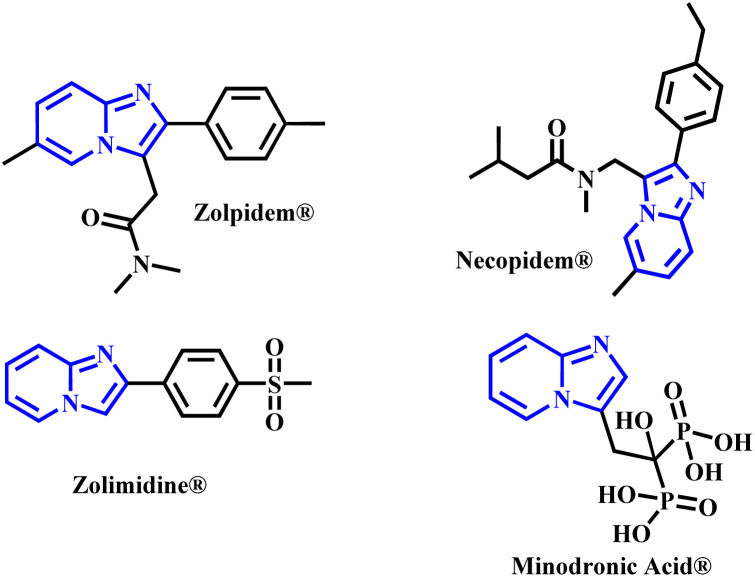 Figure 1
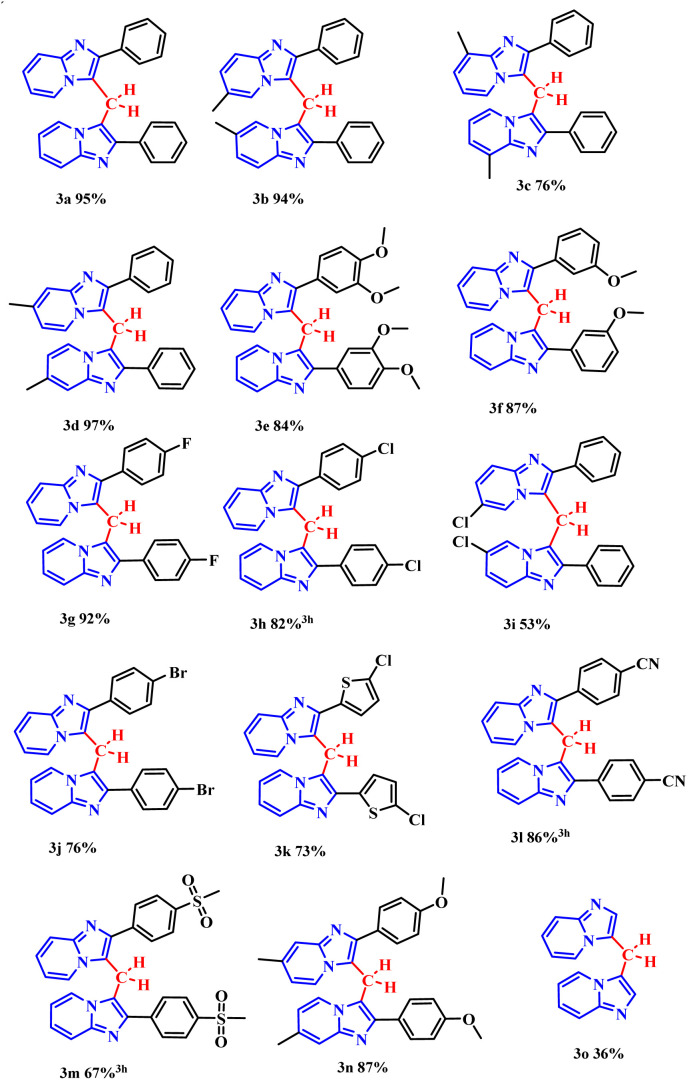 Figure 2
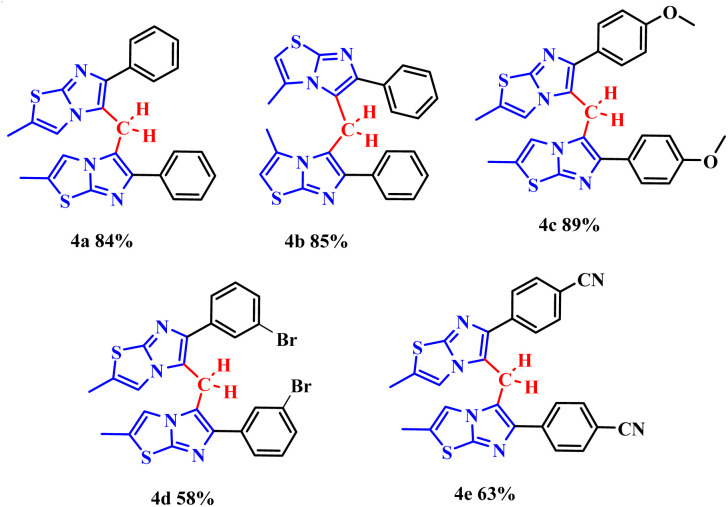 Figure 3
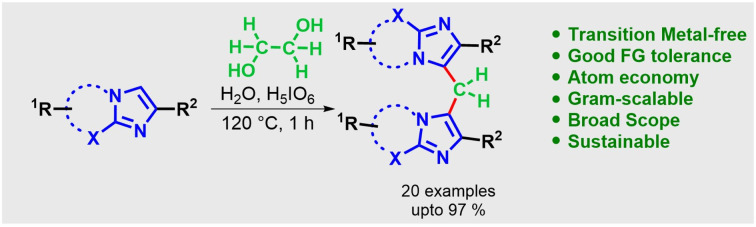 Figure 4
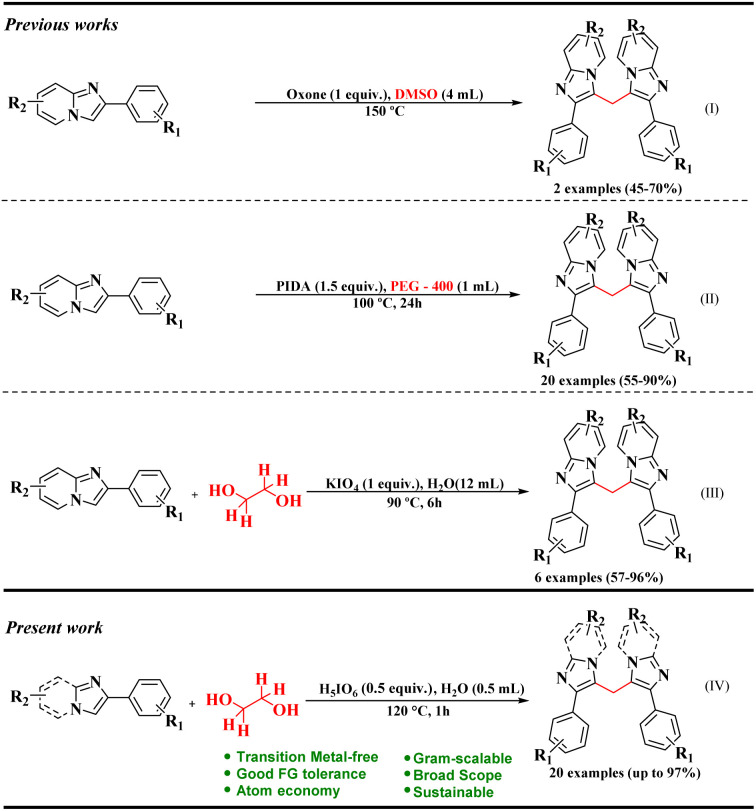 Figure 5
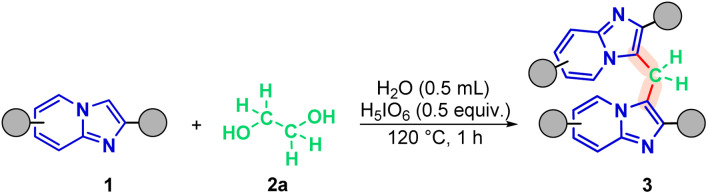 Figure 6
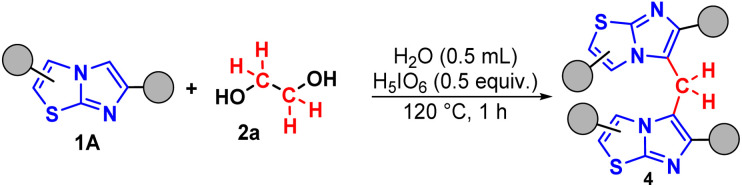 Figure 7
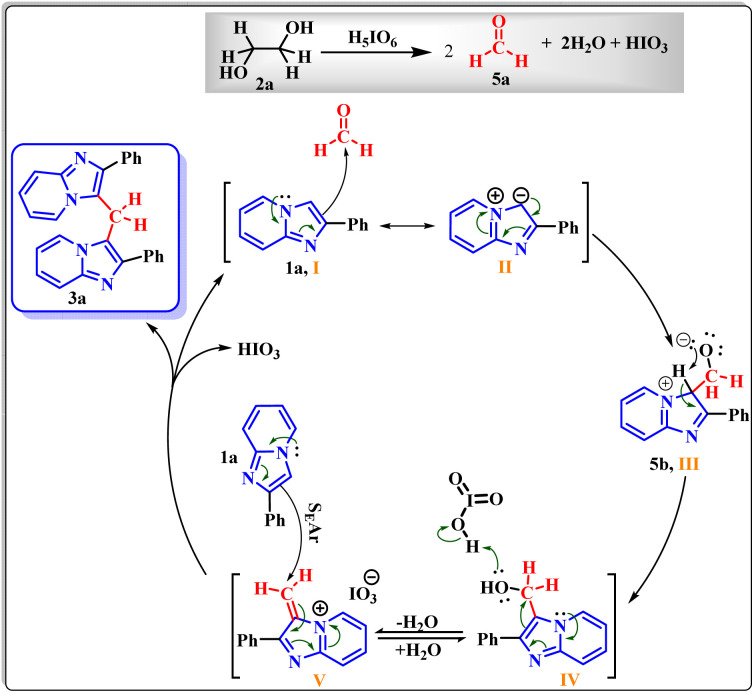 Figure 8
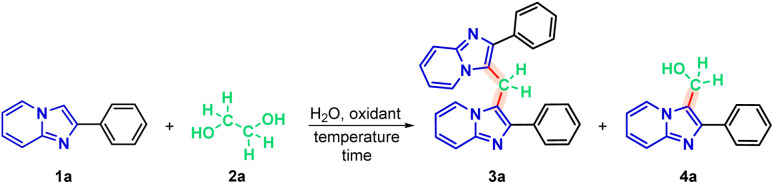 Figure 9
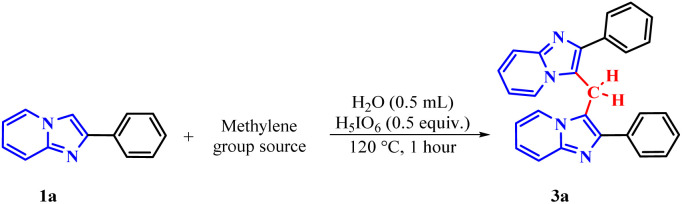 Figure 10
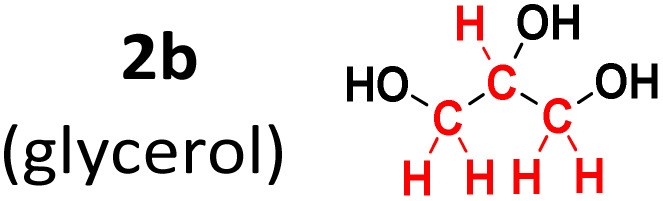 Figure 11
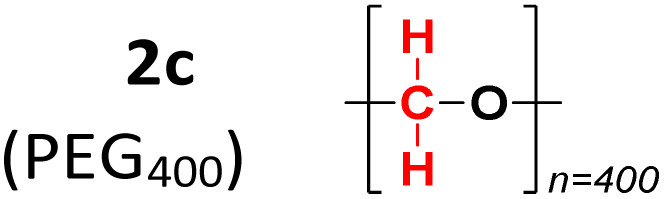 Figure 12
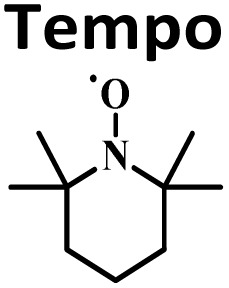 Figure 13
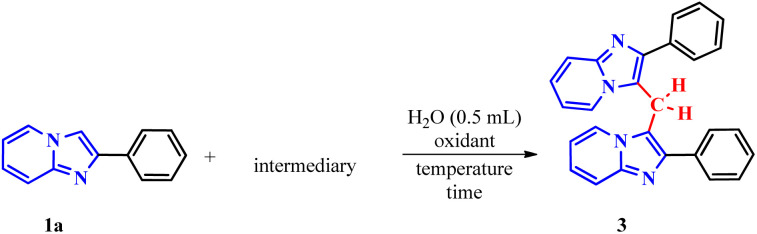 Figure 14
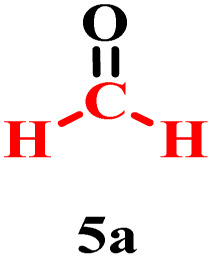 Figure 15
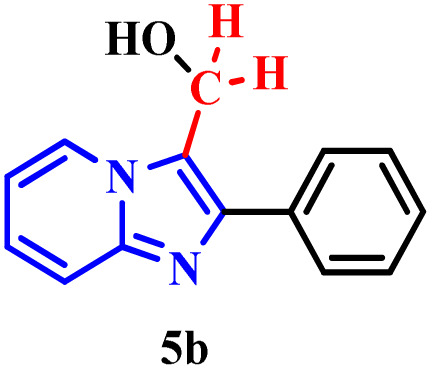 Figure 16
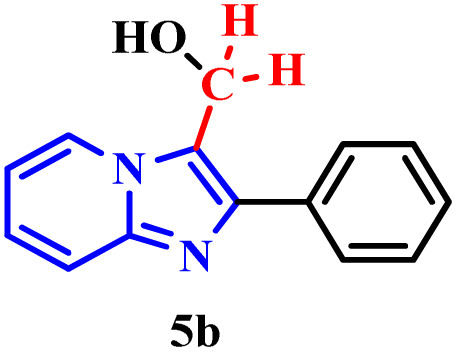 Figure 17
- —Fundação de Amparo à Pesquisa do Estado de Goiás10.13039/501100005285
- —Coordenação de Aperfeiçoamento de Pessoal de Nível Superior10.13039/501100002322
- —Instituto Nacional de Ciência e Tecnologia de Catálise em Sistemas Moleculares e Nanoestruturados10.13039/501100010432
- —Conselho Nacional de Desenvolvimento Científico e Tecnológico10.13039/501100003593
Peer Reviews
No public reviews on file for this paper yet. If you reviewed it on a platform where reviews are public (OpenReview, ICLR, NeurIPS, ICML), you can paste yours below so the community can read it here.
Videos
No videos yet. Explain this paper in a talk, walkthrough, or lecture? Add one.
Taxonomy
TopicsCatalytic C–H Functionalization Methods · Synthesis and Characterization of Pyrroles · Synthesis and Reactivity of Heterocycles
Nitrogen-containing heterocycles represent a major field of study in organic chemistry.^1^ Research in this area is extensive, driven by the significant physiological and pharmacological properties of N-heterocyclic compounds.^2,3^ They serve as fundamental building blocks for many biologically important molecules, including vitamins, nucleic acids, and pharmaceuticals.^1–3^ Their broad applicability stems from their ability to act as proton donors or acceptors and to engage in diverse non-covalent interactions, such as hydrogen bonding, van der Waals forces, hydrophobic effects, and π-stacking.^4^
Vitaku, Smith, and Njardarson (2014) published a comprehensive analysis of the structural diversity, substitution patterns, and frequency of nitrogen-containing heterocycles in US FDA-approved drugs. Their work highlights the relevance of these structures, which range from active components in therapeutic agents to key building blocks for new drug candidates.^5^
In recent decades, numerous methods have been developed for the construction and functionalization of imidazoheterocycles.^6^ Among these, imidazo[1,2-a]pyridine (IP) is particularly prominent. This scaffold is present in many commercial drugs, such as Zolpidem®, Necopidem®, Zolimidine®, and Minodronic acid® (Fig. 1), making it an important core structure with a wide range of structural variations.^7^ Furthermore, IP derivatives possess significant luminescent properties,^8–12^ and are also employed as fluorescent sensors for metal ions,^9,13^ and in phosphorescent complexes for light-emitting devices.^14^
In organic synthesis, ethylene glycol is known as a valuable two-carbon (C2) synthon but it can also be strategically cleaved to function as a C1 source for the construction of various one-carbon functional groups. Under appropriate conditions, the C–C bond of ethylene glycol can be cleaved, to generate formaldehyde in situ.^15^ The released formaldehyde can then be trapped in situ to form methylene bridges or incorporate into heterocycles.^16^
Over recent decades, several research groups have developed methods for the functionalization of the C–H bonds in IPs. Most of these methods focus on the nucleophilic C-3 position. The ability to achieve this selective functionalization without needing to protect the C-3 site is particularly advantageous from a synthetic perspective.^7^ Consequently, one important functionalization of IPs is methylenation (Scheme 1). The insertion of a methylene group into a molecule is a highly attractive synthetic strategy for constructing complex structures, especially bis-heterocyclic systems.^17^
As part of our research interest in designing and developing sustainable processes, as well as the C(sp^2^)–H functionalization of biologically-relevant heteroarenes,^18,19^ herein, we describe, a regioselective and environmentally benign protocol for the methylenation via Malaprade oxidation. Based on the interest in creating new, more sustainable synthetic routes for IP derivatives.
In the first part of the new protocol, studies were carried out to optimize the reaction conditions using 2-phenylimidazo[1,2-a]pyridine(1a) (0.3 mmol), ethylene glycol (2a) (1 molar equivalent) and 0.5 mL of distilled water. As expected, the reaction does not occur without the presence of an oxidizing agent, for 1 h at 100 °C (Table 1, entry 1). Therefore, an attempt was made to find an oxidizing agent, testing iodic acid (HIO_3_), sodium iodide (NaIO_3_) and potassium iodide (KIO_3_), keeping the other conditions constant. However, reactions did not occur (entries 2, 3 and 4, respectively). The addition of periodic acid proved to be efficient as an oxidizing agent for the system, obtaining 73% of the 2-phenylimidazo[1,2-a]pyridine dimer (3a) and 24% of the hydroxymethylated IP (4a) (entry 5).
In order to increase the yield of the dimer, a reduction of 1 molar equivalent to 0.5 of reagent 2a was performed to make it more chemoselective, proving to be efficient, since the yield was increased from 73% to 79% of the desired product (3a) and, reduced from 24% to 7% of the by-product (4a) (entry 6). When the reduction was performed to 0.4 molar equivalent of 2a, a reduction to 69% of the dimer (3a) and to 8% of the alcohol of 2-phenylimidazo[1,2-a]pyridine (4a) was observed (entry 7).
The next modification performed was the temperature, testing at 110 °C and 120 °C, obtaining, respectively, excellent values of 88% for the dimer (3a) and 5% for the alcohol (4a) (entry 8); and only the dimer (3a) in 95% yield (entry 9).
Finally, we tried to optimize the reaction time, reducing it to 30 min (entry 10), which proved to be inefficient compared to the best condition, entry 9, since with the shortest time, 62% of the desired dimer (3a) and 14% of the hydroxymethylated by-product (4a).
With the optimal reaction conditions established (Scheme 2), we applied the optimized methodology to a series of substrates derived from IPs to evaluate the generality of the new protocol.
When donating groups were attached to the pyridine nucleus of the 2-phenylimidazo[1,2-a]pyridine scaffold, the corresponding products (3b–3d, 3n) were isolated in excellent yields of 76–97%. A similar monosubstituted system with an electron-withdrawing group (3i) was also synthesized, albeit in a lower yield of 53% (Fig. 2).
The influence of substituents on the pendant phenyl group was also investigated. Electron-donating groups (1e, 1f) provided high yields (84–87%) of 3e and 3f. Conversely, electron-withdrawing groups (1g, 1h, 1j–1o) resulted in a broader yield range of 55–87% for products 3g, 3h, 3j–3n (Fig. 2). The reaction of the unsubstituted IP precursor proceeded with low efficiency, yielding only 36% of 3o. This lower yield could be due to the lack of the stabilizing aryl substituent that is present in all other substrates (3a–3n).
To prove the versatility of the method, the protocol was applied to other N-heteroarene nuclei, such as imidazo[2,1-b]thiazole 1A (Scheme 3).
In general, the desired products 4a–d were obtained in good to excellent yields. When evaluating the compounds, the influence of electronic effects is notable. Compounds with electron-withdrawing groups linked to the phenyl ring, such as 4d and 4e, presented yields in the range of 58–63%. In contrast, the compound with an electron-donating group, 4c, presented a significantly higher yield of 89% (Fig. 3).
To evaluate the method's variability compared to other sources of methylene groups, reactions were performed using glycerol (2b) and PEG-400 (2c). The reaction with glycerol gave a 92% yield, while the one with PEG-400 gave only 8% (Table 2).
In the next step, a scale-up experiment was performed using 5.5 mmol of 1a, ethylene glycol (2.75 mmol, 0.5 equiv.), and periodic acid (H_5_IO_6_, 2.75 mmol, 0.5 equiv.) in water (10 mL). The reaction mixture was heated at 120 °C for 6 hours, as a longer reaction time was anticipated to be necessary for the increased scale. The desired product (3a) was obtained in 70% yield (0.7738 g), demonstrating that the method can accommodate variations in scale.
In order to elucidate the mechanism by which the dimer formation reaction takes place, the mechanism of the methylenation reaction was examined. By adding TEMPO to the standard experiment conditions, product 3a was obtained in 92% yield (Table 3, entry 1), suggesting that the reaction occurs via an ionic pathway. The experiment was also carried out under an argon atmosphere (Table 3, entry 2), obtaining 93% yield, verifying that O_2_ does not have an active role in the reaction mechanism.
To confirm the proposed mechanism, the reaction was performed under optimized conditions by replacing ethylene glycol (2a) with formaldehyde (5a), a known source of methylene carbon (Table 4, entry 1). The successful formation of the dimer proved that formaldehyde generated in situ from the Malaprade reaction reacts with 1a.
This hypothesis was further supported using (2-phenylimidazo[1,2-a]pyridin-3-yl)methanol (5b) under the same optimized conditions (Table 4, entry 2). The high yield obtained strongly suggests that 5b is a key reaction intermediate.
To elucidate the role of periodic acid, the reaction with alcohol 5b was repeated without the oxidant (Table 4, entry 3). No product was formed, confirming that an oxidizing agent is essential, even when starting from the proposed intermediate.
The importance of water as the solvent was also investigated. The reaction was conducted without water, using a three-fold excess of ethylene glycol (2a) to act as both reagent and solvent. Only trace amounts of product 3a were detected by TLC. The isolated quantity was insufficient for quantitative analysis or characterization by NMR.
Collectively, these results reinforce the reaction mechanism proposed by Franco.^17b^ It begins with the in situ formation of formaldehyde (5a) via oxidative cleavage of ethylene glycol (2a) according to the Malaprade reaction. This is followed by the formation of the hydroxylated intermediate (5b), which subsequently undergoes nucleophilic attack to form the dimer.
Based on all experimental evidence and previous reports, we propose a tentative mechanism for this transformation (Scheme 4). The mechanism begins with the Malaprade reaction, in which the 1,2-diol (2a) is cleaved by periodic acid to generate formaldehyde (5a) in situ, along with water and iodate. Formaldehyde (5a) then reacts with 1a to form the intermediate (2-phenylimidazo[1,2-a]pyridin-3-yl)methanol, denoted as III (5b). Subsequent dehydration of the protonated species (IV) yields the key electrophilic intermediate (V). Finally, nucleophilic attack by a second molecule of 2-phenylimidazo[1,2-a]pyridine (1a) on the methylene carbon of species V leads to the formation of the final product (3a).
Conclusions
In this work, we developed a sustainable and efficient methodology for the methylenation of imidazoheteroarenes using ethylene glycol as a renewable and economical source of formaldehyde (C1), generated in situ via Malaprade oxidation. The protocol employs water as a non-toxic solvent, stoichiometric reagents, and mild reaction conditions, aligning with the principles of green chemistry. The method is highly regioselective, operationally simple, and delivers excellent yields (up to 97%) across a broad substrate scope, including imidazo[1,2-a]pyridines and imidazo[2,1-b]thiazoles. Mechanistic studies indicate an ionic pathway, with formaldehyde and a hydroxymethylated intermediate playing key role. Scalability was demonstrated (70% yield on gram-scale), highlighting the method's robustness for preparative applications.
This approach not only advances the synthetic toolbox for C–H functionalization of biologically relevant heterocycles but also underscores the potential of renewable feedstocks in sustainable chemistry. Future studies may unlock new pharmacological applications of these synthesized bis-heterocycles, leveraging the structural diversity enabled by this methodology.
Author contributions
Conceptualization: M. S. F., S. S., J. R., and A. L. B.; methodology: M. S. F. and M. Y. G. W.; validation: M. S. F.; formal analysis: M. S. F., M. Y. G. W., I. M. O., and B. S. S.; investigation: M. S. F., M. Y. G. W., I. M. O., B. S. S., S. S., and J. R.; resources: S. S., J. R., and A. L. B.; data curation: M. S. F., M. Y. G. W., and I. M. O.; writing – original draft: M. S. F., and J. R.; writing – review and editing: S. S. and J. R.; visualization: S. S., J. R., and A. L. B.; supervision: S. S., J. R., and A. L. B.; project administration: S. S., J. R., and A. L. B.; funding acquisition: S. S., J. R., and A. L. B. All authors read and approved the final draft of the manuscript.
Conflicts of interest
There are no conflicts to declare.
Supplementary Material
RA-016-D5RA09947A-s001
The reference list from the paper itself. Each links out to its DOI / PubMed record.
- 1Roy S. Das S. K. Khatua H. Das S. L. Chattopadhayay B. Road Map for the Construction of High-Valued N-Heterocycles via Denitrogenative Annulation Acc. Chem. Res.2021544395440910.1021/acs.accounts.1c 0056334761918 · doi ↗ · pubmed ↗
- 2(a) Aroura L. M. Alminderej F. M. Alhumayln H. R. Alsaimi A. H. Medini F. Mohammed H. A. Almahmoud S. A. Khan R. A. Mekni N. H. Benzimidazole(s): synthons, bioactive lead structures, total synthesis, and the profiling of major bioactive categories RSC Adv.202515757176084016135310.1039/d 4ra 08864 f PMC 11951861 · doi ↗ · pubmed ↗
- 3(a) Yang X. Jiao Z. Fan C. Ye W. Lv S. Wang X. Wang C. Zhagn K. Ke X. Zhou W. Macrocyclic Compounds: Unveiling Their Distinctive Antiviral Advantages in Medicinal Research J. Med. Chem.202568210352107110.1021/acs.jmedchem.5c 0243041070853 · doi ↗ · pubmed ↗
- 4Kerru N. Gummindi L. Maddila S. Gngu K. K. Jonnalagadda S. B. A Review on Recent Advances in Nitrogen-Containing Molecules and Their Biological Applications Molecules 202025190910.3390/molecules 2508190932326131 PMC 7221918 · doi ↗ · pubmed ↗
- 5Vitaku E. Smith D. T. Njardarson J. T. Analysis of the Structural Diversity, Substitution Patterns, and Frequency of Nitrogen Heterocycles among U.S. FDA Approved Pharmaceuticals: Miniperspective J. Med. Chem.201457102571027410.1021/jm 501100 b 25255204 · doi ↗ · pubmed ↗
- 6(a) Bagdi A. K. Santra S. Monir K. Hajra A. Synthesis of imidazo[1,2-a]pyridines: a decade update Chem. Commun.2015511555157510.1039/C 4CC 08495 K 25407981 · doi ↗ · pubmed ↗
- 7(a) Burkner G. T. Dias D. A. Souza K. F. S. d. Araújo A. J. P. d. Basilio D. C. L. S. Jacobsen F. T. Moraes A. C. R. d. Silva-Filho S. E. Cavalcante M. F. d. O. Moraes C. A. d. O. Saba S. Macedo M. L. R. Paredes-Gamero E. J. Rafique J. Parisotto E. B. Selenylated Imidazo[1,2-a]pyridine Induces Cell Senescence and Oxidative Stress in Chronic Myeloid Leukemia Cells Molecules 20232889310.3390/molecules 2802089336677949 PMC 9860887 · doi ↗ · pubmed ↗
- 8Salim R. Ech-chihbi E. Oudda H. Hajjaji E. F. Taleb M. Jodeh S. A Review on the Assessment of Imidazo[1,2-a]pyridines As Corrosion Inhibitor of Metals J. Bio Tribo Corros.2019514