Frustrated Magnetism in FeGe3O4 with a Chiral Trillium Network
Matt Boswell, Mingyu Xu, Haozhe Wang, Mouyang Cheng, Na Li, Xuefeng Sun, Haidong Zhou, Huibo Cao, Mingda Li, Weiwei Xie

TL;DR
FeGe3O4 is a new magnetic material with a unique structure that shows unusual magnetic behavior due to geometric frustration.
Contribution
FeGe3O4 is a newly identified compound with a chiral trillium network that exhibits frustrated magnetism and no long-range ordering.
Findings
FeGe3O4 crystallizes in the noncentrosymmetric cubic space group P213 with a double-trillium lattice.
Magnetic interactions in FeGe3O4 show strong frustration with only 34% of expected magnetic entropy recovered at 2.4 K.
No long-range magnetic ordering is detected down to 0.06 K in FeGe3O4.
Abstract
The discovery of new magnetic ground states in geometrically frustrated lattices remains a central challenge in materials science. Here, we report the synthesis, structural characterization, and frustrated magnetic properties of FeGe3O4, a newly identified compound that crystallizes in the noncentrosymmetric cubic space group P213. In this structure, Fe atoms form an intricate double-trillium lattice with nearest-neighbor Fe–Fe distances of ∼4.2 Å, while Ge2+ ions mediate magnetic interactions through Fe–Ge–Fe pathways. Field-dependent magnetization at 2 K shows a pronounced nonlinearity, reaching a maximum moment of 2.55(3) μB/Fe2+ at 70 kOe without evidence of saturation. Magnetic susceptibility, heat capacity, and neutron scattering collectively reveal the onset of short-range magnetic interactions near 5 K, with no long-range ordering detected down to 0.06 K. Specific heat…
Genes, proteins, chemicals, diseases, species, mutations and cell lines named across the full text — each resolved to its canonical identifier and authoritative record.
Click any figure to enlarge with its caption.
 1
1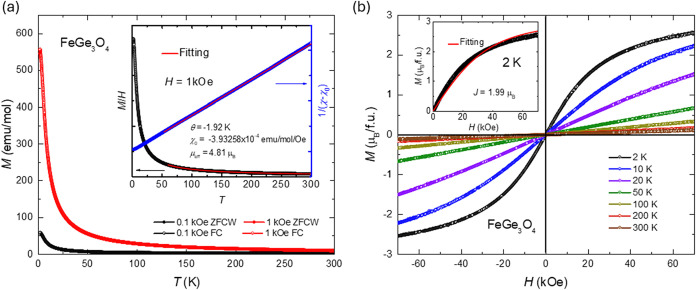 2
2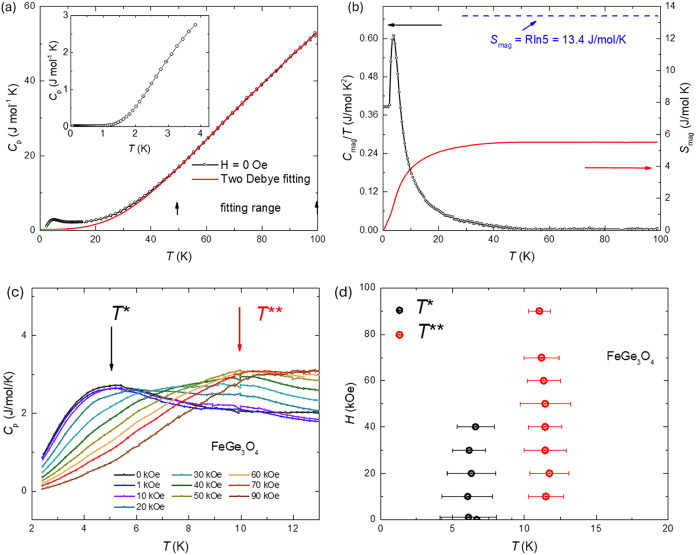 3
3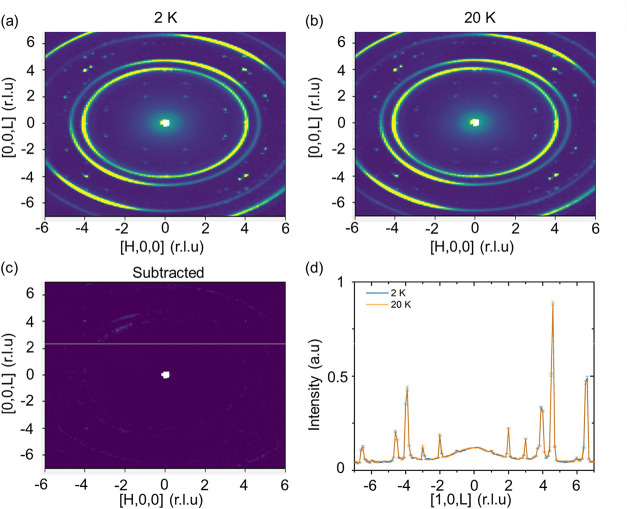 4
4- —U.S. Department of Energy10.13039/100000015
- —U.S. Department of Energy10.13039/100000015
- —Oak Ridge Institute for Science and Education10.13039/100006229
- —National Social Science Fund of China10.13039/501100012456
- —National Natural Science Foundation of China (NSFC)NA
- —National Natural Science Foundation of China (NSFC)NA
- —National Natural Science Foundation of China (NSFC)NA
- —National Basic Research Program of China (973 Program)NA
Peer Reviews
No public reviews on file for this paper yet. If you reviewed it on a platform where reviews are public (OpenReview, ICLR, NeurIPS, ICML), you can paste yours below so the community can read it here.
Videos
No videos yet. Explain this paper in a talk, walkthrough, or lecture? Add one.
Taxonomy
TopicsAdvanced Condensed Matter Physics · Physics of Superconductivity and Magnetism · Iron-based superconductors research
Introduction
Geometrically frustrated magnets are of significant interest due to their macroscopic ground-state degeneracies, which give rise to a variety of exotic quantum effects. ?−? ? A common feature in the interaction networks of frustrated materials is the presence of odd-membered rings, such as triangles and pentagons.? Despite the diverse structural topologies that can give rise to frustration, much of the research in this field has focused on a relatively limited subset of structure types commonly found in oxide materials, including pyrochlore, triangular, Kagome, and face-centered cubic lattices. ?−? ? Expanding the study of geometric frustration to a less common lattice geometry offers the potential to uncover novel magnetic phases and their associated physics. Recently, the cubic trillium lattice, characterized by the chiral space group P2_1_3, has been investigated as a framework for frustrated magnetism. This lattice features a network of corner-sharing triangles, which naturally predisposes it to geometric frustration. ?−? ? ? ? Although magnets adopting the trillium lattice are rare, primarily intermetallics referred to as B20 compounds, they exhibit a wide array of intriguing physical phenomena.? For instance, in MnSi and CoSi, magnetic skyrmions emerge due to the interplay between ferromagnetism and the Dzyaloshinskii-Moriya interaction. ?,? FeSi has been proposed as a d-electron topological Kondo insulator candidate.? Other compounds, such as EuPtSi and EuPtGe, display behavior consistent with strongly correlated spin liquids, ?,? while CeIrSi is considered a candidate for Ising trillium spin ice.? Theoretically, a simple nearest-neighbor Heisenberg antiferromagnet on the chiral trillium lattice has been predicted to support a classical spin liquid (CSL) phase over a wide temperature range, with 120° helical order in its frustrated magnetic ground state. ?,? From a structural perspective, B20 compounds such as MSi (M = Mn, Fe, Co) contain a single trillium lattice with nearest M-M distances around 2.7 Å. These short distances often promote long-range magnetic ordering, even under conditions of geometric frustration.? For instance, external stimuli, such as pressure-induced quantum phase transitions, can drive emergent behaviors in these systems. ?,? However, theoretical studies suggest that the degree of frustration in single trillium lattices like those in B20 compounds is insufficient to suppress long-range order entirely due to the short M-M distance.
Later investigations, both experimental and computational, have revealed that quantum spin liquid (QSL) behavior can arise in systems with interconnected trillium lattices. Representative examples include compounds in the langbeinite family, K_2_M_2_(SO_4_)3 (M = Fe, Co, Mn, Cr), where the interconnected trillium lattices feature nearest M-M distances ranging from 4.4 to 6.2 Å. ?,? Another notable system, NaMn(HCOO)3, contains magnetic Mn^2+^ (S = 5/2) ions arranged in a trillium lattice with nearest-neighbor Mn–Mn distances of approximately 5.6 Å.? The compound K_2_M_2_(SO_4_)3 features a network of trigonally distorted MO_6_ octahedra, which are interconnected via SO_4_ ^2–^ groups. This connectivity establishes an M–O–S–O–M supersuperexchange pathway that mediates magnetic interactions between M^2+^ ions. Within this structure, there are two distinct crystallographic M^2+^ sites, differentiated by their M-O bond distances, with each site forming a single trillium lattice. Similarly, in NaMn(HCOO)3, neighboring Mn^2+^ cations are connected by HCOO^–^ ions, resulting in an Mn–O–C–O–Mn superexchange pathway. Both compounds exhibit characteristics of geometric frustration, including the suppression of long-range magnetic order and the emergence of spin-liquid-like behavior, driven by the intricate interplay of their structural and magnetic interactions.
To the best of our knowledge, no compound has been reported to adopt a chiral trillium network with significantly larger M-M distances that would effectively suppress long-range magnetic interactions via direct exchange. Moreover, such a system featuring an M-O-M or M-T-M pathway for magnetic superexchange has not yet been observed. The lack of compounds with these characteristics represents a critical gap in the exploration of geometric frustration and the potential emergence of novel magnetic phases in trillium lattice framework. On the other hand, Fe and Ge form various binary phases, including the B20 FeGe phase.? Based on this, our research focused on Fe–Ge–O ternary phases to investigate the potential for discovering novel trillium phases. Herein, we present a comprehensive structural characterization along with an analysis of the magnetic frustration of FeGe_3_O_4_, emphasizing the Fe–Fe exchange interactions within the trillium lattice.
Experiments and Calculations
Synthesis of
FeGe3O4 Crystals
FeGe_3_O_4_ crystals were synthesized by using the chemical vapor transport (CVT) method. Stoichiometric amounts of Fe granules (Alfa Aesar, 99.98%), Fe_2_O_3_ powder (JT Baker, Baker Analyzed Reagent grade), finely ground Ge pieces (Thermo Scientific, 99.9999+%), and GeO_2_ powder (Alfa Aesar, 99.999%) were mixed thoroughly in an atomic ratio of 2:2:9:9, with a total mass of approximately 300 mg. To facilitate the transport process, ∼50 mg I_2_ flakes (Fisher Chemical) were added as the chemical transport agent. The mixture was sealed in a quartz tube under vacuum (∼10^–5^ Torr) and subjected to a thermal gradient by heating to 600 °C for 1 week. Subsequently, the tubes were cooled to room temperature at a controlled rate of 10 °C per hour. As a result, red transparent crystals with dimensions of approximately 1–2 mm were successfully grown. All products are stable toward decomposition in air and moisture.
Phase Analyses and Chemical Compositions
The synthesized samples were finely ground and analyzed for phase identification and purity using powder X-ray diffraction (PXRD) on a Bruker Davinci powder X-ray diffractometer equipped with Cu Kα radiation (λ_Kα_ = 1.5406 Å). The upper and lower discriminator values were set to 0.40 and 0.18 V, respectively, to mitigate the background due to fluorescence. Diffraction patterns were collected over a 2θ range of 5–120° with a step size of 0.010° in step-scan mode, utilizing a scintillation detector. Phase identification and lattice parameter determination were performed through Rietveld refinements using the GSAS-II software package.? Chemical composition analysis was conducted using a JEOL 6610LV scanning electron microscope (SEM) coupled with an energy-dispersive X-ray spectroscopy (EDS) detector (Oxford Instruments Isis X-ray analyzer). Samples were affixed to carbon tape before placement in the SEM chamber and analyzed at an accelerating voltage of 20 kV. Spectra were acquired with a collection time of 100 s, examining multiple points within each phase across various grains. Compositional estimates were refined by Oxford’s SEM Quant software, incorporating corrections for matrix effects to ensure accuracy.
Crystal Structure Determination
A single crystal with dimensions of 0.098 × 0.063 × 0.029 mm^3^ was picked up, mounted on a nylon loop with paratone oil, and measured using a Rigaku XtalLAB Synergy, Dualflex, Hypix single-crystal X-ray diffractometer equipped with an Oxford Cryosystems 800 low-temperature device. Data acquisition was performed using ω scans with Mo K_α_ radiation (λ = 0.71073 Å, microfocus sealed X-ray tube, 50 kV, 1 mA). The measurement strategy, including the total number of runs and images, was determined using the strategy calculation feature in CrysAlisPro software (version 1.171.43.143a, Rigaku OD, 2024). Data reduction induced correction for Lorentz polarization. Numerical absorption correction based on Gaussian integration over a multifaceted crystal model. Empirical absorption correction was applied using spherical harmonics implemented in SCALE3 ABSPACK scaling algorithm. Structure solutions and refinement were conducted using SHELXTL Software Package.?
Physical Properties
Measurements of FeGe3O4
Temperature- and magnetic-field-dependent magnetization measurements of FeGe_3_O_4_ single crystals were carried out using a Quantum Design Magnetic Property Measurement System (MPMS3). The direct-current magnetic susceptibility measurements were performed in the temperature range of 2–300 K under both zero-field-cooled (ZFC) and field-cooled (FC) modes, with an applied field of 100 Oe and 1 kOe. Field-dependent isothermal magnetization measurements were also performed employing magnetic fields ranging from 0 to 7 T and at various temperatures. Temperature-dependent specific heat measurements on the crystals ranging in mass from 1 to 3 mg were carried out using a Quantum Design, Physical Property Measurement System (PPMS DynaCool) in the temperature range of 2.4–100 K at various applied magnetic fields up to 9 T. Low-temperature specific heat measurements on the crystals with the total mass ∼6.4 mg were carried out down to 0.06 K without an applied magnetic field.
Single-Crystal Neutron
Diffraction
Single-crystal neutron diffraction was conducted at CORELLI at the Spallation Neutron Source at Oak Ridge National Laboratory. Two crystals were measured, both at 2 and 20 K with angles ranging from 0 to 360° incrementing by 3°.?
Results and Discussion
Synthesis
and Structural Analysis of FeGe3O4
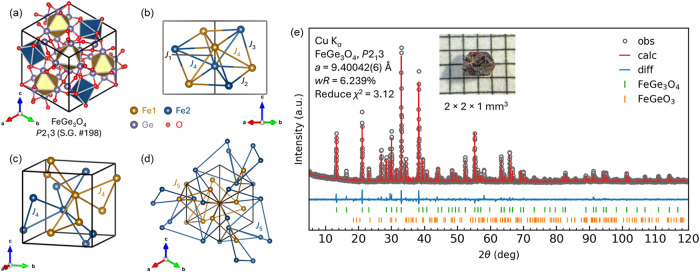
Synthetic attempts to prepare FeGe_3_O_4_ by reacting Fe_2_O_3_, GeO_2_, and Ge as a reducing agent resulted in mixtures of FeGe_3_O_4_ and FeGeO_3_ phases, as predicted by the phase diagram in Figure S1. To gain deeper insight into the structural features of FeGe_3_O_4_, single-crystal X-ray diffraction analysis was performed, focusing on elemental distributions, interatomic distances, and coordination environments, as shown in Figurea–d. The results of single-crystal diffraction are detailed in Tables S1 and S2. FeGe_3_O_4_ crystallizes in the noncentrosymmetric cubic space group P2_1_3 (No. 198), with two distinct Fe sites occupying the 4a Wyckoff positions. Although Fe^2+^ and Ge^2+^ were initially considered as mixed occupancies at these sites, refinement indicated no observable site mixing. The Fe atoms in the 4a sites form a unique double-trillium lattice. This interconnected lattice structure exhibits nearest Fe–Fe distances of approximately 4.2 Å.
(a) Crystal structure of FeGe3O4 (P213, S.G. 198) with two distinct [FeGe6] and [FeO6] polyhedra shown. Brown, blue, violet, and red represent Fe1, Fe2, Ge, and O atoms. (b–d) Exchange interactions (J 1 to J 5 between Fe2+ ions). (e) Powder XRD pattern and Rietveld refinement of FeGe3O4. Bragg peak positions of each phase included are represented by vertical tick marks. FeGeO3 exists as an impurity powder. (Inset) Optical microscope image (1 mm graph paper) of FeGe3O4.
For the powder X-ray diffraction (PXRD) patterns, all scale factors and lattice parameters were refined, resulting in a reduced χ^2^ value of approximately 3.12 and weighted profile residuals (R wp) of 6.2%. The diffraction pattern shown in Figuree confirms that FeGe_3_O_4_ is the predominant phase in the synthesized products, with a minor secondary phase of FeGeO_3_ present at an estimated concentration of less than 5%. Consistent with single-crystal diffraction and SEM analyses, all refinements confirm a Fe/Ge molar ratio close to 1:3 for this phase. This agreement across multiple characterization techniques validates the structural and compositional integrity of the synthesized FeGe_3_O_4_ sample. Single crystals of FeGe_3_O_4_ were manually selected for physical property measurements to ensure the sample quality and phase purity.
The temperature dependence of magnetization in both ZFC and FC modes is presented in Figurea with no significant difference. The temperature-dependent magnetization measurement shows tail-like behavior without any feature indicating a phase transition. As shown in the inset of Figurea, magnetization at 1 kOe is fitted using Curie–Weiss (CW) law (χ = C/(T – θ) + χ_0_) from 60 to 300 K. Here, χ represents the magnetic susceptibility, C is the Curie constant, T is the temperature, θ is the Weiss temperature, and χ_0_ is a temperature-independent susceptibility term. The effective moment is around 4.81 μ_B_, which suggests that the Fe ion’s valence is +2 and is at a high-spin state (high-spin Fe^2+^ μ_eff_ = 4.9 μ_B_). This result consists of the hypothesis of the FeGe_3_O_4_ valence states in the phase diagram shown in Figure S1. Also, the Weiss temperature is negative (−2 K), which indicates dominant antiferromagnetic interactions in the FeGe_3_O_4_, and is similar to the one observed in another quantum spin liquid candidate YbMgGaO_4_ (θ = −4 K).?
(a) Temperature dependence of magnetic susceptibility at 0.1 and 1 kOe. Inset: Curie–Weiss fitting result. (b) Magnetic field dependence of magnetization with the Brillouin function fitting.
As shown in Figureb, field-dependent magnetization measurements show nonlinear behavior at 2 K. The observed maximum magnetization, M max = 2.55(3) μ_B_/Fe, was not saturated when the maximum field of 70 kOe was applied. Magnetization curves measured at various temperatures exhibit field-dependent behavior that can be fitted using the Brillouin function as follows?
where M is the magnetic moment; M s is saturation magnetization; *g_J_
- is Landé g-factor; and *B_J_
- is the Brillouin function. Since the CW fitting result agrees with the high-spin state of Fe^2+^, S and L should be 2. As shown in the inset of Figureb, the total moment from the Brillouin function fitting, J, is 2 and is in the range of |L – S| and L + S. The deviation in the fit may arise from how accurately the temperature captures the effects of thermal frustration. Fitting is much better as a free temperature parameter at around 3 K instead of fixing at 2 K.
Figurea shows the temperature-dependent specific heat of FeGe_3_O_4_. The transition feature appears around 10 K. The phonon contribution exists dominantly in FeGe_3_O_4_ when the temperatures are above 40 K. If we consider only two contributions in the specific heat, C p = C phonon + C mag, the data was fitted using two Debye model with the temperature ranging from 40 to 100 K. This yields θ_D1_ = 307(3) K and θ_D2_ = 887(13) K, shown in Figurea. The inset gives the low-temperature specific heat measurement, and there is no transition observed before 0.061 K. The magnetic specific heat C m is obtained by subtracting the phonon contribution from the fitting. The total entropy S mag = ∫(C m/T)dT was calculated to be around 4.6 J/mol-K. The magnetic entropy should be S mag = R ln(2J + 1). Since J = 2, as shown in Figureb, the saturation magnetic entropy is R ln(5) = 13.4 J/mol/K, and only 34% of the entropy is detected above 2 K. This indicates that FeGe_3_O_4_ should be the quantum spin liquid and there is no long-range order detected, which is not similar to other trillium compounds, such as K_2_Ni_2_(SO_4_)3.? As shown in Figurec, the specific heat exhibits evolving features around 10 K with an increasing magnetic field, although no sharp peaks are observed. Given the absence of anomalies in the temperature-dependent magnetization data between 2 and 300 K, we attribute these specific heat features to the short-range magnetic order. Below 40 K, the temperature-dependent specific heat displays a broad maximum near 5 K at zero magnetic field. As the magnetic field increases, this broad peak (T* ∼ 6.5 K) diminishes, while another broader maximum (T** ∼ 11.3 K) emerges and grows more prominent, as shown in the temperature-magnetic field phase diagram in Figured.
(a) Temperature-dependent total specific heat of FeGe3O4 at zero field, together with the two Debye models representing the phonon contribution. The inset gives the low-temperature specific heat measurement. (b) Zero field temperature dependence of the magnetic specific heat and magnetic entropy. (c) Temperature-dependent specific heat for various magnetic fields. T and T** give the two peaks in the temperature-dependent specific heat. (d) Temperature-magnetic field phase diagram of FeGe3O4.*
The lack of magnetic ordering is further confirmed with elastic neutron scattering. Single-crystal neutron scattering was conducted at Oak Ridge National Lab beamline 9, CORELLI. A comparison between 2 and 20 K single-crystal neutron scattering is shown in Figure. Between 2 and 20 K, the intensities in the low-Q range match identically within error, which is further seen from a direct subtraction (Figurec,d). The lack of any order seen in neutron scattering further confirms the lack of ordering seen in the previously mentioned measurements.
Single-crystal neutron diffraction map of FeGe3O4. (HK0) plane plots at (a) 2 K and (b) 20 K. (c) Directly subtracted map highlighting the difference between 2 and 20 K. (d) Comparative intensity plots of (10L) cut at the two temperatures.
Conclusion
In this work, we report the synthesis and comprehensive characterization of FeGe_3_O_4_, a previously unrecognized oxide that crystallizes in the noncentrosymmetric cubic space group P2_1_3 and hosts an intricate double-trillium lattice of Fe atoms. Single-crystal structural refinements confirm well-defined, fully ordered Fe sites with no detectable site mixing, establishing a robust structural platform for unconventional magnetism. Magnetic susceptibility and heat-capacity measurements reveal no signatures of long-range magnetic order down to 0.06 K, despite the presence of strong local moments, which is an immediate indication of geometric frustration within the Fe sublattice. The nonlinear but nonsaturated magnetization at low temperature, together with a broad specific heat anomaly, substantial suppression of magnetic entropy, and diffuse features in neutron scattering, all point toward a short-range correlated, highly frustrated magnetic state. These combined experimental results establish FeGe_3_O_4_ as a rare oxide platform in which geometric frustration, competing exchange interactions, and noncentrosymmetric lattice symmetry converge, offering fertile ground for exploring unconventional magnetic phenomena in three-dimensional frustrated systems.
Supplementary Material
The reference list from the paper itself. Each links out to its DOI / PubMed record.
- 1Lee S.-H.Broholm C.Ratcliff W.Gasparovic G.Huang Q.Kim T. H.Cheong S.-W.Emergent Excitations in a Geometrically Frustrated Magnet Nature 2002418690085685810.1038/nature 0096412192404 · doi ↗ · pubmed ↗
- 2Wang R. F.Nisoli C.Freitas R. S.Li J.Mc Conville W.Cooley B. J.Lund M. S.Samarth N.Leighton C.Crespi V. H.Schiffer P.Artificial ‘Spin Ice’ in a Geometrically Frustrated Lattice of Nanoscale Ferromagnetic Islands Nature 2006439707430330610.1038/nature 0444716421565 · doi ↗ · pubmed ↗
- 3Syzranov S. V.Ramirez A. P.Eminuscent Phase in Frustrated Magnets: A Challenge to Quantum Spin Liquids Nat. Commun.2022131299310.1038/s 41467-022-30739-035637214 PMC 9151641 · doi ↗ · pubmed ↗
- 4Iwase F.Local Spin Frustration and Order in Fractional Cairo Pentagonal Lattice Under Magnetic Fields J. Phys. Soc. Jpn.202392707470410.7566/JPSJ.92.074704 · doi ↗
- 5Talanov M. V.Talanov V. M.Structural Diversity of Ordered Pyrochlores Chem. Mater.20213382706272510.1021/acs.chemmater.0c 04864 · doi ↗
- 6Reig-i-Plessis D.Hallas A. M.Frustrated Magnetism in Fluoride and Chalcogenide Pyrochlore Lattice Materials Phys. Rev. Mater.20215303030110.1103/Phys Rev Materials.5.030301 · doi ↗
- 7Frandsen B. A.Fischer H. E.A New Spin on Material Properties: Local Magnetic Structure in Functional and Quantum Materials Chem. Mater.202436199089910610.1021/acs.chemmater.4c 0153539398371 PMC 11467898 · doi ↗ · pubmed ↗
- 8Bulled J. M.Paddison J. A. M.Wildes A.Lhotel E.Cassidy S. J.Pato-Doldán B.Gómez-Aguirre L. C.Saines P. J.Goodwin A. L.Geometric Frustration on the Trillium Lattice in a Magnetic Metal-Organic Framework Phys. Rev. Lett.20221281717720110.1103/Phys Rev Lett.128.17720135570439 · doi ↗ · pubmed ↗