rs6971 TSPO polymorphism in Parkinson's disease
Bina Patel, Marta Camacho, Jonathan R. Evans, David P. Breen, Thomas Foltynie, Sarah L. Mason, Gemma Cummins, Ruwani Wijeyekoon, Roger A. Barker, Caroline Helen Williams‐Gray

Abstract
Genes, proteins, chemicals, diseases, species, mutations and cell lines named across the full text — each resolved to its canonical identifier and authoritative record.
Click any figure to enlarge with its caption.
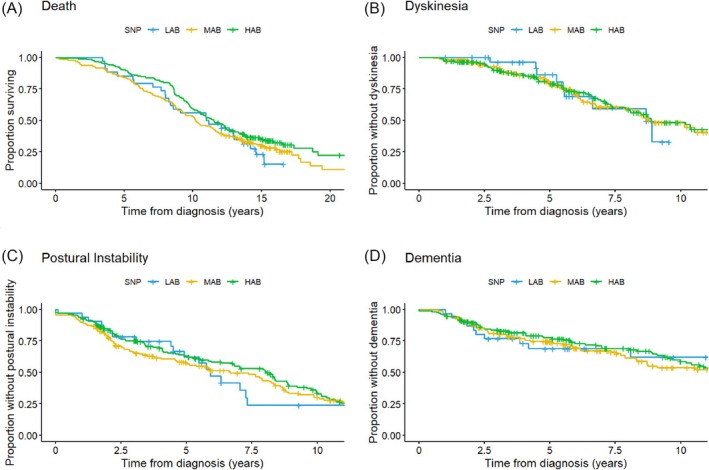 Figure 1
- —Cambridge Centre for Parkinson‐Plus
- —Parkinson's UK10.13039/501100000304
- —Van Geest Foundation
- —Cure Parkinson's Trust10.13039/100008487
- —Patrick Berthoud Charitable Trust10.13039/501100004218
- —Medical Research Council10.13039/501100000265
- —National Institute for Health and Care Research10.13039/501100000272
- —Wellcome Trust10.13039/100010269
Peer Reviews
No public reviews on file for this paper yet. If you reviewed it on a platform where reviews are public (OpenReview, ICLR, NeurIPS, ICML), you can paste yours below so the community can read it here.
Videos
No videos yet. Explain this paper in a talk, walkthrough, or lecture? Add one.
Taxonomy
TopicsParkinson's Disease Mechanisms and Treatments · Neuroinflammation and Neurodegeneration Mechanisms · Neurological diseases and metabolism
Mitochondrial translocator protein (TPSO) positron emission tomography (PET) imaging is widely used to study neuroinflammation in vivo. TSPO, located on the outer mitochondrial membrane, is upregulated in microglia in association with neuroinflammation,1 with increased binding observed in Parkinson's disease (PD).2 The first‐generation TSPO ligand [^11^C]PK11195 has important limitations due to low signal‐to‐noise ratio, and a high production failure rate. Second‐generation TSPO ligands (eg, [^11^C]PBR28/[^18^F]DPA714) offer improved binding affinity, specificity, and bioavailability,3 making them valuable in clinical studies as an index of brain inflammation. Since chronic neuroinflammation emerges early in PD and potentially drives disease progression,4 TSPO‐PET imaging can help evaluate the effectiveness of anti‐inflammatory therapies and support the development of disease‐modifying therapies.
However, second‐generation TSPO ligands are sensitive to a single nucleotide polymorphism in the TSPO gene (rs6971 Ala147Thr) producing high‐ (HAB), mixed‐ (MAB) and low‐ (LAB) affinity binders.5 LABs, (approximately 10% of Europeans6), have lower signal‐to‐noise ratios, challenging scan interpretation, often leading to their exclusion from studies utilizing these ligands, potentially introducing selection bias and limiting generalizability.
A previous PD study reported that the rs6971 polymorphism did not affect baseline demographics but HABs progressed to dyskinesia faster.7 This study was limited by a relatively small sample size (n = 150) and short follow‐up period. We aimed to further explore the impact of TSPO genotype on disease progression and clinical outcomes in PD.
393 participants (98.5% Caucasian) with idiopathic PD from two incident population‐representative cohorts: Parkinsonism: Incidence and Cognitive Heterogeneity in Cambridgeshire (PICNICS) and Cambridgeshire Parkinson's Incidence from GP to Neurologist (CamPaIGN) were genotyped and underwent at least 12 years of follow‐up with regular clinical assessments (Supplementary Methods). The frequencies of HABs (46.6%), MABs (44.8%), and LABs (8.6%) matched prior European data.6 No statistical difference was seen between the genotypic groups in terms of baseline characteristics including sex, age at diagnosis, levodopa equivalent daily dose (LEDD), Beck Depression Inventory (BDI), Mini Mental State Examination (MMSE), and Movement Disorder Society Unified Parkinson's Disease Rating Scale‐Part III (MDS‐UPDRS‐III) scores (Table S1).
Kaplan–Meier survival analysis showed no difference in progression to dyskinesia, dementia, postural instability, or death between the genotypic groups (Fig. 1). Cox proportional hazard regression models confirmed that rs6971 was not a significant predictor of these outcomes (Table S2).
Line plots with locally estimated scatterplot smoothing (LOESS) were used to visualize longitudinal changes in MDS‐UPDRS‐III, MMSE, and Addenbrookes Cognitive Examination Revised (ACE‐R) scores between the genotypic groups (Fig. S1). Linear mixed‐effects models of longitudinal MDS‐UPDRS‐III and MMSE scores confirmed that rs6971 was not a predictor of motor or cognitive progression and was the first variable removed via backward selection (Tables [Link], [Link]). The MMSE model demonstrated a poor fit due to ceiling effects and non‐normal data distribution. An alternative model using ACE‐R scores also found no significant effect of rs6971 on cognitive decline (Table S5).
Our results indicate that the rs6971 genetic polymorphism is not associated with baseline clinical characteristics or disease progression in PD, supporting the continued exclusion of LABs from studies using second‐generation TSPO‐PET ligands without compromising generalizability.
Author Roles
(1) Research Project: A. Conception, B. Organization, C. Execution, D. Genotyping, E. Clinical Data Collection, F. Supervision; (2) Statistical Analysis: A. Design, B. Execution, C. Review and Critique; (3) Manuscript Preparation: A. Writing of the First Draft, B. Review and Critique.B.P.: 1A, 1D, 1E, 2B, 3A, 3B.
M.C.: 1E, 3B.
J.R.E.: 1E, 3B.
D.P.B.: 1E, 3B.
T.F.: 1E, 3B.
S.L.M.: 1E, 3B.
G.C.: 1E, 3B.
R.W.: 1E, 3B.
R.A.B.: 1E, 3B.
C.H.W.‐G.: 1E, 1F, 3B.
Financial Disclosures for the Previous 12 Months
The authors declare that there are no additional disclosures to report.
Supporting information
Data S1. Supplementary Methods.
Figure S1: Line plots displaying Movement Disorder Society Unified Parkinson's Disease Rating Scale‐Part III (MDS‐UPDRS‐III) scores (A) Mini‐Mental State Examination (MMSE) scores (B), and Addenbrookes Cognitive Examination Revised (ACE‐R) (C) in participants by genotype group with locally estimated scatterplot smoothing (LOESS) to highlight longitudinal trends.
Table S1: Baseline demographic and clinical characteristics of Parkinson's disease patients stratified by mitochondrial translocator protein (TSPO) genotype.
Table S2: Results from four Cox proportional hazards regression models examining hazard ratios (HRs) for time to: (1) death, (2) dementia, (3) postural instability, and (4) dyskinesia.
Table S3: Summary of linear mixed‐effects model (LMEM) assessing predictors of change in Movement Disorder Society Unified Parkinson's Disease Rating Scale‐Part III (MDS‐UPDRS‐III) (motor scores) over time.
Table S4: Summary of linear mixed‐effects model (LMEM) assessing predictors of change in Mini‐Mental State Examination (MMSE) scores over time.
Table S5: Summary of linear mixed‐effects model (LMEM) assessing predictors of change in Addenbrookes Cognitive Examination Revised (ACE‐R) scores over time, PICNICs cohort only.
The reference list from the paper itself. Each links out to its DOI / PubMed record.
- 1Viviano M , Barresi E , Siméon FG , et al. Essential principles and recent progress in the development of TSPO PET ligands for neuroinflammation imaging. Curr Med Chem 2022;29:4862–4890.35352645 10.2174/0929867329666220329204054 PMC 10080361 · doi ↗ · pubmed ↗
- 2Gerhard A , Pavese N , Hotton G , et al. In vivo imaging of microglial activation with [11C](R)‐PK 11195 PET in idiopathic Parkinson's disease. Neurobiol Dis 2006;21:404–412.16182554 10.1016/j.nbd.2005.08.002 · doi ↗ · pubmed ↗
- 3Kobayashi M , Jiang T , Telu S , et al. 11C‐DPA‐713 has much greater specific binding to translocator protein 18 k Da (TSPO) in human brain than 11C‐(R)‐PK 11195. J Cereb Blood Flow Metab 2018;38:393–403.28322082 10.1177/0271678 X 17699223 PMC 5851139 · doi ↗ · pubmed ↗
- 4Roodveldt C , Bernardino L , Oztop‐Cakmak O , et al. The immune system in Parkinson's disease: what we know so far. Brain 2024;147:3306–3324.38833182 10.1093/brain/awae 177PMC 11449148 · doi ↗ · pubmed ↗
- 5Owen DR , Yeo AJ , Gunn RN , et al. An 18‐k Da translocator protein (TSPO) polymorphism explains differences in binding affinity of the PET radioligand PBR 28. J Cereb Blood Flow Metab 2012;32:1–5.22008728 10.1038/jcbfm.2011.147PMC 3323305 · doi ↗ · pubmed ↗
- 6Belmont JW , Hardenbol P , Willis TD , et al. The international Hap Map project. Nature 2003;426(6968):789–796. 10.1038/nature 02168 14685227 · doi ↗ · pubmed ↗
- 7Surathi P . Genetic polymorphism (rs 6971) in translocator protein (TSPO) and its clinical relevance in Parkinson's disease [Abstract]. Mov Disord 2019;34(Suppl 2):483.