In vitro activity of cefepime/zidebactam against Klebsiella pneumoniae carrying blaKPC variants conferring resistance to ceftazidime/avibactam
Carlo Tascini, Steven H Marshall, Robert A Bonomo, Paolo Gaibani

TL;DR
This study shows that cefepime/zidebactam is effective against Klebsiella pneumoniae strains resistant to another drug due to specific gene mutations.
Contribution
The study demonstrates the in vitro efficacy of cefepime/zidebactam against KPC-Kp strains with blaKPC variants resistant to ceftazidime/avibactam.
Findings
Cefepime/zidebactam showed greater antibacterial activity than cefepime alone and cefepime/enmetazobactam against susceptible KPC-Kp.
Cefepime/zidebactam was equally effective as cefepime/enmetazobactam against resistant KPC-Kp with blaKPC variants.
Zidebactam's effectiveness was not affected by different blaKPC variants.
Abstract
Resistance to ceftazidime/avibactam among KPC-producing Klebsiella pneumoniae (KPC-Kp) is often due to mutations within the blaKPC gene, determining a widespread occurrence of novel variants. Against KPC-Kp carrying novel blaKPC variants, further therapeutic agents are needed. We evaluated the in vitro activity of cefepime/zidebactam against 21 KPC-Kp clinical isolates carrying different blaKPC variants showing different antimicrobial susceptibility patterns to ceftazidime/avibactam, and compared it with the in vitro activity of cefepime/enmetazobactam. WGS was performed to identify antimicrobial resistance genes associated with ceftazidime/avibactam resistance. Analysis of porins and PBP-2 sequences was performed by manual alignment. Antimicrobial susceptibility testing to cefepime, cefepime/enmetazobactam and cefepime/zidebactam was performed by MIC test strips. We selected a total…
Genes, proteins, chemicals, diseases, species, mutations and cell lines named across the full text — each resolved to its canonical identifier and authoritative record.
Click any figure to enlarge with its caption.
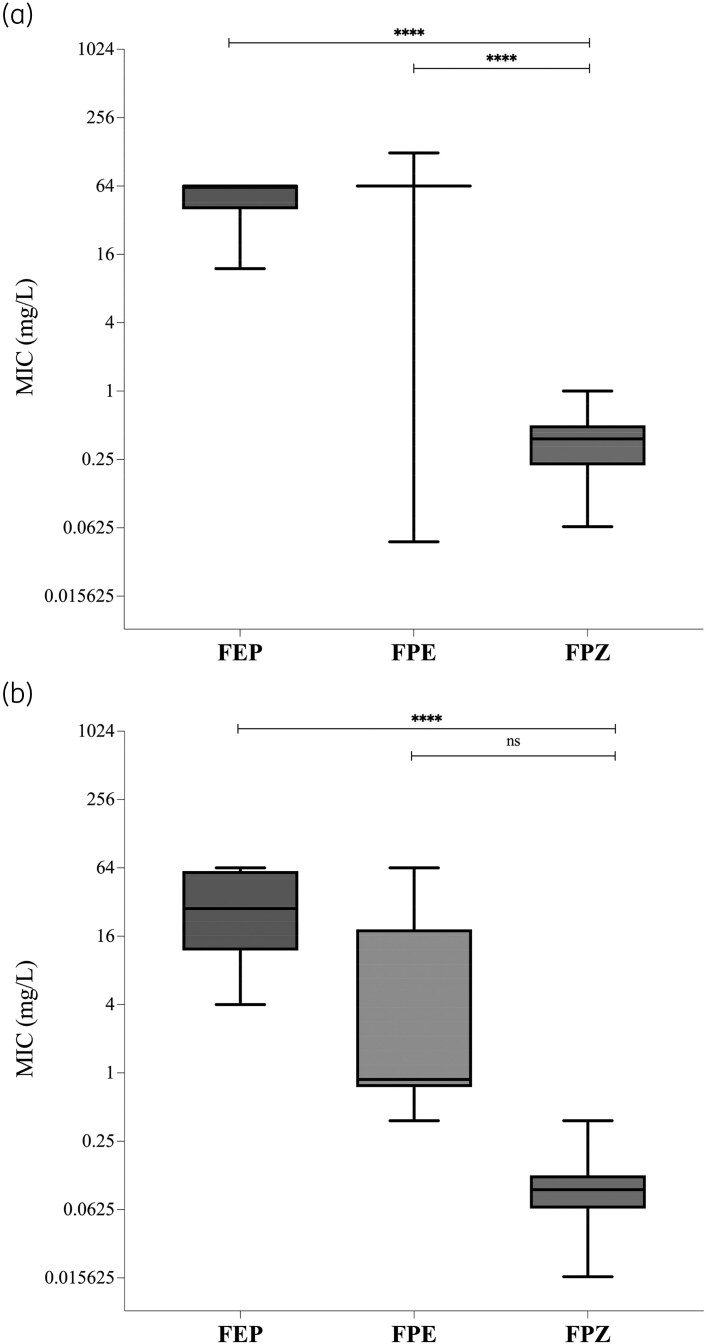 Figure 1
| Isolate | MLST | Serotype | PBP-2 | Porins | Antimicrobial resistance genes to β-lactams | |||
|---|---|---|---|---|---|---|---|---|
| ST | O | K | OmpK35 (359 aa) | OmpK36 (367 aa) | Carbapenemase | ESBL | ||
| 1 | 512 | O1/O2v2 | K107 | WT | Truncated | 135GD_Ins |
|
|
| 2 | 512 | O1/O2v2 | K107 | WT | Truncated | 135GD_Ins |
|
|
| 3 | 512 | O1/O2v2 | K107 | WT | Truncated | 135GD_Ins |
|
|
| 4 | 512 | OL102 | K107 | WT | Truncated | 135GD_Ins |
|
|
| 5 | 101 | O1/O2v1 | KL17 | WT | WT | 135GD_Ins |
|
|
| 6 | 1519 | O1/O2v2 | K107 | WT | Truncated | 135GD_Ins |
|
|
| 7 | 512 | O1/O2v2 | K107 | WT | Truncated | 135GD_Ins |
|
|
| 8 | 101 | O1/O2v1 | K107 | WT | WT | 135GD_Ins |
|
|
| 9 | 101 | O1/O2v1 | K107 | WT | WT | 135GD_Ins |
|
|
| 10 | 101 | O1/O2v1 | K107 | WT | WT | 135GD_Ins |
|
|
| 11 | 307 | O1/O2v2 | K102 | WT | WT | truncated |
|
|
| 12 | 512 | O1/O2v2 | K107 | V521M | Truncated | 135GD_Ins |
|
|
| 13 | 101 | O1/O2v1 | K17 | WT | WT | 135GD_Ins |
|
|
| 14 | 101 | O1/O2v1 | K17 | WT | 135GD_Ins |
|
| |
| 15 | 512 | O1/O2v2 | K107 | WT | Truncated | 135GD_Ins |
|
|
| 16 | 101 | O1/O2v1 | K17 | WT | WT | 136TDT_Ins |
|
|
| 17 | 101 | O1/O2v1 | K17 | WT | WT | 136TDT_Ins |
|
|
| 18 | 101 | O1/O2v1 | K17 | WT | WT | 136TDT_Ins |
|
|
| 19 | 1685 | O1/O2v1 | K17 | WT | WT | 136TDT_Ins |
|
|
| 20 | 101 | O1/O2v1 | K17 | WT | WT | 135GD_Ins |
|
|
| 21 | 512 | O1/O2v2 | K107 | WT | Truncated | 135GD_Ins |
|
|
- —RFU
Peer Reviews
No public reviews on file for this paper yet. If you reviewed it on a platform where reviews are public (OpenReview, ICLR, NeurIPS, ICML), you can paste yours below so the community can read it here.
Videos
No videos yet. Explain this paper in a talk, walkthrough, or lecture? Add one.
Taxonomy
TopicsAntibiotic Resistance in Bacteria · Nosocomial Infections in ICU · Antimicrobial Resistance in Staphylococcus
Introduction
Carbapenemase-producing Enterobacterales (CPE) are a major clinical concern due to the limited therapeutic options and to the difficult-to-treat infections caused by these microorganisms.^1^ The development of new β-lactam/β-lactamase inhibitor combinations (βL-βLICs) initially overcame the limited antimicrobial options available against KPC-bearing strains and enabled novel strategies to limit the devastating impact of CPE worldwide.^2^ However, the recent emergence of strains resistant to novel βL-βLICs has been observed in different countries, thus mitigating clinical usage of these novel molecules.^3,4^ In this context, an urgent need exists for novel molecules or innovative therapeutic approaches to counteract novel resistance among CPE.^2^
Resistance to novel βL-βLICs is due to a variety of different mechanisms of action.^3,5^ Resistance to ceftazidime/avibactam is often linked to mutations in the blaKPC gene, which may lead to a ‘reversion’ phenotype characterized by restored susceptibility to carbapenems and novel agents active against ESBL-producers, such as cefepime/enmetazobactam.^5–9^ Recently, a novel combination, cefepime/zidebactam, has been proposed for the treatment of CPE.^8^ Cefepime is an advanced fourth-generation cephalosporin that exerts its bactericidal action by inhibiting PBP-3. Zidebactam is a bicyclo-acyl hydrazide β-lactam enhancer with a dual action: inhibition of class A and C β-lactamases and enhancement of the antibacterial activity of cefepime through specific binding to PBP-2.^8^ The aim of this study was to evaluate the in vitro activity of cefepime/zidebactam against ceftazidime/avibactam-resistant Klebsiella pneumoniae (KPC-Kp) isolates carrying blaKPC variants with or without PBP-2 mutation, and compare it with the in vitro activity of cefepime/enmetazobactam.
Materials and methods
In this study, a total of 21 KPC-producing K. pneumoniae strains were selected on the basis of antimicrobial susceptibility profiles to ceftazidime/avibactam. The KPC-producing K. pneumoniae isolates were selected from strain collections isolated from patients recovered in different hospitals in Italy. The selection comprised all consecutive blood culture isolates collected in 2022/23 that were KPC producers. Duplicate KPC-producing K. pneumoniae isolates collected from the same patient were excluded.
Antimicrobial susceptibility testing was performed using Sensititre Gram-negative MDRGN1F (Thermofisher, MS, USA); MICs of cefepime, cefepime/enmetazobactam, and cefepime/zidebactam were determined by MIC TestStrip (Liofilchem, Italy), and results were interpreted following the EUCAST (cefepime and cefepime/enmetazobactam; https://www.eucast.org/clinical_breakpoints) and CLSI (cefepime/zidebactam; https://www.nih.org.pk/wp-content/uploads/2021/02/CLSI-2020.pdf) clinical breakpoints. MICs determined as equal or superior to the limit of the Strips were considered at the high value. Comparison between MICs of different antibiotics was performed using Student’s t-test analysis implemented in GraphPad Prism v.10.1.11 (San Diego, CA, USA).
WGS was performed as previously described [6]. Briefly, paired-end libraries were prepared using the Illumina DNA Prep Kit and sequenced on the Illumina MiSeq system (Illumina, CA, USA). Read quality was evaluated with FastQC v0.12.1, and genome assembly was carried out using SPAdes v3.15.2 (https://github.com/ablab/spades). MLST and resistome analysis were performed using AMRFinderPlus (https://github.com/ncbi/amr). Analysis of PBP-2 was performed by aligning the sequence obtained from each genome of KPC-Kp included in this study against the genome of K. pneumoniae ssp. pneumoniae HS11286 used as reference.^10^
The draft genome assemblies of the KPC-Kp strains included in this study have been deposited in the NCBI BioSample database under SubmissionID SAMN55289090-SAMN55289110 and BioProject ID PRJNA1421143
Results and discussion
Overall, we selected a total of 21 KPC-Kp grouped as susceptible (n = 9) or resistant (n = 12) to ceftazidime/avibactam. Genotypic characteristics of the KPC-Kp strains included in this study are shown in Table 1. Complete genomic features of KPC-Kp strains included in this study are shown in Table S1 (available as Supplementary data at JAC-AMR Online). Genomic analysis showed that 11 out of 21 (52%) isolates belonged to the clonal complex (CC) 101 (including ST101 and ST1685), 9 (43%) to CC512 (including ST512 and ST1519), and 1 (5%) to ST307. Analysis of serotype based on O antigen sequences showed that O1/O2v2 and O1/O2v1 alleles were present, respectively, in 9 (43%) and 11 (52%) out of 21 KPC-Kp strains, whereas 1 isolate harboured the OL102 serotype. Analysis of the K antigen demonstrated that allele K17 was observed in 11 (52%) KPC-Kp, allele K107 was carried in 9 (43%), and K102 was present in 1 of the KPC-Kp strains [6].
Resistome analysis of the genomes of KPC-Kp included in this study was performed in order to identify the molecular mechanisms related to resistance to ceftazidime/avibactam and, in particular, substitution within the blaKPC gene. Resistome analysis results showed that 12 of the 21 (57%) KPC-Kp harboured blaKPC variants associated with ceftazidime/avibactam resistance, whereas 9 (43%) KPC-Kp carried WT blaKPC (i.e. blaKPC-2 and blaKPC-3) alleles. In particular, blaKPC variants included blaKPC-31 (n = 3), blaKPC-14 (n = 2), blaKPC-33 (n = 1), blaKPC-93 (n = 1), blaKPC-203 (n = 1), blaKPC-205 (n = 1), blaKPC-49 (n = 1) and blaKPC-167 (n = 1), whereas Kp strains carrying WT alleles included blaKPC-3 (n = 7) and blaKPC-2 (n = 3). Structural analysis of KPC variants associated with resistance to ceftazidime/avibactam among Kp strains included in this study showed that mutations occurred in the three hotspot regions (Table S2). In detail, five variants (KPC-49, KPC-31, KPC-31, KPC-167 and KPC-203) harboured mutations (i.e. S163R, D179Y, EL deletion at position 165–166) within the omega loop (residues 163 to 179); a single variant (KPC-14) harboured a mutation (i.e. GT deletion at position 242–243) within the 237–243-loop; and four variants (KPC-93, KPC-167, KPC-203 and KPC-205) harboured insertions (i.e. NRAPN at position 269, iDDKYSE at position 269 and VYTRAPMLA at position 261) within the loop 266–275.
Analysis of porin genes showed that 42.85% (9/21) of KPC-Kp included in this study harboured a truncated OmpK35, whereas only one isolate (4.76%) carried a truncated OmpK36 porin (Table 1). At the same time, 76.19% (16/21) of KPC-Kp carried a glycine-aspartic acid insertion at position 135, and 19.04% (4/21) harboured a threonine-aspartic acid-threonine insertion at position 136 within OmpK36. Complete genetic characteristics of antimicrobial genes found within genomes included in this study are shown in Table 1 and Table S3. In order to evaluate the presence of mutations within the target of zidebactam (i.e. PBP-2), sequence genome alignment was performed against the genome of Klebsiella pneumoniae ssp*. pneumoniae* HS11286, used as reference. PBP-2 analysis showed that all KPC-Kp genomes included in this study carried a WT enzyme, although one isolate exhibited a substitution at position 521 (valine→methionine) associated with a higher MIC of cefepime/zidebactam (i.e. MIC = 1 mg/L) relative to the remaining isolates and compared with other KPC-Kp strains.
Phenotypic results demonstrated that all KPC-Kp strains included in this study were resistant to cefepime, whereas resistance to ceftazidime/avibactam was associated with mutations within the blaKPC gene (Table S3). Ceftazidime/avibactam-resistant strains due to mutations within the blaKPC gene exhibited restored susceptibility to carbapenems and cefepime/enmetazobactam, as previously reported.
Our results demonstrated that cefepime/zidebactam exhibited greater antibacterial activity (P < 0.0001) than cefepime alone and cefepime/enmetazobactam against all KPC-Kp strains included in this study (Figure S1). In particular, we observed that cefepime/zidebactam (median 0.38 mg/L, IQR 0.222–0.5 mg/L) exhibited greater antibacterial activity (P < 0.0001) than cefepime (median 64 mg/L, IQR 12–64 mg/L) and cefepime/enmetazobactam (median 64 mg/L, IQR 64 mg/L) against ceftazidime/avibactam-susceptible KPC-Kp strains carrying a WT blaKPC gene (Figure 1a). Of note, cefepime/zidebactam showed greater antibacterial activity (P < 0.001) against strains carrying the mutated blaKPC gene (median 0.094 mg/L, IQR 0.064–0.125 mg/L) than against isolates harbouring the WT blaKPC gene (median 0.38 mg/L, IQR 0.222–0.5 mg/L). However, the antibacterial activity of cefepime/zidebactam (median 0.094 mg/L, IQR 0.064–0.125 mg/L) was not statistically different (P = 0.4621) than that of cefepime/enmetazobactam (median 0.875 mg/L, IQR 0.75–18.38 mg/L) against strains carrying the mutated blaKPC gene (Figure 1b).
MICs of cefepime (FEP), cefepime/enmetazobactam (FPE) and cefepime/zidebactam (FPZ) against ceftazidime/avibactam-susceptible (a) and -resistant (b) Klebsiella pneumoniae clinical strains included in this study.
In this study, we demonstrated that cefepime/zidebactam displayed in vitro activity against both ceftazidime/avibactam-susceptible and -resistant KPC-Kp strains, and was comparable to the in vitro activity of cefepime/enmetazobactam. In detail, we observed that zidebactam enhanced the bactericidal activity of cefepime against K. pneumoniae carrying different KPC variants associated with different mutations within the three hotspot regions associated with resistance to ceftazidime/avibactam.^11^ Moreover, we observed that cefepime/zidebactam exhibited similar antibacterial activity to cefepime/enmetazobactam against K. pneumoniae carrying the mutated blaKPC gene.
Our results agree with previous studies that showed cefepime/zidebactam exhibited excellent bactericidal activity against KPC-producing Enterobacterales.^12^ However, data presented in the literature showed discordant results regarding the in vitro activity of cefepime/zidebactam against both ESBL (i.e. CTX) and/or class A (i.e. VEB, SME, KPC), class D (i.e. OXA-48-like) and class B (i.e. VIM, IMP, NDM) carbapenemase-producing Enterobacterales.^12–15^ Previous studies demonstrated that resistance to cefepime/zidebactam is observed among 41.3% (38/92) of blaNDM-carrying Klebsiella spp. and 9.09% (2/22) of blaKPC-carrying K. pneumoniae strains.^14,15^ In particular, Hamza and co-workers^15^ reported that resistance to cefepime/zidebactam is associated with KPC variants carrying mutations in the third hotspot region of the blaKPC gene, showing that two out of seven KPC-Kp strains carrying mutations within the 270-loop were resistant to cefepime/zidebactam. Both studies reported that alterations of OmpK porin composition (i.e. deleterious alterations within OmpK35 or amino acid modifications/insertions within OmpK36) contributed to the reduced susceptibility to cefepime/zidebactam, thus suggesting a key role for the porins in the resistance to this novel combination.^14,15^
Although KPC-Kp strains included in this study carried several modifications among OmpK35 and OmpK36 porins, our results demonstrated that no specific modifications were associated with the reduced susceptibility to cefepime/zidebactam. Analysis of PBP-2 sequences obtained from all isolates showed that all strains carried an L insertion at position 276 in comparison with a reference strain, whereas only one KPC-3-producing K. pneumoniae carried the substitution of valine for methionine at position 521 associated with a reduced susceptibility to cefepime/zidebactam in comparison with other KPC-Kp strains.
In this context, blaKPC variants associated with the resistance to ceftazidime/avibactam are often linked to a restored susceptibility to carbapenems (i.e. meropenem), which does not affect the activity of cefepime/zidebactam due to different target attainment. This suggests the clinical utility of cefepime/zidebactam against variants maintaining resistance to both ceftazidime/avibactam and carbapenems.
Nevertheless, we acknowledge that this study has the major limitation of a relatively small number of strains analysed and the limited number of variants analysed. Consequently, further investigation using a large number of clinical strains is fundamental to evaluate the activity of cefepime/zidebactam against all possible circulating variants.
In conclusion, we demonstrate that cefepime/zidebactam exhibits excellent in vitro activity against ceftazidime/avibactam-resistant K. pneumoniae carrying blaKPC variants, and have expanded knowledge regarding the activity of this novel antimicrobial combination against strains carrying WT and mutated blaKPC genes. Further in vivo studies will be necessary to define the clinical utility of cefepime/zidebactam and for the treatment of ceftazidime/avibactam-resistant KPC-Kp.
Supplementary Material
dlag026_Supplementary_Data
The reference list from the paper itself. Each links out to its DOI / PubMed record.
- 1Ahn JY, Ahn SM, Kim JH et al Clinical characteristics and associated factors for mortality in patients with carbapenem-resistant Enterobacteriaceae bloodstream infection. Microorganisms 2023; 11: 1121. 10.3390/microorganisms 1105112137317095 PMC 10220897 · doi ↗ · pubmed ↗
- 2Doi Y, Bonomo RA, Hooper DC et al Gram-negative bacterial infections: research priorities, accomplishments, and future directions of the antibacterial resistance leadership group. Clin Infect Dis 2017; 64: 30–5. 10.1093/cid/ciw 829PMC 584831128350901 · doi ↗ · pubmed ↗
- 3Gaibani P, Giani T, Bovo F et al Resistance to ceftazidime/avibactam, meropenem/vaborbactam and imipenem/relebactam in gram-negative MDR bacilli: molecular mechanisms and susceptibility testing. Antibiotics (Basel) 2022; 11: 628. 10.3390/antibiotics 1105062835625273 PMC 9137602 · doi ↗ · pubmed ↗
- 4Papp-Wallace KM, Mack AR, Taracila MA et al Resistance to novel β-lactam-β-lactamase inhibitor combinations: the “price of progress”. Infect Dis Clin North Am 2020; 34: 773–819. 10.1016/j.idc.2020.05.00133011051 PMC 7609624 · doi ↗ · pubmed ↗
- 5Wang Y, Sholeh M, Yang L et al Global trends of ceftazidime-avibactam resistance in gram-negative bacteria: systematic review and meta-analysis. Antimicrob Resist Infect Control 2025; 14: 10. 10.1186/s 13756-025-01518-539934901 PMC 11818042 · doi ↗ · pubmed ↗
- 6Caiazzo L, Carretto E, Gaibani P. In vitro activity of cefepime/enmetazobactam against Klebsiella pneumoniae carrying bla KPC allelic variants conferring resistance to ceftazidime/avibactam. Int J Antimicrob Agents 2025; 66: 107552. 10.1016/j.ijantimicag.2025.10755240505875 · doi ↗ · pubmed ↗
- 7Vázquez-Ucha JC, Lasarte-Monterrubio C, Guijarro-Sánchez P et al Assessment of activity and resistance mechanisms to cefepime in combination with the novel β-lactamase inhibitors zidebactam, taniborbactam, and enmetazobactam against a multicenter collection of carbapenemase-producing Enterobacterales. Antimicrob Agents Chemother 2022; 66: e 0167621. 10.1128/AAC.01676-2134807754 PMC 8846464 · doi ↗ · pubmed ↗
- 8Sader HS, Castanheira M, Huband M et al WCK 5222 (cefepime-zidebactam) antimicrobial activity against clinical isolates of gram-negative bacteria collected worldwide in 2015. Antimicrob Agents Chemother 2017; 61: e 00072-17. 10.1128/AAC.00072-1728242660 PMC 5404591 · doi ↗ · pubmed ↗