The Effectiveness of Postharvest Processing on Microbiological Safety of Game Meat—A Systematic Review
Naim Deniz Ayaz, Ali Aydin, Ewa Bilska‐Zając, Raffaella Branciari, Gunita Deksne, Vangelis Economou, Bożena Futoma‐Kołoch, Robert Głogowski, Eduarda Gomes Neves, Famke Jansen, Weronika Korpysa‐Dzirba, Andrea Lauková, Thomai Lazou, Guðný Rut Pálsdóttir, Maria Francesca Peruzy

TL;DR
This review examines how postharvest processing affects the microbiological safety of game meat, highlighting gaps in current research and methods.
Contribution
The paper systematically reviews the effectiveness of various processing methods in reducing microbiological risks in game meat.
Findings
Refrigeration and freezing may not control all hazards like Trichinella and psychrotrophic bacteria.
Curing and fermenting show limited efficacy against certain parasites and bacteria.
Thermal processing is effective but lacks systematic evaluation for game meat.
Abstract
The rising global consumption of game meat has highlighted gaps in the management of biological hazards associated with its production and consumption, and the safety of processed game meat products remain insufficiently addressed. Therefore, there is a need for research evaluating the effectiveness of processing and preservation methods in reducing microbiological risks. Thus, a systematic review adhering to the Preferred Reporting Items for Systematic Review and Meta‐Analysis (PRISMA) guidelines was conducted. The review yielded 65 records detailing the decrease or inactivation of microbiological foodborne pathogens in game meat treated with various processes. Most records focused on bacterial hazards, particularly Listeria monocytogenes, Salmonella spp., and pathogenic Escherichia coli, while only one paper specifically addressed viral concerns, notably hepatitis E virus in wild boar…
Genes, proteins, chemicals, diseases, species, mutations and cell lines named across the full text — each resolved to its canonical identifier and authoritative record.
Click any figure to enlarge with its caption.
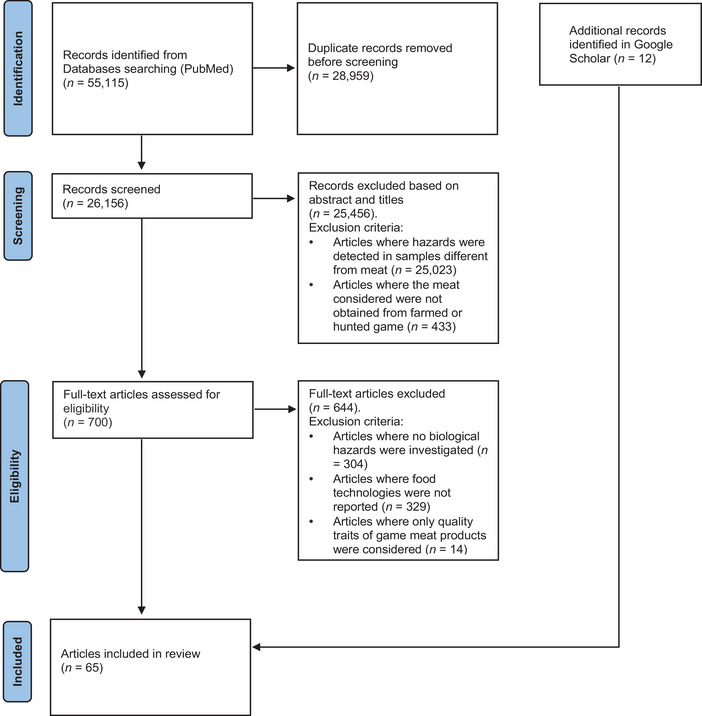 FIGURE 1
| Species | Scientific names | Main geographic area | References |
|---|---|---|---|
|
| |||
| Red deer |
| Asia, Europe, Oceania, North America | de Oliveira et al. |
| Elk /Wapiti |
| North America | Hoffman and Wiklung |
| Sika deer |
| Asia | Miyata et al. |
| Sambar deer |
| Oceania | Hampton et al. |
| White‐tailed deer |
| Europe, North America, South America | Rankins et al. |
| Black‐ tailed deer |
| North America | Hedman et al. |
| Fallow deer |
| Europe, Oceania, North America, South America | Esattore et al. |
| Roe deer |
| Asia, Europe | Avagnina et al. |
| Chital deer |
| Oceania, North America, South America | Fernández et al. |
| Reindeer |
| Asia, Europe, North America | Andronov et al. |
| Moose |
| Asia, Europe, North America | Jensen et al. |
| Chamois |
| Europe | Avagnina et al. |
| Springbok |
| Africa | North and Hoffman |
| Kudu |
| Africa | Hoffman et al. |
| Impala |
| Africa | Hoffman et al. |
| Eland |
| Africa | Needham et al. |
| Gemsbuck |
| Africa | Hoffman et al. |
| Blesbuck |
| Africa | Hoffman et al. |
| Black wildebeest |
| Africa | Hoffman et al. |
| Zebra |
| Africa | Hoffman et al. |
| Giraffe |
| Africa | Hoffman et al. |
| Muskox |
| Europa, North America | Amouei et al. |
| Mouflon |
| Asia, Europa | Amouei et al. |
| Wild boar/Feral hog |
| Asia, Europe, Oceania, North America, South America | Lestingi |
| Wharthog |
| Africa | Rudman et al. |
|
| |||
| European wild rabbit |
| Europe | Marín‐García and Llobat 2021 |
| European hare |
| Europe, South America | Bonino et al. |
| Mountain hare |
| Asia, Europe | Reid |
| Nutria/Coypu |
| South America, Europe | Saadoun and Cabrera |
| Beaver |
| Europe | Slováček et al. |
| Capybara |
| South America | Nogueira‐Filho and da Cunha Nogueira |
|
| |||
| Mallard |
| Europe, Asia | Janiszewski et al. |
| Woodpigeon |
| Europe, Asia | Kokoszyński et al. |
| Pheasant |
| Europe, Asia | Amaral et al. |
| Common quail |
| Europe | Amaral et al. |
| Stubble quail |
| Oceania | Hampton et al. |
| Teal |
| Europe | Sauvala et al. |
| Partridge |
| Europe | El‐Ghareeb et al. |
| Red‐legged partridge |
| Europe | Sánchez‐Cano et al. |
| Chukar partridge |
| Asia | Abd Rabou |
| Egyptian goose |
| Africa | Abd El Rahman et al. |
| Guinea fowl |
| Africa | Geldenhuys et al. |
| Pintail |
| Africa | Abd El Rahman et al. |
| Shoveler |
| Africa | Abd El Rahman et al. |
| Eurasian wigeon |
| Africa | Abd El Rahman et al. |
|
| |||
| Bears |
| Asia, Europe, North America | Dalcin et al. |
|
| Asia | Endo et al. | |
| Kangaroos |
| Oceania | Hampton et al. |
|
| Oceania | Hampton et al. | |
| Wallaby |
| Oceania | Hampton et al. |
| Hazard group | Pathogen/organism | Game species | Geographic region | References |
|---|---|---|---|---|
| Bacteria |
| Warthog, antelope | Africa | Mpalang et al. |
| Wild boar, deer | Asia | Magwedere et al. | ||
| Wild boar, deer, game birds | Europe | Díaz‐Sánchez et al. | ||
|
| Deer | North America | Midura et al. | |
|
Shiga‐like toxin‐producing | Warthog, antelopes | Africa | Mpalang et al. | |
| Wild boar, deer | Asia | Magwedere et al. | ||
| Deer, wild boar | Europe | Mateus‐Vargas et al. | ||
| Deer, elk | North America | Keene et al. | ||
| Kangaroo | Australia/Oceania | Eglezos et al. | ||
|
| Deer, wild boar | Europe | Membré et al. | |
| Kangaroo | Australia/Oceania | Eglezos et al. | ||
|
| Kudu, antelope | Africa | Van der Merwe and Michel | |
| Wild boar | Europe | Clausi et al. | ||
|
| Warthog, antelope | Africa | Mpalang et al., | |
| Reindeer | Arcitic region/ Syberia | Aschfalk et al. | ||
| Wild boar, deer | Asia | Magwedere et al. | ||
| Kangaroo, wallaby | Australia/Oceania | Potter et al. | ||
| Wild boar, red deer, roe deer | Europe | Paulsen et al. | ||
| Deer, elk | North America | Díaz‐Sánchez et al. | ||
| Capybara | South America | Farikoski et al. | ||
|
| Wild boar | Europe | Łepecka et al. | |
| Various mammals | South America | Ramos and Cunha | ||
|
| Wild boar | Europe | Avagnina et al. | |
|
Parasites |
| Wild boar | Europe | Korpysa‐Dzirba et al. |
|
| Antelope | Africa | Nukeri et al. | |
|
| Sika deer | Asia | Honda et al. | |
| Macropods |
Australia/ Oceania | Munday et al. | ||
| Cervids, Wild boar | Europe | Luzón et al. | ||
|
| Camelids | South America | Cañal and Beltrame | |
|
| Antelope | Africa | Bokaba et al. | |
| Bear |
Arcitic region/ Syberia | Pilfold et al. | ||
| Wild boar, deer | Asia | Saito et al. | ||
| Kangaroo |
Australia/ Oceania | Borkens | ||
| Deer, wild boar | Europe | Paulsen et al. | ||
| Deer | North America | Cook et al. | ||
| Capybara, deer | South America | Truppel et al. | ||
|
| Bear |
Arcitic region/ Syberia | Oksanen et al. | |
| Bear | North America | CDC | ||
|
| Wild boar | Europe | Pozio et al. | |
| Viruses | Hepatitis E virus | Bear, deer |
Arcitic region/ Syberia | Keatts et al. |
| Deer | North America | Akpoigbe et al. | ||
| Hepatitis E virus genotype 4 | Wild boar, deer | Europe | Li et al. | |
| HEV‐like viruses | Wild boar, deer | Asia | Wang et al. |
| Levels | Keywords |
|---|---|
| Level 1: Game meat terms | Game meat OR Venison OR Deer OR Wild boar |
| Level 2: Food safety terms | Food safety OR Foodborne pathogens OR Foodborne disease OR Foodborne illness |
| Level 3: Microbiological terms | Microbiology OR Bacteria OR Virus OR Parasite OR Salmonella OR Campylobacter OR Listeria OR Mycobacterium OR Brucella OR Escherichia coli OR Clostridium OR Bacillus OR Hepatitis OR Trichinella OR Toxoplasma |
| Level 4: Food technology terms | Product OR Process OR Maturing OR Aging OR Heating OR Cooking OR Freezing OR Marinating OR Natural substance OR Extracts OR Antimicrobial OR Smoking OR Salting OR Curing OR Fermented OR Hurdle Technology OR Sous vide OR Sausages OR Salami OR Ham |
| Classes | Objects | Number |
|---|---|---|
| Class 1: Kind of record | Scientific papers | 46 |
| Case studies | 9 | |
| Review papers | 10 | |
| Class 2: Kind of hazard |
Bacteria Virus Parasites |
47 2 18 |
| Class 3: Kind of process |
Cold temperatures High temperatures Curing and fermentation Others |
26 11 29 7 |
| Class 4: Details in process description and product parameters |
No description Partial description Full description Final product description |
27 4 19 5 |
| Class 5: Detail in the process efficacy against hazards |
Presence/absence Specific |
52 13 |
| Condition | Species | Country | Bacteria (mean log10 cfu/g − cfu/cm2 or positive/total number*) | References | ||||
|---|---|---|---|---|---|---|---|---|
| APC | EC (STEC) | ENT |
|
| ||||
|
Chilled (4°C) | Red deer ( | Japan | 115/120* |
18/120* (1/120) | n.d. | n.d. | 7/120* | Asakura et al. |
| Wild boar ( | 127/128* | 64/128* (0/128) | n.d. | n.d. | 19/128* | |||
|
Chilled (4°C) | Chamois ( | Italy | 3.23 | n.d. | 1.30 | n.d. | n.d. | Avagnina et al. |
| Roe deer ( | 3.46 | n.d. | 2.47 | n.d. | n.d. | |||
| Red deer ( | 3.31 | n.d. | 1.70 | n.d. | n.d. | |||
| Wild boars ( | 4.61 | n.d. | 3.00 | n.d. | n.d. | |||
|
Chilled (4°C) |
Red deer ( | Spain | n.d. | 19/271* | n.d. | n.d. | n.d. | Diaz‐Sanchez et al. |
|
Wild boar ( | n.d. | 12/310* | n.d. | n.d. | n.d. | |||
|
Chilled (4°C) |
White‐tailed deer ( | United States | n.d. | 3/3 | n.d. | n.d. | n.d. | Magwedere et al. |
| Red deer ( | n.d. | 2/20 | n.d. | n.d. | n.d. | |||
| Reindeer ( | n.d. | 0/2 | n.d. | n.d. | n.d. | |||
|
Wild boar ( | n.d. | 0/2 | n.d. | n.d. | n.d. | |||
| Bison ( | n.d. | 3/24 | n.d. | n.d. | n.d. | |||
| Wild Rabbit ( | n.d. | 0/4 | n.d. | n.d. | n.d. | |||
|
Chilled (4°C) |
Wild boar ( | Serbia | 5.4 | n.d. | 3.8 | n.d. | n.d. | Mirceta et al. |
|
Chilled (4°C) |
Wild boar ( | Italy | 4.67 | n.d. | 2.60 | n.d. | n.d. | Orsoni et al. |
| Chilled (5°C) | Wild boar ( | Italy | 3.66 | n.d. | 2.05 | n.d. | n.d. | Ranucci et al. |
|
Chilled (1°C–8°C) | White‐tailed deer ( | Finland | 4.5 | 0.7 | 1.5 | n.d. | n.d. | Sauvala et al. |
| Moose ( | 4.2 | 1.2 | 2.6 | n.d. | n.d. | |||
|
Chilled (4°C) |
Wild boar ( | Italy | 3.21 | 1.31 | 1.32 | n.d. | n.d. | Stella et al. |
| Condition | Specie | Country | Bacteria (mean log10 cfu/g − cfu/cm2 or positive/total number*) | References | ||||
|---|---|---|---|---|---|---|---|---|
| APC | EC (STEC) | ENT |
|
| ||||
|
Frozen (← 20°C) | Pintail ( |
Egypt |
5.8(B), 5.7(T) |
4.4(B), 4.3(T) |
4.5(B) 4.5(T) |
2.2(B) neg |
3.5(B), 3.5(T) | Abd El Rahman et al. |
| Shoveler ( |
5.5(B), 5.7(T) |
3.6(B), 4.1(T) |
4.0(B), 4.6(T) | neg | 3.4(B), 3.3 (T) | |||
| Eurasian wigeon ( |
4.1(B), 4.5(T) |
3.3(B), 3.7(T) |
4.2(B), 4.1(T) |
neg | neg | |||
| Egyptian geese ( |
4.2(B), 4.7(T) |
3.8(B), 3.5(T) |
4.7(B), 4.8(T) |
neg | 1.5(B), neg | |||
|
Frozen (← 18°C) | Red Deer ( | Spain | n.d. | 4/48* | n.d. | n.d. | n.d. | Díaz‐Sánchez et al. |
| Wild boar ( | n.d. | 1/36* | n.d. | n.d. | n.d. | |||
| Frozen (Vacuum package, ← 18°C) | Red deer ( | Germany | n.d. | 5/75* | n.d. | n.d. | n.d. | Mateus‐Vargas et al. |
| Roe deer ( | n.d. | 8/78* | n.d. | n.d. | n.d. | |||
| Wild boar ( | n.d. | 4/76* | n.d. | n.d. | n.d. | |||
|
Frozen (← 18°C) | House sparrow ( |
Tunisia/ Italy | 5.71 | n.d. | n.d. | n.d. | n.d. | Pasquali et al. |
| Starling ( | 3.30 | n.d. | n.d. | n.d. | n.d. | |||
| Origin and type of products (samples) | Country of the study | Type of processing and temperatures | Obtained result | References |
|---|---|---|---|---|
| Wild boar ( | Germany | Microwave heating (90 s) | Complete inactivation of | González‐Fuentes |
| Wild boar( | Poland | Heating to 72°C (≥2 min) | Recommended to ensure parasite inactivation | Korpysa‐Dzirba et al. |
| Wild boar ( | Germany | Sous vide processing (≤60°C, extended periods) | Reduction of | Abel et al. |
| Sika deer ( | Japan | Heating meat to 70°C (1 min) | Effective inactivation of | Honda et al. |
|
Red deer ( | Slovakia | Sous vide (50°C–65°C) combined with antimicrobials ( | Reduction of | Kačániová et al. |
| Venison (sausage) ( | United States | Commercial thermal processing (64°C–68°C) | Effective reduction of | Roberts and Getty |
| Game meat (diverse species) ( | United States | ≥61°C for ≥3.6 min; FDA recommends 62.8°C with 3‐min rest | Inactivation of | Dubey et al. |
| Bear meat ( | United States | Cooking ≥74°C (165°F) | Prevention of | Cash‐Goldwasser et al. |
| African buffalo ( | South Africa | Cooking and drying (temperatures unspecified) | Elimination of | Van der Merwe and Michel |
| Products (samples) | Country | Type of processing | Obtained result | References |
|---|---|---|---|---|
| Salame di daino (dry‐cured sausage; | Italy | Fermentation and ripening conditions: 6°C–20°C and RH 65%–90% (h 0–24); 15°C–16°C and RH 85%–90% (Days 1–21). | Absence of | Cenci Goga et al. |
| Wild boar sausages ( | Italy | Sausage stored at room temperature (10°C–18°C) in a controlled environment for 37–43 days |
| Clausi et al. |
| RTE game meat products from wild boar (WB) and red deer (RD): red cured sausages (WB | Spain | No available information | Shiga toxin‐producing | Diaz‐Sanchez et al. |
| Homemade wild boar meat products (19 hams, 42 salami, and 22 raw/“Knackwurst” sausages) | Germany |
Dry‐cured hams with and without smoking and with different ripening times Salame Fermentation: 25°C, RH: 88%–90%, 24 h Drying: 26°C, RH: 40%–60%, until Day 10 Fermented sausages: Drying: 26°C, RH: 40%–60%, 7 days | Effective inactivation of | González‐Fuentes et al. |
| Japanese sika deer ( | Japan | Meat soaked or rubbed with 2.0 or 6.0% NaCl and/or nitrite‐ enriched curing salt and stored at 4°C for up to 7 days. | More than 2.0% salt and NCS were effective in reducing the viability of | Honda et al. |
| Raw‐aged wild boar loin | Poland |
Product cured with salt and sodium nitrate and with or without addition of apple vinegar (4%). Maturing process = 15°C–17°C and humidity of 75%–80% for 2–3 days. Cold smoking at 20°C–25°C for 1–1.5 h. Maturation continues for 4 weeks with the assumed initial parameters of the process and low air movement. Products were vacuum‐packed and placed in a cooling room (4°C). | Coagulase‐positive staphylococci were found in samples without apple vinegar even after Day 28. | Łepecka et al. |
| Samples of game meat from different specie including cured sausages ( | Italy | No available information |
| Lucchini et al. |
| Wild boar meat sausages and Deer meat sausages (1:1 ratio with pork; | Croatia | Products with no starter cultures or nitrites. RH 52%–92%; −3°C to 15°C; cold intermittent smoking first 2 weeks and ripened for 20–40 days. |
| Maksimovic et al. |
| Venison jerky ( | United States | No available information (Outbreak) |
| Midura et al. |
| Wild boar sausages/salami ( | Italy | No available information | 4 of 63 (6.3%) wild boar salamis—made without liver—were RT‐qPCR positive for Hepatitis E virus | Montone et al. |
| Wild boar meat ripened sausages (mixed with pork; | Croatia |
Sausage with different starter culture. Fermentation/Ripening: 40 days, four smoking treatments |
| Mrkonjic Fuka et al. |
|
Bresaola from deer ( | Italy |
Salted at 2°C–4°C and left for 5–7 days at 3°C–4°C. Cured: Initial temperature 22°C and RH 90%, after 24 h temperature 18°C and RH 80%. Two drying stages: 17°C and RH 80% for 15–30 days, then 14°C and RH 72% for 60–120 days. |
No Pathogenic staphylococci were detected | Paleari et al. |
| Wild boar sausages and dried muscle | Serbia | No available information | Presence of 0.18 lpg ( | Pavic et al. |
| Dried wild boar ham | France | No available information (outbreak) | Presence of 8.32 lpg | Peju et al. |
| Traditional salami made from roe‐deer ( | Italy |
Stuffed meat mix (fresh salami) was dried 10 days at 22°C and 62% relative humidity (RH) for 48 h; 19°C and 66% RH for 76 h, followed by a 1°C temperature reduction and 1% increase in the RH each day, so as to reach 15°C and 72% RH within 10 days). The products were | No | Ranucci et al. |
| ripened in controlled seasoning rooms at 13°C and 75% RH for 60 days. | ||||
| Traditional salami made from wild boar meat and pork | Italy | Stuffed meat mix (fresh salami) was dried 10 days at 22°C and 62% RH for 48 h, 19°C and 66% RH for 76 h followed by 1°C T reduction and 1% RH increase every 24 h until reaching 15°C and 72% RH. Afterwards, the salami were ripened in controlled seasoning rooms at 13°C and 75% RH for 60 days | No | Roila et al. |
| Salami from springbok ( | Namibia |
Fermentation for 12 h at 18°C–22°C and RH 92%. Cold smoking with oak wood chips for 36 h at 22°C–24°C and RH 92%. Ripening: for a further 21 days at 12°C–16°C and RH 75%. Vacuum packaging and storing at 4°C. | S | van Schalkwyk et al. |
| Dried‐cured wild boar sausages ( | Italy | No available information (outbreak) | Presence of 1.5 and 1.7 lpg | Turiac et al. |
| Biltong from African buffalo ( | South Africa | No available information |
No were detected | Van der Merwe and Michel |
- —European Cooperation in Science and Technology10.13039/501100000921
- —German Federal Institute for Risk Assessment, Berlin, Germany
Peer Reviews
No public reviews on file for this paper yet. If you reviewed it on a platform where reviews are public (OpenReview, ICLR, NeurIPS, ICML), you can paste yours below so the community can read it here.
Videos
No videos yet. Explain this paper in a talk, walkthrough, or lecture? Add one.
Taxonomy
TopicsMeat and Animal Product Quality · Listeria monocytogenes in Food Safety · Polyamine Metabolism and Applications
Introduction
1
Game meat occupies a historically and culturally significant place around the world. Hunting has long‐shaped social identity, food traditions, and the way humans relate to nature (Ljung et al. 2012). In Europe, for example, it has traditionally been a symbol of prestige, land stewardship, and respect for seasonal and ecological rhythms (Niewiadomska et al. 2020). These European traditions mirror global patterns. In North and South America, indigenous groups rely on hunting to maintain cultural continuity (Hedman et al. 2020; Ponta et al. 2019), while in Africa, communities integrate wild animals into food security strategies and conservation‐linked game ranching (Taylor et al. 2020). In Asia and Oceania, hunting remains a central component of local customs, ecological management and subsistence practices (Arobaya et al. 2021; Bray et al. 2018; Gressier 2016). Game meat acts as a cultural link between traditional lifestyles and modern society across continents (Hoffman and Wiklund 2006). As such, game meat serves as both a gastronomic delight and a symbol of heritage, linking contemporary culinary practices with historical traditions that continue to shape European cuisines today (Needham et al. 2023). In recent years, demand for game meat has increased due to consumers' perception of such products as organic and free of synthetic inputs and as an alternative to industrial, large‐scale livestock farming (Hoffman and Wiklund 2006; Niewiadomska et al. 2020; Tomić Maksan et al. 2025). The high quality of game meat results from various factors, such as the animals’ slow growth in natural and wild environments, their diet based on natural food sources, and the absence of both pharmacological interventions and stress typical for farmed animals (Babicz et al. 2018).
The animal species considered as game meat around the world can vary, as shown in Table 1. In general, the species hunted only for self‐consumption or black‐illegal market are not defined as game meat but as “wildmeat” or “bushmeat” (Lindsay et al. 2013; Pangau‐Adam et al. 2012), and were not considered in the present review.
The widespread belief that wild game is naturally “pure” and free from chemicals can create a misleading sense of safety among consumers. In fact, wild game animals, exposed to a variety of environmental factors, may harbor zoonotic bacteria, parasites, and viruses (Table 2). Indeed, field studies have detected Salmonella spp. in wild boar and deer lymph nodes, and a high seroprevalence of Toxoplasma gondii in wild boar populations (Paulsen et al. 2012; Weindl et al. 2016; Gil Molino et al. 2019; Barroso et al. 2020). Parasites such as Trichinella spp. and emerging pathogens like Alaria alata can persist in muscle tissues, posing health risks if the meat is consumed undercooked or raw (Pozio 2007; Korpysa‐Dzirba et al. 2021). Additionally, hepatitis E virus (HEV) RNA has been found in game meat, highlighting the potential for viral transmission even through minimally processed meats (Li et al. 2005). A crucial factor in ensuring the safety of venison lies in the processing steps carried out after shooting—from the initial handling of the carcass, through evisceration to refrigeration, storage, and meat processing such as maturation, freezing, heat treatment, curing, fermentation, and smoking. When performed correctly, each of these stages can significantly prevent or reduce the presence of pathogens in the meat (Branciari et al. 2020; Di Gioia et al. 2016; Fraqueza et al. 2021; Ježek et al. 2020). However, the absence of standardized handling protocols, combined with limited awareness of associated risks among those involved in subsistence or small‐scale venison harvesting and processing, remains a significant problem. Therefore, ensuring food safety remains a major challenge in the game meat supply chain (Needham et al. 2023). This topic forms part of an international COST Action (CA22166 Safety in the Game Meat Chain‐SafeGameMeat) that focuses particularly on identifying and assessing known and emerging chemical and biological risks of regional, national or global importance that pose a hazard to human health when consuming game meat. In this context, identifying research gaps in the safety of game meat products is crucial.
This review aims to critically evaluate the literature on the presence of biological hazards (foodborne bacteria, viruses, and parasites) in processed game meat, given that the current methods used to reduce these biohazards during processing have not been fully investigated in these meats. This could help risk assessments, evaluate consumer exposure, and identify practical directions to improve technological practices that can enhance the safety of game meat, while respecting tradition. For this reason, only processing techniques adopted for game meat were considered, rather than being compared with those used for livestock meat products. Both traditional and modern pathogen control techniques are analyzed, including effectiveness against bacterial, viral, and parasite hazards. The importance of risk awareness, maintaining full process oversight, and educating producers and consumers was emphasized. All the terms adopted in this review paper are available as supporting information (Supporting Information 1).
Overview of Game Meat Processing: Meat Preparation and Meat Products
2
Fresh Cuts and Meat Preparation (Steaks, Chops, and Roasts)
2.1
To ensure that a carcass meets appropriate hygienic standards, different operations can be applied during slaughter and dressing. International guidance documents, such as the Codex Code of Hygienic Practice for Meat, reference measures including potable‐water carcass washing (spray or immersion), immersion chilling, proper management of scalding water, and trimming of visible contamination, all aimed at maintaining contamination at the lowest practicable level (CXC 58–2005). European regulations give limited treatment options on game carcasses: the water used for washing carcasses must be potable, while the use of chemical decontaminants on carcasses is generally restricted and subject to national regulations (EC Reg. 853/2004; European Parliament and Council 2004). Additionally, steam pasteurization is an approved physical decontamination method in the EU, where potable water is used to generate steam applied under controlled conditions to carcasses without causing irreversible changes to the meat (EFSA 2010). In other jurisdictions, such as the United States, the USDA‐FSIS authorizes the use of several antimicrobial agents for meat decontamination, including lactic acid (up to 5% on carcasses), buffered organic acids, the bacteriocin nisin (GRAS‐listed), and lactoferrin, reflecting a broader set of permitted interventions (Yim 2025). In this context of comparatively narrower EU options, recent scientific evaluations and EFSA opinions have recognized the potential use of alternative agents, such as weak organic acids, which may be incorporated into HACCP systems at critical control points under strict regulatory conditions (EFSA 2022).
In general, cold temperatures and freezing represent the most common methods for preserving game meat, preventing spoilage, and reducing the risk of bacterial and parasitic foodborne illnesses (Paulsen and Winkelmayer 2004). Rapidly lowering the temperature of wild game to below 4.4°C (40°F) is essential to inhibit bacterial proliferation and maintain meat quality (Schmutz et al. 2007). In line with this principle, general meat hygiene standards—not limited to game species—highlight the importance of prompt carcass cooling after slaughter. Several countries suggest that carcasses should be chilled at temperatures between 0°C and 4°C for 24–48 h postmortem to ensure adequate thermal stabilization. Furthermore, Europe, Canada, and South Africa indicate that the internal temperature of carcasses should be decreased to below 7°C before processing into primal and subprimal cuts. As part of this broader framework, refrigeration may be carried out directly at collection centers on skin‐on carcasses, with the cold chain maintained until arrival at the game handling establishment. In some countries, such as the Czech Republic, national legislation also permits refrigerated skin‐on game intended for direct sale to be stored for up to 15 days after hunting at temperatures between 0°C and 1°C (Zhang et al. 2019; EU Reg. 853/2004). The optimal approach involves implementing the cooling process on the day of the hunt, with the carcass being transferred to a designated cooler (Anonymous 2025). Particular care should be taken to keep the carcass cool or refrigerated, especially during the hot hunting season (Schmutz et al. 2007).
The storage temperature appears to impact the hygiene quality of the meat, which may be due to the effect of cooling conditions on contamination levels (Membré et al. 2011). If cooling is insufficient, microbial growth can occur. This may lead to the surface of the meat or carcass accumulating high levels of pathogens and spoilage microorganisms, ultimately affecting meat quality and safety.
Hunters who sell game to wholesalers or game processing companies are considered food business operators and are responsible for food safety. They are subject to the same hygiene regulations as game processing plants or other food business operators. Any failure to respect these procedures may result in impaired quality and violation of the safety of the game meat. However, if the appropriate storage regime is observed, meat of extremely good quality posing no risk to the consumer can be obtained and distributed even after 15 days of storage (Borilova et al. 2016).
Fresh cuts of game meat are typically produced by butchering the carcass into primal cuts, which are further divided into steaks, chops, and roasts, depending on the species and the desired product. For example, venison might be cut into steaks and roasts, while wild boar might be prepared as chops. These cuts require minimal processing beyond cleaning and portioning, though some may be marinated or seasoned before sale. The preservation of meat quality is a primary consideration, with factors such as aging, packaging, and storage temperature affecting the final product's sensory and nutritional properties. Game meat is also usually available frozen. When prepared from fresh cuts, fallow deer mince retains its red color better during retail display than when processed from frozen or thawed meat (Chakanya et al. 2017; Djekic et al. 2023).
Cured, Fermented, and Smoked Products (Sausages, Jerky, and Pâtés)
2.2
Curing and smoking are age‐old techniques used to extend the shelf life of game meat and enhance its flavor. Sausages, jerky, and pâtés are common examples of cured and smoked products (Wójciak et al. 2024). These products undergo processes like salting, drying, fermentation, and smoking, which not only preserve the meat but also impart unique flavors and textures (Kononiuk and Karwowska 2020; Vargas‐Ramella et al. 2021). Sausages are typically made by grinding the meat and mixing it with fat, spices, and sometimes preservatives, followed by stuffing the mixture into casings. The sausages may undergo smoking, drying, or fermenting to improve shelf life (Ranucci et al. 2019; Chakanya et al. 2020). For example, the basic ingredients of “salame di daino” (dry fermented sausage produced in Italy) are lean fallow deer meat, lean pork, pork fat, salt, pepper, garlic, white wine and ascorbic acid. No milk, milk powder, sugars, or additives are added (Cenci Goga et al. 2012). Jerky, a dried product, is often prepared by marinating thin slices of meat in salt and spices before drying it, which both preserves and concentrates the meat's flavor (Nummer et al. 2004). Pâtés involve grinding or pureeing meat, often with added fat, herbs, and spices, which is then cooked or sometimes smoked. Pâté is typically a soft spread, with a creamy texture that contrasts the more robust characteristics of the meat (Adenuga et al. 2025).
Ready‐to‐Eat Meals (Precooked Dishes for Convenience)
2.3
The demand for convenience foods has led to the development of ready‐to‐eat meals that use game meat. These precooked dishes are designed to save time and effort for the consumer while offering a more natural alternative to conventional processed foods. The production of ready‐to‐eat meals may involve precooking the meat, then combining it with other ingredients such as vegetables, grains, and sauces. These meals are often vacuum‐sealed or canned to ensure their shelf life without compromising quality.
Precooked game meat meals are an emerging segment of the market, particularly in regions with high hunting and wild game consumption. Research on these products has examined various preservation methods, such as sous vide cooking and advanced freezing techniques, which help retain nutritional value and sensory quality (Baldwin 2012; Kačániová et al. 2024a, 2024b).
Material and Methods
3
Finding pertinent research on the impact of various processing methods used in the food industry on the existence (survival) or inhibition of microbiological foodborne pathogens' growth in game meat products was the aim of the search. For this reason, a systematic review was conducted adopting the Preferred Reporting Items for Systematic Review and Meta‐Analysis standards (Page et al. 2021). PubMed was used as the primary database to find pertinent investigations, and Google Scholar was used as a secondary database to find records that would not have been located in the prior platform. The search includes all the research articles, case reports, and review papers available in the databases considered until January 2025. The keywords adopted and the selection methods, including data mining, are reported in Table 3 and Figure 1, respectively.
PRISMA diagram describing the records selection process.
The selection of the records was performed with the following exclusion parameters (Figure 1):
- papers where hazards were detected in samples different from meat (e.g., blood, fecal material);
- papers where the meat considered were not obtained from farmed or hunted game (e.g., bushmeat, meat of wildlife hunted for human consumption, particularly in parts of Africa, Asia, and South America, commonly harvested through unregulated or subsistence hunting practices, and marine mammals such as seals);
- papers where no biological hazards were investigated (e.g., chemical hazards, spoiling bacteria, technological bacteria);
- papers where food processing technologies were not mentioned (e.g., carcasses, fresh meat);
- papers where only quality traits of game meat products were considered (e.g., color, texture).
After duplicate records were erased, a total of 26,157 PubMed records were obtained using the keywords taken into consideration. Therefore, data mining was required to identify the publications that were completely consistent with the research's objective, excluding those that had nothing to do with the processing of game meat or its products combined with biological hazards reduction or elimination (Figure 1). One record was removed because only the abstract was in English language (Yamamoto et al. 2022). Not all of the articles identified in the databases for the systematic review of game meat referred to the origin of the raw material, that is, whether it came from hunted or farmed game. When in doubt, all articles matching the keywords were included. Information on the decrease or inactivation of microbiological foodborne pathogens in game meat treated with at least one of the processes (see Table 4) was available in 53 PubMed records obtained through data mining, and an additional 12 were identified via Google Scholar, for a total of 65 records.
The records were then sorted in classes according to:
- The kind of records: Scientific papers, review articles, case studies.
- The kind of biological hazards: Bacteria, viruses, parasites (including protozoa and helminths).
- The kind of process: Cold temperature (maturing, aging, freezing), high temperature (heating, cooking), curing/fermenting process, other processes (e.g., smoking, marinating, or the use of antimicrobial plant extracts).
- The details in process description: No description of process and parameters, description only of parameters of the final products, partial description of process and parameters, full description of the process and parameters (e.g., parameters considered pH, temperature, time).
- The detail in the process efficacy against hazards: Presence/absence in the products, specific studies on inactivation or reduction of biological hazards.
Results
4
The keyword combinations and data mining made it possible to obtain 65 records from the selected databases, covering all three types of records. In particular, 46 Scientific papers, 10 review articles, and 9 case studies. Among biological hazards, most of the records were on bacteria and on curing, fermentation and cold temperature use in game meat products (Table 4). According to the bacterial hazards considered, Escherichia coli, including Shiga toxin‐producing Escherichia coli (STEC), Salmonella spp. and L. monocytogenes were mentioned in 27, 22, and 22 papers, respectively. Only one paper was specific to viruses, specifically regarding HEV in wild boar meat products. The most referred parasite was Trichinella spp. (11 records), in particular referring to case study papers. Limited information is generally provided on product description, and other parameters considered as intrinsic and extrinsic factors for biological hazards controls (such as pH, activity water (aw), salt content, temperature, time), with only 19 records that describe them. Some of the records investigate only the absence of the hazards in the final products, not giving clear evidence of their presence in the raw game meat used during production, and in some products (e.g., sausages and salami) different percentages of meat from livestock animal (pork mainly) were also used in the recipes.
Cold Temperature and Freezing
4.1
The storage temperature appears to impact the hygiene quality of the meat, which may be due to the effect of cooling conditions on contamination levels (Membré et al. 2011). If cooling is insufficient, microbial growth can occur. This may lead to the surface of the meat or carcass accumulating high levels of pathogens and spoilage microorganisms, ultimately affecting meat quality and safety. In this context, more than 20 relevant zoonotic pathogens have been reported in game meat (Ruiz‐Fons 2017). L. monocytogenes, Yersinia spp., Salmonella spp., pathogenic E. coli, and Campylobacter spp. are foodborne pathogens often associated with inadequate hunting hygiene (Hedman et al. 2020). In addition, L. monocytogenes and Yersinia spp. are particularly problematic as they can grow during storage under vacuum at temperatures below 6°C (Sauvala et al. 2023). Epidemiological studies conducted worldwide have revealed the prevalence of L. monocytogenes (Kanai et al. 1997; Membré et al. 2011; Fredriksson‐Ahomaa et al. 2022), Yersinia enterocolitica (Avagnina et al. 2012; Sannö et al. 2014), Salmonella spp. (Gauthier et al. 2010; Díaz‐Sánchez et al. 2013; Mirceta et al. 2017), E. coli (Mateus‐Vargas et al. 2017; Ziomek et al. 2021) including shiga‐like toxin‐producing E. coli (STEC; Magwedere et al. 2013; Asakura et al. 2017; Smith‐Palmer et al. 2018), and Campylobacter spp. (Díaz‐Sánchez et al. 2013; Stella et al. 2018; Sauvala et al. 2023) in different game meats. Indeed, numerous publications have been reported regarding outbreaks caused by different serotypes of STEC (O157:H7, non‐O157:H7) in deer meat (Keene et al. 1997; Otani 1997; Rabatsky‐Ehr et al. 2002; Rounds et al. 2012; Smith‐Palmer et al. 2018). Therefore, for game meat products that cause outbreaks, good hygiene and proper cooking practices by consumers are important control measures to manage the risk of pathogens (Fredriksson‐Ahomaa et al. 2022).
There are relatively few studies on bacterial contamination of game meat stored under cold and frozen conditions worldwide (Tables 5 and 6). The majority of the articles focused on large game, particularly wild boar and deer, while a few studies examined small wild game, such as rabbits and wild birds. As most of the research was reported in Europe, studies on wild game from other continents would be desirable. Several publications indicate that there is still a need for improvement regarding meat hygiene, and therefore safety, under chilling and frozen conditions, particularly for deer, wild boar, and small wild game meat (Gomes‐Neves et al. 2021; Peruzy et al. 2019; Membré et al. 2011).
It is posited that the game meat will remain safe to consume as long as it is frozen but, after thawing bacteria (including Mycobacterium bovis) could be viable and potentially harmful if the cooking process is not optimally performed (Clausi et al. 2021). However, it is recommended that frozen game meat cuts should be consumed within 6–9 months to ensure optimal quality and freshness (Anonymous 2010). Although vacuum packaging and freezing have been shown to effectively extend the shelf life of venison, it is recommended that it should not be stored for more than 1 year to maintain its quality (Sauvala et al. 2023).
Freezing has long been considered a practical strategy for controlling parasitic infections in game meat, especially when immediate cooking is not possible. However, while freezing is effective against certain parasites such as Trichinella spiralis, its efficacy is significantly reduced when dealing with freeze‐resistant species (Cash‐Goldwasser et al. 2024). These include Trichinella nativa, Trichinella britovi, and the T6 genotype—parasites commonly found in wildlife in Arctic and sub‐Arctic regions (Gajadhar and Forbes 2010) but also in Europe (T. britovi, Pozio et al. 2007). Studies and outbreak investigations have demonstrated that T. nativa larvae can survive in frozen meat for over 110 days (CDC 2023), and that T. britovi retains infectivity after 3 weeks at −20°C and even 7 days at −35°C (Pozio and Zarlenga 2005; Pozio 2019). This high level of cold tolerance is believed to be an evolutionary adaptation to the parasites’ natural host environments, which are characterized by prolonged cold temperatures (Pozio 2016). The persistence of these parasites under freezing conditions has critical implications for food safety, particularly for communities and individuals who rely on wild game as a protein source (CDC 2024). Outbreaks of trichinellosis associated with the consumption of frozen and subsequently cooked wild boar and bear meat have been documented in multiple regions, including North America and Europe (CDC 2004; Gari‐Toussaint et al. 2005). Some of these infections have been reported among individuals who consumed thoroughly stewed bear meat, suggesting potential postprocess contamination with raw meat, despite prolonged heating treatment (McIntyre et al. 2007). These outbreaks demonstrate that while freezing is a useful storage technique, it cannot substitute for proper cooking in inactivating freeze‐resistant Trichinella spp.
In addition to Trichinella spp., other parasites, such as T. gondii, pose a significant risk in game meat. Unlike T. nativa and T. britovi, T. gondii tissue cysts are more susceptible to freezing; studies have shown that exposure to −12°C for at least 2 days or −20°C for 3 days can render the parasite inactive in the meat of livestock (Kotula et al. 1991; Kijlstra and Jongert 2008). However, the efficiency of inactivation is influenced by variables such as cyst burden, meat thickness, and the rate of temperature drop during freezing. Therefore, a combination of freezing and thorough cooking is the most reliable method of reducing the transmission of T. gondii through food, particularly given the parasite's global prevalence and its ability to cause severe disease in immunocompromised individuals and developing fetuses (Kuruca et al. 2023).
High Temperature and Cooking
4.2
Thermal processing remains one of the most traditional and straightforward techniques for inactivating foodborne pathogens and spoilage microorganisms. By applying high temperatures, vital cellular structures are disrupted through denaturation or coagulation, thereby enhancing the safety, quality, and overall hygiene of treated foods (Espinosa et al. 2020; Park et al. 2021). The effectiveness of thermal treatment depends on both the temperature applied and the duration of heating, as well as the inherent heat resistance of the microorganisms. Specifically, the time‐temperature relationship plays a critical role: higher temperatures can achieve effective inactivation in shorter times, whereas lower temperatures require longer exposure (Den Besten et al. 2018; Espinosa et al. 2020). Additionally, the heating process is influenced by factors such as equipment design, heating medium, food size and shape, and product composition and viscosity (Den Besten et al. 2018).
When it comes to game meat and related products, studies examining heat treatment against pathogenic bacteria are comparatively limited (Table 7). Most existing research has focused on the efficacy of sous vide processing—a method involving vacuum‐sealing food and subjecting it to precisely controlled low temperatures (typically ≤60°C) over extended periods. Sous vide is recognized not only for its microbial control potential but also for improving flavor, texture, and nutrient retention (Abel et al. 2020; Romeo et al. 2024). For example, Abel et al. (2020) investigated the thermal inactivation of L. monocytogenes in wild boar and roe deer muscles under sous vide conditions, revealing that decimal reduction times (D‐values) were significantly influenced by the meat's composition and structure with differences in fat levels (a highly significant correlation between higher fat content and higher D‐value were found) and matrix‐related properties (e.g., muscle pH) influencing heat transfer and bacterial survival, accounting for the longer D‐values observed in wild boar compared with roe deer. Similarly, Kačániová et al. (2024a, 2024b) demonstrated the reduction of L. monocytogenes and Salmonella enterica in deer muscles processed sous vide at temperatures between 50°C and 65°C, with effectiveness enhanced by the addition of natural antimicrobial agents such as Piper nigrum and Eugenia caryophyllus essential oils.
Beyond sous vide, Roberts and Getty (2011) evaluated a commercial thermal process for acidified venison summer sausage contaminated with E. coli O157:H7. Their findings showed robust pathogen reduction at internal temperatures around 64°C–68°C, regardless of sausage fat content or acidulant type, highlighting the consistency of thermal inactivation across different product formulations.
Thermal processing also proves effective against other significant pathogens in game meat. Van der Merwe and Michel (2010) showed that cooking and drying eliminated M. bovis in infected African buffalo and greater kudu meat, though nontuberculous mycobacteria were not inactivated in some tissues, indicating the need for further veterinary and public health attention.
Regarding parasites, heat treatment is widely considered the most effective control measure. González‐Fuentes (2020) demonstrated that microwave heating for 90 s successfully inactivated all developmental stages of A. alata mesocercariae in wild boar meat. The German Federal Institute for Risk Assessment recommends heating wild boar meat to 72°C for at least 2 min to ensure parasite inactivation (Korpysa‐Dzirba et al. 2021). For Trichinella spp., US authorities advise cooking wild game meat to a minimum internal temperature of 74°C (165°F) to prevent infection—a recommendation reinforced by a 2022 outbreak linked to undercooked bear meat (Cash‐Goldwasser et al. 2024). Indeed, when T. spiralis larvae were removed from pork chops and cooked in a microwave at 71°C–82°C (2.9–3.1 min) infection in rats occurs (Kotula et al. 1983). Notably, both the CDC and the International Commission on Trichinellosis discourage slow cooking over open fires due to unreliable temperature control and incomplete parasite inactivation (Rostami et al. 2017a).
A European case–control study further identified undercooked game meat as a significant risk factor for T. gondii infection during pregnancy (Cook et al. 2000). Research indicates that T. gondii tissue cysts become nonviable after exposure to ≥61°C for 3.6 min (Dubey et al. 1990). However, cooking effectiveness can vary based on meat type, cut thickness, and preparation method; grilling, for instance, may fail to achieve uniform temperatures sufficient for parasite inactivation (Kijlstra and Jongert 2008). Despite this, there remains a considerable gap in targeted research on the thermal inactivation of T. gondii specifically in game meat. Current US FDA guidelines recommend cooking meat to 62.8°C with a 3‐min rest, increasing to 71°C for vulnerable groups such as pregnant women (Food Safety and Inspection Service, USDA, News and Events 2011).
Lastly, avoiding the consumption of raw or undercooked game meat is critical to prevent enteric infections caused by Sarcocystis species. Studies on sika deer have shown that heating meat to 70°C for 1 min effectively inactivates Sarcocystis spp. cysts (Honda et al. 2018).
In summary, while specific studies on heat treatment in game meat are relatively sparse, existing evidence strongly supports that high‐temperature thermal processing—whether via sous vide, conventional cooking, or drying—is effective in inactivating a broad spectrum of bacterial pathogens and parasites. Given the variability in meat types and processing methods, proper heat treatment remains essential for ensuring the microbiological safety of game meat products. Further research is warranted to refine thermal inactivation parameters tailored to diverse game meat species and cuts.
Curing and Fermenting
4.3
Regarding foodborne bacterial pathogens, available data suggest that curing of game meat normally results in safe RTE products (Table 8 and Supporting Information 2). In particular, Campylobacter spp., L. monocytogenes, Salmonella spp., and Staphylococcus aureus were not detected in RTE raw‐ripened wild boar loins with added curing salts and apple vinegar, though S. aureus was isolated from the control sample at Days zero (0) and 14 postproductions (Łepecka et al. 2023). The presence of Mycobacterium spp. in naturally infected game meat and organs (African buffalo and greater kudu) was also eliminated in the produced cured‐dried biltong, though obtained colonies on agar media originating from the untreated pooled control muscle tissue sample were identified as M. bovis by PCR (Van der Merwe and Michel 2010). Likewise, no mycobacteria were detected in sausages from wild boar meat (Sus scrofa) artificially contaminated with M. bovis that were subjected to a ripening/aging process for over 5 weeks, characteristic of cured meat, though viable (culturable) M. bovis was detected in intermediate products until Day 23 (Clausi et al. 2021). However, L. monocytogenes was present in 38% of RTE cured game meat sausages analyzed in four processing plants in Italy, but still under the applicable legal limit of 100 cfu/g and consistently under the method's limit of quantification (10 colony forming units/g; Commission Regulation (EC) No 2073/2005 of November 15, 2005 on Microbiological Criteria for Foodstuffs 2020; Lucchini et al. 2014). In addition, Díaz‐Sánchez et al. (2012) detected specific serotypes and encoding genes of STEC in 9.5% of wild boar and 2.7% of red deer RTE products (red cured sausages, cured sausages, and dry‐cured meats).
Fermented game meat products produced with either autochthonous or starter cultures of lactic acid bacteria (LAB) also exhibit acceptable overall food safety attributes with respect to bacterial foodborne pathogens (Table 8). Even in studies where pathogenic bacteria were originally present in raw meat mixtures and intermediate products, the fermentation process eliminated their presence in the final game meat products. For example, L. monocytogenes, Salmonella spp., and/or S. aureus were present at the initial stages of ripening but subsequently absent in the RTE venison (Dama dama) nitrite‐free dry‐cured sausages as well as in wild boar and deer (Cervus elaphus) starter culture‐free meat sausages (Paleari et al. 2003; Cenci Goga et al. 2012; Maksimovic et al. 2018; Mrkonjic Fuka et al. 2021). Also, Salmonella enterica serovar Typhimurium was detected in the meat batter of one batch and in 7‐day‐old salami samples produced from wild boar but was not detected from Day 14 and beyond, and Salmonella serovar Rissen was detected in the meat batter of another batch but not in corresponding salami samples tested on Day 7 and beyond (Roila et al. 2021). Nonetheless, other studies have reported the isolation and enumeration of Bacillus cereus group bacteria in spontaneously fermented game meat sausages (wild boar or deer meat with pork in 1:1 ratio; Maksimovic et al. 2018) and of sulfite‐reducing bacteria in salami samples (Ranucci et al. 2019). A detailed E. coli O157:H7 outbreak linked to consumption of jerky prepared from a black‐tailed deer in Oregon, USA is reported by Keene et al. (1997). The outbreak affected members of a household as well as their close family and friends. In November 1995, E. coli O157:H7 was cultured from a 3‐year‐old boy who presented with bloody diarrhea. Two days before the onset of symptoms, the family had made jerky from a deer that had been hunted the previous week. Ultimately, six confirmed and five presumptive cases were identified, with affected individuals ranging in age from 9 months to 54 years. The authors concluded that deer can be colonized by E. coli O157:H7 and can serve as a source of human infection.
Another article describes laboratory work performed in connection with the outbreak from 1966 in California, the only recorded case in US history of Clostridium botulinum toxin type F poisoning, originating from venison jerky consumed by humans. Researchers examined samples of the jerky using standard tests for C. botulinum, including selective culture methods and biological assays confirming the presence of type F botulinum toxin. The presence of the toxin in the jerky was confirmed, but no toxin or C. botulinum organisms could be detected in any of the ingredients (seasoned salt, black pepper, curing sugar, and Bar‐B‐Q liquid smoke) or in enrichment cultures of these products. The investigation highlights the need for caution in the preparation and consumption of meat products, especially dried game meat (Midura et al. 1972).
Regarding parasitic hazards, wild boar (Sus scrofa) hunting is widespread in many European countries, and meat from these animals is often used to produce traditional products such as sausages and hams. Human trichinellosis outbreaks continue to be reported regularly across the continent, typically following the consumption of uncontrolled wild boar meat products that have not undergone the mandatory Trichinella testing required under EU legislation (EU Reg. 2015/1375, Noeckler et al. 2019). Three recent studies reported T. britovi in wild boar meat from France (Peju et al. 2023), Italy (Turiac et al. 2017), and Serbia (Pavic et al. 2020), with confirmed human trichinellosis outbreaks linked to the consumption of raw or dried homemade sausages and ham. Infected meat contained up to 17 larvae/g, and diagnosis was confirmed via artificial digestion of the meat and PCR. One study highlights the need to raise awareness among hunters about the risks associated with consuming raw game meat, and that freezing meat does not guarantee the inactivation of larvae (Peju et al. 2023).
Other parasite species can also be found in wild boar meat in Europe. In 2015, González‐Fuentes et al. studied A. alata mesocercariae in wild boar meat used to produce traditional German raw cured products. Viable parasites were detected in raw sausages 24 h postpreparation but were completely absent in final products after standard processes, including curing with nitrite salt, fermentation, cold smoking, and drying for 7–22 days, depending on the product type. Another study examined Sarcocystis spp. in Japanese sika deer meat and all 20 samples were positive. Viability was lost within 1 day when cured with ≥2.0% salt with or without nitrite. In contrast, the parasites survived for at least 7 days at refrigeration temperatures (0°C–4°C) and under acidic conditions (pH 3.0 – 5.0), indicating limited effect of cold storage or acidification alone (Honda et al. 2018).
HEV has emerged as a notable foodborne hazard, with pork and game meat implicated in most locally acquired cases. Montone et al. (2019) surveyed 162 cured or raw meat products sold in Campania (Italy) and detected HEV RNA in four out of 63 home‐made wild‐boar sausages (6.3%), while none of the 99 pork samples were confirmed positive. Viral loads in the sausages were low (≈2–3 log10 copies/g), yet these products are often eaten uncooked, so viability and therefore infection risk, remains uncertain. Phylogenetic analysis identified all sequences as genotype 3 (clade 3abchij) and closely related to strains previously found in local wild‐boar livers, underscoring spill‐over from wildlife reservoirs. Although limited in prevalence, this study highlights wild‐boar meat as a credible vehicle for zoonotic HEV and supports its inclusion in quantitative risk assessments of viruses in game meat.
Other Processing Methods
4.4
Processes including marinating, antimicrobial use, smoking that are applied to game meat are reviewed in this section.
In recent years, the demand for natural preservatives in the preservation of meat and meat products has increased (Efenberger‐Szmechtyk et al. 2021). In this context, there are studies investigating the effects of polyphenols obtained from plants on pathogens and spoilage microorganisms (Rodriguez Vaquero et al. 2013; Zhao et al. 2019; Kalogianni et al. 2020; Roila et al. 2022a). However, there have been a limited number of studies on the antimicrobial effects of polyphenols in game meats (Altissimi et al. 2024; Roila et al. 2022b; Kačániová et al. 2024a, 2024b). In a study, Altissimi et al. (2024) found that counts such as aerobic colony count, Enterobacteriaceae, Pseudomonas spp. and LAB counts were significantly reduced after 7 and 14 days of storage under vacuum‐packed conditions at 3°C in game meats immersed in 10% polyphenol solutions obtained from olive mill wastewater, which mostly contain hydroxytyrosol and tyrosol.
In another study, the effect of 2% lactic acid and aromatic vinegar solutions on microbial load reduction on the surfaces of wild boar carcasses was investigated. Both lactic acid and aromatic vinegar have been found to provide a reduction in the number of aerobic colonies, the number of Staphylococcus spp. and the number of Lactobacillus spp. In particular, it was noted in the study that the application of lactic acid solution was highly effective in reducing the microbial load on wild boar carcasses (Roila et al. 2022b).
In their study, Kačániová et al. (2024a) investigated the antimicrobial effect of vacuum packaging in red venison with the application of Piper nigrum essential oil (PNEO). As a result of the study, it was shown that the total viable count, coliform bacteria and L. monocytogenes counts decreased with the temperature and processing time of the sous vide method. The lowest counts in the microorganism groups were observed in samples treated with 1% PNEO. The analysis revealed that PNEO, in combination with the sous vide method, effectively reduced L. monocytogenes counts and extended the shelf ‐life of red deer meat.
In a similar study, researchers investigated the effect of Eugenia caryophyllus essential oil on Salmonella enterica in red deer meat. As a result of the analyses, it was determined that Eugenia caryophyllus essential oil showed strong antibacterial activity against S. enterica. In addition, the antibiofilm activity of Eugenia caryophyllus essential oil was also detected in that study (Kačániová et al. 2024b).
In Katanga, the southern province of the Democratic Republic of the Congo, it was reported that smoked game meat is often consumed by rural populations living around forested areas. In these regions, smoked game meat is highly appreciated by consumers for its organoleptic properties such as taste, smell and color. Smoking is a preservation method that aims to extend the shelf‐ life of meat and improve its organoleptic properties. This method has been developed in the region, especially for the transportation of meat from areas far from settlements without spoiling. Thus, game meat obtained in rural areas can be transported to vendors in urban centers in the form of dried or smoked meat (Mpalang et al. 2013). In a study investigating the bacteriological quality of smoked game meat in Lubumbashi, 182 samples of smoked game meat belonging to three species: Syncerus caffer (African buffalo; n = 63), Phacochoerus aethiopicus (desert warthog; n = 60) and Sylvicapra grimmia (common duiker; n = 59) sold in retail outlets were analyzed. E. coli was isolated from 81.3% of the samples, indicating that significant fecal contamination occurred in smoked game meat. In the study, Shiga toxigenic E. coli (STEC), Salmonella spp., Campylobacter jejuni and Campylobacter coli were detected in 0.0%, 4.3%, 3.8%, and 14.2%, respectively. These data showed that smoking in Lubumbashi was not sufficient to ensure the safety of game meat (Mpalang et al. 2013).
Among the innovative methods which could be applied for game meat safety based on the other information, bacteriocins effect can be allotted (Franz et al. 2007; Gillor et al. 2008; Ness et al. 2014). Bacteriocins represent antimicrobial active substances of proteinaceous character with inhibitory effect against more or less relative bacteria which are produced by various bacterial strain species (Ness et al. 2014); often involving also those bacterial strains with probiotic character (Franz et al. 2007). Recently, bacteriocins were allotted in the group of postbiotics, namely, preparations of inanimate microorganisms and/or their components that confers a health (Salminen et al. 2021), meaning different biological components with beneficial influence on host niche and/or organism. They are more often indicated as components providing new horizons in microbial biotherapy, and /or preventing and functional foods (Nataraj et al. 2020). No studies on the use of bacteriocins on game meat products are present in the databases but Nisin was successfully used in prevention against Salmonella spp. and S. aureus colonies in fresh pork meat. Antilisterial effect of nisin was demonstrated in Gombasek sausage (up to difference 4.4 log cycle) and Púchov salami with the almost same antimicrobial effect without negative influence on sausage pH value (Lauková et al. 2003; Lauková and Turek 2012).
Considering other processing technologies, the effects of irradiating wild boar muscle experimentally infected with T. spiralis and T. pseudospiralis is reported. A dose of 0.32–0.41 kGy of Cobalt 60 was used on the muscles and the absence of viable parasitic larvae in the meat was highlighted already after 24 h from the treatment (Ercole et al. 2021). Nonetheless, meat irradiation is not allowed in several countries worldwide (European Commission 2021).
Discussion
5
The results of this systematic review reveal that, although there is an increasing demand in game meat as it is perceived as organic and more natural, product safety is not sufficiently controlled. Variable hunting hygiene, insufficient processing standards and a lack of consumer knowledge regarding preparation methods lead to a high biological risk in game meat. Pathogens such as L. monocytogenes, Salmonella spp., E. coli (including STEC), Trichinella spp., and zoonotic viruses like HEV are still being identified in game meat and game meat products (Cook et al. 2000; Pozio 2007; Díaz‐Sánchez et al. 2012, 2013; Montone et al. 2019; Fredriksson‐Ahomaa et al. 2022).
Cold‐treatment and freezing are standard methods for preserving game meat but their effectiveness in controlling bacteria and parasites is limited and varies by species. Although several pathogen species are eliminated with freeze‐treatment (T. spiralis, T. gondii; Kotula et al. 1991; Kijlstra and Jongert 2008), freeze‐resistant pathogens such as T. nativa and T. britovi and low‐temperature growing bacteria pose significant public health risks, even after extended freezing periods, necessitating caution among hunters, meat processors, and consumers (Gamble et al. 2000; Pozio 2019). Among several foodborne pathogenic bacteria, the presence in refrigerated game meat of well‐established foodborne pathogens, such as L. monocytogenes, Yersinia spp., Salmonella spp., pathogenic E. coli, and Campylobacter spp. poses a significant risk (Hedman et al. 2020). These pathogens are closely linked to hygiene standards and are capable of surviving, and in some cases multiplying, at low temperatures. Consequently, their presence in game animals and the potential for contamination of meat and proliferation during cold storage may increase the associated health risks—an area that remains under‐researched.
Curing of game meat generally results in safe RTE products, regarding foodborne bacterial pathogens (Table 7), but tends to be insufficient for eliminating parasites such as Trichinella spp. or A. alata (González‐Fuentes et al. 2015; Pavic et al. 2020; Peju et al. 2023; Turiac et al. 2017). Historically, cured game meats have been implicated in foodborne outbreaks; however, these incidents occurred in the past and were likely associated with reduced vigilance and less stringent food safety practices at the time. Today, commercially produced cured meat products are generally considered safe, as modern preservation techniques help ensure their microbiological stability. Nevertheless, caution remains warranted regarding the potential survival of STEC and L. monocytogenes, which appear capable of surviving certain curing processes. Only one study was found on the effect of curing on viruses in game meat and although limited in prevalence, this study highlights wild boar meat as a credible vehicle for zoonotic HEV and supports its inclusion in quantitative risk assessments of viruses in game meat (Montone et al. 2019).
Only six studies were found on other processes, including marinating, antimicrobial use, smoking, and drying. Natural substances, such as polyphenols derived from olive oil or plant essential oils with potent antimicrobial properties are expected, in combination with the appropriate packaging, to provide organoleptically sound and microbiologically stable products, as shown in meat products in general (Kalogianni et al. 2020; Da Silva et al. 2021). However, the rather small number of published studies and the quite variable initial microbial flora of game meat, do not give a clear picture of their importance. Concerning other traditionally used preservation methods, such as smoking and drying, again the number of studies is rather limited; it is highly unlikely that these methods can ensure game meat safety, especially since dried products differ considerably concerning parameters that permit microbial proliferation (Mediani et al. 2022). Their contribution to a hurdle technology system should not be overlooked, as they are certainly an integral part of the production process for certain high added value game meat products.
Thermal processing remains one of the most traditional and straightforward techniques for inactivating foodborne pathogens. While specific studies on heat treatment in game meat are relatively sparse, existing evidence strongly supports that high‐temperature thermal processing—whether sous vide, conventional cooking, or heat drying—is effective in inactivating a broad spectrum of bacterial pathogens and parasites. Given the variability in meat types and processing methods, proper heat treatment remains essential for ensuring the microbiological safety of game meat products.
In general, there is a lack of standardized processing and hygiene protocols specifically for game meat. There are currently no established microbial contamination thresholds specifically for game meat, therefore, guidelines for livestock are usually applied (Needham 2023). Among the bacterial indicators commonly reported in meat and meat products, aerobic viable counts, as well as counts of E. coli and Enterobacterales, were frequently reported, with considerable variation in average values (e.g., Tables 5 and 6). In several cases, these indicators exceeded the microbial criteria established by EU legislation (Commission Regulation (EC) No 2073/2005 of November 15, 2005 on Microbiological Criteria for Foodstuffs 2020) and any subsequent amendment) for carcass surfaces, whereas in other instances, the mean values were significantly lower (Peruzy et al. 2022). This considerable variance in the initial microbial flora may inadequately reflect the risk profiles of game meat, making the estimation of the efficiency of preservation techniques quite difficult. While freezing, chilling, and cooking remain cornerstones of microbial control, their effectiveness is highly dependent on precise parameters—many of which were incompletely reported in the literature surveyed. For instance, only 17 out of 64 reviewed records included a full description of the technological process applied, significantly limiting the other studies’ utility for risk assessment or regulatory refinement. The lack of a full description of the process, makes it difficult to attribute microbial reductions to specific technological interventions. Additionally, most records involved mixed meat formulations (e.g., game–pork blends), complicating risk attribution.
Despite extensive focus on bacterial hazards (47 studies), limited data were available on viruses (two studies), parasites (18 studies) and transmissible spongiform encephalopathy (TSE) such as chronic wasting disease (CWD) in game meat. Only two studies specifically addressed zoonotic viruses, even though HEV has been repeatedly detected in raw or minimally processed wild boar sausages. Similarly, many parasitic threats (e.g., A. alata, Sarcocystis spp., and liver flukes) remain under‐recognized and poorly documented, particularly in cured or fermented products. Their survival under common processing conditions warrants further investigation.
Based on the previous experiences with bacteriocins (postbiotic) use in food products involving meat, it is a chance for their use also for game meat treatment. There is a lack and/or no information using this treatment associated with game meat. So, it is also an open area for continuing research in this field.
Given the limited availability of indexed scientific literature on certain aspects of game meat processing, only two databases (PubMed and Google Scholar) were searched for the present review. Although this combination has been shown to retrieve a substantial proportion of literature (Bramer et al. 2013; Teo et al. 2020), restricting the search to a limited number of sources may have resulted in missing relevant studies. Future updates of the review should therefore broaden the search to additional databases to enhance completeness and minimize potential selection bias.
Conclusions
6
This systematic review clearly highlights the significant microbiological risks associated with game meat, despite its increasing popularity as a natural and organic food source. The lack of standardized hygiene practices during hunting and processing, combined with insufficient consumer awareness, allows foodborne pathogens to persist in game meat products. While preservation techniques like refrigeration and freezing are commonly applied, their efficacy is inconsistent. Freezing may inactivate certain parasites, but it is mostly ineffective against freeze‐resistant species such as bacteria and viruses. Furthermore, although curing has demonstrated some microbiological safety in contemporary ready‐to‐eat products, it fails to eliminate specific parasites and resistant bacteria. Alarmingly, only a single study has investigated viral inactivation during curing, revealing a significant knowledge gap, particularly regarding HEV. Thermal processing stands out as the most effective method for pathogen reduction; however, there is a notable lack of studies focusing specifically on its application to game meat. Alternative methods, such as marinating, smoking, drying, and the use of natural antimicrobials, have yet to receive thorough exploration and warrant further investigation. A critical limitation across the reviewed literature is the inadequate reporting of processing parameters, which hinders accurate assessment of intervention efficacy. Additionally, the frequent use of mixed meat formulations complicates risk attribution. The overwhelming focus on bacterial hazards, with far fewer studies addressing viruses and parasites, indicates a glaring imbalance in current research efforts.
In conclusion, ensuring the microbiological safety of game meat demands the establishment of stringent hygiene protocols, targeted processing guidelines, regular inspections, and robust consumer education. Future research must decisively address the identified gaps, particularly concerning viral, parasitic, and chemical residual risks, to support the creation of regulatory standards specifically designed for the unique characteristics of game meat production and consumption. Regulatory guidelines should acknowledge the limitations of the different processes and standardize processing protocols regarding the handling of game meat. Hunters, small‐scale producers, and consumers must be better educated about biological risks, residues, safe processing parameters, and effective cooking practices.
Author Contributions
Naim Deniz Ayaz: writing – original draft, writing – review and editing, data curation, conceptualization. Ali Aydin: writing – original draft, writing – review and editing, data curation, conceptualization. Ewa Bilska‐Zając: writing – original draft, data curation, writing – review and editing, conceptualization. Raffaella Branciari: data curation, writing – original draft, writing – review and editing, conceptualization. Gunita Deksne: writing – review and editing, data curation, writing – original draft, conceptualization. Vangelis Economou: writing – original draft, writing – review and editing, data curation, conceptualization. Bożena Futoma‐Kołoch: writing – original draft, data curation, writing – review and editing, conceptualization. Robert Głogowski: writing – original draft, data curation, writing – review and editing, conceptualization. Eduarda Gomes Neves: writing – original draft, writing – review and editing, data curation, conceptualization. Famke Jansen: writing – original draft, writing – review and editing, data curation, conceptualization. Weronika Korpysa‐Dzirba: writing – original draft, conceptualization, data curation, writing – review and editing. Andrea Lauková: writing – original draft, conceptualization, data curation, writing – review and editing. Thomai Lazou: writing – original draft, conceptualization, data curation, writing – review and editing. Guðný Rut Pálsdóttir: writing – original draft, conceptualization, data curation, writing – review and editing. Maria Francesca Peruzy: writing – original draft, conceptualization, data curation, writing – review and editing. Petras Prakas: writing – original draft, conceptualization, data curation, writing – review and editing. David Ranucci: data curation, writing – original draft, writing – review and editing, conceptualization. Rossana Roila: data curation, conceptualization, writing – original draft, writing – review and editing. Mirosław Różycki: writing – original draft, conceptualization, data curation, writing – review and editing. Selene Rubiola: writing – original draft, conceptualization, data curation, writing – review and editing. Ioannis Sakaridis: writing – original draft, conceptualization, data curation, writing – review and editing. Madalena Vieira‐Pinto: writing – review and editing, conceptualization, writing – original draft, data curation.
Conflicts of Interest
The authors declare no conflicts of interest.
Supporting information
Supporting Information: crf370420‐sup‐0001‐SuppMat.docx
Supporting Information: crf370420‐sup‐0002‐SuppMat.docx
The reference list from the paper itself. Each links out to its DOI / PubMed record.
- 1Abd El Rahman, M. A. , A. S. Ashour , and A. H. Khalifa . 2023. “Assessment Microbiological Quality for Wild Birds Carcasses in Aswan Governorate, Egypt.” Egyptian Journal of Food Science 51, no. 1: 1–11. 10.21608/ejfs.2023.171517.1143. · doi ↗
- 2Abd Rabou, A. F. N. 2022. “On the Poaching of and the Threats Facing the Chukar Partridge (Alectoris chukar JE Gray, 1830) in Palestine.” Biomedical Journal of Scientific & Technical Research 46: 37793–37803. 10.26717/BJSTR.2022.46.007403. · doi ↗
- 3Abel, T. , A. Boulaaba , K. Lis , A. Abdulmawjood , M. Plötz , and A. Becker . 2020. “Inactivation of Listeria monocytogenes in Game Meat by Applying Sous Vide Cooking Conditions.” Meat Science 167: 108164. 10.1016/j.meatsci.2020.108164.32361331 · doi ↗ · pubmed ↗
- 4Adenuga, B. M. , R. Biltes , C. Villa , et al. 2025. “Unravelling Red Deer (Cervus elaphus) Meat Adulteration in Gourmet Foods by Quantitative Real‐Time PCR.” Food Control 168: 110872. 10.1016/j.foodcont.2024.110872. · doi ↗
- 5Akpoigbe, K. , J. Culpepper‐Morgan , O. Akpoigbe , and P. Santogade . 2023. “Acute Hepatitis E Infection Associated With Deer Meat in the United States.” ACG Case Reports Journal 10, no. 6: e 01068. 10.14309/crj.0000000000001068.37389196 PMC 10306433 · doi ↗ · pubmed ↗
- 6Altissimi, C. , R. Roila , D. Ranucci , R. Branciari , D. Cai , and P. Paulsen . 2024. “Preventing Microbial Growth in Game Meat by Applying Polyphenolic Extracts From Olive Mill Vegetation Water.” Foods 13: 658. 10.3390/foods 13050658.38472771 PMC 10930796 · doi ↗ · pubmed ↗
- 7Amaral, J. S. , C. G. Santos , V. S. Melo , J. Costa , M. B. P. Oliveira , and I. Mafra . 2015. “Identification of Duck, Partridge, Pheasant, Quail, Chicken and Turkey Meats by Species‐Specific PCR Assays to Assess the Authenticity of Traditional Game Meat Alheira Sausages.” Food Control 47: 190–195. 10.1016/j.foodcont.2014.07.009. · doi ↗
- 8Amouei, A. , A. Mizani , M. Arabian , et al. 2025. “Prevalence of Toxoplasmosis in Natural Ungulates as Human Zoonotic Meat‐Borne Pathogens: A Systematic Review and Meta‐Analysis.” Journal of Food Science 90, no. 4: e 70172. 10.1111/1750-3841.70172.40183754 · doi ↗ · pubmed ↗