Improving ECG Interpretation Skills Among Healthcare Providers at Aswan University Hospitals: A Clinical Audit
Eiman Yassir Musa Hussain, Razan Mutasim Mahgoub Idris, Reem Ahmed Mohammed Diab, Ahmed Mahmoud Sidahmed Abdullah, Ziyad Tarig Hashim Gabir, Khalid Abdelhadi Ahmed Elbalal, Tarig Osman Mohamedali Ahmed, Randa Mahamoud Hamid Hassan, Othman Yousuf Ibrahim Elhaj

TL;DR
This study shows that training improved ECG interpretation skills among healthcare providers at Aswan University Hospitals, leading to better patient care.
Contribution
The study demonstrates the effectiveness of targeted training in improving ECG interpretation skills in a clinical setting.
Findings
ECG interpretation skills improved significantly after training, especially in identifying QRS width changes and heart rate.
The ability to recognize the relationship between atrial and ventricular activity increased by 27.8%.
Overall adherence to ECG interpretation guidelines improved, suggesting better clinical decision-making.
Abstract
Background: Electrocardiogram (ECG) interpretation is a fundamental skill in cardiovascular diagnostics, crucial for identifying various cardiac conditions and guiding appropriate clinical decisions. Misinterpretation can lead to adverse patient outcomes. This clinical audit aimed to assess and improve the commonest life-threatening cases that can be faced during daily practice at Aswan University Hospitals, Aswan, Egypt. Methods: This clinical audit involved 124 participants in the second cycle, including house officers, medical officers, and registrars, from Aswan University Hospitals. Data were collected using a pre-made questionnaire and analyzed. A six-stage approach to ECG interpretation was used as the standard for assessment, covering electrical activity presence, ventricular rate, QRS rhythm regularity, QRS width, atrial activity presence, and the relationship between atrial…
Genes, proteins, chemicals, diseases, species, mutations and cell lines named across the full text — each resolved to its canonical identifier and authoritative record.
Click any figure to enlarge with its caption.
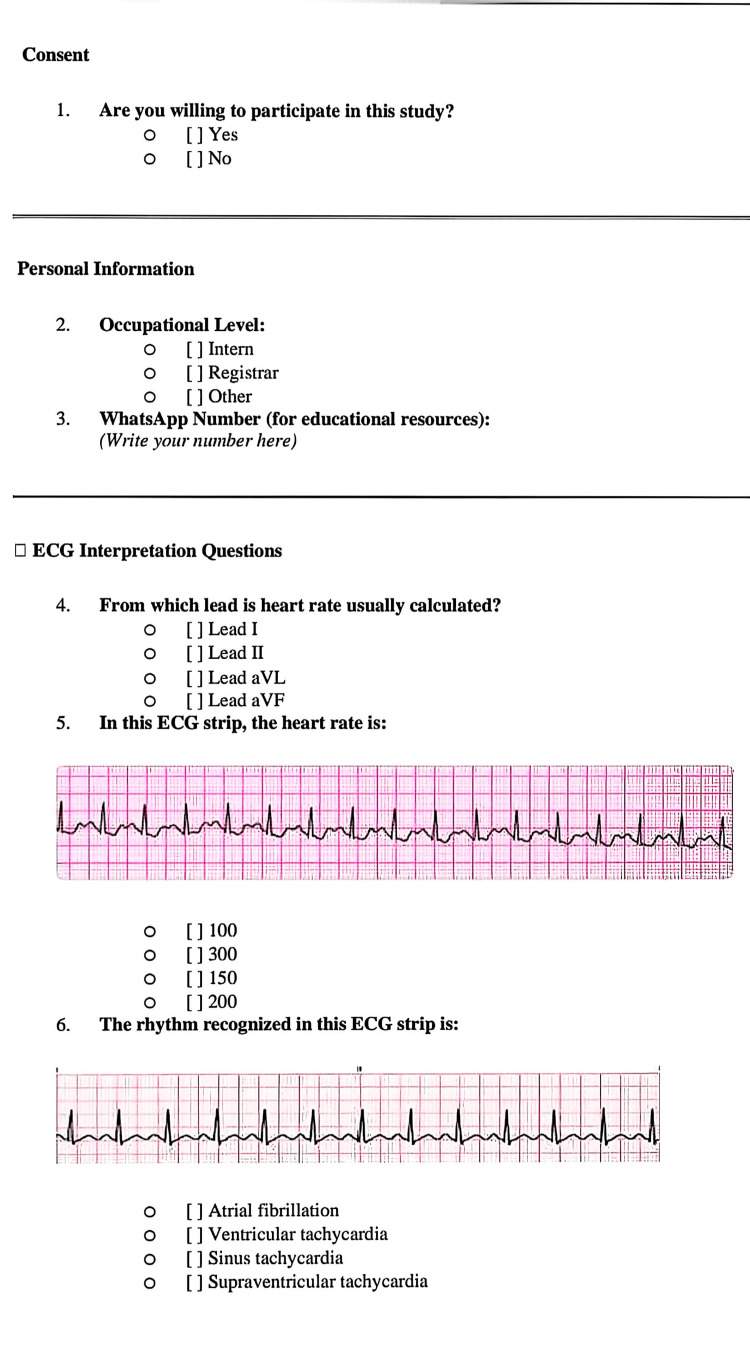 Figure 1
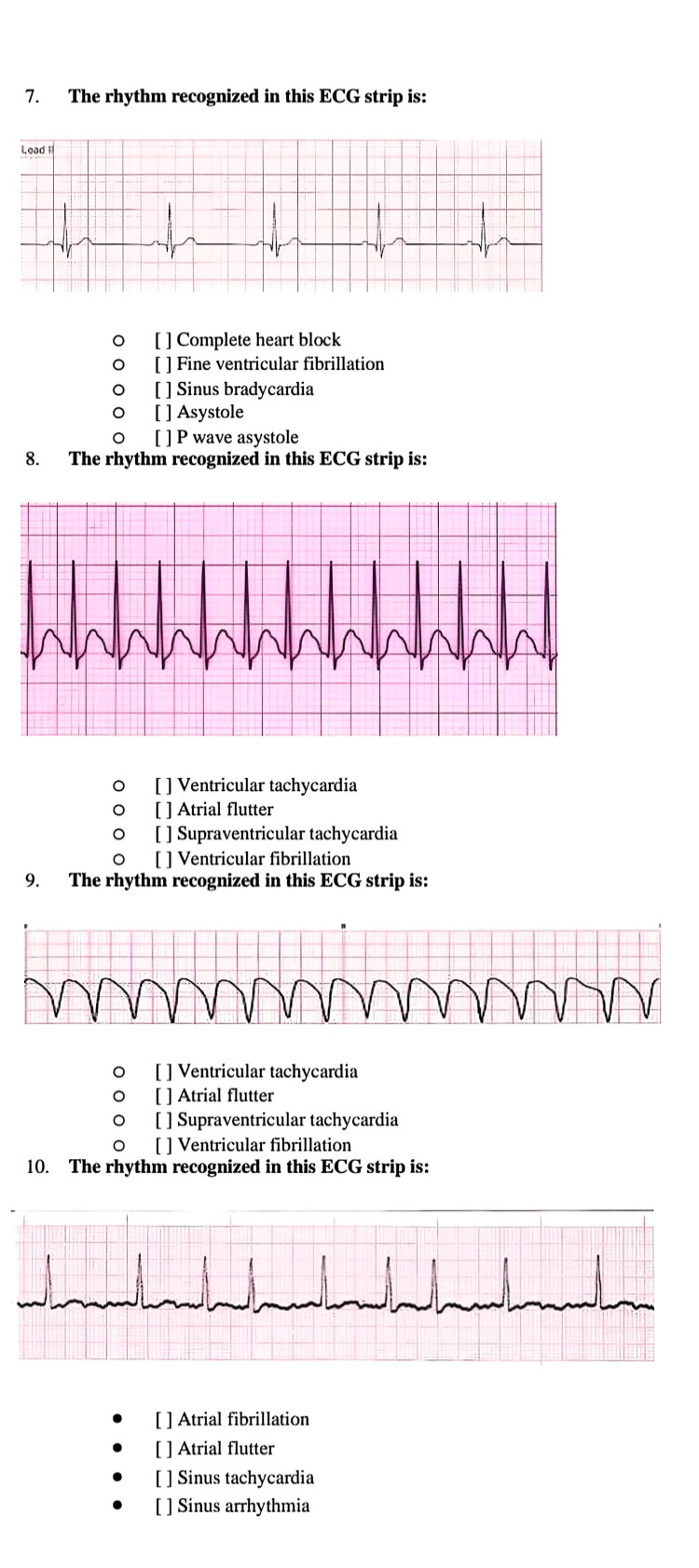 Figure 2
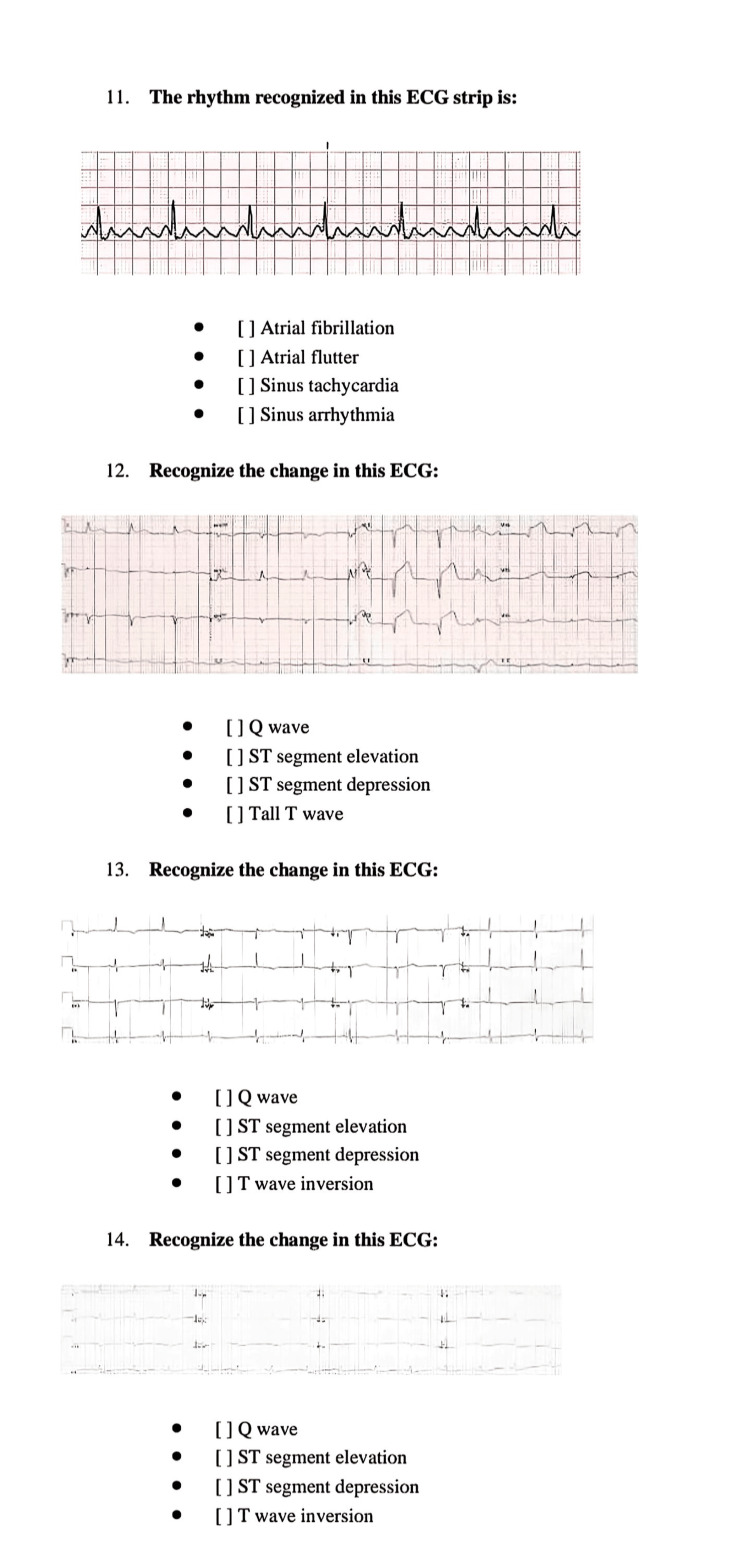 Figure 3
| Stage | Description |
| 1 | Is there any electrical activity? |
| 2 | What is the ventricular (QRS) rate? |
| 3 | Is the QRS rhythm regular or irregular? |
| 4 | Is the QRS width normal (narrow) or broad? |
| 5 | Is atrial activity present? |
| 6 | How is atrial activity related to ventricular activity? |
| ECG Interpretation Skill | First Cycle; N (%) | Second Cycle; N (%) | Improvement (%) |
| Is there any electrical activity? | 67 (65.7%) | 118 (95.2%) | 29.50% |
| What is the ventricular (QRS) rate? | 47 (46.1%) | 103 (83.1%) | 37.00% |
| Is the QRS rhythm regular or irregular? | 66 (64.7%) | 100 (80.6%) | 15.90% |
| Is the QRS width normal (narrow) or broad? | 33 (32.4%) | 90 (72.6%) | 40.20% |
| Is atrial activity present? | 68 (66.7%) | 91 (73.4%) | 6.70% |
| How is atrial activity related to ventricular activity? | 49 (48.0%) | 94 (75.8%) | 27.80% |
| Role | N (%) | N (%) |
| Interns | 206 | 91.20% |
| Medical officers | 18 | 8.00% |
| Residents | 2 | 0.90% |
| Total | 226 | 100% |
Peer Reviews
No public reviews on file for this paper yet. If you reviewed it on a platform where reviews are public (OpenReview, ICLR, NeurIPS, ICML), you can paste yours below so the community can read it here.
Videos
No videos yet. Explain this paper in a talk, walkthrough, or lecture? Add one.
Taxonomy
TopicsECG Monitoring and Analysis · Healthcare Technology and Patient Monitoring · Phonocardiography and Auscultation Techniques
Introduction
Electrocardiogram (ECG) interpretation proficiency remains suboptimal among medical trainees globally. Studies from Poland and Saudi Arabia reveal that while students can identify basic ECG elements, they often fail to recognize life-threatening abnormalities due to insufficient training [1]. Al Mousa et al. found that Saudi interns struggled with ECG interpretation despite advanced life support training, reinforcing the need for case-based education [2]. In the UK, only 9.7% of junior doctors reported confidence in ECG interpretation, with no improvement across training levels, suggesting limitations in traditional teaching methods [3]. Online learning approaches, particularly interactive webinars, have shown promise in improving confidence and skill acquisition [4,5]. The objective of this audit was to evaluate baseline ECG interpretation performance among junior doctors against predefined standards based on the six-stage ECG interpretation model. These standards required complete and accurate application of all six interpretation components, followed by implementation of a targeted educational intervention and re-audit to assess compliance and improvement. Collectively, these findings highlight the urgent need for structured, practical, and continuous ECG education to enhance diagnostic accuracy and patient care.
Materials and methods
Study design and setting
This was a prospective clinical audit conducted at Aswan University Hospitals over the period 15/01/24 to 15/06/24.
Study population and sample size
The audit population included house officers (also referred to as interns), medical officers, and registrars (also referred to as residents) working at Aswan University Hospitals who were routinely involved in ECG interpretation during clinical duties. Participants were recruited using convenience sampling.
A total of 102 physicians participated in the baseline audit cycle, and 124 physicians participated in the re-audit cycle. The predominance of house officers reflects the local clinical practice, where junior doctors are primarily responsible for initial ECG interpretation, particularly during on-call shifts.
Data collection tools and analysis
Data were collected using a structured questionnaire developed to assess ECG interpretation skills according to the six-stage interpretation model (see Appendix). The questionnaire content was reviewed by senior clinicians with experience in cardiology and acute care to ensure content relevance and clarity.
Responses were collected and analyzed. Results were expressed as frequencies and percentages, with comparisons made between baseline and re-audit cycles to assess changes in performance. No inferential statistical testing was performed.
ECG interpretation standards
Assessment of ECG interpretation skills was based on a six-stage structured approach, with predefined standards requiring complete and accurate application of all six interpretation components. These standards were formulated by hospital consultants to align with local clinical practice and expectations (Table 1).
Audit cycle
The clinical audit was conducted in three progressive phases:
Phase I - Baseline Assessment (First Cycle)
The initial assessment was carried out among 102 physicians to evaluate their existing competency in ECG interpretation. Using the six-stage protocol, responses were examined for accuracy, completeness, and pattern recognition. This phase helped identify core gaps in interpretation skills across clinical ranks.
Responses were assessed for completeness and correctness across all six interpretation stages, and overall compliance with the predefined standards was recorded.
Phase II - Interventions
The intervention phase involved a multifaceted educational strategy designed to enhance participants’ ECG interpretation skills. This included didactic training sessions systematically addressing each of the six ECG interpretation stages, ensuring a structured understanding of the diagnostic approach. Tailored guideline summaries and visually engaging reference posters were disseminated to reinforce key concepts and provide quick-reference tools during clinical decision-making. Structured interpretation templates were also distributed to guide consistent documentation practices. Additionally, interactive discussions and Q&A rounds created dynamic learning environments that allowed participants to clarify uncertainties and deepen their comprehension. Collectively, these interventions aimed to standardize interpretation methods and promote diagnostic consistency across all levels of clinical responsibility.
The intervention was delivered over a four-week period by senior physicians with experience in ECG interpretation and medical education. Training sessions were conducted in small groups to facilitate interaction and practical application.
Phase III - Post-intervention Reassessment (Second Cycle)
A reassessment was conducted with 124 physicians to evaluate the effectiveness of the interventions. The same questionnaire was administered, and a comparative analysis was performed to measure improvements in interpretation accuracy. Emphasis was placed on both qualitative shifts in reasoning and quantitative increases in compliance with standard criteria.
Ethical Considerations
The audit was conducted in accordance with ethical guidelines, ensuring data confidentiality and patient privacy. Approval was obtained from the hospital’s institutional review board (IRB) and ethics committee prior to commencement (approval number: 10021024).
Results
A total of 226 participants were assessed across the two audit cycles; the samples in the first and second cycles were independent and not paired, as different participants were included in each cycle using a structured, locally formulated six-question framework designed by hospital consultants. This approach enabled a progressive and measurable assessment of core competencies essential for accurate ECG analysis. Notably, there was significant overall improvement between the first and second audit cycles across all parameters.
In the initial stage, determining whether any electrical activity was present, accuracy rose from 67 (65.7%) to 118 (95.2%), reflecting a 29.5% improvement. Similarly, identification of the ventricular (QRS) rate improved markedly, from 47 (46.1%) to 103 (83.1%), yielding a 37.0% gain. The ability to recognize the regularity of the QRS rhythm increased more modestly, from 66 (64.7%) to 100 (80.6%), a 15.9% improvement.
The most significant relative gain was observed in the classification of QRS width, which improved by 40.2%, from only 33 (32.4%) to 90 (72.6%). Recognition of atrial activity exhibited a more modest increase of 6.7%, from 68 (66.7%) to 91 (73.4%). Meanwhile, understanding the relationship between atrial and ventricular activity improved from 49 (48.0%) to 94 (75.8%), indicating a 27.8% gain.
Table 2 summarizes these improvements across various key aspects of ECG analysis. Overall, the comparison between the first and second cycles indicates a consistent and substantial enhancement in the participants' ECG interpretation capabilities across all assessed domains.
To ensure a representative understanding of documentation practices across the clinical workforce, a total of 226 participants were assessed during the two audit cycles. For participant distribution across roles, the composition remained consistent across both cycles, with interns forming the majority at 206 (91.2%), followed by medical officers at 18 (8.0%), and residents contributing 2 (0.9%) (Table 3). This distribution underscores the pivotal role of interns in shaping documentation habits, while also highlighting the need to engage medical officers and residents in quality improvement interventions to ensure standardized compliance across all tiers of healthcare providers.
Discussion
The findings of this clinical audit demonstrate a clear improvement in ECG interpretation performance following the implementation of a targeted educational intervention based on a structured six-stage interpretation model. This supports existing evidence that focused, systematic training can enhance ECG interpretation skills among junior doctors [6].
Improvement was most pronounced in core interpretative domains such as ventricular rate assessment and recognition of QRS width abnormalities [7,8]. These components are frequently encountered in daily clinical practice and were repeatedly emphasized during the intervention through posters, structured templates, and case-based discussions [9,10]. The observed pattern suggests that repetitive exposure and reinforcement of foundational steps are particularly effective in improving interpretation accuracy. In contrast, more complex interpretative elements showed comparatively smaller gains, likely reflecting the need for longer-term training and continued clinical exposure.
The audit’s findings are consistent with previous studies reporting suboptimal ECG interpretation skills among interns and junior physicians, particularly when training is unstructured or inconsistent. Prior literature has demonstrated that case-based and structured educational approaches are more effective than traditional lecture-based teaching in improving ECG competency, which aligns with the improvements observed following the intervention in this audit [11-15].
Interpretation of the results should consider several important limitations. The participant population differed between audit cycles and consisted predominantly of interns, reflecting local staffing patterns where junior doctors are primarily responsible for initial ECG interpretation. While this supports the relevance of the audit to real-world clinical practice, it also limits generalizability and introduces potential confounding when comparing baseline and re-audit results. In addition, the audit assessed departmental-level performance rather than individual paired outcomes, and formal psychometric validation of the questionnaire was not performed.
Despite these limitations, the audit successfully identified gaps in ECG interpretation practice, implemented a feasible educational intervention, and demonstrated measurable improvement against predefined standards. The findings support the role of regular audit and feedback cycles in improving clinical practice and highlight the value of structured ECG interpretation frameworks in junior doctor education.
Conclusions
This clinical audit effectively demonstrated a significant improvement in the ECG interpretation skills of healthcare providers at Aswan University Hospitals. The substantial gains across various aspects of ECG analysis reflect a successful intervention and adherence to clinical guidelines. These improvements are anticipated to translate into optimized patient care and improved outcomes in the management of various health conditions. Continued re-auditing is strongly recommended to ensure the sustained implementation of these enhanced standards and foster a culture of continuous learning and quality improvement.
The reference list from the paper itself. Each links out to its DOI / PubMed record.
- 1Competency in ECG Interpretation Among Medical Students Med Sci Monit KopećG MagońW Hołda M Podolec P 338633942120152654199310.12659/MSM.895129 PMC 4638278 · doi ↗ · pubmed ↗
- 2Electrocardiogram Interpretation Competency of Medical Interns in Saudi Arabia: A Cross-Sectional Study Cureus Al Mousa AM Alhubail FM Almulhim M 015202310.7759/cureus.37557 PMC 1018309537193433 · doi ↗ · pubmed ↗
- 3Electrocardiography Interpretation Proficiency Among Medical Doctors of Different Grades in the United Kingdom Cureus Abdalla AA Khanra D 014202210.7759/cureus.29755 PMC 961759536324360 · doi ↗ · pubmed ↗
- 4The Effectiveness of Online Learning in Improving the Electrocardiogram Interpretation Skills of Junior Medical Trainees: A Mixed Methods Observational Study Cureus Elkammash A Ahmed MW Alsinan M Madi K 015202310.7759/cureus.42320 PMC 1044389137614256 · doi ↗ · pubmed ↗
- 5Improving the Acquisition, Interpretation, and Documentation of Electrocardiograms (EC Gs) in Patients Suspected of Having Acute Coronary Syndrome: A Clinical Audit Conducted in Emergency Departments Across Sudan Cureus Idrees IH Alamin SH Ahmed Osman MO 017202510.7759/cureus.82892 PMC 1210369640416156 · doi ↗ · pubmed ↗
- 6Assessment of electrocardiogram interpretation competency among healthcare professionals and students of Ardabil University of Medical Sciences: a multidisciplinary study BMC Med Educ Amini K Mirzaei A Hosseini M Zandian H Azizpour I Haghi Y 4482220223568119110.1186/s 12909-022-03518-0PMC 9179219 · doi ↗ · pubmed ↗
- 7Implementation of a longitudinal, near-peer ECG didactic curriculum in an internal medicine residency program and impact on ECG interpretation skills BMC Med Educ Kaye MG Khan HA Gudleski GD Yatsynovich Y Graham SP Kwiatkowski AV 5262320233748850210.1186/s 12909-023-04483-y PMC 10367257 · doi ↗ · pubmed ↗
- 8Clinically contextualised ECG interpretation: the impact of prior clinical exposure and case vignettes on ECG diagnostic accuracy BMC Med Educ Viljoen CA Millar RS Manning K Hoevelmann J Burch VC 4172120213434437510.1186/s 12909-021-02854-x PMC 8336410 · doi ↗ · pubmed ↗