Advancing the design of the kissing bug kill trap for surveillance of triatomines
Yuexun Tian, Nadia A. Fernández-Santos, Jose G. Juarez, Henry Esquivel, Andrea M. Moller-Vasquez, María Granados-Presa, Adriana Echeverria, Pamela Pennington, Alejandra Zamora-Jerez, Juan P. Fimbres-Macias, Walter Roachell, Paul A. Lenhart, Theresa Casey, Molly E. Keck

TL;DR
Researchers improved a solar-powered trap for catching kissing bugs, which spread Chagas disease, making it more efficient and suitable for use in different regions.
Contribution
The study identifies the optimal design of the Kissing Bug Kill Trap for triatomine surveillance and control.
Findings
The reference trap with six large black funnels and four LED panels above the rain guard performed best across regions.
The trap captured 1,531 triatomines representing six species over three years.
The trap design shows potential for reducing T. cruzi infection risk by intercepting bugs before they reach human habitats.
Abstract
Standardized surveillance and control of kissing bugs (Hemiptera: Reduviidae: Triatominae), the insect vectors of the Chagas disease parasite, Trypanosoma cruzi, which causes Chagas disease, remains difficult. The Kissing Bug Kill Trap consists of solar powered LED lights mounted over a column of black funnels. It operates autonomously to capture, kill and preserve adult triatomines. We conducted experiments from 2022-2024 testing potential ways to improve trap performance, ease of deployment, and minimize cost. Thirteen prototypes evaluated in Texas, Guatemala, and Mexico captured 1,531 triatomines. In 2022–2023 we selected a six-funnel trap suspended from a single support pole with an angle bracket, and with four LED lights and a solar panel mounted above the rain-guard, as a reference trap. In 2023, traps with smaller funnels, blue funnels, and blue lights were inferior to the…
Genes, proteins, chemicals, diseases, species, mutations and cell lines named across the full text — each resolved to its canonical identifier and authoritative record.
Click any figure to enlarge with its caption.
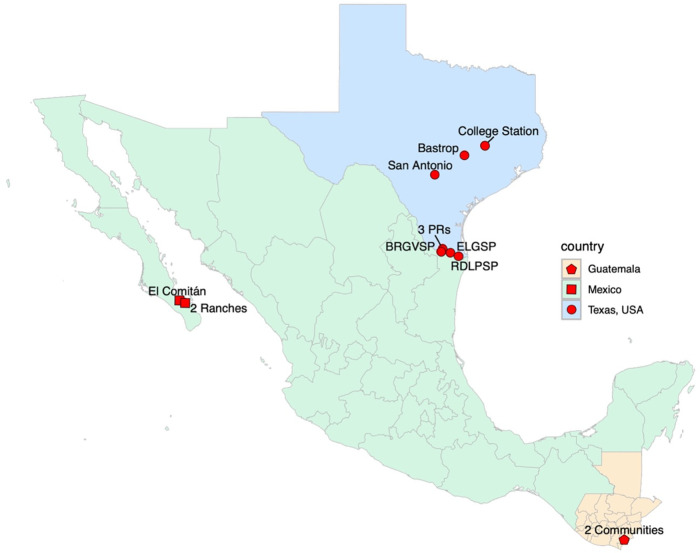 Fig 1
Fig 1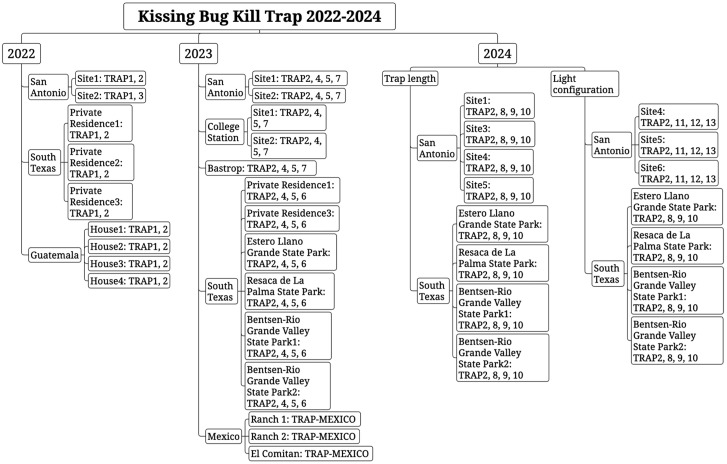 Fig 2
Fig 2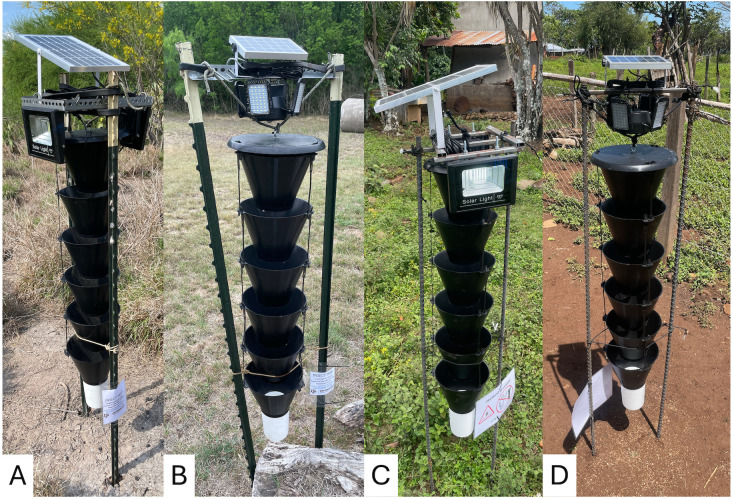 Fig 3
Fig 3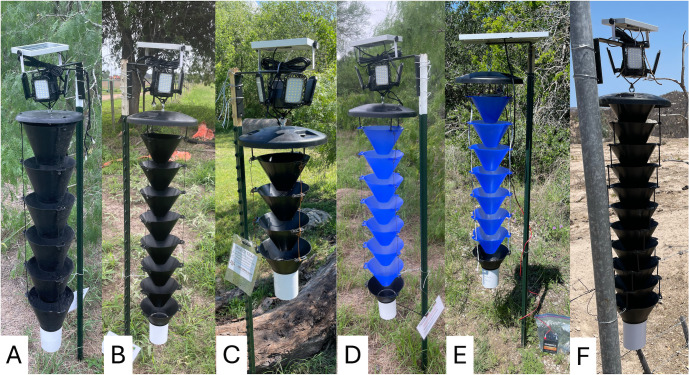 Fig 4
Fig 4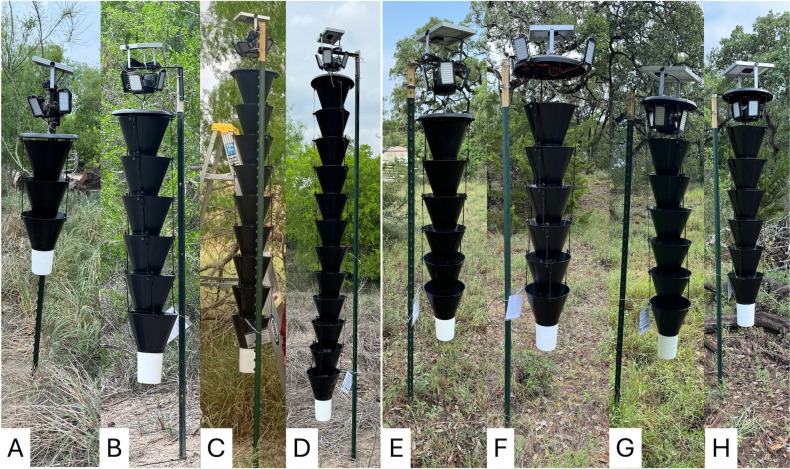 Fig 5
Fig 5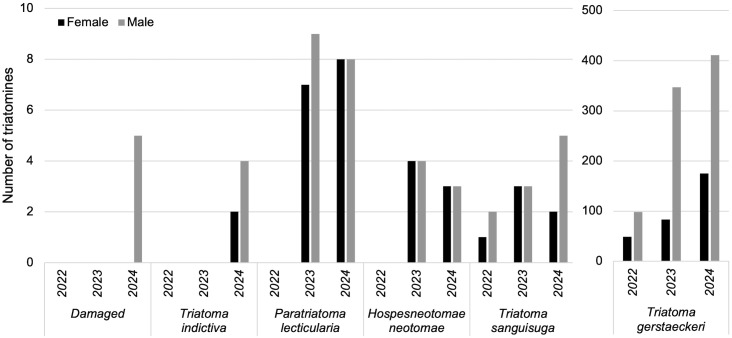 Fig 6
Fig 6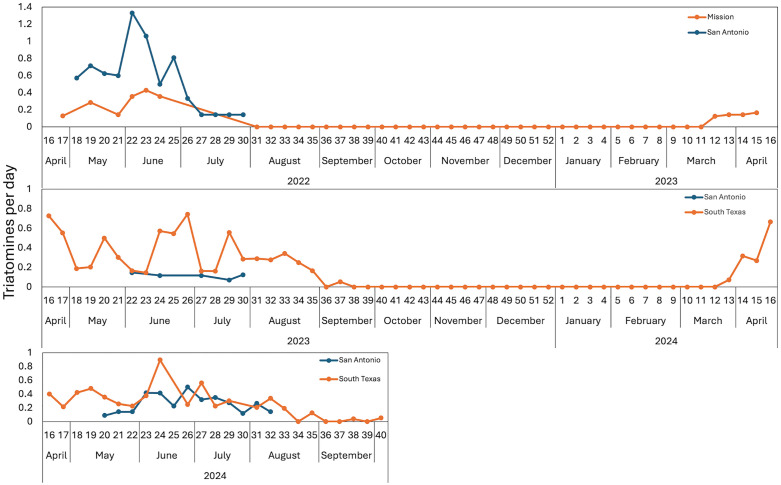 Fig 7
Fig 7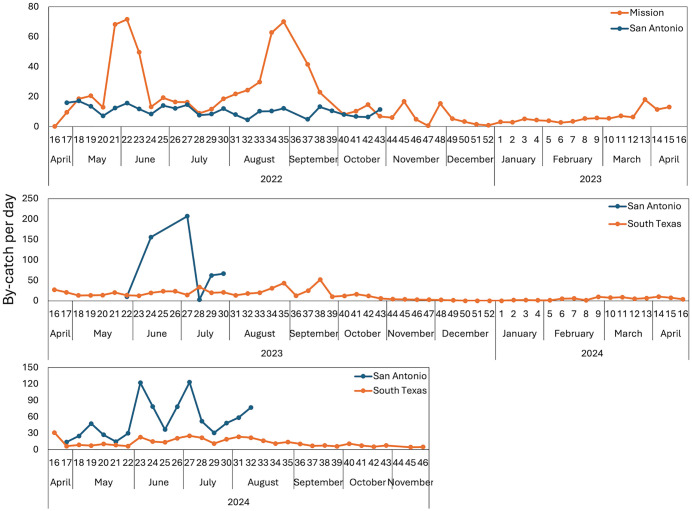 Fig 8
Fig 8- —NIH
- —Texas A&M AgriLife Urban Entomology Endowment
- —Texas A&M University School of Veterinary Medicine & Biomedical Sciences Diversity Fellowship
Peer Reviews
No public reviews on file for this paper yet. If you reviewed it on a platform where reviews are public (OpenReview, ICLR, NeurIPS, ICML), you can paste yours below so the community can read it here.
Videos
No videos yet. Explain this paper in a talk, walkthrough, or lecture? Add one.
Taxonomy
TopicsTrypanosoma species research and implications · Insect-Plant Interactions and Control · Insect symbiosis and bacterial influences
Introduction
Triatomines (Hemiptera: Reduviidae: Triatominae) are the insect vectors of Trypanosoma cruzi, the agent of Chagas disease throughout the Americas. Surveillance techniques to identify and quantify triatomine populations remain challenging, and the availability of surveillance tools lags behind that for other arthropod vectors such as mosquitoes and ticks. Although pesticides have been used as irritants to flush out triatomines from crevices in homes for surveillance and detection purposes [1], the high cost of manual collections poses a challenge for long-term and large-scale monitoring. Various traps have been developed to capture triatomines for different settings. For example, sticky traps can act as a physical barriers, preventing triatomines from entering chicken coops or residences where they may establish populations [2]. Lorenzo, Reisenman [3] reported a capture of 126 triatomines over five consecutive nights at two chicken-coops using yeast-baited traps, which was significantly more efficient than unbaited traps. In addition to yeast, live mice have also been used as bait, showing high efficiency in nidicolous and domiciliary settings [4,5].
While the above traps target crawling triatomines, several light-based traps have been developed to capture dispersing adult triatomines. These traps capitalize on the well-established attraction of triatomines to lights [6,7]. In 1964, three black lights hung against a white wall attracted a total of 398 Triatoma protracta [8]. Other light trap designs, such as a cross panel trap with diode lights, a cross-vane trap with UV lights, and a white cloth with fluorescent lights, have proven effective in capturing dispersing triatomines under different environmental conditions [2,6,8–10]. Despite their effectiveness, these traps require considerable time to set up and some require manual monitoring, limiting their uses for routine surveillance or large-scale triatomine control. Therefore, there is a need to develop a standardized trap that is easy to deploy, functions autonomously for long periods, and requires minimal maintenance.
Hamer, Fimbres-Macias [11] described the development of the Kissing Bug Kill Trap for collection, killing, and preservation of adult triatomines. The trap is a modified multiple-funnel trap [12] forming a vertical silhouette with an attractive LED light source powered by a solar panel mounted on top of the funnel column. The trap functions autonomously by automatically turning on the LEDs each night using a photodiode and captures attracted arthropods in a collection cup containing propylene glycol as a non-toxic preservative attached beneath the lowest funnel. This trap intercepts flying adult triatomines but not immature stages which lack wings. The trap can be checked at different intervals, depending on operational objectives. Over a three-year development period (2019–2021), Hamer, Fimbres-Macias [11] tested several trap prototypes, captured four triatomine species, and used the traps to evaluate flight dispersal phenology. The objectives of the current study were to evaluate trap performance for capturing triatomines of multiple species in different geographic regions, decrease non-target bycatch, and improve the trap design for commercialization. Experiments conducted in the USA, Mexico, and Guatemala from 2022 to 2024 tested different lengths of the vertical funnel column and different types and positions of LED light stimuli. As triatomines are reportedly attracted to light in the blue (430–555 nm) wavelengths [13–15], we also compared blue and black funnel columns and blue and white LED lights.
Materials and methods
Experiments were conducted in Texas, USA, Jutiapa, Guatemala, and Baja California Sur, Mexico (Figs 1 and 2). Texas study locations included private properties, public areas, and military training areas in the Lower Rio Grande Valley, San Antonio, Bastrop, and College Station. All the locations were selected based on documented triatomine presence, landscape variability, and availability of collaborators who could manage weekly trap visits. Experiments were set up as randomized complete blocks, with each location considered a replicate across all regions.
Map of the locations of the traps in Texas, USA, Mexico, and Guatemala during 2022-2024.BRGVSP: Bentsen-Rio Grande Valley State Park; ELGSP: Estero Llano Grande State Park; RDLPSP: Resaca De La Palma State Park; PR: private residence. Administrative boundaries were obtained from the Natural Earth database (https://www.naturalearthdata.com) using the R packages rnaturalearth and rnaturalearthhires.
Diagram of the evaluation locations of Kissing Bug Kill Trap in Texas, Guatemala, and Mexico with different trap prototypes (Table 1) deployed from 2022-2024.
Table 1: Descriptions of the Kissing Bug Kill Trap in various Multitrap and Lindgren trap modifications tested for capability to capture triatomines in 2022-2024. Modifications are described in trap length, funnel number, size and color, and LED light-solar panel configurations.
The major type of trap used was the Multitrap (Synergy Semiochemicals Corp., Delta, BC, Canada) (Fig 3), a slightly modified Lindgren Funnel Trap, which was designed to mimic a tree trunk and is especially effective for forestry pests. It was modified into the Kissing Bug Kill Trap by adding a visual LED lure [11] and was tested with various modifications of the LED light stimulus and length of the funnel column (Table 1). The LED lights in all traps were controlled by a photoswitch providing illumination throughout the scotophase. All collection cups contained propylene glycol (Bluewater Chemgroup, Fort Wayne, IN, USA), a preservative which can be re-used when checking and resetting traps. Traps within each location were spaced at least 50 m apart and were checked every 1–2 weeks. Collected trap contents were transferred to containers with 70% ethanol and transported to a laboratory. Triatomines were separated from by-catch and identified to species [16]. Other arthropods (by-catch) were identified to order and counted (S1 Fig).
Kissing Bug Kill Trap prototypes evaluated in 2022.A) 6-funnel Multitrap trap with two large light panels deployed in Texas (TRAP1); B) 6-funnel Multitrap trap with 4 small light panels deployed in Texas (TRAP2), C) TRAP1 prototype deployed in Guatemala, D) TRAP2 prototype deployed in Guatemala.
2022: Evaluation of light sources
In 2022, three types of Multitraps were evaluated (Fig 3 and Table 1) for the number of light sources and size of the solar panel (TRAP1 versus TRAP2 and TRAP3) and length (TRAP1 and TRAP2 versus TRAP3). TRAP1 and TRAP2 were deployed at one location in San Antonio and three private residences in south Texas, while TRAP1 and TRAP3 were deployed in another location in San Antonio, resulting in five replicates for TRAP1 (two in San Antonio, three in south Texas), four for TRAP2 (two in San Antonio and two in south Texas, Fig 3), and one for TRAP3. Within each location, suitable trap sites with no shade and good visibility were identified and then the trap type was randomly assigned to them. The traps were installed using two T-posts with different numbers of metal bars supporting the lights above the trap (four bars for large lights and one for small lights) [11]. Traps were monitored from April to October 2022 in San Antonio and April 2022 to April 2023 in South Texas.
In Guatemala, eight traps (four TRAP1 and four TRAP2) were deployed on July 7, 2022, in two communities in Comapa, Jutiapa, selected based on previous presence of T. dimidiata at low density in households [17]. The traps in Guatemala had the same funnels and lights as Texas but we sourced local materials (1.9-cm rebar and support brackets) to install the traps (Fig 3). In each community, two houses were selected based on field access, location near to an open field and safety. In each, we deployed one trap of each type within 10 m of each other. Traps were checked weekly from July 2022 to May 2024. Two manual searches for triatomines using the one-person-hour methodology at the households were conducted in May 2023 and May 2024 [18].
2023: Color of funnels and light source
TRAP2A was modified from TRAP2 so that the solar panel and LED lights are supported by a single angle bracket and the trap is hung from a bracket attached to a single supporting post; this trap was used as a basis for comparison with the Lindgren multiple-funnel trap modified as in Table 1. In 2023, we focused on the evaluation of funnel size and number as well as light color to evaluate the potential to increase efficacy. Because the Lindgren trap has smaller funnels than the Multitrap, eight funnels were needed in TRAP4 to achieve the same column length as TRAP2 with six funnels. TRAP5 was similar to TRAP4, but with only four funnels. TRAP6 was also similar to TRAP4, but the funnels were manufactured from blue plastic containing a fluorescent pigment instead of black plastic. TRAP2A, TRAP4, TRAP5, and TRAP6 used the same small 4-panel LED lights. TRAP7 was similar to TRAP6, except that the white LED lights at the top of the trap were replaced with three blue-light LED strips (connected to a 6-volt battery) running vertically down the length of the trap. Suspension of the traps was simplified by using a single T-post with a metal shelving bracket at the top to hold the entire trap (Fig 4).
Five Kissing Bug Kill Trap prototypes evaluated in Texas in 2023.A) TRAP2A, Multitrap with 6 funnels and 4-panel lights; B) Lindgren black funnel trap with 8 funnels and 4-panel lights (TRAP4); C) Lindgren black funnel with 4 funnels and 4-panel light (TRAP5); D) Lindgren blue funnel trap with 8 funnels and 4-panel light; E) Lindgren blue funnel trap with 8 funnels and blue LED light strips (TRAP7); F) Lindgren black funnel nested together with 11 funnels and small LED (TRAP-MEXICO).
In central Texas, TRAP2A, TRAP4, TRAP5, and TRAP7, were randomly deployed within two locations in each of San Antonio (eight traps) and College Station (eight traps) and one in Bastrop (four traps), while TRAP2A, TRAP4, TRAP5, and TRAP6 were deployed in each of six locations in south Texas: two private residences (four traps per private residence) and four locations in three state parks [Bentsen-Rio Grande Valley State Park (eight traps), Estero Llano Grande State Park (four traps), Resaca de la Palma State Park (four traps) (Texas Parks and Wildlife State Park Scientific Study Permit No. 26–23)] (Fig 4).
In addition to the five prototypes, another two Lindgren traps of the original design (TRAP-MEXICO, Fig 4 and Table 1) were deployed at three locations in Baja California Sur, Mexico. One trap was deployed at Rancho la Huerta on June 20, 2023, taken down on August 22, 2023, and re-deployed at Rancho José Melero on September 13, 2023. One trap was deployed at El Comitán (CIBNOR weather station) on June 22, 2023. Both traps were removed on December 1, 2023, and redeployed at El Comitán from September 1 to November 15, 2024. The traps were checked every 1–4 weeks during these periods.
2024: Pre-commercial configurations
Experiments with modified Multitraps in 2024 focused on evaluation of trap length and position of the LED lights for compatibility with commercialization. In the first evaluation, TRAP2A with six funnels and small 4-panel LED lights mounted above the rain guard was compared with identical traps with three funnels (TRAP8), nine funnels (TRAP9), and twelve funnels (TRAP10) (Table 1 and Fig 5). Traps were randomly deployed in each of the four locations in south Texas (four traps/location) and the San Antonio area (four traps/location), resulting in eight replicates for each trap length. In the second evaluation, TRAP2A was compared with traps bearing 4-panel LED lights around the perimeter of the rain guard (TRAP11), 4-panel LED lights below the rain guard (TRAP12), and 5-panel LED lights below the rain guard (TRAP13) (Fig 5). Traps were deployed at three locations in south Texas (three traps/location) and San Antonio area (three traps/location), resulting in six replicates for each light position (Fig 2).
Kissing Bug Kill Traps deployed in Texas in 2024.Group one compares Multitraps with A) TRAP8, 3 funnels, B) TRAP2A. 6 funnels, C) TRAP9, 9 funnels, and D) TRAP10, 12 funnels, and Group 2 compares Multitraps with E) TRAP2A, 4 LED lights above the rainguard, F) TRAP11, 4 LED lights on the perimeter of rainguard, G) TRAP12, 4 LED lights under the rainguard, and H) TRAP13 5 LED lights under the rainguard.
Sample processing methods
For traps from the Texas locations with a large number of insects collected, two methods were used to estimate by-catch. The dry weight method was used to process all TRAP7 collections in 2023. After the removal of all triatomines, the remaining trap content was drained, spread evenly in plastic Petri dishes (13.5 cm diameter, 1.8 cm depth), and dried in a fume hood at room temperature for ≥48 h. The desiccated arthropods were then weighed in a new petri dish, and approximately 1/8 of the content was removed, weighed again, and all specimens in the 1/8 content were identified to order. The total number of specimens in each order was estimated based on the equation:
The floating method was used for the 2024 collections to estimate numbers of small arthropods as the small arthropods tend to stick together and were difficult to separate. A round paper of the same 13.5-cm-diameter as a Petri dish was prepared by drawing four lines that equally divided the paper into eight pie pieces (S2 Fig). This paper was placed under a plastic Petri dish with the trap contents floating inside the Petri dish. The arthropods that were floating in the water were identified and counted individually. The remaining small arthropods that sank to the bottom were estimated by counting and identifying them to order in three randomly selected pie sections. The total number of specimens in each order was estimated based on the equation:
Two triatomines collected from traps deployed in Guatemala were processed with our lab’s established bloodmeal metabarcoding protocol [18] to identify vertebrates fed on prior to capture. These two individuals were also tested for T. cruzi using PCR targeting a 166 bp region of repetitive microsatellite nuclear DNA.
Statistics
Data for each year were analyzed separately. A generalized linear mixed model (GLMM) was used to compare triatomines caught per day and triatomines per 1000 other arthropods among trap prototypes, with the prototypes as variables and the location as random effects. Tweedie distributions were applied because the data were right-skewed and zero-inflated, a common characteristic in ecological count data. Due to loss during transport, some of the captured triatomines were not identified to species in the lab and were not included in the species-based analyses. The identified triatomine numbers were also analyzed using a GLMM, with a negative binomial distribution, with species and sex as the explanatory variables and years as random effects. A pairwise comparison evaluated the effect of sex on triatomine number within each species. All analyses were conducted using R [19]. Data for which we could not confirm accuracy due to unclear labeling and records were excluded from the analyses.
Results
During the 3-year evaluation period, the Kissing Bug Kill Trap prototypes captured 1,531 triatomines with an estimated 604,432 non-target arthropods (S1 Table).
2022: Evaluation of light sources
In 2022 in Texas, 197 triatomines were captured by the three trap prototypes (five TRAP1, four TRAP2, and one TRAP3) (Table 2). Due to 47 lost specimens during relocation from our field laboratory to the main laboratory, only 150 triatomines were identified to species: 49 female and 98 male T. gerstaeckeri and 1 female and 2 male T. sanguisuga. Mean triatomines caught per day did not differ significantly among the three trap prototypes with Traps 1 and 3 being the highest and the lowest, respectively. However, the mean triatomines per 1,000 other arthropods for TRAP3 (11.29) was significantly higher than for TRAP1 (10.61). Although TRAP2 (6.55 triatomines), with six funnels and small LED lights, captured fewer triatomines than the prototype with large LED lights and 6 funnels (TRAP1), the difference was not significant. These results were due to the varied number of each trap evaluated (four TRAP2 and one TRAP3), resulting in different variances. Moreover, TRAP2 was light and only required one support metal bar while TRAP1 with large LED lights was heavier and required two metal bars to mount the light and solar panel securely to the stakes.
Table 2: Total numbers of triatomines caught and operational days for each trap prototype in Texas in 2022 with means for trap performance and by-catch ratio calculated. A generalized mixed linear model was used to compare trap performance and by-catch ratio with TRAP1 as reference. Asterisk indicates significant difference from TRAP1 (p < 0.05). Dash indicates that the trap was not evaluated at the location. The two San Antionio locations are at the Joint Base San Antonio (JBSA)-Lackland Chapman Training Annex.
In Comapa, Guatemala, 13 triatomines, all T. dimidiata, were captured from the eight traps during 2022–2024 (Table 3). Traditional manual searches of four homes found no triatomines. Two T. dimidiata (collected on October 1 and November 27, 2022) were processed for bloodmeal metabarcoding [20]. Only one (female) yielded a PCR amplicon of the vertebrate 12S rRNA gene followed by amplicon deep sequencing, which matched Canis lupus familiaris (domestic dog) and Gallus gallus (chicken). This same female (TD22CompaKB1) was also infected with T. cruzi (untypable).
Table 3: Total number of triatomines caught and operational days for each trap prototype in Guatemala from 2022-2024 with mean trap performance and by-catch ratio calculated. A generalized mixed linear model disclosed no significant differences in trap performance and by-catch ratio with TRAP1 as reference.
2023: Color of funnels and light source
In 2023 in Texas, 44 traps of 5 prototypes caught 492 triatomines with 460 identified to species due to specimen lost during transportation, including 83 female and 347 male T. gerstaeckeri, 7 female and 9 male Paratriatoma lecticularia, 4 female and 4 male Hospesneotomae neotomae [formally known as Triatoma neotomae [21]], and 3 female and 3 male T. sanguisuga (Table 4). TRAP2A (with 6 large black funnels) had the highest number of triatomines per day, significantly higher than TRAP4 (with 8 small black funnels) and TRAP5 (with 4 small black funnels). It also had significantly more triatomines per 1,000 other arthropods than TRAP7 (with blue funnels and blue light) (p ≤ 0.01). Meanwhile, TRAPS 5 and 7 had the lowest triatomines per day and per 1,000 other arthropods, respectively.
Table 4: Total number of triatomines caught and operational days for each trap prototype in Texas in 2023 with mean trap performance and by-catch ratio calculated. A generalized mixed linear model was used to compare trap performance and by-catch ratio with TRAP2A trap as a reference. Asterisks indicate significant difference from TRAP2A (p ≤ 0.05). The two San Antionio locations are at the Joint Base San Antonio (JBSA)-Lackland Chapman Training Annex.
Four triatomines were captured from the two traps in Mexico. Two Dipetalogaster maxima (one female and one male) were captured at Rancho la Huerta on July 21, 2023. One female and one male Hospesneotomae peninsular [formerly known as Triatoma peninsular [21]] were captured at El Comitán (CIBNOR weather station) on October 18, 2024.
2024: Pre-commercial configurations
In 2024 in Texas, 690 triatomines were collected, 333 in the 32 traps with different numbers of funnels and 357 in the 24 traps with different light configurations (Tables 5 and 6). The 626 triatomines identified to species included 175 female and 411 male T. gerstaeckeri, 2 female and 4 male T. indictiva, 8 female and 8 male P. lecticulari, 3 female and 3 male H. neotomae, and 2 female and 5 male T. sanguisuga, with 5 specimens too damaged to be identified, with 64 specimens lost during transportation.
Table 5: Total number of triatomines caught and operational days for trap prototypes with different numbers of funnels in Texas in 2024 with mean trap performance and by-catch ratio calculated. A generalized mixed linear model disclosed no significant differences in trap performance and by-catch ratio with the TRAP2A trap as reference. San Antonio-1 and San Antonio-3 are at the Joint Base San Antonio (JBSA)-Lackland Chapman Training Annex.
Table 6: Total number of triatomines caught and operational days for trap prototypes with different light configurations in Texas in 2024 with mean trap performance and by-catch ratio calculated. A generalized mixed linear model was used to compare trap performance and by-catch ratio with the TRAP2A trap as reference. Asterisks indicate a significant difference from TRAP2A (p ≤ 0.05).
Traps with different number of funnels (3, 6, 9, 12 funnels) did not have a significant difference in the triatomine numbers while traps with 9 and 3 funnels had the highest and lowest numbers of triatomines per day and per 1,000 other arthropods, respectively. (Table 5). TRAP2A caught significantly more triatomines per day and significantly more triatomines per 1,000 other arthropods than traps with the LED lights on the perimeter of (TRAP11) or below (TRAP12, TRAP13) the rain guard (Table 6). Trap 11 and trap 12 had the lowest triatomines per day and triatomines per 1,000 other arthropods, respectively. Increasing the number of LED lights from four to five in TRAP13 raised the number of triatomines caught per day to a level not significantly different from that in TRAP2A.
Triatomine species and sex ratios
Triatoma gerstaeckeri was caught in significantly higher numbers (z = 5.311, P < 0.001) compared to all other species (Fig 6), with 94.1% (n = 1,156) of all captures. There was no interaction between sex and triatomine species (P > 0.1). Pairwise comparisons revealed 2.8x more T. gerstaeckeri males than females captured (P < 0.01) but there was no difference in catch by sex for T. indictiva (P = 0.30), P. lecticularia (P = 0.51), H. neotomae (P = 0.79), and T. sanguisuga (P = 0.48).
Number of each triatomine species and sex collected from the traps from 2022-2024.
Phenology
Adult flight dispersal phenology for T. gerstaeckeri plotted as the numbers of bugs caught per day per trap among the traps for each week of sampling differed between years and regions (Fig 7). Dispersal flights in 2022 had begun in both south Texas and San Antonio when traps were deployed in April, and dispersal activity in both places diminished by the first week of August. The 2023 and 2024 dispersal flights in South Texas both began in the third week of March. The 2023 flight ended in the third week of September, while the 2024 flight extended into October. In both years flight in San Antonio began several weeks later and ended several weeks earlier than in South Texas.
Weekly phenology of Triatoma gerstaeckeri catch per day per trap in 2022-2024 at south Texas and San Antonio.The trap data for all south Texas locations and all San Antonio locations are averaged.
Other triatomine species in Texas were captured in smaller numbers than T. gerstaeckeri (S2 Table). Triatoma sanguisuga were captured from May to August, H. neotomae from April to October, T. indictiva in July and August, and P. lecticularia from April to September. Thirteen T. dimidiata were captured throughout the year in Guatemala, three during the rainy season from May to October and 10 during the dry season from November to April.
Trap by-catch and failures
The by-catch, measured as triatomines per 1,000 other arthropods, ranged from 0.04 for TRAP7 (blue funnels with blue LED light strips) to 11.29 for TRAP3 (4 black funnels and 4 LED lights) for the 15 trap prototypes that received the full processing of total arthropods (S1 Table). While the TRAP7 blue funnel and blue light trap was only operated for one season in Texas, this trap captured 261,495 individual arthropods, which is 43.3% of all the by-catch of all 15 prototypes for the entire three-year study. The longitudinal pattern in by-catch of other arthropods showed peaks in in early June and late August in south Texas, 2022 and in June in San Antonio in 2023 and 2024 (Fig 7).
Over the three-year evaluation period of 15 traps, occasional malfunctions were observed and promptly addressed. For example, connections on one 12-funnel trap in 2024 broke and the trap fell; the trap was repaired to restore functionality. Similarly, malfunctioning lights were either fixed or replaced as soon as detected. At one site in San Antonio (Lackland Chapman Training Annex) in 2024, the solar panel light from one trap was stolen; we replaced the missing light with a backup unit to maintain continuous operation. Collection data obtained from all affected traps during malfunction periods were discarded and excluded from analyses.
Discussion
Over a period of three years (2022–2024), we captured 1,531 triatomines of eight species in 13 Kissing Bug Kill Trap prototypes in three countries.. Among the 13 trap prototypes, the combination of six large black funnels with 4 LED light panels mounted above the rain guard with a single support pole and angle bracket (TRAP 2A) performed best in terms of triatomine caught per day, and per 1,000 other arthropods and overall ease of deployment.
In 2022, TRAP2 with six black funnels, two support posts and four small LED light panels mounted above the rain guard on a bar suspended between the support posts was comparable to the same trap with two large light panels (TRAP1) in triatomines caught per day but was inferior in triatomines caught per 1,000 other arthropods. This inferiority was not found in later experiments. Moreover, the LED lights and solar panel of TRAP2 were lighter than the larger LED lights and solar panel of TRAP1, which required a cumbersome square frame mounted to the two support posts. Because TRAP2 was lighter, cheaper, and easier to install than TRAP1, it was modified by employing a single supporting post with an angle bracket holding the lighting assembly and suspending the trap (called TRAP2A). TRAP2A was selected as a reference treatment for experiments in 2023 and 2024. These experiments upheld its superiority.
In 2023, TRAP2A outperformed all other traps tested regardless of color or length of the funnel column, and in 2024 it outperformed other Multitrap prototypes with either different numbers of funnels or lower LED light positions. Lindgren traps were designed to catch flying beetles [12] and the modifications incorporated into Multitraps improved their efficacy for this use [22]. Unlike the original Lindgren trap [designated as TRAP-MEXICO (Fig 4F)] which had nested funnels, other versions of the Lindgren trap in our experiments had the funnels configured so that the bottom of one funnel was at the same level as the top of the funnel below it (Fig 4B-4E), just as the funnels in TRAP2 and TRAP2A were configured. Therefore, other features of TRAP2 and TRAP2A would have been responsible for their superior performance. These features include wider funnels and apertures, greater funnel height and a steeper slope.
Despite evidence that triatomines are attracted to blue light [13–15], blue Lindgren traps with white LED lights (TRAP6) or blue LED strips (TRAP7) caught no more triatomines than black traps with white LED lights. The blue traps with blue LED strips were highly attractive to other arthropods, resulting in significant reduction in triatomines caught per 1,000 other arthropods. Thus, they are less suitable for catching triatomines but might be useful in ecological studies that investigate taxonomic diversity and biomass of night-flying insects.
Hamer, Fimbres-Macias [11] demonstrated that the Kissing Bug Kill Trap captured four species of triatomines: T. gerstaeckeri, T. sanguisuga, H. neotomae and T. rubida. Our study adds five additional species to this list: P. lecticularia and T. indictiva in the USA, D. maxima and H. peninsularis in Mexico, and T. dimidiata in Guatemala. The triatomine species collected in the USA likely reflect differences in population abundance and distribution across ecotopes. Triatoma gerstaeckeri was the dominant species captured by the traps in central and south Texas, corroborating data collected in a citizen-science study in Texas [23]. The additional triatomine species collected in Texas are known to occur in these regions but at lower abundance [24], demonstrating that relative capture of dispersing adult triatomines of the different species by the Kissing Bug Kill Trap likely reflects local population densities. The low number of T. dimidiata in Comapa, Guatemala may be due to low triatomine populations in sylvatic habitats in the region [18] due to anthropogenic disturbance to natural habitat and the subsistence hunting of wild animals resulting in low wildlife occurrence [25]. The eight traps in Guatemala were in continuous operation for over two years with minimal maintenance, indicating their durability and suitability for use in rural areas of Central America. Two manual searches conducted inside the Guatemala households with traps installed outside yielded zero triatomines, suggesting that in addition to serving as a more effective surveillance tool than manual searching, the traps may have intercepted dispersing triatomines before they entered households and established populations. Sampling of other households in these same Comapa, Guatemala communities in 2022 disclosed infestation rates ranging from 17–38% and colonization levels between 9–29% [18].
Prior to development of the Kissing Bug Kill Trap, no standardized surveillance tool has existed to attempt to quantify spatio-temporal heterogeneity of adult triatomine abundance. We have now deployed large numbers of these traps over six consecutive seasons in multiple countries and have begun to capture the species diversity of dispersing adult triatomines as well as variation in adult dispersal phenology. Confirming anecdotal observations in prior years, trap catches in south Texas and San Antonio comprised mainly T. gerstaeckeri, with varying magnitudes and peaks (Fig 7). Within a season, the earlier occurrence in traps of T. gerstaeckeri in south Texas compared to San Antonio matches our prior observations. Using traps as a standardized surveillance tool will remove observer bias associated with other forms of collection.
While we captured 1,531 triatomines during three years of field experiments, we also captured 604,432 non-target arthropods (S1 Table). While this amount of by-catch sounds large, several interpretive factors need to be considered. Of the total by-catch, 43.3% was collected from the TRAP7 (blue funnel with three blue light stripes) in 2023. Low catches of target insects (only 10 triatomines) coupled with the very high by-catch led to the decision to withdraw this trap from further evaluation The magnitude of by-catch fluctuated throughout the years in different locations (Fig 8). To evaluate the phenology of triatomines in regions with poor understanding of seasonal changes in dispersal behavior, these traps were set up and run continuously for multiple months or multiple years. This study design therefore results in traps being deployed during periods of active triatomine dispersal and also periods of no triatomine captures when other non-target arthropods continued to be captured. For example, large numbers of non-target arthropods and no triatomines were captured in the traps in August and September, 2022, in south Texas (Figs 7 and 8). Even when studies quantify trap by-catch and present ratios of vectors to non-target captures [26], this is only done during short windows of time and we are un-aware of any arthropod vector trap that is continuously operated for multiple years.
Weekly number of by-catch per day per trap in 2022-2024 at south Texas and San Antonio.The trap data for all south Texas locations and all San Antonio locations are averaged.
Non-target by-catch in Kissing Bug Kill Traps could have alternative scientific uses, such as in studies of biodiversity, dispersal and phenology of numerous flying and passively dispersing insect species [27]. In addition, by-catch could be used for animal feed, e.g., poultry food for rural villages in developing countries. This award-winning concept of mass capture of flying insects for animal feed was introduced by Cohnstaedt, Lado [28]. It may or may not be necessary to find an alternative for propylene glycol, which is generally regarded as safe, with an LD_50_ of 21,000 mg/km in dogs (Propylene Glycol | C3H8O2 | CID 1030 - PubChem).
It is difficult to compare the by-catch observed with different Kissing Bug Trap prototypes because other vector trapping studies rarely quantify by-catch (but see Hribar [29]). While trap by-catch often makes the removal of vectors time-consuming, that is not the case with triatomines in Kissing Bug Kill Traps. Triatomines are larger than most of the arthropod by-catch (see S1–S2 Figs) and also have a distinctive morphology. Therefore, when processing traps, the triatomines are easily removed as the first quick step and then the very consuming step (for research purposes only) is identifying, sorting, and counting the other arthropods (S1 Fig).
Another concern with a large by-catch is the potential ecological impact by removing insects that perform essential ecological services in an environment. Fortunately, we noticed very few honeybees (1,193) in the traps over three years, so this is one beneficial insect not expected to be significantly impacted by the trap. Because Kissing Bug Kill Traps will most likely be used in or near to ecologically disturbed areas of human habitation, it is possible that a substantial portion of the by-catch will be comprised of insects that preferentially inhabit or invade such disturbed areas, many of which are considered to be pests, providing an additional benefit to the use of the traps. For example, a large number of the by-catch were Coleoptera, made up with a large proportion of click beetles (Elateridae). Although we did not identify the click beetles to species, many elaterid larvae (wireworms) are major pests worldwide [30]. Even if the by-catch were comprised solely of insects that provided beneficial ecological services, we also contend that the impact of the traps would be inconsequential on a landscape level. Even if traps were used in large-scale surveillance or mass-trapping programs they would impact a minute area compared to the entire landscape. Moreover, the easily quantifiable removal of non-target insects from the environment caused by Kissing Bug Kill Traps would represent a tiny fraction of the apparently huge (but hard to quantify) impacts posed by large-scale habitat alterations, such as clearing forests for agriculture or urban development [31], or the non-target impact of annual worldwide application of 3 billion kg of pesticides [32]. Unlike chemical pesticides [33,34], the Kissing Bug Kill Trap would leave no long-term environmental residue. Such anthropogenic activities as habitat degradation and non-target impact of pesticides are hypothesized to be one of the major drivers of the alarming global decline in insect populations [35,36].
If a future goal is to minimize trap by-catch, the collection cups of Kissing Bug Kill Traps could be modified to minimize by-catch. For example, Kissing Bug Kill Trap experiments in 2025 used dry collection cups, with no liquid preservatives. If a small hole was placed in these dry collection cups, arthropods smaller than adult triatomines (the vast majority of the by-catch) could escape unharmed. Additionally, frequent monitoring of traps with dry collection cups could allow non-target arthropods to be released alive while retaining only the triatomines.
Of the T. gerstaeckeri captured, 74% were males. This result is similar to that reported for T. infestans and T. eratyrusiformis in Argentina, where more flying males were captured using light traps than females, but not for T. guasayana, wherein 62% were female [2]. Fimbres-Macias, Harris [37] collected 1.6x more female than male T. sanguisuga manually around a building in Texas, USA, with light as an attractant. With 3,215 triatomines collected from a citizen science program, more females than males were collected for T. gerstaeckeri, T. sanguisuga, T. indictiva, T. rubida, while more males than females were collected for P. lecticularia, T. protracta, and H. neotomae [24]. Collectively, these results indicate that the sex ratio of triatomines attracted by light may differ among species and may differ from the sex ratio of natural populations.
Our previous study detected T. cruzi in triatomines captured by Kissing Bug Kill Traps [11], demonstrating that propylene glycol is suitable for preservation of nucleic acids. The current study represents our first attempt at using bloodmeal metabarcoding [38] to identify prior hosts of triatomines captured in Kissing Bug Kill Traps. One of the two captured T. dimidiata subjected to the bloodmeal analysis had evidence of past feeding on dog and chicken blood, suggesting that preservation in propylene glycol is suitable for this analysis. Similarly, with a larger set of triatomines collected alive manually from houses in the same neighborhoods, Juarez, Moller-Vasquez [39] found chicken and dog as frequent bloodmeal hosts, but also detected evidence of prior feeding on Rattus rattus, Felis catus, Homo sapiens, Mus musculus, Sus scrofa, Anatidae and Archimandrita sp. These bloodmeal results from the two insects caught in the Kissing Bug Kill Traps in our study suggest that they emerged from a domestic habitat, prior to flying and being intercepted by the trap, as opposed to a sylvatic habitat where wildlife hosts would be expected hosts. In the future, such assays could be used to identify the habitat of origin of dispersing adults, which would be important in understanding not only movement of triatomines but also the origins and prevalence of T. cruzi.
Our results build on the initial development of the Kissing Bug Kill Trap [11], and suggest that because of the efficacy, low cost, ease of maintenance, and durability of the trap it has promising potential for use as a large-scale surveillance tool. The trap would enable standardized passive surveillance methodology, avoiding observer bias that accompanies active sampling techniques. The multiple funnel design and solar-powered LED lights resulted in minimal trap failure over the three-year study, with only one instance of theft involving a solar-powered LED light. Most homeowners, especially in Guatemala which lacked electricity, appreciated the traps because they offered a free security light at night. The Kissing Bug Kill Trap may also have promise as a control tool to prevent dispersing triatomines from colonizing residences or domestic animal harborages thereby reducing the global threat of Chagas disease. The possibility of use as a control tool is supported by a 1954 study in which three light traps around an Arizona home captured 398 Triatoma protracta and the homeowners noticed fewer triatomines around their residence [8]. Deploying multiple traps around a household has proven to be effective in protecting humans from mosquito-borne pathogens [40]. The potential for practical implementation of the Kissing Bug Kill Trap awaits commercialization of this trap and its introduction into the pest control marketplace.
Supporting information
S1 TableArthropod bycatch for the different multi-funnel trap prototypes used in 2022–2024.(XLSX)
S2 TableThe number of triatomines and triatomines per day per trap (in parenthesis) of the six species captured from 2022-2024 in Texas and Guatemala.(XLSX)
S1 FigExamples of processing by-catch arthropods from Kissing Bug Kill Traps after a week of collection.Triatomines were removed and counted as the first step as they are larger than most of the by-catch and have a distinctive shape.(TIFF)
S2 FigExample of the collected arthropods, including two adult triatomines, from a Kissing Bug Kill Trap deployed for one week (A) and an example of the floating method to speed-up processing of large numbers of small arthropod by-catch (B).(TIFF)
S1 DataDataset used for the analyses in this study.(XLSX)
The reference list from the paper itself. Each links out to its DOI / PubMed record.
- 1Reynoso MMN, Seccacini EA, Calcagno JA, Zerba EN, Alzogaray RA. Toxicity, repellency and flushing out in Triatoma infestans (Hemiptera: Reduviidae) exposed to the repellents DEET and IR 3535. Peer J. 2017;5:e 3292. doi: 10.7717/peerj.3292 28533956 PMC 5438576 · doi ↗ · pubmed ↗
- 2Abrahan LB, Gorla DE, CataláSS. Dispersal of Triatoma infestans and other Triatominae species in the arid Chaco of Argentina: flying, walking or passive carriage? The importance of walking females. Mem Inst Oswaldo Cruz. 2011;106(2):232–9. doi: 10.1590/s 0074-02762011000200019 21537686 · doi ↗ · pubmed ↗
- 3Lorenzo MG, Reisenman CE, Lazzari CR. Triatoma infestans can be captured under natural climatic conditions using yeast-baited traps. Acta Trop. 1998;70(3):277–84. doi: 10.1016/s 0001-706x(98)00042-4 9777714 · doi ↗ · pubmed ↗
- 4Noireau F, Abad-Franch F, Valente SAS, Dias-Lima A, Lopes CM, Cunha V, et al. Trapping Triatominae in silvatic habitats. Mem Inst Oswaldo Cruz. 2002;97(1):61–3. doi: 10.1590/s 0074-02762002000100009 11992149 · doi ↗ · pubmed ↗
- 5Noireau F, Flores R, Vargas F. Trapping sylvatic Triatominae (Reduviidae) in hollow trees. Trans R Soc Trop Med Hyg. 1999;93(1):13–4. doi: 10.1016/s 0035-9203(99)90161-x 10492778 · doi ↗ · pubmed ↗
- 6Wisnivesky-Colli C, Gürtler RE, Solarz ND, Schweigmann NJ, Pietrokovsky SM, Alberti A, et al. Dispersive flight and house invasion by Triatoma guasayana and Triatoma sordida in Argentina. Mem Inst Oswaldo Cruz. 1993;88(1):27–32. doi: 10.1590/s 0074-02761993000100006 8246755 · doi ↗ · pubmed ↗
- 7Minoli SA, Lazzari CR. Take-off activity and orientation of triatomines (Heteroptera: Reduviidae) in relation to the presence of artificial lights. Acta Trop. 2006;97(3):324–30. doi: 10.1016/j.actatropica.2005.12.005 16460653 · doi ↗ · pubmed ↗
- 8Sjogren RD, Ryckman RE. Epizootiology of Trypanosoma cruzi in southwestern North America. 8. Nocturnal flights of Triatoma protracta (Uhler) as indicated by collections at black light traps (Hemiptera: Reduviidae: Triatominae). J Med Entomol. 1966;3(1):81–92. doi: 10.1093/jmedent/3.1.81 5941571 · doi ↗ · pubmed ↗