Prevalence and antimicrobial susceptibility profile of Staphylococcus aureus from meat, abattoir workers, equipment and water samples at Abergelle International Livestock Development PLC, Mekelle, Northern Ethiopia
Haftom Yirga Tsegay, Muuz Gebru Sahle, Biruk Mekonnen Woldie, Kedir Seid Abdelkadir

TL;DR
This study found that Staphylococcus aureus is commonly present in meat and abattoir environments in Ethiopia, with high resistance to some antibiotics, highlighting the need for better hygiene and monitoring.
Contribution
The study provides new insights into S. aureus prevalence and antibiotic resistance patterns in an Ethiopian abattoir, emphasizing One Health implications.
Findings
Staphylococcus aureus was found in 29.3% of samples, with highest contamination in personnel and equipment.
Multidrug resistance was observed in 20% of isolates, with high resistance to penicillin-G.
Higher contamination was observed in cattle slaughterhouses and during non-fasting periods.
Abstract
Raw meat is one of the main sources of food borne infections worldwide. Staphylococcus aureus (S. aureus) is one of the key organisms that is prevalent in contaminated meat, having different patterns of antimicrobial susceptibility to different antibiotics. This study aimed to determine the prevalence and antimicrobial susceptibility pattern of S. aureus in meat, abattoir workers, water, and equipment samples. A cross-sectional study was conducted from January to September 2023 at the Abergelle International Export Abattoir, Tigray, Ethiopia. Meat and equipment samples were collected via simple random sampling, while swabs from slaughter lines, personnel, and water were obtained by convenience sampling, all aseptically on a weekly basis after flaying process of slaughtering. A total of 400 samples were collected: 233 meat, 95 equipment, 24 slaughter line, 48 personnel, and 24 water…
Genes, proteins, chemicals, diseases, species, mutations and cell lines named across the full text — each resolved to its canonical identifier and authoritative record.
Click any figure to enlarge with its caption.
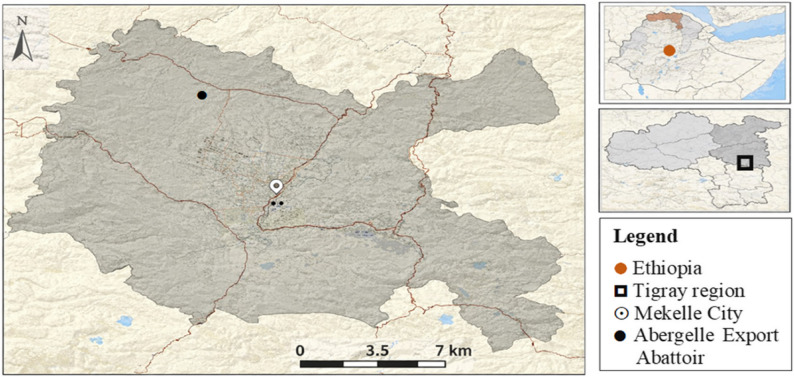 Figure 1
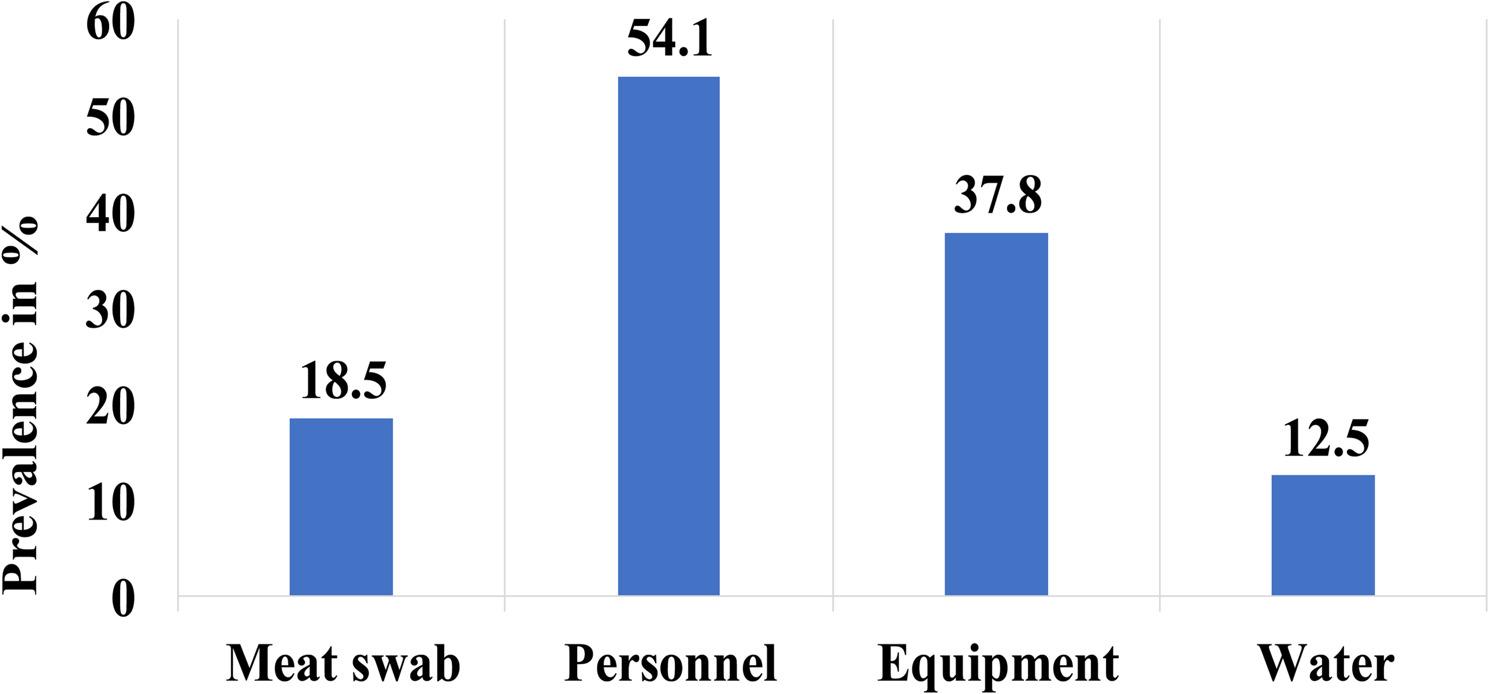 Figure 2
Peer Reviews
No public reviews on file for this paper yet. If you reviewed it on a platform where reviews are public (OpenReview, ICLR, NeurIPS, ICML), you can paste yours below so the community can read it here.
Videos
No videos yet. Explain this paper in a talk, walkthrough, or lecture? Add one.
Taxonomy
TopicsAntimicrobial Resistance in Staphylococcus · Salmonella and Campylobacter epidemiology · Antibiotic Resistance in Bacteria
Background
Foodborne illnesses are widespread in many African countries, largely due to poor handling practices and limited food safety regulations [1–3]. Animal-source foods such as meat, milk, and eggs commonly carry Staphylococcus aureus (S. aureus), contributing to frequent foodborne outbreaks [4]. Meat is especially vulnerable to contamination at multiple stages, including slaughter, processing, storage, and distribution [5].
Meat can become contaminated through infected animals, poor hygiene, inadequate sterilization, or contaminated equipment and facilities, creating both economic losses and health risks due to S. aureus enterotoxins [6]. The nutrient-rich, near-neutral pH of meat and milk further supports bacterial growth [7]. S. aureus, a common colonizer of human and animal skin and nasal mucosa, is carried by roughly 30% of healthy individuals and is a major potential contamination source in abattoirs [8, 9].
S. aureus carries numerous virulence factors that make it a significant food safety and public health threat. Its enterotoxins, over 20 heat-stable, protease-resistant toxins, can cause classical food poisoning even after the bacteria are no longer viable [10]. These superantigens are frequently linked to outbreaks from contaminated meat, milk, and other animal products [11]. Genomic studies also show that enterotoxin expression is tightly regulated by prophages and global regulatory systems, adding to the organism’s pathogenicity [12–14]. Clinically, S. aureus can cause pneumonia, bacteremia, osteomyelitis, dermatitis, meningitis, endocarditis, and toxic shock syndrome [15–17], while in animals it commonly results in mastitis [18, 19], skin and soft tissue infections [20], and bumble foot in poultry [16].
Antimicrobial resistance (AMR) in S. aureus has emerged as a major One Health concern, driven by inappropriate antimicrobial use in livestock, weak regulatory systems, and insufficient food-safety controls [21]. Resistant strains, including methicillin-resistant S. aureus (MRSA) and multidrug-resistant S. aureus, are increasingly reported in food animals, animal products, and throughout the food chain [22]. In many low and middle-income regions, particularly sub-Saharan Africa, limited stewardship, over-the-counter access to antibiotics, and weak surveillance systems have accelerated the spread of resistant strains from animals to humans through direct contact, food handling, or consumption of contaminated products [23]. Similar trends are documented in East Africa, where rising resistance to tetracyclines, penicillins, and macrolides in livestock-associated S. aureus is a growing public health and food safety concern [24–26].
In Ethiopia, the irrational use and misuse of antimicrobials by health care providers, unskilled practitioners, and drug consumers are frequent and play a large role in changing the resistance level [27, 28]. Additionally, cultural practices involving the consumption of raw or undercooked meat may further heighten the risk of exposure as they are common in Ethiopian context [29, 30].
Although the Abergelle International Export Abattoir primarily targeted export markets, it also supplies local high-standard hotels and universities, making any contamination a potential public health concern. Despite these concerns, data on the prevalence and antimicrobial susceptibility of S. aureus in abattoir environments in Tigray, Ethiopia remains scarce, as most studies focus on clinical settings. This study addresses that gap by determining the prevalence and evaluating the antimicrobial susceptibility patterns of S. aureus in meat, personnel, water, and equipment at the Abergelle abattoir, providing evidence that can support both local and export-oriented meat safety interventions.
Methods
Study area
This study was conducted at the Abergelle International Export Abattoir, the only legally established large-scale export abattoir in the Tigray region of Ethiopia that meets recognized export standards. The facility is located 9 km north of Mekelle city and operates under the Abergelle International Livestock Development PLC established in 2005. It has modern slaughtering and processing infrastructure, including equipment imported from Germany. It has 18 cold rooms with a capacity of over 240 cattle and 960 sheep/goats per day. It uses municipal water supply serving all processing and sanitation activities. Although the abattoir has historically exported beef, mutton, goat meat, and offal to North Africa, the Middle East, and Asia, operations have recently shifted toward supplying local institutions due to market and technical challenges [31] (Fig1).
Fig. 1. Map of Mekelle city (Arc GIS, 2025)
Study design
A cross-sectional study design was employed to assess the prevalence and antimicrobial susceptibility patterns of Staphylococcus aureus (S. aureus) in an abattoir setting.
Study period
The study was conducted from January to September 2023.
Study population
The study population included slaughtered animals (bovine, caprine, and ovine), abattoir personnel, equipment, and the water used during slaughtering and processing. All slaughtered animals were male, due to their higher carcass yield and better dressing percentage, which is in line with export-oriented purchasing practices. Although sex-based differences in S. aureus colonization have not been consistently demonstrated in food animals, sampling only males may slightly limit generalizability. The animals were originated from farmer cooperatives and traders operating under intensive and semi-intensive systems in the Tigray, Amhara, and Afar regions of Ethiopia. Abattoir personnel participating in the study were workers involved in slaughtering, processing, packaging, and transporting beef, mutton, and goat meat.
Sample size determination and sampling methodology
The sample size was determined using the standard formula for estimating proportions described by Thrusfield [32], given below. In the absence of prior prevalence data from the study area, an expected prevalence (P) of 50% was assumed, as this provides the maximum sample size and ensures adequate statistical power. Using a 95% confidence level (Z = 1.96) and a 5% margin of error (d), the minimum required sample size was 384. To increase precision, a total of 400 samples were collected.
\documentclass[12pt]{minimal} \usepackage{amsmath} \usepackage{wasysym} \usepackage{amsfonts} \usepackage{amssymb} \usepackage{amsbsy} \usepackage{mathrsfs} \usepackage{upgreek} \setlength{\oddsidemargin}{-69pt} \begin{document}$$\:n={\left(Z\right)}^{2}\:P\frac{1-P}{{d}^{2}}$$\end{document}The sampling contained 233 meat swabs (159 beef, 50 goat meat and 24 mutton), 95 equipment swabs (24 knife, 24 apron, 23 splitting axe and 24 slaughter line), 24 slaughter line swabs, 48 abattoir personnel swabs (24 nasal swabs and 24 hand swabs), and 24 water samples.
Sample allocation among species of animals was performed proportionally to the abattoir’s throughput during the study period. Cattle represent the predominant species processed at the facility; therefore, 159 meat swabs were collected from cattle, compared with 50 from goats and 24 from sheep. A simple random sampling technique was used to collect meat and equipment samples (a subset of the total per each collection day), while a convenience sampling technique was used to collect samples from the slaughter lines, water samples and abattoir personnel participating in slaughtering, evisceration, processing, and packaging of meat.
Sample collection and transport
Samples were collected aseptically on a weekly basis (20 samples per week) after the flaying and evisceration process and abattoir personnel samples were collected during their active shifts to capture potential contamination. Equipment and water samples were collected before the beginning of the active processing, prior to any slaughter activities. To prevent cross-contamination, sterile materials were used throughout, gloves were changed between samples, and a new sterile swab or bottle was used for each sampling point. The species, source, and time of collection (fasting vs. non-fasting periods) were recorded for each sample. Observations of the general abattoir environment, lairages, slaughtering process, and hygiene measures were conducted using a checklist.
Sterile cotton-tipped swabs were used to sample carcasses, equipment, and personnel. Carcass swabs were taken from rump, flank, brisket, and neck over an approximately 100 cm² area. Entire surfaces of knives and splitting axes were swabbed, while apron and slaughter line surfaces were swabbed approximately 100 cm². For personnel sampling, nasal swabs were collected by gently inserting a sterile swab approximately 1–2 cm into each nostril and rotating it against the nasal mucosa. Hand swabs were collected by swabbing the entire surface of both hands, including palms, fingers, and interdigital spaces, using moistened sterile swabs. All swab tips were immediately placed into 10 mL of buffered peptone water after breaking off the shafts inside the test tubes to prevent contamination. For water samples, 1 mL of potable water which was used for washing carcasses and equipment was added to 9 mL of buffered peptone water. Samples were transported in ice boxes to the Microbiology Laboratory of the College of Veterinary Sciences, Mekelle University, and stored at + 4 °C until culturing. Sample collection and transportation was conducted according to standard procedures described by the International Standards Organization [33, 34].
Isolation and identification
Identification of S. aureus was based on a combination of phenotypic and biochemical assays. Swab samples were first placed into 10 mL of buffered peptone water and incubated at 37 °C for 24 h for enrichment. After incubation, a loopful of the enriched culture was streaked onto 7% sheep blood agar and incubated aerobically at 37 °C for 24 h. Presumptive staphylococcal colonies, round, smooth, white to yellow, and β-haemolytic, were selected and sub-cultured on nutrient agar to obtain pure cultures. Representative colonies were subjected to Gram staining, and those showing Gram-positive cocci in clusters were retained for further testing. As a next step, catalase testing was performed by emulsifying a small amount of culture in 3% hydrogen peroxide; immediate bubble formation indicated a positive reaction. Each isolate was then streaked onto Mannitol Salt Agar (MSA) and incubated at 37 °C for 24 h; yellowing of the medium indicated mannitol fermentation. DNase activity was assessed by streaking isolates on DNase agar, incubating at 37 °C for 24 h, and flooding with HCl; a clear halo indicated DNase production. Tube coagulase test was performed by inoculating 0.5 mL of rabbit plasma with a loopful of culture and incubating at 37 °C, with readings at 1 h and 24 h; clot formation confirmed coagulase positivity.
Isolates positive for Gram-positive clustered cocci, catalase, mannitol fermentation, DNase, and coagulase were confirmed as S. aureus, while coagulase-negative isolates were excluded from S. aureus counts. S. aureus ATCC 25,923 was used as a quality control strain for culture and biochemical testing, and ambiguous results were resolved by repeat testing and comparison with the control strain.
Antimicrobial susceptibility test (AST)
Antimicrobial sensitivity tests of the isolates were performed via the disk diffusion method [35] according to Clinical Laboratory Standards Institute (CLSI) M100, 30th edition [36].
Nine different antimicrobial discs for nine class of antimicrobials that commonly used for treating different bacterial diseases and considered important for human health were used for the test. The nine antimicrobials were: gentamycin (GEN-10 µg), chloramphenicol (C-30 µg), penicillin-G (P-10 units), erythromycin (E-15 µg), doxycycline (DO-30 µg), ciprofloxacin (CIP-5 µg), sulfamethoxazole-trimethoprim (COT-25 µg), cefoxitin (CFX-30 µg) and vancomycin (VA) were tested for twenty randomly selected isolates of S. aureus. S. aureus ATCC 25,923 was used as the quality control strain for the eight antimicrobials using the disk diffusion method. The minimum inhibitory concentration (MIC) through the broth microdilution method was applied for vancomycin sensitivity. S. aureus ATCC 29,213 was used as a quality control strain for vancomycin MIC.
The isolates were classified as resistant, intermediate or sensitive according to the Clinical Laboratory Standards Institute (CLSI) [36]. The interpretive criteria used for antimicrobial susceptibility testing of S. aureus is provided in Supplementary Table 1. Multidrug resistance (MDR) was determined according to the international standard proposed by Magiorakos et al.., as non-susceptibility to at least one agent in three or more different antimicrobial classes [37].
Data management and analysis
Data were entered into EpiData manager 4.6 and analyzed using SPSS version 27. Descriptive statistics were used to summarize the data and calculate the prevalence of S. aureus. Univariable analyses were conducted using chi-square (χ²) tests and univariable logistic regression to estimate crude odds ratios (CORs) with 95% confidence intervals. Variables with a p-value ≤ 0.25 in univariable analysis were considered for inclusion in the multivariable logistic regression model. Multivariable logistic regression was performed to identify independent predictors of S. aureus contamination, and adjusted odds ratios (AORs) with 95% confidence intervals were calculated. Statistical significance was set at p < 0.05. Slaughter line samples, shoat slaughterhouse, fasting period, and sheep were used as reference categories. Multicollinearity was assessed using variance inflation factors (VIF), and model fit was evaluated using the Hosmer-Lemeshow goodness-of-fit test. The predictive performance of the final model was evaluated using the receiver operating characteristic (ROC) curve. Antimicrobial susceptibility results were summarized as percentages of resistant, intermediate, and susceptible isolates.
Results
Isolation rate of Staphylococcus aureus from the abattoir
In this study, out of the 400 samples examined, 117 (29.3%) were positive for Staphylococcus aureus (S. aureus). Meat swabs accounted for 233 of the samples, of which 43 (18.5%; 95% CI: 13.5–23.4) were positive. Within the abattoir personnel samples, S. aureus was isolated in 54.1% (95% CI: 40.3–67.4); while equipment samples showed a 37.8% (95% CI: 37.6–57.3) prevalence (Fig. 2).
Fig. 2. Major categories of samples with their prevalence S. aureus contamination at the export abattoir in Mekelle, Ethiopia
The prevalence of S. aureus differed significantly by type of sample (χ² = 82.9; df = 7; p < 0.001). The highest prevalence was observed in knife swabs (83.3%; 95% CI: 64.2–93.3) and hand swabs from abattoir personnel (79.2%; 95% CI: 59.5–90.8), followed by apron swabs (45.8%; 95% CI: 27.9–64.9). A significant difference in contamination was also observed by sample source, with samples from the cattle slaughterhouse showing a higher prevalence of S. aureus (33.7%; 95% CI: 27.9–39.6) compared to those from the shoat slaughterhouse (21.6%; 95% CI: 15.0-28.3) (χ² = 6.606; df = 1; p < 0.05). Similarly, the prevalence varied significantly by time of collection, with higher contamination detected during non-fasting periods (35.2%; 95% CI: 28.5–41.8) compared to fasting periods (23.4%; 95% CI: 18.1–27.7) (χ² = 6.720; df = 1; p < 0.05). In contrast, no statistically significant difference in S. aureus prevalence was observed among animal species (χ² = 1.784; df = 2; p > 0.05) (Table 1).
Table 1. Prevalence and Chi-square (χ²) analysis of factors associated with S. aureus contamination at the export abattoir in Mekelle, EthiopiaFactorCategoryExamined (n)Positive (n, %)95% CI (%)χ²dfp-valueType of SampleMeat Swabs23343 (18.5)13.5–23.482.97< 0.001Nasal Swabs247 (29.2)14.9–49.2Hand Swabs2419 (79.2)59.5–90.8Water243 (12.5)4.3–31.0Knife Swabs2420 (83.3)64.2–93.3Apron Swabs2411 (45.8)27.9–64.9Splitting Axe238 (34.8)18.8–55.1Slaughter Line246 (25.0)12.0-44.9Sample SourceCSH25285 (33.7)27.9–39.66.60610.010SSH14832 (21.6)15.0-28.3Time of CollectionNFP19970 (35.2)28.5–41.86.72010.010FP20147 (23.4)18.1–27.7Animal SpeciesCattle15933 (20.8)15.2–27.71.78420.410Goat507 (14.0)7.0-26.2Sheep243 (12.5)4.3–31.0CSH Cattle Slaughter House, SSH Shoat Slaughter House, NFP Non-fasting Period, FP Fasting Period
Univariable and multivariable logistic regression analyses were performed to identify factors associated with S. aureus contamination (Table 2). In the univariable analysis, type of sample, sample source, and time of collection were significantly associated with S. aureus positivity, whereas animal species showed no significant association and was not retained in the multivariable model.
The multivariable logistic regression model showed that, type of sample remained an independent predictor of S. aureus contamination. Compared with slaughter line samples, significantly higher odds of contamination were observed for hand swabs (AOR = 3.61; 95% CI: 1.24–10.47; p < 0.05) and knife swabs (AOR = 4.92; 95% CI: 1.71–14.12; p < 0.05). Other sample types, including meat swabs, nasal swabs, water samples, apron swabs, and splitting axe swabs, were not significantly associated with contamination after adjustment (p > 0.05). Sample source was also significantly associated with S. aureus isolation in the adjusted model, with samples from the cattle slaughterhouse showing higher odds of contamination compared to those from the shoat slaughterhouse (AOR = 1.74; 95% CI: 1.07–2.82; p < 0.05). Similarly, samples collected during non-fasting periods had significantly higher odds of S. aureus contamination than those collected during fasting periods (AOR = 1.69; 95% CI: 1.06–2.70; p < 0.05) (Table 2).
Table 2. Univariable and multivariable logistic regression analysis of factors associated with S. aureus contamination at the export abattoir in Mekelle, EthiopiaFactorCategoryExamined (n)Positive (n, %)COR (95% CI)p-valueAOR (95% CI)p-valueType of sampleMeat Swabs23343 (18.5)0.68 (0.25–1.81)0.4440.72 (0.26–1.98)0.530Nasal Swabs247 (29.2)1.24 (0.35–4.43)0.7591.18 (0.32–4.28)0.800Hand Swabs2419 (79.2)4.00 (2.79–9.95)0.0013.61 (1.24–10.47)0.018Water243 (12.5)0.43 (0.09–1.96)0.2710.48 (0.10–2.28)0.360Knife Swabs2420 (83.3)6.00 (3.01–11.34)0.0014.92 (1.71–14.12)0.003Apron Swabs2411 (45.8)2.54 (0.75–8.63)0.1372.21 (0.62–7.89)0.220Splitting Axe238 (34.8)1.60 (0.45–5.65)0.4671.43 (0.39–5.26)0.590Slaughter Line246 (25.0)1*-1*-Sample SourceCSH25285 (33.7)1.85 (1.15–2.95)0.0101.74 (1.07–2.82)0.024SSH14832 (21.6)1*-1*-Time of CollectionNFP19970 (35.2)1.78 (1.15–2.75)0.0101.69 (1.06–2.70)0.027FP20147 (23.4)1*-1*-Animal SpeciesCattle15933 (20.8)1.83 (0.52–6.52)0.350--Goat507 (14.0)1.14 (0.27–4.86)0.854--Sheep243 (12.5)1*---CSH Cattle Slaughter House, SSH Shoat Slaughter House, NFP Non-fasting Periods, FP Fasting Periods1*: Reference
Antimicrobial susceptibility testing
Twenty representative S. aureus isolates were tested for susceptibility to nine antimicrobial agents from nine different classes. No resistance was observed to ciprofloxacin, chloramphenicol, or sulfamethoxazole-trimethoprim. In contrast, penicillin-G showed the highest resistance rate (90%). An extent of 25% of the isolates also showed resistance to cefoxitin, which are methicillin-resistant S. aureus (MRSA). The antimicrobial susceptibility test results for the isolated S. aureus are summarized in Table 3.
Table 3. Susceptibility patterns of S. aureus (n = 20) isolated from the export abattoir in Mekelle, EthiopiaAntimicrobialDisc potency (ug)Susceptible n (%)Intermediate n (%)Resistant n (%)Doxycycline3011 (55)5 (25)4 (20)Penicillin G10 units2 (10)-18 (90)Erythromycin1514 (70)2 (10)4 (20)Trimethoprim-sulfamethoxazole2520 (100)--Chloramphenicol3020 (100)--Ciprofloxacin520 (100)--Gentamicin1018 (90)-2 (10)Cefoxitin3015 (75)-5 (25)Vancomycin (MIC)-17 (85)1 (5)2 (10)
With respect to the resistance to more than three class classes of drugs, the S. aureus isolates demonstrated Multidrug resistance (MDR). Among the resistant isolates, 4 out of 20 (20%) were identified as multidrug resistant. On the other hand, seven (7) isolates (35%) were resistant to two classes of antimicrobials, while eight (8) isolates (40%) were resistant to only one class of antimicrobials (Table 4).
Table 4. Class-based resistance patterns of S. aureus (n = 20) from the export abattoir in Mekelle, EthiopiaNo. of antimicrobial classesAntimicrobial classes involvedResistant antimicrobialsNo. of isolates (%)Resistance in 1 classPenicillinsPG only8 (40%)Resistance in 2 classesPenicillins + CephamycinsPG, CFX2 (10%)Penicillins + MacrolidesPG, E2 (10%)Penicillins + TetracyclinesPG, DO1 (5%)Penicillins + AminoglycosidesPG, GEN2 (10%)Resistance in 3 classesPenicillins + Cephamycins + MacrolidesPG, CFX, E1 (5%)Penicillins + Tetracyclines + GlycopeptidesPG, DO, VA1 (5%)Cephamycins + Tetracyclines + MacrolidesCFX, DO, E1 (5%)Penicillins + Cephamycins + Tetracyclines + GlycopeptidesPG, CFX, DO, VA1 (5%)Total MDR4 (20%)MDR was defined as non-susceptibility to ≥ 1 agent in ≥ 3 antimicrobial classesPG Penicillin-G, DO Doxycycline, GEN Gentamicin, E Erythromycin, VA Vancomycin, CFX Cefoxitin
Discussion
Staphylococcus aureus (S. aureus) is an opportunistic pathogen in animals and humans that is known for acquiring AMR [38, 39]. It causes skin infection, mastitis and severe diseases in farm animals and wound infections in humans [40, 41]. It is also well known for causing food poisoning via enterotoxins [10, 13]. In this study, the organism was detected across meat, personnel, water, and equipment surfaces within the abattoir, indicating multiple potential points of contamination. The notably higher recovery from personnel and equipment reveals the critical role of hygiene practices and handling procedures in pathogen transmission within slaughter facilities [42, 43].
The prevalence of S. aureus of this study (29.3%) was comparable to a 30% prevalence of S. aureus in hanging and minced meat in Adigrat, Tigray, Ethiopia [44]. However, it was lower than 68% in Thailand [45], 54.4% in ready-to-eat meat in Bahrdar, Ethiopia [46], 36.4% in beef carcass swabs and equipment in Asella, Ethiopia [47], and 33% in sheep and goat carcasses in Addis Ababa, Ethiopia [48]. These differences may be attributed to variations in sample types and abattoir hygiene, as poor hygiene promotes microbial contamination. In contrast, this study’s overall prevalence was higher than 15% reported from municipal abattoirs and butcher shops in Addis Ababa, Ethiopia [9], 13.2% in Addis Ababa, Ethiopia [49], 23.4% in Asella, Ethiopia [50], 12.1% from minced meat in Jimma, Ethiopia [51], 10.6% from beef in the Netherlands [52], 20.5% from beef in the USA [53], and 21.2% from abattoirs and butcher shops in Mekelle, Ethiopia [1]. These differences in prevalence may reflect variations in food handling practices, environmental hygiene, and awareness of microbial contamination. Notably, high S. aureus contamination is often linked to poor personal hygiene during food handling and processing [54].
In this study, sample type was strongly associated with S. aureus contamination (χ² = 82.9; p < 0.05), with particularly high odds observed for knife swabs (AOR = 4.92; 95% CI: 1.71–14.12; p < 0.05) and hand swabs (AOR = 3.61; 95% CI: 1.24–10.47; p < 0.05) compared to slaughter line swabs. These results reveal abattoir personnel and equipment as major reservoirs of contamination. Comparable findings have been reported in Ethiopia, where Adugna et al.. documented significantly higher odds of S. aureus from knives and butcher hands (AOR = 2.8 and 2.4, respectively) compared to carcass samples [9], and Gizaw et al.. similarly observed elevated prevalence in knife and hand swabs along dairy and beef production lines [55].
This study’s knife swab odds of contamination are higher than values previously reported locally, suggesting either poorer tool sanitation or higher workload pressure in the studied facility. International studies also support this pattern: in Hong Kong, Ho et al.. found hand carriage of S. aureus to be a strong risk factor for cross-contamination among food handlers (OR = 5.66) [56], while another abattoir study in Thailand reported smaller but significant associations between inadequate knife sanitization and contamination (OR ≈ 1.5) [57]. Likewise, Wardhana et al.. in Indonesia showed that poor hygiene practices increased contamination risk (OR ≈ 2.7) [58]. To reduce cross-contamination, mandatory hand-washing stations with disinfectants, routine knife sterilization between carcasses, and the use of color-coded knives for specific processing tasks are important, alongside regular hygiene training and supervision [59].
Temporal variation was also significant in our study, with samples collected during non-fasting periods showing higher contamination (AOR = 1.69; 95% CI: 1.06–2.70; p < 0.05). While few Ethiopian studies have compared fasting vs. non-fasting periods directly, this finding aligns with the broader evidence that busy slaughter seasons, higher throughput with increased worker turnover along the slaughter line, reduced intervals for hand-washing and rushed handling increase contamination rates [60]. Such operational pressure likely increased opportunities for cross-contamination, consistent with evidence linking high slaughter throughput and rushed handling to elevated microbial contamination [61, 62].
Species of animal did not significantly predict contamination (p > 0.05), consistent with studies indicating that cross-contamination is driven more by hygiene and environment than by inherent species factors [55, 58]. Taken together, these results of high contamination in hands of personnel, knives, aprons, slaughter-line surfaces, animals coming contaminated with S. aureus associated with poor hygiene can act as primary and secondary routes that disseminate S. aureus along the processing chain. This echo both national and international evidence that poor personal hygiene and inadequate sanitation are central drivers of S. aureus contamination in the meat chain [42, 62].
The high prevalence of S. aureus among abattoir workers (54.1%) and on equipment surfaces (37.8%) reveals how human, animal, and environmental pathways intersect within the slaughterhouse system. This overlap emphasizes the need for a One Health approach, where surveillance and interventions are coordinated across public health, veterinary services, and environmental hygiene teams. Strengthening joint monitoring, improving worker hygiene practices such as frequent hand-washing with disinfectant, and enforcing equipment sanitation are all essential elements of intersectoral control that directly align with the One Health framework [43].
In the present study, the isolates demonstrated varying susceptibilities to the tested antimicrobial agents. The antimicrobial sensitivity findings of this study were in agreement with those of a study in Adama, Ethiopia [63], which reported high susceptibility of S. aureus to chloramphenicol (100%). The effectiveness of chloramphenicol (100%), ciprofloxacin (100%), and sulfamethoxazole-trimethoprim (100%) against S. aureus was also consistent with that reported in a study from Ethiopia [48]. Similarly, the 100% sensitivity of S. aureus to chloramphenicol and sulfamethoxazole-trimethoprim was also similar to that reported in another study in Ethiopia [47]. This full susceptibility of S. aureus could be basically due to the reduced use pattern of these antibiotics in Ethiopia and the study area [64, 65]. However, this sensitivity was greater than that reported in a study conducted in Assela, Ethiopia [50], where 68.2%, 81.8% and 86.4% of the isolates were susceptible to chloramphenicol, ciprofloxacin and sulfamethoxazole-trimethoprim, respectively.
The markedly high resistance to penicillin-G observed in this study (90%) is basically due to the ability of S. aureus to produce β-lactamase, predominantly mediated by the blaZ gene [66]. Such high resistance to penicillin-G among S. aureus isolates has been repeatedly documented in Ethiopia; for example, Gizaw et al.. found 95% penicillin resistance in isolates from dairy and meat supply chains, and other studies in milk, meat, and abattoir settings reported similar rates (87–95%) [67–69]. On the other hand, the 90% resistance of S. aureus isolates to penicillin-G was greater than 67.9% in Hawassa, Ethiopia [70], 86.9% resistance pattern in another Ethiopian study [48], 71.6% in South Africa [71], and 69.1% in Italy [45]. This high resistance to penicillin G in the study area could be largely driven by the widespread and often unregulated use of older β-lactams in both veterinary and human sectors [72, 73], though the resistance level to penicillin-G resistance in this study was lower than 100% resistance in Gujarat [74].
In this study, 25% of S. aureus isolates were phenotypically cefoxitin-resistant (used as a surrogate for MRSA), a prevalence higher than pooled global estimates for meat and meat products (2.75–5.02%) [22], but lower than reports from other Ethiopian meat-chain studies (41.3–55.8%) [5, 67], indicating variability in hygiene practices and antimicrobial exposure across facilities. Vancomycin resistance was detected in 10% (2/20) of isolates, which is concerning given vancomycin’s role as a last-line therapy for severe MRSA infections [75]. Comparable Ethiopian studies have reported pooled vancomycin-resistant S. aureus (VRSA) prevalence of 14.5% among clinical isolates [76] and up to 65.1% in abattoir and dairy settings [5]. The detection of MRSA and VRSA on carcasses, equipment, and personnel hands reveals significant food-safety and occupational-health risks, emphasizing the need for strengthened hygiene measures, antimicrobial stewardship, and integrated One Health surveillance to curb the spread of resistant strains [77, 78].
Four isolates (4/20, 20%) showed Multidrug resistance (MDR) to at least one agent in three or more antimicrobial classes. This figure is higher than a report by Tibebu et al.. from Bishoftu, Oromia, Ethiopia with overall MDR 10.4% [79]. However, the MDR figure of this study was lower than that of another studies conducted in Ethiopia, like 73.9% [67], 53.3% [80], 34.4% [48], 62.8% [70], 98% [46] and 100% [49]. The comparatively lower MDR prevalence observed in this study may be partly attributed to differences in study setting, sample size, antimicrobial agents tested, and antimicrobial use practices. Unlike studies conducted in clinical settings or intensive production systems, this investigation was based on an export abattoir environment, where the animals regularly undergone pre-slaughter selection and withdrawal periods that reduce antimicrobial pressure. In addition, only a subset of isolates underwent antimicrobial susceptibility testing, which may have limited the detection of rarer MDR phenotypes.
Limitations of the study
This study has some limitations that should be acknowledged. First, molecular characterization and analysis of specific virulence factors were not performed due to resource constraints. Specifically, methicillin resistance was assessed phenotypically using cefoxitin disk diffusion without confirmation of the mecA or mecC genes, and no molecular typing methods such as spa typing or multilocus sequence typing (MLST) were conducted. This limits the molecular confirmation and ability to compare isolates at the genetic level. Second, the small antimicrobial susceptibility test sample size due to resource constraints may limit the AMR and MDR generalizability of the S. aureus isolates recovered in this study. Third, the use of convenience sampling for personnel and water samples, may also introduced selection bias. Fourth, the study was confined to a single export abattoir in northern Ethiopia and the findings may not represent other regions or types of slaughter facilities. Despite these limitations, the study provides baseline data on S. aureus contamination and antimicrobial susceptibility in an export abattoir setting in northern Ethiopia and reveals critical hygiene and food-safety gaps. Future studies should aim to include larger antimicrobial susceptibility testing samples and employ molecular typing methods to better characterize the genetic diversity and transmission dynamics of isolates.
Conclusion
In this study, Staphylococcus aureus (S. aureus) was detected in meat, abattoir personnel, equipment, and water, with an overall prevalence of 29.3% (117/400). The findings highlighted poor hygiene practices that increase the risk of meat borne infections. Contamination was observed on hands, utensils (such as knives), and water, indicating inadequate hygiene during processing and a failure to sterilize equipment. This raises concerns about raw meat acting as a reservoir for antibiotic-resistant S. aureus, which poses a serious public health threat. Some isolates exhibited Multidrug resistance (MDR) to at least one agent in at least three class of antimicrobials. Improving hygienic practices at abattoirs is vital for safeguarding public health against staphylococcal food poisoning and the transmission of multidrug-resistant strains. In conclusion, the responsible use of antibiotics in both the human healthcare and veterinary sectors through the One Health approach is essential to curb the development of antimicrobial resistance.
Supplementary Information
Supplementary Material 1.
The reference list from the paper itself. Each links out to its DOI / PubMed record.
- 1WHO. Food safety. 2024. Available from: https://www.who.int/news-room/fact-sheets/detail/food-safety. [cited 2024 Nov 18]
- 2Hennekinne JA, De Buyser ML, Dragacci S. Staphylococcus aureus and its food poisoning toxins: characterization and outbreak investigation. FEMS Microbiol Rev. 2012;36(4):815–36. 10.1111/j.1574-6976.2011.00311.x 22091892 · doi ↗ · pubmed ↗
- 3Beyene T, Endalamaw D, Tolossa Y, Feyisa A. Evaluation of rational use of veterinary drugs especially antimicrobials and anthelmintics in Bishoftu, central Ethiopia. BMC Res Notes. 2015;8:482. 10.1186/s 13104-015-1466-4PMC 458443326415926 · doi ↗ · pubmed ↗
- 4Berhanu L, Gizeyatu A, Abebe M, Teshome D, Aragaw M, Berihun G. Bacteriological quality and predictors of raw meat collected from municipal slaughterhouse and butcher shops in northeast, Ethiopia. Front Public Health [Internet]. 2025 Jan 8 [cited 2025 Nov 29];12. Available from: https://www.frontiersin.org/journals/public-health/articles/10.3389/fpubh.2024.1455881/full.10.3389/fpubh.2024.1455881 PMC 1175122139845661 · doi ↗ · pubmed ↗
- 5ISO. ISO 6888-3:2003, Microbiology of food and animal feeding stuffs — Horizontal method for the enumeration of coagulase-positive staphylococci (Staphylococcus aureus and other species). ISO. 2003. Available from: https://www.iso.org/standard/33147.html. [cited 2024 Nov 19]
- 6Quinn PJ, Carter ME, Markey BK, Carter GR. Clinical Veterinary Microbiology. Virginia: Harcourt Publishers; 2002. Available from: https://www.vet-ebooks.com/clinical-veterinary-microbiology/. [cited 2024 Nov 19]
- 7CLSI. Performance Standards for Antimicrobial Susceptibility Testing. 30th ed. Vol. 40. Clinical Laboratory Standards Institute (CLSI). 2020. Available from: https://www.nih.org.pk/wp-content/uploads/2021/02/CLSI-2020.pdf.
- 8Takele B, Hayishe H, Gizaw F, Beyi A, Abunna F, Mamo B et al. Prevalence and antimicrobial resistance profile of Staphylococcus in dairy farms, abattoir and humans in addis Ababa, Ethiopia. BMC Res Notes. 2017;10(1):171.10.1186/s 13104-017-2487-y PMC 541009128454589 · doi ↗ · pubmed ↗