Ultrasound-Assisted Enhancement of Bioactive Compounds in Amazonian Fruit Juices (Mammea americana, Solanum Sessiliflorum, and Cassia leiandra)
Célio Matias Airone Macalia, Josiana Moreira Mar, Adriano de Souza Carolino, Ronald Zico de Aguiar Nunes, Kalil Araújo da Silva, Camila Macena Ruzo, Jaqueline de Araújo Bezerra, Samuel Oliveira da Silva, Alessandra Ramos Lima, Edgar Aparecido Sanches

TL;DR
This study shows that ultrasound can boost the release of beneficial compounds in Amazonian fruit juices without damaging their quality.
Contribution
The study introduces ultrasound as an effective nonthermal method to enhance bioactive compounds in underexplored Amazonian fruits.
Findings
Moderate ultrasound (60%) increased carotenoid and phenolic extraction without altering key juice properties.
Antioxidant activity improved significantly in Abricó and Cubiu juices after sonication.
Mari-mari juice showed no significant response to ultrasound treatment.
Abstract
Despite growing interest in nonthermal technologies, the effects of ultrasound processing on the molecular and bioactive properties of underexplored Amazonian fruits remain poorly understood. This study provides an integrated physicochemical, spectroscopic, and antioxidant assessment of Abricó (Mammea americana), Cubiu (Solanum sessiliflorum Dunal), and Mari-mari (Cassia leiandra Banth) juices subjected to ultrasound treatment (20–80% power level). Moderate sonication (60%) significantly enhanced carotenoid and phenolic extraction without affecting pH, titratable acidity, or soluble solids, confirming the gentle, nonthermal character of the process. UV–Vis and FTIR analyses revealed preserved molecular fingerprints and characteristic π–π* transitions of carotenoids, polyphenols, and flavonoids, demonstrating structural stability after sonication. Antioxidant assays (DPPH, ABTS, and…
Genes, proteins, chemicals, diseases, species, mutations and cell lines named across the full text — each resolved to its canonical identifier and authoritative record.
Click any figure to enlarge with its caption.
 1
1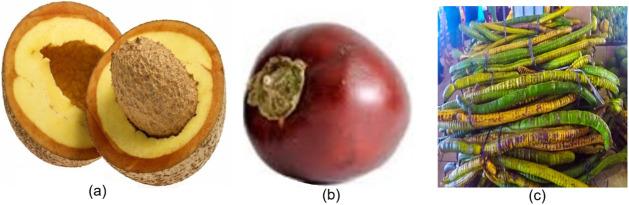 2
2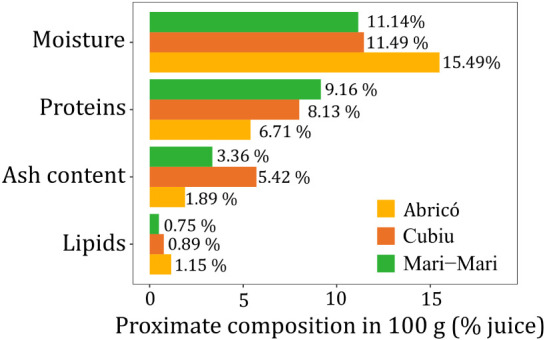 3
3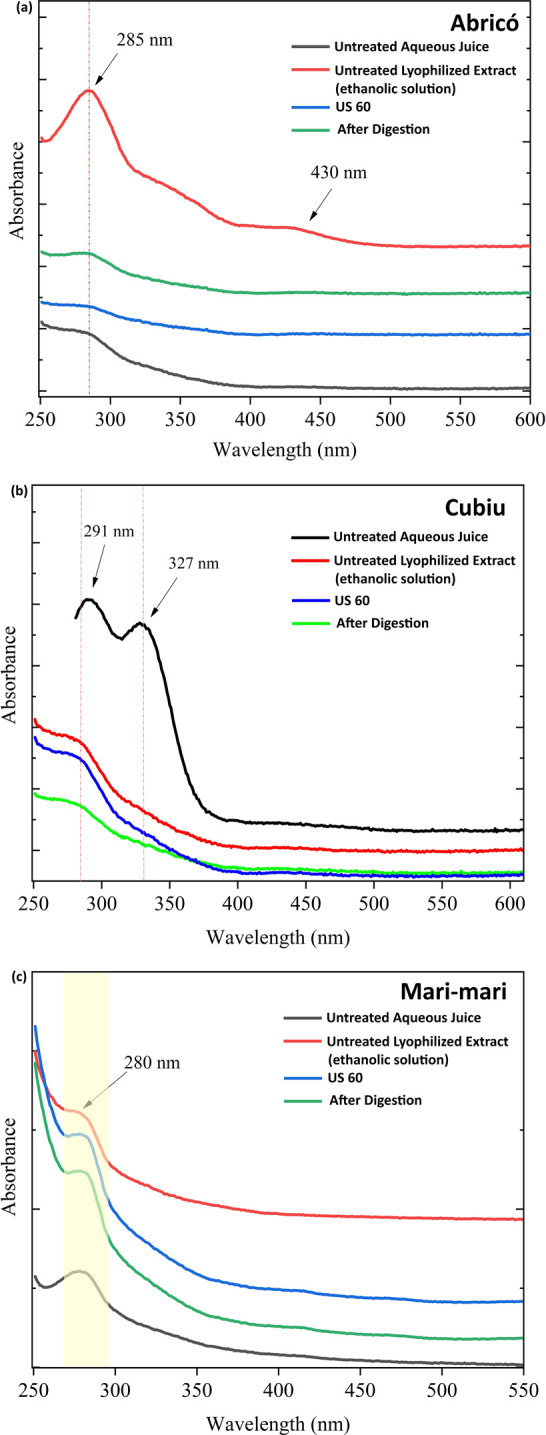 4
4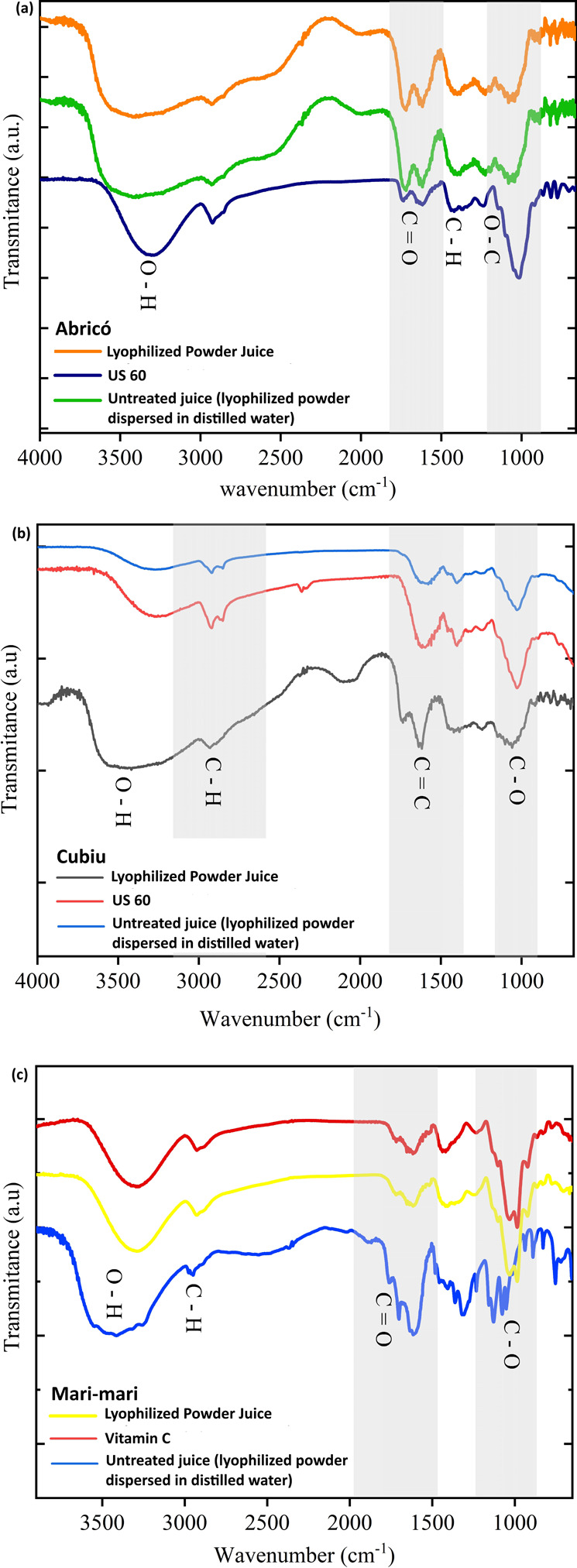 5
5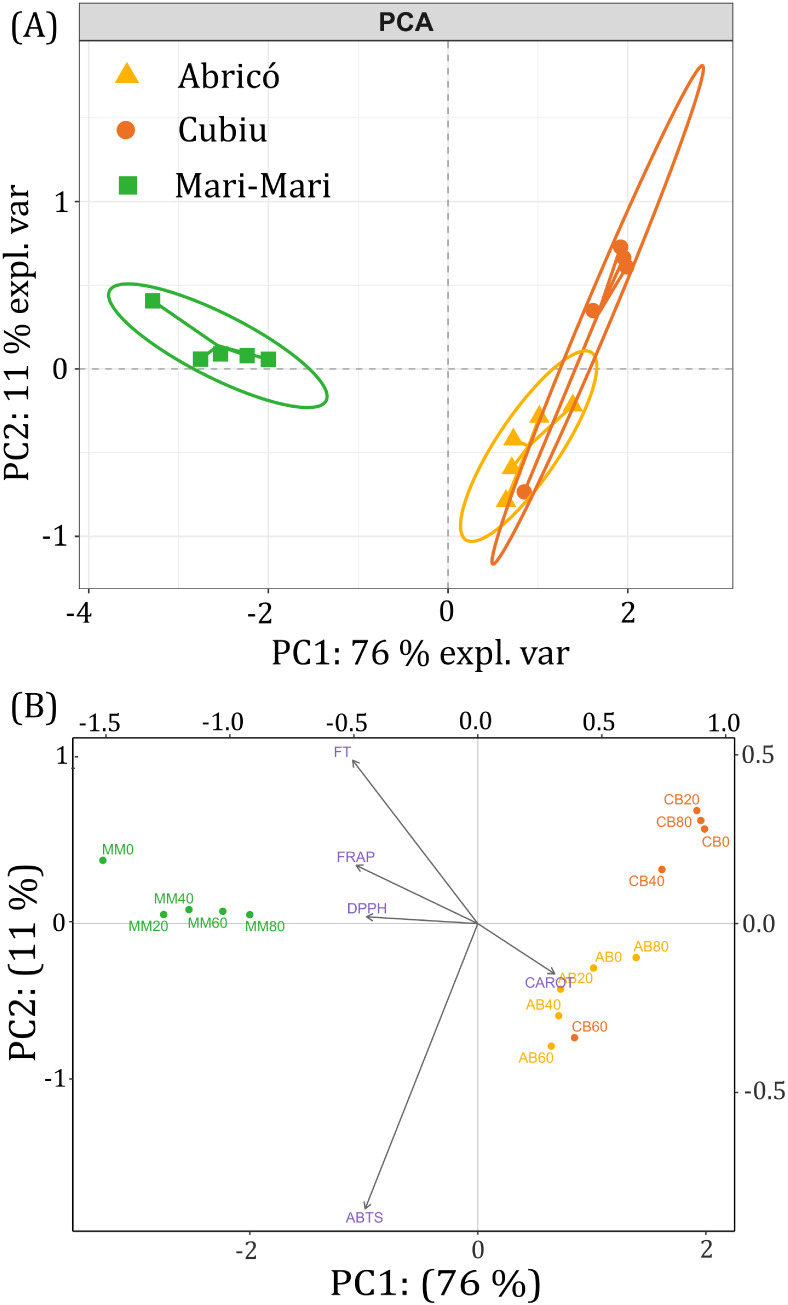 6
6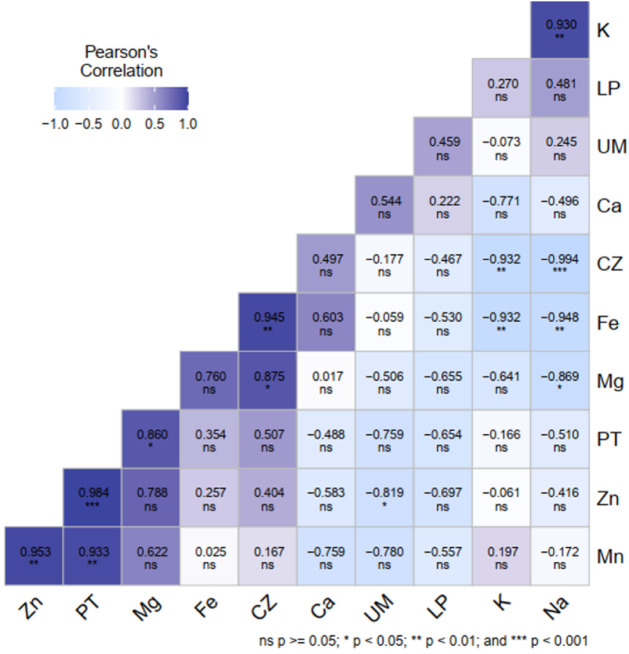 7
7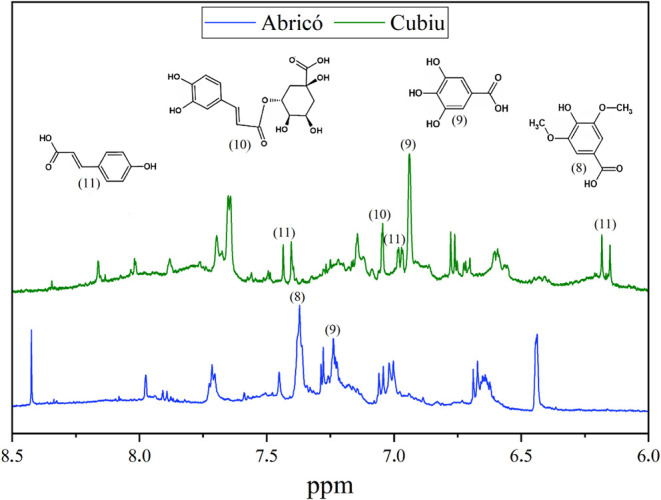 8
8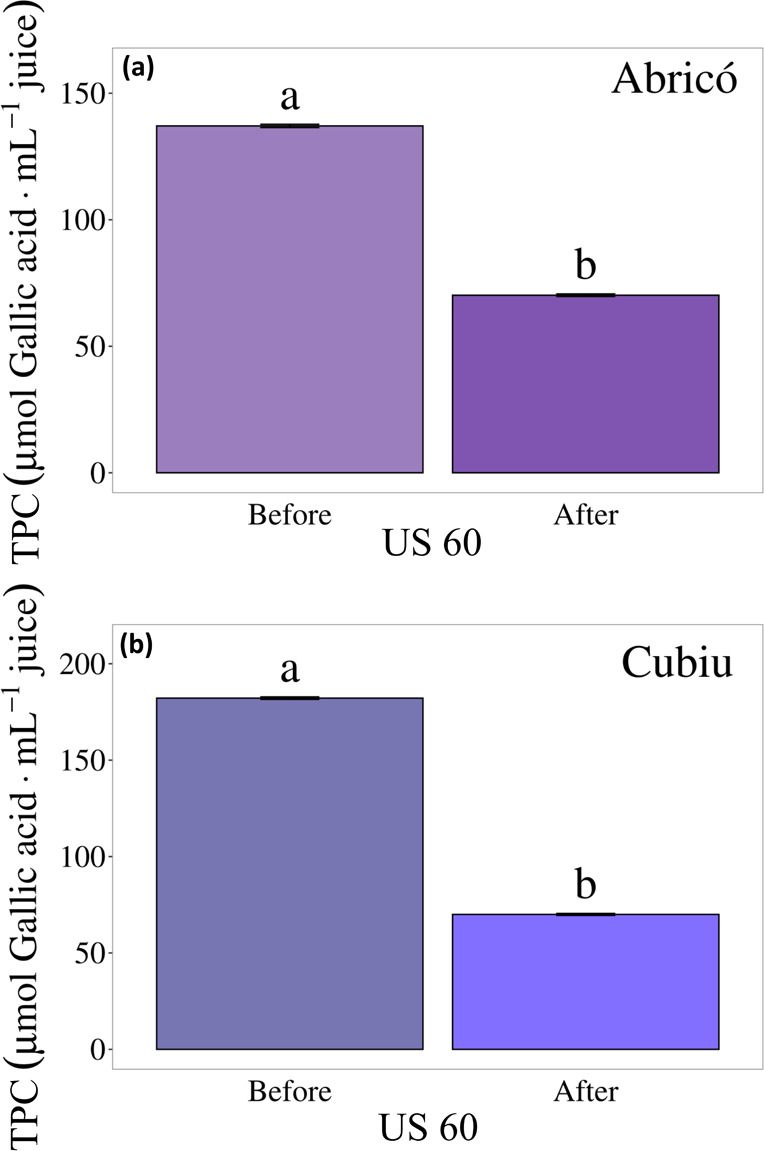 9
9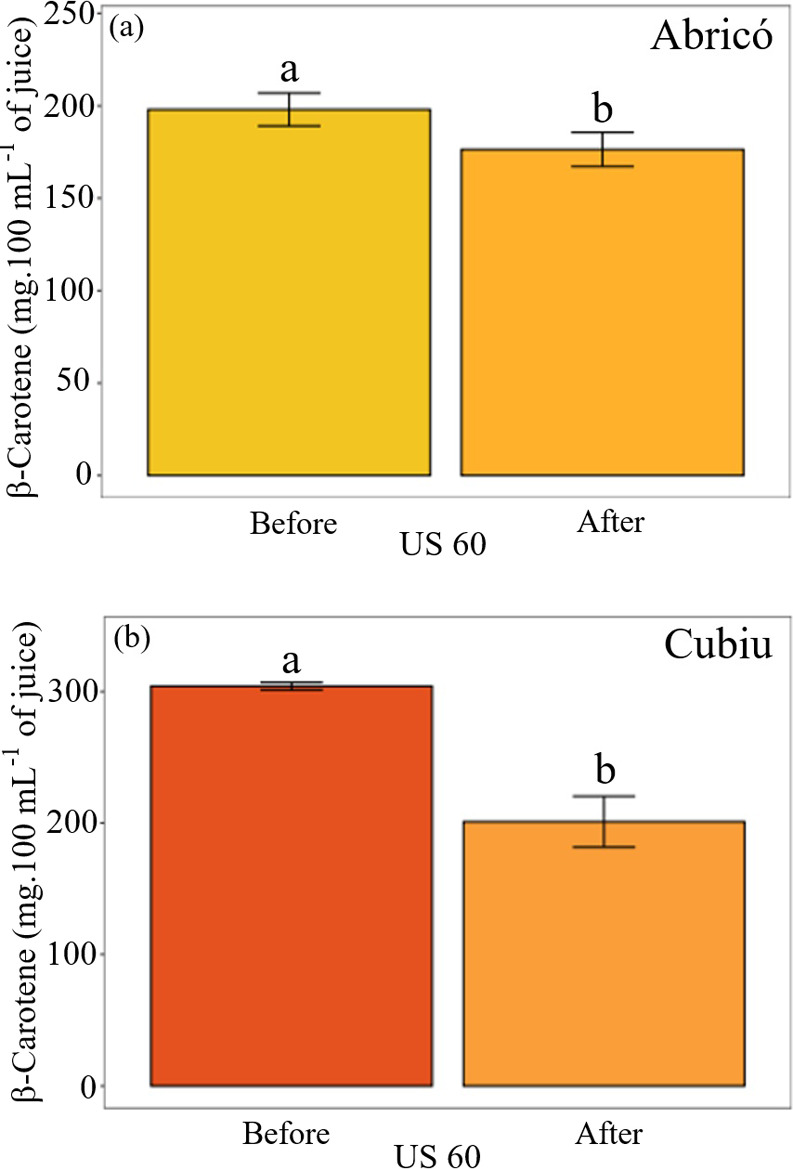 10
10| Minerals
(mg/100 g) | ||||
|---|---|---|---|---|
| Samples | K | Ca | Mg | Na |
| Abricó | 74.4 ± 0.2a | 23.0 ± 0.7b | 3.4 ± 0.1c | 2.87 ± 0.02a |
| Cubiu | 45.8 ± 0.1b | 26 ± 1a | 15.4 ± 0.4a | 2.03 ± 0.02c |
| Mari-mari | 75 ± 3a | 14.29 ± 0.7c | 12.1 ± 0.4b | 2.60 ± 0.06b |
| Treatment (%) | No treatment | US 20 ± SD | US 40 ± SD | US 60 ± SD | US 80 ± SD |
|---|---|---|---|---|---|
| Abricó ( | |||||
| pH | 4.46 ± 0.05a | 4.22 ± 0.05b | 4.16 ± 0.05b | 4.26 ± 0.05b | 4.16 ± 0.05b |
| TA (%) | 9.73 ± 0.05a | 7.56 ± 0.05b | 7.03 ± 0.05b | 7.33 ± 0.05b | 7.36 ± 0.05b |
| SS (%) | 3.36 ± 0.05c | 2.71 ± 0.05d | 3.46 ± 0.05c | 3.85 ± 0.05b | 4.11 ± 0.05a |
| Cubiu ( | |||||
| pH | 4.71 ± 0.05a | 4.34 ± 0.05b | 4.36 ± 0.05b | 4.33 ± 0.05b | 4.33 ± 0.05b |
| TA (%) | 6.63 ± 0.06a | 6.33 ± 0.05ab | 5.91 ± 0.05b | 4.91 ± 0.13c | 4.81 ± 0.12c |
| SS (%) | 3.33 ± 0.05a | 2.56 ± 0.05b | 2.43 ± 0.05b | 2.55 ± 0.05b | 2.43 ± 0.05b |
| Mari-mari ( | |||||
| pH | 4.13 ± 0.01b | 4.37 ± 0.01a | 4.47 ± 0.01a | 4.43 ± 0.01a | 4.40 ± 0.01a |
| TA (%) | 11.50 ± 0.05c | 11.36 ± 0.05c | 12.33 ± 0.05b | 12.64 ± 0.05a | 10.40 ± 0.05d |
| SS (%) | 6.83 ± 0.04a | 6.66 ± 0.04a | 6.71 ± 0.04a | 6.83 ± 0.04a | 6.63 ± 0.04a |
| Treatment (%) | No treatment | US20 ± SD | US40 ± SD | US60 ± SD | US80 ± SD |
|---|---|---|---|---|---|
| Abricó ( | |||||
|
| 29.07 ± 0.04e | 29.48 ± 0.02d | 33.57 ± 0.09c | 35.16 ± 0.03b | 36.22 ± 0.02a |
|
| 8.11 ± 0.01a | 7.09 ± 0.07b | 5.9 ± 0.2c | 5.56 ± 0.02d | 5.93 ± 0.03c |
|
| 27.59 ± 0.05c | 27.5 ± 0.4c | 30.95 ± 0.02a | 28.49 ± 0.04b | 28.43 ± 0.05b |
| Δ | | 38.4 ± 0.3c | 40.24 ± 0.02a | 36.81 ± 0.04d | 36.39 ± 0.06e |
| Cubiu ( | |||||
|
| 25.68 ± 0.05c | 27.97 ± 0.03a | 26.7 ± 0.4b | 28.0 ± 0.2a | 28.04 ± 0.04a |
|
| 7.4 ± 0.6a | 6.29 ± 0.06e | 6.81 ± 0.04b | 6.68 ± 0.01c | 6.41 ± 0.02d |
|
| 18.1 ± 0.8e | 20.4 ± 0.7a | 19.6 ± 0.5b | 19.14 ± 0.05c | 18.4 ± 0.8d |
| Δ | | 32.9 ± 0.1a | 33.1 ± 0.2a | 31.9 ± 0.1c | 31.1 ± 0.5d |
| Mari-mari ( | |||||
|
| 55.01 ± 0.04d | 58.07 ± 0.00c | 60.14 ± 0.01b | 61.79 ± 0.00a | 60.15 ± 0.01b |
|
| –4.50 ± 0.02e | –1.29 ± 0.01d | –0.61 ± 0.01c | –0.10 ± 0.02b | 1.31 ± 0.02a |
|
| 21.23 ± 0.02a | 15.77 ± 0.00b | 15.10 ± 0.02c | 13.44 ± 0.04d | 13.34 ± 0.02a |
| Δ | | 18.89 ± 0.01b | 18.58 ± 0.02c | 17.33 ± 0.04d | 16.30 ± 0.03e |
| Treatment (%) | DPPH• | ABTS•+ | FRAP |
|---|---|---|---|
| Abricó ( | |||
| US 0 | 808 ± 5l | 1171 ± 13j | 731 ± 3k |
| US 20 | 879 ± 9k | 1297 ± 5i | 874 ± 4i |
| US 40 | 1029 ± 8h | 1367 ± 10h | 922 ± 3h |
| US 60 | 1125 ± 6g | 1464 ± 12f | 1008 ±3g |
| US 80 | 775 ± 6m | 1037 ± 8k | 702 ± 3l |
| Cubiu ( | |||
| US 0 | 582 ± 9n | 507 ± 13n | 686 ± 3m |
| US 20 | 929 ± 10i | 316 ± 6° | 607 ± 2° |
| US 40 | 900 ± 8j | 636 ± 10l | 629 ± 3n |
| US 60 | 1204 ± 7f | 1373 ± 7g | 1022 ± 3f |
| US 80 | 427 ± 10° | 532 ± 11m | 840 ± 2j |
| Mari-mari ( | |||
| US 0 | 1603 ± 9a | 2029 ± 8a | 1732 ± 3a |
| US 20 | 1549 ± 5b | 2000 ± 20b | 1629 ± 3b |
| US 40 | 1520 ± 10c | 1929 ± 8c | 1555 ± 4c |
| US 60 | 1427 ± 10d | 1874 ± 7d | 1477 ± 5d |
| US 80 | 1375 ± 9e | 1831 ± 14e | 1363 ± 2e |
| Treatment (%) | TPC | CC |
|---|---|---|
| Abricó ( | ||
| US 0 | 94 ± 1l | 18 ± 2j |
| US 20 | 98 ± 1k | 34 ± 5i |
| US 40 | 102 ±1j | 86 ± 2c |
| US 60 | 137 ± 1h | 145 ± 54b |
| US 80 | 84 ± 1m | 52 ± 3e |
| Cubiu ( | ||
| US 0 | 111 ± 2i | 45 ± 1f |
| US 20 | 37 ± 1° | 38 ± 20g |
| US 40 | 57 ± 1n | 36 ± 3h |
| US 60 | 182 ± 2f | 207 ± 1a |
| US 80 | 144 ± 1g | 54 ± 36d |
| Mari-mari ( | ||
| US 0 | 838 ± 1a | ND |
| US 20 | 655 ± 1b | ND |
| US 40 | 635 ± 1c | ND |
| US 60 | 611 ± 1d | ND |
| US 80 | 607 ± 1e | ND |
| No. | Compound | δH (ppm, multiplicity, | δC (ppm) | HMBC correlations | Species |
|---|---|---|---|---|---|
| 1 | Fatty acids | 0.85 ( | 14.4; 18.1; 14.7 | – | Both |
| 2 | Acetic acid | 1.81 ( | 28.3 | 177.2 | Both |
| 3 | Quinic acid | 1.61 ( | 39.6; 44.5 | 70.5; 76.3; 73.3 |
|
| 4 | Malic acid | 2.37 ( | 41.3 | 67.0; 173.9 |
|
| 5 | Citric acid | 2.51 ( | 171.9 (CO) | 48.4; 77.9 |
|
| 6 | α, β-Glucose | 3.17–5.23 ( | 61.2–97.0 | 73.8; 72.4 | Both |
| 7 | Sucrose | 3.50–5.40 ( | 60.5–104.8 | 74.1; 82.2; 75.0 | Both |
| 8 | Syringic acid | 7.37 ( | 112.1 (C-2/C-6); 172.3 (CO) | 153.3; 62.4 |
|
| 9 | Gallic acid | 7.24 ( | 115.6 | 151.2; 144.1 |
|
| 10 | Chlorogenic acid | 7.05 ( | 114.3; 148.8; 145.1 | 115.4; 122; 168.8 |
|
| 11 |
| 7.42 ( | 145.1; 114.6; 121.2 | 130.9; 125.4; 167.7 |
|
- —Coordena??o de Aperfei?oamento de Pessoal de N?vel Superior10.13039/501100002322
- —Conselho Nacional de Desenvolvimento Cient?fico e Tecnol?gico10.13039/501100003593
- —Funda??o de Amparo ? Pesquisa do Estado do Amazonas10.13039/501100004916
Peer Reviews
No public reviews on file for this paper yet. If you reviewed it on a platform where reviews are public (OpenReview, ICLR, NeurIPS, ICML), you can paste yours below so the community can read it here.
Videos
No videos yet. Explain this paper in a talk, walkthrough, or lecture? Add one.
Taxonomy
TopicsMicrobial Inactivation Methods · Microencapsulation and Drying Processes · Phytochemicals and Antioxidant Activities
Introduction
1
The Amazon rainforest, one of the most biodiverse ecosystems on the planet, harbors an exceptional diversity of nutrient-rich fruits, seeds, and roots. Many of these native species are noteworthy sources of bioactive compounds such as carotenoids, anthocyanins, and phenolic constituents, which are recognized for their antioxidants, anti-inflammatory, and protective effects against chronic diseases. ?,? Among these species, Mammea americana L. (Abricó), Solanum sessiliflorum Dunal (Cubiu), and Cassia leiandra Benth (Mari-mari) stand out as underexplored Unconventional Food Plants (UFPs) with considerable nutritional and nutraceutical potential. However, their high fiber content and structurally complex matrices can hinder the release and intestinal absorption of bioactive compounds, reducing their overall bioavailability. Conventional extraction methods such as solvent extraction, distillation, and mechanical pressingoften show limited efficiency and may cause thermal or chemical degradation of sensitive metabolites due to elevated temperatures or the use of toxic solvents. ?−? ? ?
Recent advances highlight a growing shift toward green and nonthermal extraction technologies, particularly ultrasound-assisted extraction (UAE). Through acoustic cavitation, UAE promotes cell wall disruption and enhances the release of lipophilic pigments and phenolic compounds, while reducing solvent consumption, energy requirements, and environmental impact.? In this context, UAE has been widely explored as an alternative to conventional extraction techniques, mainly due to its ability to intensify mass transfer while preserving thermolabile compounds. Because many bioactive compounds remain trapped within plant cellular structures and are not fully released during digestion, UAE has also been proposed as an effective strategy to improve their bioavailability. In support of this, studies with puree,? guava juice,? and tomato juice? report increased bioaccessibility of bioactive compounds following ultrasound processing.
Applications in Amazon fruits such as açaí, buriti, cubiu, camu–camu, and pomegranate further demonstrate the versatility and efficiency of UAE for recovering bioactive constituents from natural matrices. ?,?−? ? ? However, most previous studies have focused on high-energy ultrasound systems, the use of organic solvents, or conventional fruit matrices, with limited emphasis on water-based, moderate-intensity UAE conditions optimized for unconventional edible plants from the Amazon biome. Moreover, investigations combining UAE with in vitro digestion models to assess the bioaccessibility of bioactive compounds in Amazonian UFPs remain scarce.
Therefore, despite the growing body of literature on UAE, a clear research gap persists regarding the application of optimized, solvent-free extraction medium for wild Amazonian plant matrices, as well as its effects on the physicochemical, nutritional, and digestive stability of the extracted compounds. To address this scientific gap, the present study investigates a water-based, ultrasound-assisted approach to enhance both the extraction and the bioaccessibility of bioactive compounds of Abricó, Cubiu, and Mari-mari juices. This work contributes to the development of sustainable and high-value nutraceutical ingredients derived from Amazonian biodiversity by demonstrating the potential of UAE as an environmentally friendly and efficient processing technology.
Experimental Section
2
Sequential
Steps in the Preparation of Juices
2.1
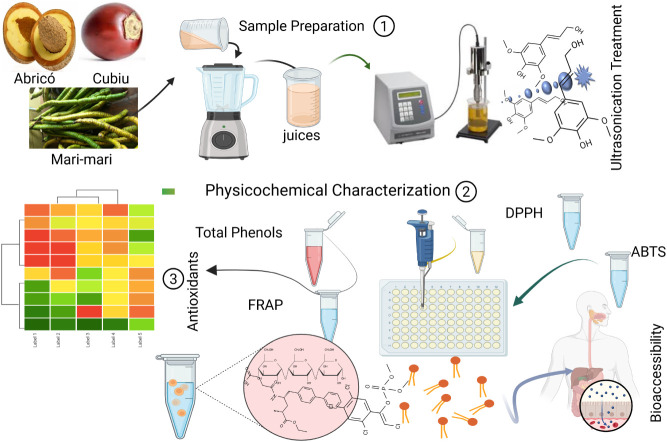
Bioactive compounds and dietary fibers were extracted and characterized from Abricó, Cubiu, and Mari-mari juices through a sequential workflow involving pulp processing and juice preparation, followed by physicochemical analyses, antioxidant assays, and spectroscopic characterization (UV–Vis, FTIR). Principal Component Analysis (PCA) was applied to identify compositional patterns among the samples, and in vitro digestibility was evaluated using simulated gastric and intestinal phases. Figure summarizes the main steps involved in the extraction and release of bioactive compounds.
Workflow for juice preparation, physicochemical analysis, antioxidant assays, and chemical characterization.
Raw Material Acquisition and Preparation of
Fruit Juices
2.2
Fruits in natura were purchased from the Producer’s Fair located at Av. Autaz Mirim, Cidade Nova, Manaus, AM, Brazil. After acquisition, the fruits were washed in potable water, followed by sanitization in a sodium hypochlorite solution for 10 min and subsequent rinsing under running tap water. The cleaned fruits were then peeled, weighed using an analytical balance, and processed in a blender (Oster Super BLSTMG-BR8). The resulting pulp was sieved, refrigerated at 10 °C, and subsequently lyophilized. Juices were prepared by reconstituting the lyophilized pulp at a 1:2 ratio (g/mL pulp-to-water) to a final volume of 200 mL. All analyses were conducted in triplicate. Figure shows the fruits in natura.
Photographs of the Amazonian fruit species used in this study: (a) Mammea americana L. (Abricó), (b) Solanum sessiliflorum Dunal (Cubiu), and (c) Cassia leiandra Benth (Mari-mari).
Juice Processing
2.3
The juices of each species were divided into five treatment groups: an untreated control and ultrasound treatments at 20% (150 W; US20), 40% (300 W; US40), 60% (450 W; US60), and 80% (600 W; US80). All samples were processed using ultrasonic homogenization for 10 min, with temperature maintained below 45 °C. Ultrasound was applied with a 25 mm probe operating at 20 kHz in a Vibra-Cell VCX 750 tip sonicator (Sonics & Materials, Inc., Newtown, CT, USA).
Color Parameters
2.4
Colorimetric parameters were measured using a digital colorimeter (Delta Color 71421, Delta Vista), which provided luminosity (L*), red-green coordinate (a), and yellow-blue coordinate (b*). All measurements were performed in triplicate. The total color difference (ΔE) was calculated according to eq.
Total Phenolic Content
2.5
The Total Phenolic Content (TPC) of fruit juices was quantified using the Folin–Ciocalteu method as described elsewhere. ?,? Two reagent solutions were prepared: (i) Folin–Ciocalteu reagent (1 N) diluted to a final volume of 100 mL, and (ii) sodium bicarbonate solution (6 g), added to the Folin–Ciocalteu mixture according to the referenced protocol. Samples were prepared at a concentration of 1 mg/mL in methanol. A volume of 20 μL of each sample was mixed with 150 μL of Folin–Ciocalteu reagent and allowed to stand for 5 min. Subsequently, 150 μL of sodium bicarbonate solution (NaHCO_3_) were added, and the mixture was incubated for 90 min. Absorbance was measured at 750 nm using a microplate reader (Epoch 2, BioTek). TPC was expressed as gallic acid equivalence (GAE) based on a previously constructed calibration curve.
Determination
of Antioxidant Activity
2.6
DPPH Free-Radical Scavenging
Assay
2.6.1
The antioxidant capacity of the treated fruit juices was determined using the DPPH (2,2-diphenyl-1-picrylhydrazyl) assay. A 100 μM methanolic DPPH^•^ solution was prepared, and the reaction was initiated by mixing 1 mL of the sample with 1 mL of the DPPH solution. ?,?,? The reaction mixtures were incubated in the dark at room temperature for 30 min. Then, absorbance was measured at 515 nm using a microplate reader (Epoch 2, BioTek). The percentage of radical inhibition was calculated according to eqs and ?. The antioxidant potential was expressed as Trolox equivalents based on a calibration curve.
ABTS•+ Radical Scavenging
Assay
2.6.2
The antioxidant activity of the juices was determined using the ABTS^•+^ [2,2′-azino-bis(3-ethylbenzothiazoline-6-sulfonic acid)] radical scavenging assay.? The ABTS^•+^ cation radical was generated by reacting 7 mM ABTS with 140 mM potassium persulfate (K_2_S_2_O_8_) at room temperature. The resulting solution was allowed to stand in the dark for 12–16 h, and its absorbance was adjusted to 0.70 ± 0.05 at 750 nm (y = −0.0003x
- 0.7502, R ^2^ = 0.9999) using ethanol as diluent. For the assay, the ABTS^•+^ solution was mixed with the juice samples at a 1:10 (v/v) ratio in a 96-well microplate. After a 6 min reaction period, absorbance was recorded at 750 nm using a microplate reader (Epoch 2, BioTek).
Ferric
Reduction Antioxidant Power (FRAP) Assay
2.6.3
The Ferric Reducing Antioxidant Power (FRAP) reagent was freshly prepared by mixing 25 mL of acetate buffer (300 mmol/L), 2.5 mL of TPTZ (2,4,6-tripyridyl-s-triazine, 10 mmol/L), and 2.5 mL of FeCl_3_ (20 mmol/L). The reaction was initiated by adding 90 μL of each juice sample, 270 μL of distilled water, and 2.7 mL of the FRAP reagent into a microplate well, in triplicate. ?−? ? Absorbance was measured immediately at 595 nm using a microplate reader (Epoch 2, BioTek). The FRAP reagent was used as a blank, and ferrous sulfate (FeSO_4_) served as the calibration standard. Antioxidant activity was quantified using the FeSO_4_ calibration curve (up to 1000 μM), with results expressed as μM FeSO_4_/g of extract.
Carotenoids Content
2.6.4
Carotenoids content was determined following the β-carotene-based method, ?,?,? Juice, distilled water, and hexane were mixed in a 1:5:6 (v/v/v) ratio, vortexed for 1 min, and centrifuged at 3000 rpm for 1 min. The resulting supernatant was collected and its absorbance measured at 450 nm using a microplate reader (Epoch 2, BioTek). Hexane served as the blank, and β-carotene was used as the calibration standard.
UV–Vis
Absorption and Fourier-Transform Infrared Spectroscopy with Attenuated Total Reflectance (FTIR-ATR) Analyses
2.6.5
A sample of 3 mg of each lyophilized pulp was weighed and mixed with 5 mL of ethanol. Suspensions were vortexed for 2 min and kept in ethanol for 24 h at 23 °C, protected from light. Then, the mixtures were vortexed again for 2 min and centrifuged at 3,000 rpm for 10 min. Samples were analyzed using a UV–Vis absorption spectrophotometer (Cary 50) from 200 to 800 nm. The chemical profile of the juices was determined using a FTIR–ATR spectrophotometer (Agilent Cary 630) with attenuated total reflection module (FTIR-ATR) from 680–4000 cm^–1^.
Nuclear
Magnetic Resonance (NMR) Analysis
2.6.6
Lyophilized pulp (50 mg) of Abricó and Cubiu was dissolved in 650 μL of DMSO-d 6, stirredagitated in an ultrasonic bath for 10 min, and the resulting supernatant was transferred to a 5 mm NMR tube. NMR spectra were acquired at the Nuclear Magnetic Resonance Laboratory (NMRLab/UFAM) using a Bruker Avance III HD NMR spectrometer (Bruker, Billerica, MA, USA), operating at 11.7 T (500 MHz for ^1^H) and equipped with a 5 mm BBFO Plus SmartProbe with Z-axis gradient. For ^1^H NMR acquisition, the zgpr pulse sequence was used with the following parameters: 32k data points in the time domain (TD), a spectral width (SW) of 8 kHz, acquisition time (AQ) of 1.64 s, relaxation delay (D1) of 1 s, 90° pulse duration of 10 μs, receiver gain (RG) of 90.5, number of scans (NS) of 32, free induction decay (FID) resolution of 0.30 Hz, central frequency (O1) set to 1667.48 Hz, and suppression power (PLW9) of 8.6289 × 10^–5^ W. Chemical shifts (δ, in ppm) were referenced to the residual solvent peak of DMSO-d 6 at δH 2.50 ppm, and coupling constants (J) were reported in Hz. Two-dimensional NMR experiments were conducted to confirm metabolite assignments, including ^1^H–^1^H correlated spectroscopy (COSY), ^1^H–^13^C heteronuclear single quantum coherence (HSQC),? and ^1^H–^13^C heteronuclear multiple bond correlation (HMBC). Phase and baseline corrections of all spectra were performed manually using TopSpin 3.6.3 software (Bruker). Metabolite identification was achieved by comparing the acquired NMR data with literature values.
Digestibility
Analysis
2.6.7
Simulated gastrointestinal digestion was performed following the standardized INFOGEST protocol. ?,? All simulated fluidssimulated salivary fluid (SSF), simulated gastric fluid (SGF), and simulated intestinal fluid (SIF)were freshly prepared prior to the assays. For the oral phase (SSF), human salivary α-amylase (Sigma-Aldrich, A1031; 75 U/mL) was dispersed in SSF and mixed with the juice samples, followed by incubation at 37 °C for 2 min. For the gastric phase (SGF), the oral bolus was diluted with SGF adjusted to pH 3.0 and supplemented with pepsin (Sigma-Aldrich, P7012; 2,000 U/mL), then incubated at 37 °C for 120 min with continuous pH monitoring and adjustment using 1 M HCl or 1 M NaOH. For the intestinal phase (SIF), the gastric chyme (20 mL) was mixed with SIF (7.8 mL), CaCl_2_·2H_2_O (40 μL; 0.3 M), ultrapure water (1.31 mL), lipase (3.2 mL; 25,000 U/mL), pancreatin (5 mL; 800 U/mL), and porcine bile extract (2.5 mL; 160 mM). The pH was adjusted to 7.0, and the mixture was incubated at 37 °C for 120 min under orbital agitation (200 rpm). Liquid aliquots were collected after each digestive phase, and nondigested solid residues were recovered by centrifugation at 10,000×g for 12 min. All assays were performed in triplicate.
Statistical
Analysis
2.6.8
A completely randomized design was adopted to evaluate the effect of ultrasound treatment at different power levels (20%, 40%, 60%, and 80%). Statistical analyses were performed for physicochemical parameters, proximate composition, mineral content, total phenolic content, and antioxidant activity (free radical scavenging assays). Analysis of variance (ANOVA) was used to assess treatment effects, and mean comparisons among the fruit juices were conducted using Duncan’s multiple range test at a significance level of p-value <0.05. ANOVA and Duncan tests were performed using the agricolae package, while data visualization was carried out with ggplot2. Principal component analysis (PCA) was conducted with the mixOmics package to examine correlations between antioxidant responses and ultrasound power levels. Pearson correlation analyses, implemented via the metan package, were used to evaluate linear relationships among proximate and mineral composition variables. All statistical procedures were performed in RStudio (version x64 4.2.2).
Results
and Discussion
3
Proximate Composition
3.1
The physicochemical composition of the juices provides essential insight into their nutritional quality and structural integrity. Key parameters, including moisture, protein, ash, and lipid content, were quantified to characterize the proximate profile of Abricó, Cubiu, and Mari-mari juices. Figure summarizes the proximate compositon for each fruit species.
Proximate composition of Abricó, Cubiu, and Mari-mari juices (moisture, proteins, ash content, and lipids), presented as g/100 g dry weight.
The juices exhibited moisture contents of 15.49% (Abricó), 11.46% (Cubiu), and 11.14% (Mari-mari), differing by approximately 4%, which reflects their naturally succulent characteristics. The protein content was 9.16% for Mari-mari, 8.13% for Cubiu, and 6.71% for Abricó, values that exceeded those reported in the literature. Protein levels of approximately 6% was found in lyophilized juices of tucumã (Astrocaryum aculeatum), camu–camu (Myrciaria dubia), and abiu (Pouteria caimito), ?,?,? The higher protein concentrations observed in the present study indicate a promising nutritional contribution, particularly considering the role of dietary proteins in supporting metabolic health and delaying premature aging. The ash content, which reflects the mineral residue remaining after complete combustion of the sample, provides an estimate of the total mineral composition of the juices. The ash levels observed for Cubiu, Mari-mari, and Abricó (5.42%, 3.36%, and 1.89%, respectively) were higher than those reported for jambu juice (Acmella oleracea; 0.77–0.82%),? indicating good nutritional comparability with other fruits and vegetables described in the scientific literature. Lipid contents for Cubiu, Mari-mari, and Abricó (0.89%, 0.75% and 1.15%, respectively) were also in agreement with previous findings for abiu pulp (1.28%)? and araçá-boi (0.92%). These results indicated that the evaluated fruits exhibited low caloric density and are suitable for regular dietary consumption.
Table presents the mineral composition (potassium, calcium, magnesium, sodium, manganese, copper, iron, and zinc) of the Abricó, Cubiu, and Mari-mari juices.
1: Mineral Composition of Abricó, Cubiu, and Mari-Mari Juices
The proximate composition of fruit juices is an important indicator of their nutritional quality and potential health benefits. For comparison, moisture values of 38–64% were found in pomegranate pulp,? highlighting the variability among of fruit matrices, which may be influenced by intrinsic factors such as pulp-to-water ratios and tissue structure. In the present study, all analyzed minerals differed significantly among species. Potassium exhibited the highest concentrations in both sonicated and lyophilized samples, ranging from 45.8 to 75 mg/100 g. These values are comparable to those reported for other nutritionally relevant fruits, including camu–camu (44.00 mg/100 g) and duckweed pulp (750.00 mg/100 g).? Overall, the mineral composition observed in Abricó, Cubiu, and Mari-mari juices suggested nutraceutical potential, reflecting favorable nutritional attributes that remained largely preserved after processing. Moreover, the incorporation of fruit flours into food productssuch as breads or jamsmay serve as a strategy to reduce sugar or fat content while increasing dietary fiber, thereby enhancing the functional quality of the final product.
pH, Titratable Acidity, and Soluble Solids
3.2
The effects of ultrasound treatment on the physicochemical properties (soluble solids, pH, and titratable acidity) of Abricó, Cubiu, and Mari-mari juices are summarized in Table.
2: Physicochemical Characterization of Abricó, Cubiu, and Mari-Mari Juices Subjected to Different Ultrasound Treatments and Untreated Controls
The Abricó, Cubiu, and Mari-mari juices exhibited acidic pH values and a mildly sour sensory profile, with an average soluble solids content of 6.83 °Brix. Mari-mari juice showed the highest total acidity (12.64% TA), whereas no significant differences in pH or soluble solids were detected among treatments. These parameters remained stable after sonication and are consistent with previous reports for noni (Morinda citrifolia L.). ?,? Such stability may be attributed to the controlled cavitation effects. ?,? The uniformity of pH and acidity across treatments indicated that ultrasound processing did not result in physicochemical alterations capable of promoting vitamin or protein degradation.
Color
Parameter Measurements
3.3
The colorimetric parameters of Abricó, Cubiu, and Mari-mari juices are presented in Table.
3: Color Parameters (L, a, b*) of Abricó, Cubiu, and Mari-Mari Juices Subjected to Different Ultrasound Power Treatments**
Juice color, assessed through the CIELAB parameters L* (lightness), a* (red green), and b* (yellow-blue), is strongly influenced by pigments such as phenolics, anthocyanins, and carotenoids. Significant variations (p-value <0.05) were observed across treatments, characterized by increases in L* and b* values and a reduction in a*. The decrease in a* likely reflected the naturally low concentrations of red- and green-pigmenting compounds, whereas the increases in L* and b* suggested greater lightness and yellowness. This pattern is consistent with enhanced β-carotene extraction induced by ultrasonic cavitation, as previously reported for buriti juice and its byproducts. ?,?
Ultrasound treatment caused pronounced changes in Cubiu juice, where increases in L* and b*, accompanied by a reduction in a*, indicated an intensified carotenoid release due to the ultrasound-generated shear forces,? corroborating earlier findings on carotenoid quantification.? A similar trend was observed for Mari-mari juice, which exhibited elevated luminosity (L* = 61.79) and reduced a* (−0.10), shifting the coloration toward greenish-yellow tones. These changes are associated with higher levels of carotenoids and vitamins A and C, which are bioactive compounds of nutritional relevance, particularly for visual and skin health.? The greatest total color differences (ΔE) were observed in Abricó and Cubiu juices at 40% ultrasound power, primarily driven by increases in b* values linked to β-carotene enrichment, which contributes to the characteristic yellow-orange coloration of these fruits.
Antioxidant Activity and Total Phenolic Content
(TPC) and Carotenoids Contents (CC)
3.4
Evaluating the antioxidant potential of foods has become increasingly relevant, as it provides insights into their resistance to oxidative degradation, the quantitative profile of antioxidant constituents, and their potential contribution to the body’s antioxidant defenses upon consumption.? Table summarizes the effects of ultrasound processing on the antioxidant activity of Abricó, Cubiu, and Mari-mari juices, as determined by DPPH^•^, ABTS^•+^, and FRAP assays.
4: Antioxidant Activity (DPPH•, ABTS•+, and FRAP)
Significant variations (p-value <0.05) in antioxidant activity were observed among the treated juices, indicating that the response to ultrasonication was dependent on both fruit matrix and ultrasound intensity. In general, moderate ultrasound intensities promoted higher radical scavenging capacity and ferric reducing power, reflecting enhanced release of antioxidant compounds induced by cavitation phenomena. These effects are associated with mechanical forces such as microjet formation and cell wall disruption, which facilitate the transfer of antioxidant molecules into the liquid phase. The observed trends are consistent with previous studies reporting improved antioxidant activity in fruit-based matrices subjected to ultrasound processing, including enhanced bioaccessibility of antioxidant compounds under moderate ultrasound conditions.? The combined interpretation of DPPH^•^, ABTS^•+^, and FRAP assays provided a robust assessment of the antioxidant potential of the juices, as these methods reflected complementary mechanisms of radical scavenging and reducing capacity.
Table presents the Total Phenolic Content (TPC) and carotenoid (CC) contents of Abricó, Cubiu, and Mari-mari juices subjected to different ultrasound intensities. Ultrasound processing significantly influenced the concentration of these bioactive compounds, particularly carotenoids, which are highly sensitive to structural disruption of chromoplasts and cellular membranes. In Cubiu juice, ultrasound treatment resulted in increased lightness (L*) and yellowness (b*), accompanied by a reduction in redness (a*), indicating enhanced yellow coloration. This chromatic shift is consistent with an increased release and dispersion of carotenoids, primarily β-carotene and xanthophylls, arising from cavitation-induced rupture of chromoplasts and microstreaming effects. These mechanical forces promote cell wall disruption and facilitate pigment transfer into the liquid matrix,? in agreement with previous studies demonstrating improved carotenoid bioaccessibility and stability under moderate ultrasound processing.? Similarly, Mari-mari juice exhibited elevated luminosity (L* = 61.79) and a slight decrease in a* (−0.10), shifting its tonality toward greenish-yellow hues. From a nutritional perspective, these color modifications reflected a higher availability of carotenoids and vitamin C bioactive compounds with synergistic antioxidant and photoprotective functions. Carotenoids serve as vitamin A precursors and contribute to visual function, epithelial maintenance, and immune regulation, whereas vitamin C is essential for collagen synthesis and protection against oxidative damage. ?,? The highest total color difference (ΔE) was detected in Abricó and Cubiu juices (≈40%), primarily driven by substantial increases in b* values associated with enhanced β-carotene accumulation. This intensified yellow–orange pigmentation not only improves the visual appeal of the juices, an important sensory factor influencing consumer acceptance, but also reflects greater nutraceutical potential, as β-carotene is a key indicator of antioxidant capacity and lipid-soluble micronutrient content.
5: Total Phenolic and Carotenoid Contents (TPC and CC)
UV–Vis Analysis
3.5
Figurea presents the UV–Vis absorption spectra of Abricó juice under different conditions: untreated aqueous juice, untreated lyophilized juice extract (ethanolic solution), treated juice sonicated at 60%, and after in vitro gastric and intestinal digestion. All treatments exhibited absorption profiles characteristic of electronic transitions, with defined bands between 285 and 430 nm and a slight shift toward 283 nm. ?,?
UV–vis spectra of (a) Abricó, (b) Cubiu, and (c) Mari-mari juices considering characteristic absorption bands associated with polyphenolic π → π transitions (280–330 nm) and carotenoids (≈430 nm).*
These spectral variations suggest possible modifications in the molecular environment or structural conformation of the compounds, potentially influenced by ultrasound processing. Polyphenols typically exhibit π–π* electronic transitions within 240–320 nm due to their aromatic ring systems. ?,? Thus, the band observed at 285 nm in Abricó juice is consistent with the excitation of π electrons into π* orbitals.
In Figurea (Abricó), an absorption band was also observed near 430 nm, which is characteristic of carotenoids and consistent with the 400–500 nm region typically associated with these pigments, corresponding to the S_0_ → S_2_ electronic transition.? It is important to note that absorption regions may shift depending on the specific type of polyphenol or carotenoid, as well as on matrix effects or processing conditions such as ultrasound treatment and lyophilization.? These electronic transitions contribute to understanding both the coloration and antioxidant behavior of the juice. In Figureb (Cubiu), a distinct absorption band appears near 327 nm in the untread sample, likely arising from π→π* transitions within conjugated aromatic ring systems. ?,?
This behavior is likely associated with monomeric species linked to specific chromophores within the juice matrix, with polyphenols being the most plausible contributors. Additionally, certain carotenoids may exhibit absorption near 326–327 nm, as observed in the spectra, potentially reflecting structural modifications induced by processing.?
Figurec (Mari-mari) shows an absorption peak around 280 nm, which is typically attributed to aromatic compounds, polyphenols, flavonoids, or other chromophores containing conjugated ring systems. The observed absorption is consistent with electronic π → π* or n → π* transitions within conjugated double-bond frameworks or nonbonding orbitals.
FTIR Analysis
3.6
The characteristic absorption bands corresponding to the vibrational modes of functional groups present in the fruit juices were identified. Figurea–c displays the FTIR spectra of Abricó, Cubiu, and Mari-mari juices.
FTIR spectra of (a) Abricó, (b) Cubiu, and (c) Mari-mari juices.
Figurea shows the FTIR spectra of Abricó juices under three conditions: untreated juice (lyophilized powder dispersed in distilled water), untreated lyophilized power, and ultrasound-treated (60%) juice. Prominent absorption bands were observed between 2,000 and 600 cm^–1^, a region typically associated with compounds such as carotenoids and flavonoids. The main vibrational modes identified correspond to C–O, CC, C–H, O–H, and C–O–C functional groups. A series of well-defined absorption bands also appeared within the 1,725–1,051 cm^–1^ range. ?,? The band at 1,725 cm^–1^ is characteristic of CO stretching vibrations from esters or organic acids and is frequently reported in carotenoid-rich matrices. The band at 1,233 cm^–1^ is attributed to C–O stretching, while the signal around 1,153 cm^–1^ corresponds to additional C–O stretching modes. The band at 917 cm^–1^ is associated with bending (deformation) vibrations of CC and C–O bonds.? The bands detected at 1,725 and 1,233 cm^–1^ are likely linked to the presence of β-carotene (CO stretching vibrations). Bands around 1153 cm^–1^ are assigned to C–O stretching vibrations, while those at 917 cm^–1^ are associated with the bending of C–C and C–O bonds.? The absorption band at 1408 cm^–1^ is attributed to C–H bending vibrations, while those between 861 and 708 cm^–1^ correspond to out-of-plane C–H deformation modes typically associated with unsaturated systems. In the ultrasound-treated (60%) Abricó juice, the bands at 861 cm^–1^, 917 cm^–1^, and 708 cm^–1^ exhibited markedly higher intensities compared with the untreated and lyophilized juices. This enhancement may be associated to the mechanical effects of ultrasonic cavitation, which promotes structural disruption of the intracellular matrix and facilitates the release of compounds exhibiting these vibrational features. Previous studies have reported that ultrasound-assisted processing can increase the liberation of bioactive molecules in structurally dense or fibrous fruits, thereby amplifying the spectral signals associated with their functional groups.?
Figureb shows the FTIR spectra for the Cubiu juices, revealing characteristic absorption bands associated with key functional groups. The broad bands at approximately 3,476 and 3,273 cm^–1^ correspond to O–H stretching vibrations, indicative of moisture, phenolic constituents, and organic acids. The region near 2,900 cm^–1^ is dominated by aliphatic C–H stretching, commonly associated with lipids and carbohydrate structures. Absorptions at lower wavenumbers in this region may include complex contributions from the matrix but should not be directly attributed to CC or C–O–H modes. These differences are notable between untreated and treated juices, potentially associated with matrix breakdown due to ultrasound treatment. Additionally, multiple bands in the fingerprint region may be consistent with C–O stretching vibrations. The broad band observed in the region from 1,603 to 1,681 cm^–1^ is likely due to the overlap of angular deformation of water with CC stretching of unsaturated systems present in the matrix (such as polyenes and aromatics). ?,?
Figurec presents the FTIR spectra of the Mari-mari juices, as well as a vitamin C sample, highlighting diagnostic absorption bands associated with key functional groups. The broad absorptions between 3,414 and 3,303 cm^–1^ correspond to O–H stretching vibrations, likely reflecting moisture and hydroxyl-rich compounds present in the matrix. The bands at 2,946 and 2,927 cm^–1^ were assigned to aliphatic C–H stretching modes, including symmetric and asymmetric vibrations of methyl and methylene groups.? Similarly, the band at 1,429 cm^–1^ is attributed to deformation (bending) modes of these same functional groups. A low-intensity feature near 1,896 cm^–1^, consistent with previous reports, may arise from overtone or combination bands commonly observed in complex aromatic systems. ?,? The absorption region between 1,726 and 1,759 cm^–1^ corresponds to CO stretching vibrations of carbonyl groups, characteristic of flavonoid structures. These spectral signatures collectively support the presence of phenolic, aromatic, and carbohydrate-related compounds.
Principal Component Analysis (PCA)
3.7
Figure presents the PCA score and loading plots for Abricó, Cubiu, and Mari-mari juices subjected to different ultrasound intensities. The first two principal components explained 87% of the total variance, with PC1 accounting for 76% and PC2 for 11%, indicating a robust representation of the data set.
Principal component analysis (PCA) of Abricó, Cubiu, and Mari-mari juices subjected to different ultrasound treatments. (a) Score plot showing sample distribution along PC1 (76% of explained variance) and PC2 (11% of explained variance), with clear clustering by fruit species. (b) Loading plot illustrating the contribution of antioxidant parameters (DPPH, ABTS, FRAP), phenolic compounds (FT), and carotenoids (CAR) to sample separation. Abricó, Cubiu, and Mari-mari samples are represented by triangles, circles, and squares, respectively, with ellipses highlighting group clustering patterns.
The score plot (Figurea) revealed a clear clustering pattern primarily driven by fruit species, reflecting intrinsic differences in matrix composition. Abricó and Cubiu samples clustered closely along PC1 due to their compositional similarity, mainly associated with higher contents of dietary fibers and carotenoids, whereas Mari-mari samples formed a distinct group characterized by higher concentrations of vitamins, and specific bioactive compounds. Within each fruit group, variations in ultrasound intensity influenced the dispersion of samples along the principal components, indicating a matrix-dependent response to ultrasound processing. These findings are related to previous report,? revealing strong Pearson correlations between phenolic content and antioxidant activity in açaí and buriti juices, further supporting the observed clustering pattern.
The loading plot (Figureb) indicates that carotenoids presented high loadings on PC1 and are closely associated with Abricó and Cubiu samples, whereas PC2 is primarily driven by antioxidant assays (DPPH, ABTS, FRAP) and total phenolics, explaining the separation of Mari-mari samples. The distribution patterns along both principal components, evidenced by their respective positive and negative score values, established significant correlations with antioxidant assays.
This systematic variation confirmed the substantial antioxidant capacity of these juices, primarily attributable to their phenolic compounds and vitamins A and C content. These findings are aligned with previous work? reporting polyphenols as major contributors to antioxidant activity in spice matrices.
Correlation
3.8
Figure shows the Pearson correlation matrix between proximate composition parameters and mineral content in Abricó, Cubiu, and Mari-mari juices. Strong positive correlations were observed between ash content and iron (r = 0.945) and magnesium (r = 0.860), indicating that ash content is a reliable indicator of total mineral contribution in these juices. Protein content exhibited an exceptionally strong correlation with zinc (r = 0.984), which was also strongly correlated with manganese (r = 0.953), suggesting coordinated accumulation of these micronutrients within the fruit matrix. These patterns are consistent with previous report? for jambu (Acmella oleracea), where proximate composition was closely linked to mineral distribution.
*Pearson correlation matrix showing the relationships between proximate composition variables (PT = proteins; CZ = ash; UM = moisture; LP = lipids) and mineral elements (Zn = zinc; Ca = calcium; Fe = iron; Mg = magnesium; Mn = manganese; Na = sodium; K = potassium) in Abricó, Cubiu, and Mari-mari juices. Statistical significance is indicated as *p < 0.05, **p < 0.01, and **p < 0.001. Cells without asterisks do not differ significantly according to Duncan’s test (p-value >0.05).
Negative correlations were observed between lipid content and several minerals, including iron, magnesium, zinc, and manganese, indicating a limited role of lipids in mineral retention in the aqueous juice matrix. Additionally, ash content showed a strong negative correlation with potassium and sodium (r = −0.932), which may reflect dilution effects or the presence of nonmineral ash components.? Protein content was negatively correlated with calcium, potassium, and sodium, reinforcing compositional differences among the studied fruits.
These mineral/nutrient interactions are consistent with previous reports on plant-based matrices and highlight the nutritional relevance of these juices as sources of essential minerals, particularly iron, magnesium, zinc, and manganese. ?,? These observations are consistent with previous reports reporting similar mineral-nutrient interactions. ?,?
NMR Analysis
and Compound Variability
3.9
The DMSO-d 6 extracts of Abricó and Cubiu were analyzed by ^1^H NMR spectroscopy combined with two-dimensional experiments (COSY, HSQC, and HMBC), allowing the identification of the main metabolites Table, Figure). The spectra displayed signals in three distinct regions: aliphatic (δ 0.50–2.30), carbinolic (δ 2.31–6.00), and aromatic (δ 6.01–8.80) compounds. Metabolite assignments were confirmed by comparing chemical shifts, coupling constants, and ^1^H–^13^C correlations with literature data and validated databases on HMDB (Human Metabolome Database) and BMRB (Biological Magnetic Resonance Bank).
6: Metabolites Identified by 1H NMR Spectroscopy in Abricó and Cubiu Extracts along with Their Respective Spectral Information
1H NMR spectra of aqueous extract of Abricó and Cubiu juices treated with probe ultrasound and in vitro digestibility.
The ^1^H NMR spectra for Abricó and Cubiu are shown in Figure. The spectrum displayed a complex pattern, with signals attributed to aliphatic (d 0.50–2.30), carbinolic (d 2.31–6.00) and aromatic (d 6.01–8.80) compounds. The identified metabolites were compared with chemical shift data, coupling constants, and correlations obtained from two-dimensional experiments, referencing the literature and scientific databases such as HMDB and BMRB. Additionally, 2D NMR experiments were conducted, including correlated spectroscopy (^1^H–^1^H) COSY, (^1^H–^13^C) HSQC, and (^1^H–^13^C) HMBC.
In the aliphatic region, long-chain fatty acids (1) were identified by terminal methyl signals at δH 0.85–1.05 (t), with HSQC correlations to δC 14.4–18.1. Acetic acid (2) showed characteristic singlets at δH 1.81 (Abricó) and δH 1.91 (Cubiu). Quinic acid (3), exclusive to Cubiu, displayed signals at δH 1.61 and 1.81 (dd), correlating with δC 39.6 and 44.5. The carbinolic region was richer in Cubiu extracts, revealing important organic acids and carbohydrates. Malic acid (4) showed diastereotopic hydrogens at δH 2.37 and 2.65 (dd, δC 41.3), while citric acid (5), also exclusive to Cubiu, exhibited signals at δH 2.51 and 2.68 (d) with HMBC correlation to the carbonyl at δC 171.9. α,β-Glucose, which has already been identified in the leaves of this species,? (6) and sucrose (7) were present in both species, with significantly higher intensities in Cubiu. The aromatic region showed greater abundance in Abricó, indicating higher phenolic content. Syringic acid (8) displayed a singlet at δH 7.37 (δC 112.1, C-2/C-6) with HMBC correlation to the carbonyl (δC 172.3). Gallic acid (9) showed δH 7.24 (s, H-2/H-6, δC 115.6). In Cubiu, chlorogenic acid (10) was characterized by signals at δH 7.05 and 7.42 (d) correlating with δC 114.3 and 148.8, while p-coumaric acid (11) showed diagnostic signals at δH 7.42, 6.17, and 6.98 (δC 145.1, 114.6, 121.2).
These assignments are consistent with previous phytochemical studies of Solanaceae and Clusiaceae species and corroborated the FTIR analysis, where absorption bands at 1,743 cm^–1^ (carboxylic acids), 1,604/1,514 cm^–1^ (aromatics), and 2,924/2,854 cm^–1^ (aliphatic chains) confirmed the presence of the identified compound classes. The complementary use of FTIR (functional groups) and 2D NMR (structural elucidation) provided robust evidences for the metabolite assignments in Table.
Bioaccessibility Analysis
3.10
During gastrointestinal digestion, variations in pH and enzymatic activity can reduce the concentration of native bioactive compounds. Accordingly, the bioaccessibility of the major bioactives in Abricó and Cubiu juicesprimarily carotenoidsrelative to their phenolic content is presented in Figure.
(a,b): Total Phenolic Compound (TPC) content during simulated in vitro digestibility of Abricó and Cubiu.
Abricó juice (Figurea) exhibited a markedly higher total phenolic content (TPC) prior to in vitro digestion, with a significant reduction observed following the simulated gastrointestinal process, indicating substantial degradation or transformation of phenolics during digestion. A similar pattern was observed for Cubiu juice (Figureb), which also presented high initial TPC followed by a statistically significant decline after digestion. These results suggested that a considerable fraction of the phenolic compounds present in both juices is not bioavailable under the simulated gastrointestinal conditions.
The reduction in TPC observed after in vitro digestion is likely related to the partial release of phenolic compounds from the food matrix, followed by their degradation under gastric conditions. The gastric phase, characterized by highly acidic pH values (1.5–3.0), can promote the hydrolysis of glycosidic bonds in flavonoids and accelerate the degradation of anthocyanins, which are particularly unstable in acidic environments. A significant decrease (p-value <0.05) in TPC was detected in the 60% sonicated juices of Abricó (139.65 ± 0.64 to 78.21 ± 1.55 mg GAE/mL) and Cubiu (182.32 ± 0.87 to 78.59 ± 1.63 mg GAE/mL). These findings indicated that, before digestion, both juices contained high concentrations of phenolics and carotenoids,? supporting their strong antioxidant profiles. However, during the intestinal phase, substantial losses occurred, with approximately 56% of phenolics remaining in Abricó and 43% in Cubiu juices, suggesting that only a fraction of these compounds becomes bioavailable for absorption.? These results, presented in Figure, highlighted the dietary importance of compounds and their potential contributions to health.
Carotenoid content in (a) Abricó and (b) Cubiu juices before (undigested) and after in vitro digestion (simulated gastric and intestinal phases; oral phase excluded). Values are expressed as mean ± standard deviation (n = 3). Carotenoids were quantified as key bioactive constituents in juices treated with 60% ultrasound power. Different lowercase letters (a, b) within each fruit indicate statistically significant differences between digestion stages (p-value <0.05).
Previous research,? explored the bioavailability of bioactive compounds released through ultrasound in buriti and pear juices, both before and after digestion, corroborating the findings of this study. Additionally, studies have focused on the phenolic composition of Solanum sessiliflorum and Eugenia stipitate, ?,? demonstrating promising results in the presence of various phenolic compounds beneficial for health and potential in preventing oxidative stress-related diseases. These investigations underscore the significance of phenolic content in fruits overall and particularly in apricot and cubiu (Figurea), known for their richness in diverse bioactive compounds. ?,? However, carotenes, β-carotene, and flavonoids are being considered as agents in combating premature aging, diseases induced by oxidative stress, and promoting health and disease prevention.? Intriguingly, the release of compounds within the intracellular wall of vegetables and fruits is more efficient with the application of ultrasound technique.
In the digestibility assay, the carotenoid concentration in the predigestion and gastric phases remained stable at approximately 76.42 ± 4.44 mg·100 mL^–1^, showing a significant difference (p-value <0.05) between the pregastric and postdigestion phases. The observed stability of carotenoids in Abricó juice (Figurea) is likely associated with the protective effect of its lipophilic matrix, which facilitates micelle formation and reduces oxidative degradation during digestion. ?,? In contrast, (Figureb) Cubiu juice exhibited a significant reduction in β-carotene content after digestion, indicating lower bioaccessibility. This decline may be attributed to oxidative and enzymatic degradation of carotenoids under acidic and oxidative gastrointestinal conditions, consistent with the known sensitivity of β-carotene to light, temperature, and pH. ?,? Similar patterns have been reported in studies of fresh tucumã pulp from Amazonas and Pará (Brazil), where the concentrations of tocopherols and vitamins A and E were comparable to the values observed here. ?,?
Overall, the changes observed before and after the in vitro digestion highlighted the dynamic nature of carotenoid bioaccessibility in these Amazonian fruits. These findings emphasize the relevance of understanding how digestion influences the release and absorption of key bioactive compounds, with direct implications for their nutritional and health-promoting potential.
Industrial
Relevance, Limitations, and Future Perspectives
3.11
From an industrial perspective, the results of the present study demonstrated that water-based ultrasound-assisted extraction operated at moderate intensities represents a promising and sustainable strategy for enhancing the release and bioaccessibility of antioxidant compounds in Amazonian fruit juices. The use of water as a green solvent, combined with reduced processing time and energy input, supports the potential scalability of this approach for the production of functional beverages and nutraceutical ingredients. Moreover, the matrix-dependent response observed among Abricó, Cubiu, and Mari-mari highlights the importance of tailoring ultrasound parameters to specific botanical characteristics. Despite these advantages, some limitations should be acknowledged. The scalability of ultrasound-assisted extraction remains a key challenge, as cavitation efficiency and energy distribution in laboratory-scale systems may differ from pilot- or industrial-scale operations. In addition, the intrinsic variability of Amazonian fruits associated with seasonality, ripening stage, and geographical origin may affect the reproducibility and standardization of bioactive compound recovery. Future research may focus on optimizing operational parameters to accommodate raw material variability, as well as exploring the integration of ultrasound with other emerging technologies.
Conclusions
4
The present study provides a comprehensive physicochemical, structural, and spectroscopic evaluation of Abricó (Mammea americanaL.), Cubiu (Solanum sessiliflorum Dunal), and Mari-mari (Cassia leiandra Banth) juices, confirming their remarkable nutritional and functional potential. Their compositioncharacterized by high levels of vitamins, minerals, and dietary fiber, combined with low lipid content and high moisturesupports their classification as nutrient-dense, low-calorie matrices suitable for functional food applications.
Ultrasound-assisted processing (20–80%) proved to be an effective nonthermal technology for enhancing the extraction of bioactive compounds while preserving the physicochemical stability of the juices. Moderate ultrasound intensities, particularly 60%, resulted in increased carotenoid and phenolic contents, leading to greater antioxidant capacity, as demonstrated by the DPPH^•^, ABTS^•+^, and FRAP assays. Improvements in color parameters, such as increased lightness (L*) and yellowness (b*), were associated with enhanced β-carotene extraction, especially in Abricó and Cubiu juices.
Spectroscopic analyses (UV–Vis and FTIR) revealed molecular fingerprints characteristic of polyphenols, carotenoids, and flavonoids, indicating structural preservation and potentially improved bioavailability of antioxidant compounds. Multivariate (PCA) and correlation analyses further demonstrated consistent positive associations among phenolics, carotenoids, minerals, and antioxidant activity, with Mari-mari forming a distinct cluster due to its higher vitamin contents.
Overall, ultrasound emerges as a sustainable and eco-efficient processing strategy for improving the functional and nutraceutical quality of Amazonian fruit juices without compromising their compositional integrity. These findings provided mechanistic insights into the structural and compositional transformations induced by sonication and highlight the potential of Abricó, Cubiu, and Mari-mari as promising natural sources of antioxidants for the development of high-value functional beverages aligned with global trends toward health-promoting and sustainable foods.
The reference list from the paper itself. Each links out to its DOI / PubMed record.
- 1Silva G. N. D. M.Rodrigues E. S. B.de Macêdo I. Y. L.Gil H. P. V.Campos H. M.Ghedini P. C.da Silva L. C.Batista E. A.de Araújo G.L.Vaz B. G.de Castro Ferreira T. A. P.Blackberry jam fruit (Randia formosa (Jacq.) K. Schum): An Amazon superfruit with in vitro neuroprotective properties Food Biosci.20225010208410.1016/j.fbio.2022.102084 · doi ↗
- 2Peixoto Araujo N. M.Arruda H. S.Marques D. R. P.de Oliveira W. Q.Pereira G. A.Pastore G. M.Functional and nutritional properties of selected Amazon fruits: A review Food Res. Int.202114711052010.1016/j.foodres.2021.11052034399498 · doi ↗ · pubmed ↗
- 3Corrêa P. G.Moura L. G. S.Amaral A. C. F.Do Amaral Souza F.Aguiar J. P. L.Aleluia R. L.de Andrade Silva J. R.Chemical and nutritional characterization of Ambelania duckei (Apocynaceae) an unexplored fruit from the Amazon region, Food Res Int 202316311229010.1016/j.foodres.2022.11229036596195 · doi ↗ · pubmed ↗
- 4de Souza Carvalho L. M.Lemos M. C. M.Sanches E. A.da Silva L. S.de Araújo Bezerra J.Aguiar J. P. L.Das Chagas Do Amaral Souza F.Alves Filho E. G.Campelo P. H.Improvement of the bioaccessibility of bioactive compounds from Amazon fruits treated using high energy ultrasound, Ultrason Sonochem 20206710514810.1016/j.ultsonch.2020.10514832388313 · doi ↗ · pubmed ↗
- 5Xue F.Li C.Effects of ultrasound assisted cell wall disruption on physicochemical properties of camellia bee pollen protein isolates, Ultrason Sonochem 20239210624910.1016/j.ultsonch.2022.106249 PMC 971277336459901 · doi ↗ · pubmed ↗
- 6Liu Y.Chan M.Blake E.Sy H.Brown P. N.Determination of ethanol content in Kombucha products by gas chromatography with flame ionization detection: A multilaboratory study J. AOAC Int.201910287888210.5740/jaoacint.18-019030227904 · doi ↗ · pubmed ↗
- 7de Oliveira A. C.Mar J.Corrêa R.Sanches E.Campelo P.da Silva Ramos A.de Araújo Bezerra J.Pouteria spp. fruits: health benefits of bioactive compounds and their potential for the food industry Food Res. Int.202317311331010.1016/j.foodres.2023.11331037803621 · doi ↗ · pubmed ↗
- 8Campoli S. S.Rojas M. L.Do Amaral J. E. P. G.Canniatti-Brazaca S. G.Augusto P. E. D.Ultrasound processing of guava juice: Effect on structure, physical properties and lycopene in vitro accessibility Food Chem.201826859460110.1016/j.foodchem.2018.06.12730064802 · doi ↗ · pubmed ↗