Correction to: Atopic Comorbidities and Topical Steroids in Early Childhood Atopic Dermatitis: Are We Missing a Piece of the Puzzle?
Courtney A. Chau, Sonya L. Cyr, Ruchi Gupta, Peter Lio

Abstract
Genes, proteins, chemicals, diseases, species, mutations and cell lines named across the full text — each resolved to its canonical identifier and authoritative record.
Click any figure to enlarge with its caption.
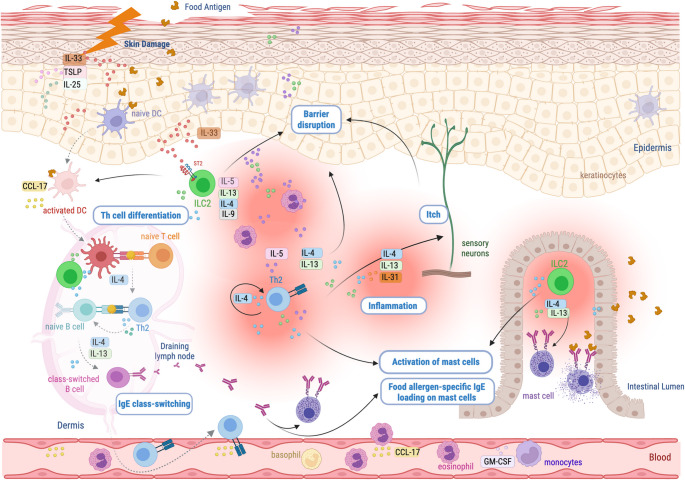 Figure 1
Peer Reviews
No public reviews on file for this paper yet. If you reviewed it on a platform where reviews are public (OpenReview, ICLR, NeurIPS, ICML), you can paste yours below so the community can read it here.
Videos
No videos yet. Explain this paper in a talk, walkthrough, or lecture? Add one.
Taxonomy
TopicsDermatology and Skin Diseases · Psoriasis: Treatment and Pathogenesis · Urticaria and Related Conditions
Correction to: Clinical Reviews in Allergy & Immunology (2026) 69:3.
10.1007/s12016-025-09131-5.
In this article, part of the caption for Figure 1 was mistakenly misplaced as the last paragraph in the ‘Conclusion’ section. The figure caption should have appeared as shown below.Fig. 1. Graphical depiction of local and remote priming. Infant epicutaneous sensitization, or local priming, can occur through a combination epidermal damage, type 2 signaling and food antigen exposure. Epidermal damage is associated with alarmin signals (IL-33, IL-25 and TLSP) and ILC2 cytokines. Together, these promote DCs to educate memory T and B lymphocytes in a ‘danger’ context, thereby recognizing food antigens as allergens, resulting in the loading of skin-resident mast cells with allergen-specific antibodies. DCs and tissues also produce chemotactic agents such as CCL-17 enhancing the recruitment of type 2 effector cells from the circulation. Remote gut priming is thought to be initiated primarily with epidermal IL-33 binding of ST2 on ILC2s in a nonredundant manner for optimal distal IgE production. The role of ILC2s in this process may involve distinct mechanisms; 1-upstream of effector T cell generation by influencing DC migration or activation, 2-contribution to mast cell expansion in the intestine and 3-within lymphoid organs to complement the IL-4 and IL-13 primarily derived from T follicular helper (TFH) cells, thereby further enhancing B cell class switching to IgE. Gut resident mast cells are ultimately loaded with food-allergen specific IgE, primed for food allergen recognition and degranulation upon subsequent oral exposure. Created in Biorender [66].
The original article has been corrected.