Molecular Evidence of Ovine Theileriosis in Selected Areas of Qinghai Province
Lamu Aan, Yi Yang, Peiyao Yang, Chengcai Wang, Zhi Li, Yong Fu, Xueyong Zhang, Dan Jia, Xiuying Shen, Zhihong Guo, Jie Wang, Hong Duo

TL;DR
This study identifies high infection rates and genetic diversity of Theileria parasites in sheep from Qinghai Province, China, offering insights for disease control.
Contribution
The study provides the first comprehensive molecular analysis of Theileria species in Qinghai Province, revealing high infection rates and genetic diversity.
Findings
A 39.92% overall infection rate of Theileria species was found in Qinghai sheep.
Three dominant Theileria species were identified, with frequent co-infections observed.
Phylogenetic analysis showed local strains are closely related to those in other Chinese and Turkish regions.
Abstract
This study investigates the diversity and epidemiology of Theileria species that infect sheep in Qinghai Province, China. Through molecular detection and genetic analysis, a high overall infection rate (39.92%) was found, with three dominant species identified: Theileria uilenbergi, Theileria luwenshuni, and Theileria ovis. Co-infections were frequent (22.69%), reflecting complex transmission patterns in the region. Phylogenetic analysis further revealed that local strains were closely related to those from other areas of China and from Turkey, suggesting possible historical pathogen dispersal. These findings provide key insights into the genetic structure and distribution of Theileria parasites in Qinghai, supporting improved surveillance and control strategies for ovine theileriosis. Ovine theileriosis is a tick-borne hemoparasitic disease caused by protozoan parasites of the genus…
Genes, proteins, chemicals, diseases, species, mutations and cell lines named across the full text — each resolved to its canonical identifier and authoritative record.
Click any figure to enlarge with its caption.
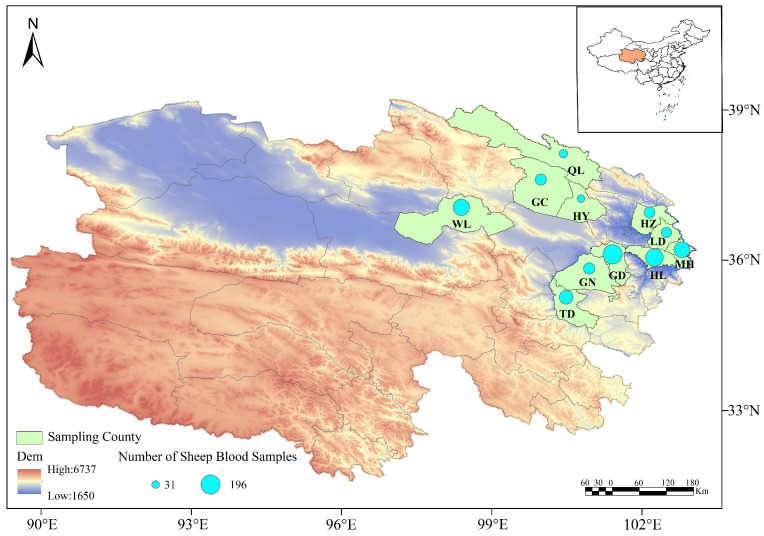 Figure 1
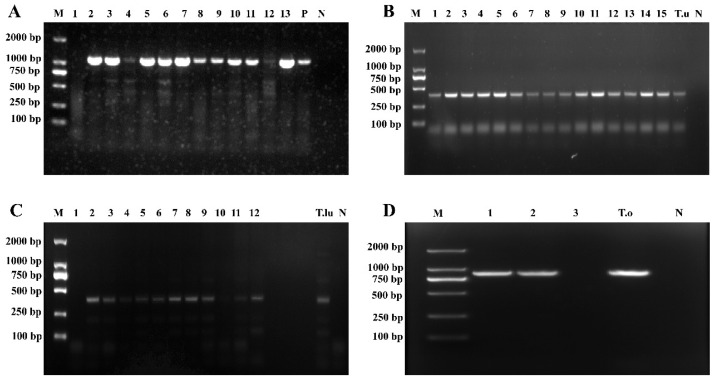 Figure 2
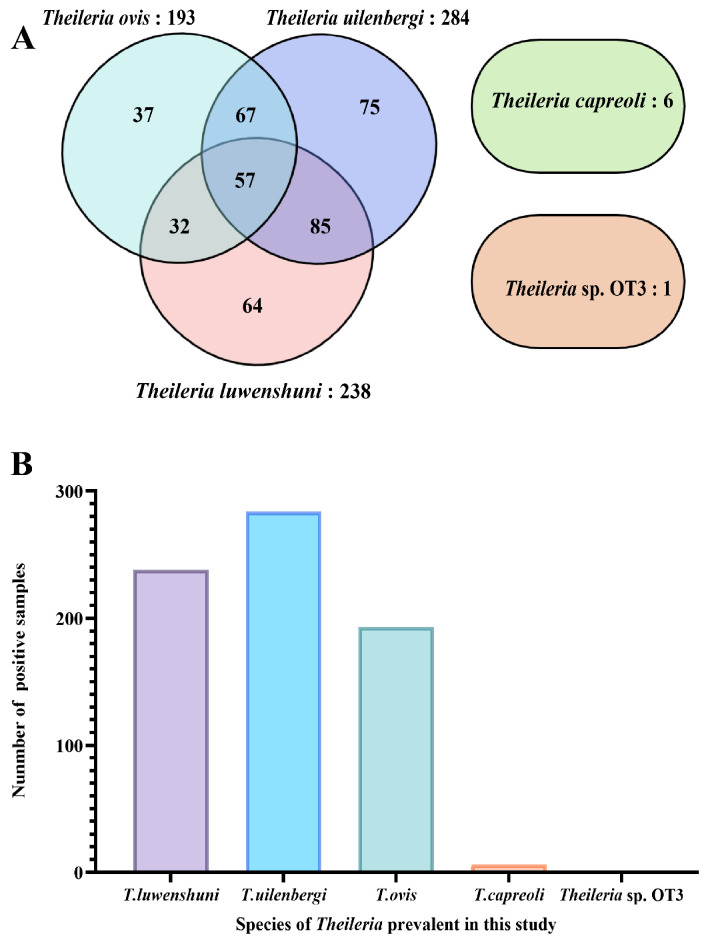 Figure 3
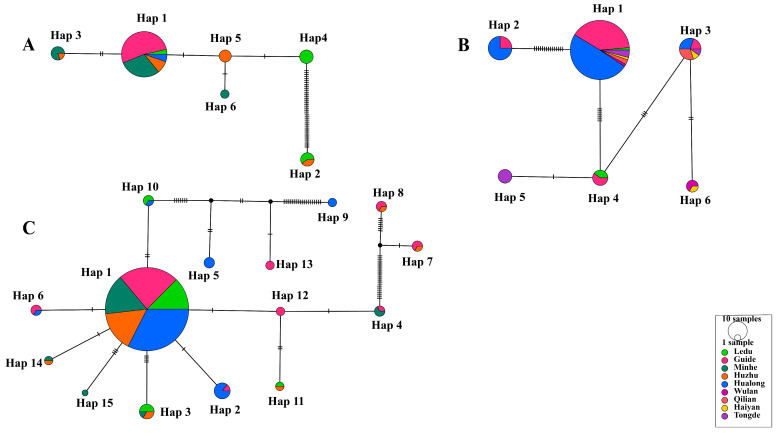 Figure 4
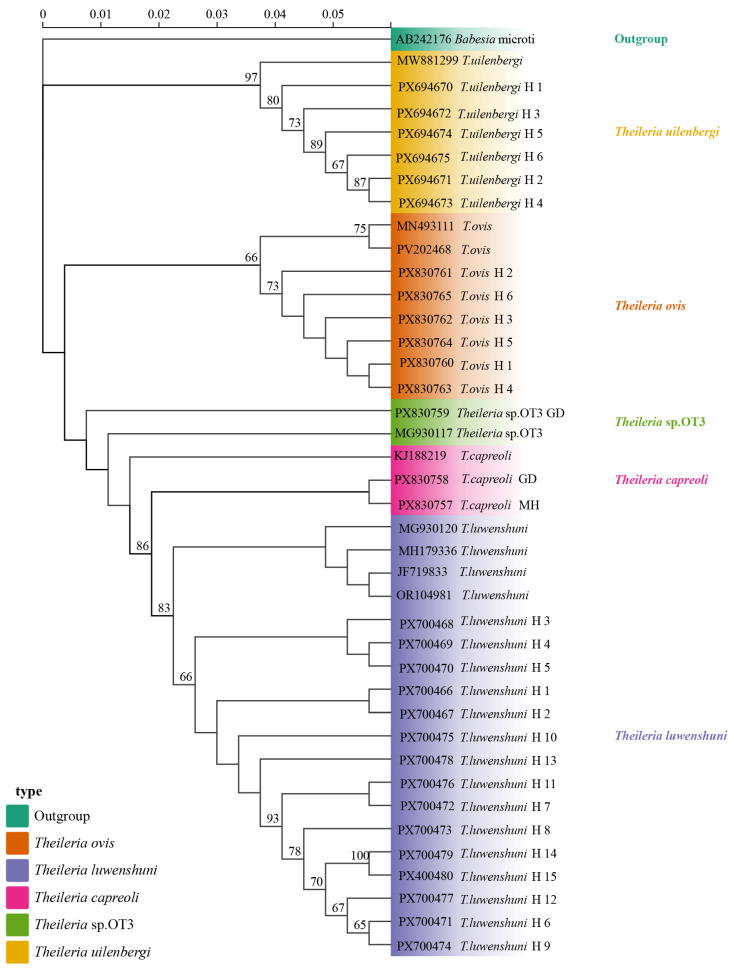 Figure 5
- —Qinghai Provincial Science and Technology Special Project
- —National Natural Science Foundation of China
Peer Reviews
No public reviews on file for this paper yet. If you reviewed it on a platform where reviews are public (OpenReview, ICLR, NeurIPS, ICML), you can paste yours below so the community can read it here.
Videos
No videos yet. Explain this paper in a talk, walkthrough, or lecture? Add one.
Taxonomy
TopicsVector-borne infectious diseases · Parasitic Diseases Research and Treatment · Parasites and Host Interactions
1. Introduction
Ovine theileriosis is a tick-borne hemoprotozoan disease caused by parasites of the genus Theileria within the family Theileriidae, which infect vertebrate erythrocytes, macrophages and lymphocytes. This disease causes significant economic losses to the livestock industry [1,2]. To date, more than ten species within the genus Theileria have been identified, among which six are known to infect sheep: Theileria luwenshuni, Theileria uilenbergi, Theileria ovis, Theileria lestoquardi, Theileria recondita, and Theileria separata [3]. Of these, T. luwenshuni, T. uilenbergi, and T. lestoquardi are highly pathogenic and are classified as virulent Theileria spp., whereas T. ovis, T. recondita, and T. separata exhibit low pathogenicity and are referred to as benign forms of Theileria spp. [4,5,6]. Ovine theileriosis is widely distributed across the world and has been reported in many countries, including Sudan and Algeria in Africa, Spain in Europe, and multiple countries across Asia [7,8,9,10].
To date, the pathogenic species of ovine theileriosis reported in China have included T. uilenbergi, T. luwenshuni, and T. ovis [11,12,13]. Under natural infection conditions, most cases were co-infections involving T. uilenbergi and T. luwenshuni, with only a minority being single-species infections [14]. In northwestern China, T. luwenshuni and T. uilenbergi commonly occur in mixed infections, with cases of theileriosis reported in Gansu, Shaanxi, Inner Mongolia, Xinjiang and Qinghai [15,16,17,18,19]. Previous studies have detected Theileria species in sheep from certain regions of Qinghai Province, including T. ovis, T. luwenshuni, T. uilenbergi, Theileria capreoli, Theileria sp. and Theileria sp. OT3 [20,21]. However, recent factors such as climate change, international trade and the expansion of the geographical range of ticks may exacerbate the epidemic risk of tick-borne ovine theileriosis in Qinghai Province. Therefore, this study conducted a molecular epidemiological investigation of ovine theileriosis in selected regions of Qinghai Province, aiming to identify the pathogenic species and confirm the genetic diversity of ovine theileriosis. The findings are expected to provide a scientific basis for comprehensive prevention and control of the disease in this area.
2. Materials and Methods
2.1. Study Area and Sample Collection
A total of 1062 sheep blood samples were collected from 11 counties in Qinghai Province, including Huzhu, Minhe, Hualong, Gangcha, Wulan, Guinan, Guide, Qilian, Haiyan, Ledu, and Tongde during the sampling period from 2014 to 2025. The blood samples were collected using anticoagulant tubes, and stored at 4 °C for subsequent analysis (see Figure 1 and Table 1).
This study employed a geographically stratified sampling strategy, selecting a total of 11 counties within the main ecological-pastoral zones of Qinghai Province as sampling sites: the Eastern Agro-pastoral Ecotone (Huzhu County, Minhe County, Hualong County, Guide County and Ledu District) and the Circum-Qinghai Lake Pastoral Area (Gangcha County, Haiyan County, Qilian County, Guinan County and Tongde County). This scheme systematically covered the major sheep farming systems in the province, ranging from agro-pastoral ecotones to intensive pastoral areas.
This study is a fundamental pathogen detection survey. Field sample collection spanned multiple years, with the main body of work concentrated between 2014 and 2021. Supplementary sampling was conducted in some regions in 2022–2025. All sampling was completed between April and October. The sample sizes (ranging from 31 to 196 per county) were determined based on the sample size formula for detection surveys (n ≥ ln(α)/ln(1 − p), where α = 0.05, p = 5%), which is fully effective for achieving the core objective of “detecting the presence of pathogens”. In subsequent analyses, prevalence was estimated for counties with sufficient sample sizes, while data from counties with smaller sample sizes were primarily used to confirm the presence of pathogens and for subsequent genetic analysis.
2.2. Genomic DNA Extraction
Genomic DNA was extracted from 200 μL of each whole blood sample using the TIANamp Blood DNA Kit (TIANGEN Co., Ltd., Beijing, China) in accordance with the manufacturer’s instructions. The extracted DNA was preserved at −20 °C for subsequent molecular experiments.
2.3. PCR Amplification
Four pairs of primers targeting the 18S rRNA gene of Theileria spp. were synthesized on the basis of previous reports, comprising a Theileria genus-specific primers set (989s/990as), a T. luwenshuni-specific set (Tluw310s/Tluw374as), a T. uilenbergi-specific set (Tuil310s/Tuil689as), and a T. ovis-specific set (F/R) [16,22,23]. All primers were synthesized by Sangon Biotech (Sangon Biotech Co., Ltd., Shanghai, China) and their detailed sequences and corresponding amplification conditions are shown in Table 2.
PCR amplification was performed on all extracted DNA samples using Theileria genus-specific primers (989s/990as). The total reaction volume was 25 μL, containing 12.5 μL of 2× Taq Master Mix (Takara Biomedical Technology Co., Ltd., Dalian, China), 1 μL each of the forward and reverse primers (10 μmol/L), 2 μL of DNA template, and 8.5 μL of RNase-free water (Takara Biomedical Technology Co., Ltd., Dalian, China). Positive and negative controls were included in each PCR reaction. Genomic DNA samples from previously confirmed Theileria-positive sheep were used as the positive control, while genomic DNA samples from verified Theileria-negative sheep were used as the negative control. The amplification protocol for the Theileria genus-specific primers consisted of an initial denaturation at 94 °C for 4 min, followed by 35 cycles of denaturation at 94 °C for 30 s, annealing at 55 °C for 1 min, and extension at 72 °C for 1 min 10 s, with a final extension at 72 °C for 10 min.
The amplified PCR products were analyzed by 1.2% agarose gel electrophoresis. Amplified fragments of the expected size were purified, and the gel-extracted products were sent to Sanger technology (Sangon Biotech Co., Ltd., Shanghai, China) for sequencing.
All 424 PCR-positive samples were subjected to Sanger sequencing without exclusion. To ensure the reliability of the final sequence data, particularly for samples that showed faint or non-specific bands in the initial screening, we implemented a strict quality control protocol prior to sequencing as follows:
- (1)Re-amplification with Optimized Conditions: For these samples, PCR conditions (e.g., annealing temperature and extension time) were re-optimized and the reactions were repeated to enhance the yield and specificity of the target fragment.
- (2)Gel Separation and Purification: The re-amplified products were separated on a 1.5% agarose gel. The specific target band was precisely excised and purified using a commercial gel extraction kit (TIANGEN Co., Ltd., Beijing, China) to remove impurities such as primer dimers and non-specific products.
- (3)Purity Verification and Quantification: The purified products were verified using a NanoDrop spectrophotometer. Samples proceeded to sequencing only when the A260/A280 ratio fell within the optimal range of 1.8–2.0, confirming high purity.
The samples that tested positive with the Theileria genus-specific primers were subsequently subjected to species-specific PCR amplification using primers targeting T. luwenshuni, T. uilenbergi, and T. ovis, respectively. All PCR products were analyzed by 1.5% agarose gel electrophoresis. The obtained nucleotide sequences of Theileria spp. were aligned using the BLAST program (https://blast.ncbi.nlm.nih.gov/Blast.cgi, accessed on 8 October 2025) within the NCBI database to confirm both the identity of the target gene and the Theileria spp.
2.4. Genetic Diversity Analyses
All sequences used for downstream analyses were derived from PCR products amplified using the Theileria genus-specific primers. PCR products from species-specific primers were not sequenced, as their specificity was confirmed via control experiments. The sequence variants used for haplotype analysis in this study were all derived from diploid nuclear genes (18S rRNA). The genetic diversity of the obtained ovine Theileria spp. 18S rRNA gene sequences was analyzed using DnaSP v6 software, including the number of haplotypes (H), the number of polymorphic sites (S), haplotype diversity (Hd) with its standard deviation (SD), and nucleotide diversity (π) with its standard deviation (SD). Multiple sequence alignment was performed using the MAFFT program implemented in PhyloSuite v1.2.3, followed by the trimming of the aligned sequences with TrimAI to remove low-quality and ambiguous regions, thereby enhancing the reliability of the phylogenetic tree. The validated gene sequences were subjected to sequence comparison and phylogenetic analysis. A phylogenetic tree of the Theileria spp. 18S rRNA gene was subsequently constructed with IQ-TREE v2.2.0 using the Maximum Likelihood method and Babesia microti (accession no. AB242176) was used as the outgroup.
2.5. Statistical Analyses
To assess the geographical significance of differences in the prevalence of Theileria spp. across 11 counties, statistical analyses were performed in this study. The 95% confidence intervals (95% CIs) for the prevalence rates were calculated using VassarStats (VassarStats: Statistical Computation Web Site, https://vassarstats.net/, accessed on 6 January 2026) to estimate the potential range of the true prevalence. An overall heterogeneity test was conducted on the prevalence rates of all counties using the chi-square test. After confirming the existence of a significant overall difference, pairwise comparison tests were further performed for all county combinations. The significance level of the tests was adjusted using the Bonferroni correction method.
3. Results
3.1. Pathogen Diversity of Ovine Theileria
Based on the results of PCR amplification using Theileria genus-specific primers, 424 out of the 1062 whole-sheep-blood genomic DNA samples yielded a target band of approximately 1033 bp (Figure 2A), indicating the presence of Theileria spp. infection in these samples. A total of 424 positive samples were detected across the 11 counties in Qinghai Province, yielding an overall infection rate of 39.92% (424/1062), including Hualong County (77.44%, 127/164), Ledu District (76.79%, 43/56), Huzhu County (70.15%, 47/67), Guide County (63.78%, 125/196), Minhe County (47.73%, 63/132), Qilian County (13.51%, 5/37), Haiyan County (9.68%, 3/31), Tongde County (8.00%, 8/100), and Wulan County (2.08%, 3/144). Notably, no infection was detected in two counties: Guinan and Gangcha (Table 3).
A total of 230 sequences of T. luwenshuni, 78 sequences of T. uilenbergi, 109 sequences of T. ovis, 6 sequences of T. capreoli, and 1 sequence of Theileria sp. OT3 were successfully amplified, sequenced, and verified from the collected sheep blood samples. Only the distinct haplotype sequences identified in this study have been submitted to the NCBI GenBank: T. luwenshuni [PX700466-PX700480], T. uilenbergi [PX694670-PX694675], T. ovis [PX830760-PX830765], T. capreoli [PX830757-PX830758], and Theileria sp. OT3 [PX830759]. The sequencing results reveal nucleotide sequence identities of 99.62–99.90% for T. uilenbergi (MW881299), 99.18–100% for T. luwenshuni (OR104981), and 99.20–99.88% for T. ovis (MW020235). One sequence showed a 97.64% identity with Theileria sp. OT3 (MG930118) from GenBank and Theileria sp. OT3 274 (GD) sequence was most closely related to Theileria sp. OT3 MG930117. Six sequences exhibited 98.16–99.90% identity with T. capreoli (KJ188219) in GenBank and were identified as T. capreoli.
The 424 samples that tested positive with Theileria genus-specific primers were further amplified using species-specific primers for T. luwenshuni, T. uilenbergi, and T. ovis. Among these, amplification with T. uilenbergi-specific primers yielded an approximately 388 bp target band in 284 samples (Figure 2B), indicating that the overall infection rate of T. uilenbergi was 26.74% (284/1062), including Hualong County (71.95%, 118/164), Guide County (52.55%, 103/196), Ledu District (48.21%, 27/56), Huzhu County (19.40%, 13/67), and Minhe County (17.42%, 23/132).
The amplification with T. luwenshuni-specific primers yielded an approximately 389 bp target band in 238 samples (Figure 2C), indicating that the overall infection rate of T. luwenshuni was 22.41% (238/1062), including Ledu District (57.14%, 32/56), Huzhu County (52.24%, 35/67), Hualong County (47.56%, 78/164), Minhe County (28.79%, 38/132), and Guide County (28.06%, 55/196).
Amplification with T. ovis-specific primers produced an approximately 904 bp target band in 193 samples (Figure 2D), confirming T. ovis infection in these samples. The overall infection rate was 18.17% (193/1062), including Hualong County (64.63%,106/164), Guide County (28.06%, 55/196), Ledu District (23.21%, 13/56), Qilian County (13.51%, 5/37), Haiyan County (9.68%, 3/31), Tongde County (8.00%, 8/100), and Wulan County (2.08%, 3/144).
Of the 424 samples successfully amplified with Theileria genus-specific primers, 6 samples failed to yield amplicons in the species-specific primer PCR assay. These 6 samples were subsequently confirmed as T. capreoli on the basis of amplicons from the Theileria genus-specific primer PCR, combined with Sanger sequencing and phylogenetic analysis.
Of the 1062 samples, 241 were positive for mixed infections, yielding an infection rate of 22.69% (241/1062), while 183 samples showed single-species infection, with the infection rate of 17.23% (183/1062). Among the single-species infections, the cases were distributed as follows: T. luwenshuni (64, 6.03%), T. uilenbergi (75, 7.06%), T. ovis (37, 3.48%), T. capreoli (6, 0.56%), and Theileria sp. OT3 (1, 0.09%) (Figure 3).
3.2. Polymorphism Analysis and Haplotype Network Construction
The 78 validated 18S rRNA sequences of T. uilenbergi confirmed by NCBI BLAST were analyzed with DnaSP v6, and the results revealed six haplotypes (H), with an Hd of 0.456, a π of 0.00683, and 42 polymorphic sites (S). For the 109 18S rRNA sequences of T. ovis, six haplotypes were identified, with an Hd of 0.506, a π of 0.00761, and an S of 23. Among the 230 18S rRNA sequences of T. luwenshuni, 15 haplotypes were observed, with an Hd of 0.323, a π of 0.00504, and an S of 64 (Table 4).
Among the six haplotypes of T. uilenbergi, Hap 1 (57/78) was predominant and distributed across multiple counties including Guide, Minhe, Huzhu and Hualong, and Ledu District (Figure 4A). Similarly, the predominant Hap 1 (84/109) of T. ovis was found across a wide geographical range spanning seven counties (Figure 4B). For T. luwenshuni, the most prevalent Hap 1 (189/230) was also detected in five major endemic counties (Figure 4C). The widespread distribution of these predominant haplotypes across multiple, non-contiguous counties may suggest frequent historical gene flow or recent pathogen expansion within the surveyed region. However, no strict phylogeographical structure (i.e., exclusive haplotype region associations) was observed for these species, indicating a lack of strong geographical isolation at the scale of this study.
3.3. Phylogenetic Analysis
Phylogenetic analysis based on the 18S rRNA gene sequences revealed that the T. uilenbergi sequences obtained from sheep blood samples in Qinghai clustered with MW881299 (Hunan). The T. ovis sequences formed a clade with MN493111 (Turkey) and PV202468 (Hubei). T. luwenshuni sequences clustered with OR104981 (Qinghai), MG930120 (Shaanxi), JF719833 (Gansu), and MH179336 (Gansu). Meanwhile, the T. capreoli (MH and GD) sequences grouped with KJ188219 (China), and the Theileria sp. OT3 (GD) sequence clustered with Theileria sp. OT3 MG930117 (Shaanxi) (Figure 5).
3.4. Statistical Results of Geographical Differences in Theileria spp. Prevalence
The overall prevalence rate in this survey was 39.92% (424/1062). There were significant geographic differences in prevalence, with rates across counties ranging from 0% to 77.44%. Statistical grouping based on pairwise comparison tests (Table 5) indicated that Hualong County, with the highest prevalence rate, was classified into Group a. Ledu and Huzhu counties were both categorized into Group ab, Guide County into Group b, and Minhe County into Group c, reflecting a general descending trend in prevalence. Notably, Qilian, Haiyan, Tongde, Wulan, Guinan, and Gangcha counties exhibited relatively low infection rates (0–13.51%) and were assigned to Groups d through f (specifically d, d, de, ef, f, f), collectively forming a low-infection region.
4. Discussion
In the present study, the epidemiological investigation of ovine theileriosis in selected areas of Qinghai Province revealed an infection rate of 39.92%, which is significantly lower than that in neighboring regions such as Gansu Province and Xinjiang, indicating that Qinghai is a low-prevalence area for ovine theileriosis [24,25]. However, this study found infection rates of Theileria spp. exceeding 70% in Ledu District, Huzhu County, and Hualong County, and in Guide County, the infection rate of the pathogen was more than 60%. In contrast, the prevalence of Theileria spp. was less than 10.00% in Wulan County, Haiyan County, and Tongde County, while no infection was detected in Gangcha County or Guinan County. These marked disparities suggest a potential link to significant geographical and climatic variations (altitude and temperature) across these regions (Figure 1), which may contribute to the reduced infection rates of ovine theileriosis. The pattern could also be associated with ecological differences in the geographical distribution of vector ticks. These findings are consistent with the previous reports, which demonstrated a close correlation between the distribution of Haemaphysalis qinghaiensis and the transmission intensity of Theileria spp. in Qinghai [26].
In this study, the infection rates of T. uilenbergi and T. luwenshuni were 26.74% (284/1062) and 22.41% (238/1062), respectively. These species were predominantly distributed in Guide, Hualong, Minhe, Huzhu, and Ledu, indicating T. uilenbergi and T. luwenshuni as the dominant species in these regions. In contrast, the infection rate of T. ovis in the surveyed areas of Qinghai was 18.17% (193/1062). Previous studies have indicated that T. ovis is primarily endemic to the Xinjiang region [25]. Its presence in Qinghai may be attributed to the province’s geographical proximity to Xinjiang and factors such as inter-regional animal movement and expansion of ticks, which could have facilitated the introduction of this pathogen into Qinghai. In addition, this study documented a case of sheep infected with Theileria sp. OT3 in the Guide area, whereas the first identification of this pathogen in China was reported in Xinjiang [27]. The natural hosts of T. capreoli were initially confirmed to be roe deer and other wild cervids, and previous studies have reported the detection of cross-species infection by this pathogen in sheep in the Qinghai–Tibetan Plateau Area [28,29]. In this study, T. capreoli was detected in sheep with an infection rate of 0.56% (6/1062), further confirming its cross-species transmission potential and providing new empirical evidence for the expansion of this pathogen’s host range. This phenomenon is hypothesized to be closely associated with wildlife, domestic animals, and vector ticks sharing habitats, where niche overlap may facilitate the cross-species transmission of the pathogen. In Qinghai Province, T. capreoli infections in sheep were identified in regions where Haemaphysalis qinghaiensis is the predominant tick species, suggesting that H. qinghaiensis may also serve as a potential vector for T. capreoli [26]. Concurrently, mixed infections involving two or three Theileria species were observed, with a co-infection rate of 22.69%, which highlights the complex nature of pathogen composition of ovine theileriosis in Qinghai Province, which in turn poses significant challenges for its control and prevention. The significant spatial heterogeneity in infection rates may be associated with inherent differences in the ecological/production systems across the study regions. For example, the longer period of indoor or confined rearing in the Eastern Agro-pastoral Ecotone may limit vector contact, whereas the extensive seasonal grazing practices in the Circum—Qinghai Lake Pastoral Area could increase exposure risks. Although this study did not directly measure micro-environmental variables, the ecological zoning used as the basis for sampling inherently integrates key background differences such as altitude and climate (see Section 2.1). These factors warrant validation as quantitative risk factors in future research.
The genetic diversity analysis of the Theileria-positive samples revealed haplotype diversity (Hd) values of 0.456 for T. uilenbergi, 0.506 for T. ovis, and 0.323 for T. luwenshuni. These low Hd values indicate a relatively limited level of genetic diversity for these three Theileria species in Qinghai, suggesting the existence of relatively stable parasite populations in the region.
Haplotype network analysis revealed that Hap 1 (57/78) was the predominant haplotype of T. uilenbergi, distributed across Guide, Minhe, Huzhu and Hualong counties, and Ledu District (Figure 4A). For T. ovis, Hap 1 (84/109) was predominant and was found in Hualong, Guide, Tongde, Qilian, Ledu, Wulan, and Haiyan counties (Figure 4B). For T. luwenshuni, Hap 1 (189/230) was identified as the predominant haplotype, showing a wide distribution across Hualong, Guide, Minhe, and Huzhu counties, as well as Ledu District (Figure 4C). Notably, the number of haplotypes detected in specific counties varied significantly: Guide County recorded three T. ovis and eight T. luwenshuni haplotypes, while Hualong County recorded four and seven, respectively. Furthermore, both Ledu District and Minhe County registered three T. uilenbergi haplotypes each. In summary, Guide and Hualong Counties may represent genetic differentiation centers for T. ovis and T. luwenshuni in Qinghai, while Ledu District and Minhe County are likely focal points for the genetic differentiation of T. uilenbergi. This distribution pattern is probably shaped by the combined influences of environmental characteristics of natural foci, host population densities and spatial variations in the distribution of ticks.
This study’s sampling design (purposive sampling with unequal sample sizes across counties) may influence the precision of prevalence estimates and their comparability across counties, and was primarily constrained by resources and sampling accessibility. However, this is aligned with the study’s positioning as a fundamental pathogen detection survey, and the existing sample sizes are sufficient to achieve the core objectives of confirming pathogen distribution and obtaining genetic samples. The widespread distribution of these predominant haplotypes across multiple, non-contiguous counties may suggest frequent historical gene flow or recent pathogen expansion within the surveyed region. However, no strict phylogeographical structure (i.e., exclusive haplotype–region associations) was observed for these species, indicating a lack of strong geographical isolation at the scale of this study.
To further elucidate evolutionary mechanisms and transmission risks, further studies should focus on investigating the population’s genetic structure and the diversity of ticks across extensive regions. This will help systematically clarify the co-evolutionary relationships among ticks, hosts and Theileria pathogens, thereby providing a scientific basis for risk assessment and the development of control strategies against tick-borne theileriosis in Qinghai.
5. Conclusions
This study confirms that Theileria infections in sheep are widespread yet exhibit significant regional variations across the agro-pastoral areas of Qinghai Province. The pathogen displays distinct genetic evolutionary characteristics, with most strains clustering closely with those from neighboring regions, indicating that geographical distance influences its genetic differentiation and transmission. The parasite population demonstrates moderate genetic diversity, and a few dominant genotypes are widely distributed. Variations in infection rates are closely associated with geographical environment, climatic conditions, and breeding scale. These findings clarify the epidemiological patterns and genetic features of Theileria in the region, providing a critical basis for implementing targeted regional prevention and control measures.
The reference list from the paper itself. Each links out to its DOI / PubMed record.
- 1Abdallah M.O. Niu Q. Yang J. Hassan M.A. Yu P. Guan G. Chen Z. Liu G. Luo J. Yin H. Identification of 12 Piroplasms Infecting Ten Tick Species in China Using Reverse Line Blot Hybridization J. Parasitol.201710322122710.1645/16-16128355109 · doi ↗ · pubmed ↗
- 2Ge Y. Pan W. Yin H. Prevalence of Theileria infections in goats and sheep in southeastern China Vet. Parasitol.201218646646910.1016/j.vetpar.2011.11.06622178410 · doi ↗ · pubmed ↗
- 3Yin H. Schnittger L. Luo J. Seitzer U. Ahmed J.S. Ovine theileriosis in China: A new look at an old story Parasitol. Res.2007101 S 191S 19510.1007/s 00436-007-0689-217823827 · doi ↗ · pubmed ↗
- 4Zakian A. Nouri M. Barati F. Kahroba H. Jolodar A. Rashidi F. Vertical transmission of Theileria lestoquardi in sheep Vet. Parasitol.201420332232510.1016/j.vetpar.2014.04.00724813745 · doi ↗ · pubmed ↗
- 5Mahmoud H. Tanaka T. Ali A.O. Emeish W.F.A. Molecular detection and characterization of Anaplasma ovis, Theileria ovis, and Theileria lestoquardi in sheep and goats in Luxor, Egypt BMC Vet. Res.20242026010.1186/s 12917-024-04109-538886742 PMC 11181633 · doi ↗ · pubmed ↗
- 6Nangru A. Maharana B.R. Vohra S. Kumar B. Molecular identification of Theileria species in naturally infected sheep using nested PCR-RFLP Parasitol. Res.20221211487149710.1007/s 00436-022-07489-535314893 · doi ↗ · pubmed ↗
- 7Ali A.M. Salih D.A. Njahira M.N. Hassan S.K. El Hussein A.M. Liu Z. Yin H. Pelle R. Skilton R.A. Genotyping of Theileria lestoquardi from sheep and goats in Sudan to support control of Malignant Ovine Theileriosis Vet. Parasitol.201723971410.1016/j.vetpar.2017.04.00528495200 · doi ↗ · pubmed ↗
- 8Sadeddine R. Diarra A.Z. Laroche M. Mediannikov O. Righi S. Benakhla A. Dahmana H. Raoult D. Parola P. Molecular identification of protozoal and bacterial organisms in domestic animals and their infesting ticks from north-eastern Algeria Ticks Tick-Borne Dis.20201110133010.1016/j.ttbdis.2019.10133031786146 · doi ↗ · pubmed ↗