Identifying Host-Characteristics and Management Risk Factors in a California Equine Herpesvirus Myeloencephalopathy (EHM) Outbreak
Shadira Gordon, Nicola Pusterla, Carrie J. Finno, Amy Young, Beatriz Martínez-López

TL;DR
This study identifies risk factors for equine herpesvirus myeloencephalopathy outbreaks in California, focusing on age, horse activity, and barn-sharing practices.
Contribution
The study provides new insights into specific host and management risk factors for EHM outbreaks using both statistical and machine learning approaches.
Findings
Older horses had higher odds of developing EHM (OR = 1.33).
Jumpers had significantly higher odds of EHM compared to hunters (OR = 7.37).
Sharing a barn with horses from different home barns increased EHM risk (OR = 7.37).
Abstract
Despite extensive efforts to mitigate the spread of equine alphaherpesvirus-1 and equine herpesvirus myeloencephalopathy, including new vaccination strategies and treatment alternatives, the frequency of outbreaks reported worldwide has been increasing. The objectives of this study were to identify the main risk factors associated with the 2021–2022 outbreak of equine herpesvirus myeloencephalopathy in Thermal, California, and provide recommendations to mitigate the risk of future outbreaks. Sixty-three questionnaires regarding host demographics, biosecurity, and diet management were obtained. We identified that increasing age, main activity (jumpers vs. hunters), and sharing a barn with horses from different home barns were associated with higher odds of becoming a case. These findings provide useful insights for refining biosecurity protocols against equine alphaherpesvirus-1 and…
Genes, proteins, chemicals, diseases, species, mutations and cell lines named across the full text — each resolved to its canonical identifier and authoritative record.
Click any figure to enlarge with its caption.
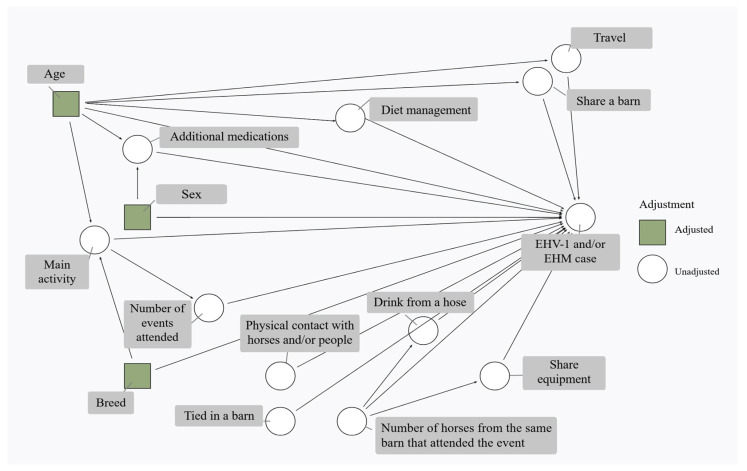 Figure 1
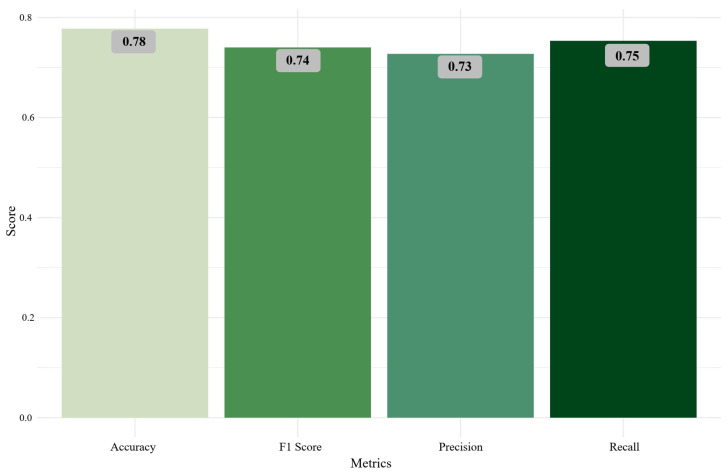 Figure 2
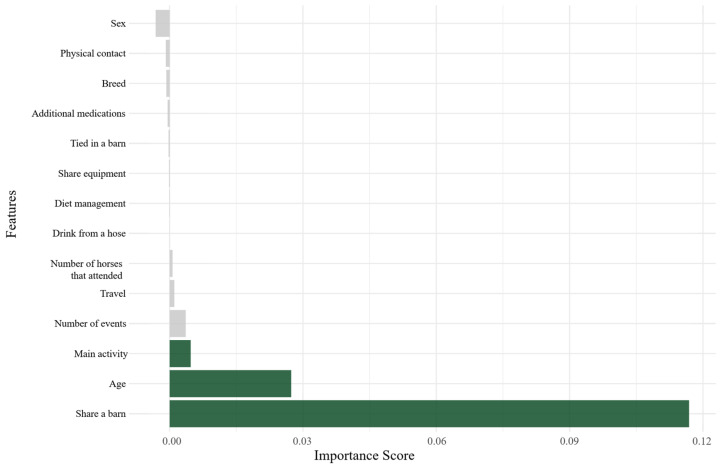 Figure 3
| Model | Factor | OR Estimate | % Change OR |
|---|---|---|---|
| A |
Additional medications | 17.69 | 4.07 |
| B |
Number of events attended | 19.13 | 3.94 |
| C |
|
|
|
| D |
Drink from a hose | 20.16 | 9.5 |
| E |
|
|
|
| F |
|
|
|
| G |
|
|
|
| H |
|
|
|
| I |
Number of horses from the same barn | 20.01 | 8.69 |
| J |
Diet management | 16.65 | 9.5 |
- —Desert International Horse Park (DIHP)
- —UC Davis Graduate Student Support Program (GSSP)
- —Louis R. Rowan Fellowship
- —USDA National Institute of Food and Agriculture
Peer Reviews
No public reviews on file for this paper yet. If you reviewed it on a platform where reviews are public (OpenReview, ICLR, NeurIPS, ICML), you can paste yours below so the community can read it here.
Videos
No videos yet. Explain this paper in a talk, walkthrough, or lecture? Add one.
Taxonomy
TopicsHerpesvirus Infections and Treatments · Viral-associated cancers and disorders · Cytomegalovirus and herpesvirus research
1. Introduction
Equine alphaherpesvirus-1 (EHV-1) was first isolated in the U.S. in 1933 from an abortion case [1,2], with the associated clinical manifestations extending to respiratory disease, neonatal death, conjunctivitis, and neurological deficits [3,4]. The neurological manifestation of EHV-1 is referred to as equine herpesvirus myeloencephalopathy (EHM) [5].
As a multifactorial disease, different components play important roles in its pathogenesis. Age, sex, and breed have been identified as specific risk factors for EHM [6]. Recent outbreak investigations have revealed higher odds of developing EHM in recently vaccinated horses, while other analyses suggest no effect or fewer EHM cases among vaccinated horses [7,8,9]. Although vaccination may still reduce virus shedding and is sometimes recommended in the face of outbreaks, its specific effects on EHM risk remain uncertain [10]. Consequently, prevention relies on recognizing who is at highest risk and how management practices can amplify exposure.
Even with substantial interventions aimed at limiting EHV-1 spread, it has been estimated that around 15% to 27% of the global equine population is latently infected with EHV-1 [10], while some studies have reported an estimated prevalence of 80 to 90% by the time horses reach two years of age [11,12,13].
In recent years, outbreaks of EHM have increasingly been reported worldwide, with the EHV-1 outbreaks in California from 2021 to 2023 causing the cancellation of several equine competitions. According to data from the International Federation for Equestrian Sports (FEI), California hosts the second-highest number of international equestrian events per year in the U.S., and boasts a substantial equine population, being surpassed only by Texas [14]. It receives a significant number of horses from diverse origins, contributing to an increased vulnerability to potential outbreaks of EHV-1 and EHM due to the extensive movement and interaction among horses [15,16].
In this study, we aimed to describe the epidemiological characteristics of the 2021–2022 EHV-1 outbreak at the Desert International Horse Park (DIHP) in Thermal, California; identify risk factors associated with EHV-1 and/or EHM status; and generate customized recommendations to mitigate the risk of future EHV-1 disease outbreaks.
2. Materials and Methods
2.1. Study Design
An unmatched case–control study design was implemented, and questionnaires were collected using a non-random sampling method (i.e., convenience sampling) between November 10th and 17th, 2022. Horses were selected based on their previous participation in the 2021–2022 winter horse show season at the DIHP, held from February 2nd to February 22nd, 2022. The questionnaire included previously reported determinants of EHV-1 [8,9,17,18,19,20,21,22], subclassified into host demographics, biosecurity, and diet management items (Appendix A).
From the initial set of 43 items, we retained 15 candidate questions (Table 1). Questions were excluded from further analysis according to the following criteria: (i) identifier fields, (ii) items used in the case definition, (iii) near-zero variance (i.e., imbalance ≲ 5% or ≳95% in one level), and/or (iv) >10% missingness. Variables excluded due to near-zero variance included vaccination status (all horses in the study were vaccinated), health history (survival, concurrent disease, previous EHV-1 infection), biosecurity practices during the event (isolation, quarantine, shared water source), and post-diagnosis management (barn disinfection, isolation, and testing after diagnosis).
To reduce sparsity and improve interpretability, three diet-related items (steamed/soaked hay, oils in diet, high-grain diet) were combined into a single “diet management” variable (Appendix B). The responses from the questionnaires were cross-referenced by the DIHP management and veterinarians, when applicable. The dataset that supports the findings of this study is available from the corresponding author upon reasonable request.
Horses with fever, detection of EHV-1 via qPCR (QuantStudio 5 Real-Time PCR System; Applied Biosystems, Thermo Fisher Scientific, Waltham, MA, USA) in blood and/or nasal secretions, and/or clinical disease (i.e., lethargy, anorexia, limb edema, respiratory signs) were classified as EHV-1-positive. Horses with neurological deficits (i.e., incoordination, recumbence, inability to get up, head tilt, urinary incontinence) and detection of EHV-1 via qPCR in blood and/or nasal secretions were classified as EHM positive. To preserve statistical power and maintain a balanced case-control ratio, we classified horses as cases if they were EHV-1 and/or EHM-positive, consistent with the approach used in a prior outbreak investigation [8]. Controls were defined as horses without clinical signs and with negative EHV-1 qPCR results in blood and/or nasal secretions.
Due to limitations in participant availability and the use of convenience sampling, only 63 individuals were enrolled (26 cases and 37 controls). This sample size was sufficient to detect an odds ratio of 10, assuming a case–control ratio of 1:1.5, with 80% power and a significance level of 0.05 [23].
2.2. Statistical Approach
First, we employed a directed acyclic graph (DAG) to guide the selection of confounders. DAGs provide a transparent, visual framework for encoding prior knowledge about the relationships between variables, allowing researchers to identify a minimally sufficient adjustment set that blocks confounding pathways while avoiding inappropriate adjustment for mediators or colliders. Importantly, while DAGs are rooted in causal inference theory, we used this approach strictly for principled variable selection; as such, we do not intend to imply causality from the findings of this observational case–control study. Second, given the limited sample size and the occurrence of perfect separation in our data, we applied a bias correction method to the multivariable logistic regression model. This penalized likelihood approach yields finite, less-biased parameter estimates when traditional maximum likelihood estimation fails to converge or produces implausibly extreme odds ratios. Third, we complemented the regression analysis with conditional permutation importance (CPI) derived from a random forest model. This nonparametric method allows for assessment of variable importance without assuming linearity or a specific functional form, providing independent validation of the variables identified through the DAG-guided regression approach.
2.3. Directed Acyclic Graph (DAG) Gold Standard Change in Estimate Procedure
A minimally sufficient set of confounders and conditional independence relations between the observed variables and the potential outcome were illustrated using a DAG (Figure 1) with the R Statistical Software (v4.5.2; R Core Team 2025) and the webtool “DAGitty” [24,25].
Among the variables included, the smallest set that blocked all biasing paths between the main exposure of interest (main activity) and the outcome (EHV-1 and/or EHM) using the backdoor criterion included sex, breed, and age, represented as green squares in Figure 1.
The DAG gold standard change-in-estimate (CIE) approach for variable selection was implemented using the SAS software version 9.4 (SAS Institute Inc.) [26], according to prior literature [27]. The initial full model included age, sex, and breed as potential confounding variables; the main exposure of interest: main activity; and the remaining 10 covariates. Each covariate was retained in the multivariable logistic regression model (Table 2) if the change in the odds ratio (ΔOR) after removing that variable was higher than 10% according to the following equation:
where
ORi = odds ratio for the ith model
O**R DAG = odds ratio from the initial full DAG model.
Multicollinearity was assessed according to the variance inflation factor (VIF) calculated using the R software [28] for each of the predictors included in the multivariable logistic regression model (Table 3).
2.4. Multivariable Logistic Regression Model with Bias Correction Approach
Due to perfect separation and limited sample size concerns, a bias correction approach [29] was considered over traditional methods (e.g., exact logistic regression) to evaluate the associations between the variables of interest and EHV-1 development in the multivariable logistic regression model. The bias correction method enables convergence to finite estimates and, therefore, provides a bias of smaller asymptotic order than that of the maximum likelihood estimator [30]. This results in a better estimate of the relationship between the risk factors and the outcome, considering the sample size, complete separation, and sparse data, while providing an interpretation that is equal to those obtained through traditional methodologies [31]. The “brlgm” package in R was used to incorporate the bias correction approach [28].
2.5. Conditional Permutation Importance
A nonparametric conditional permutation importance (CPI) approach using a random forest model was implemented to compare the results obtained from the DAG gold- standard change-in-estimate (CIE) approach. The CPI approach ranks the importance of the variables of interest regarding EHV-1 and/or EHM development [32]. The importance of the covariates was measured to classify a horse as a case or as a control conditioned on the remaining covariates. The model performance indicators included accuracy, F1 score, precision, and recall (Figure 2).
A risk factor was considered important depending on how much the model relied on the variable for the prediction of a case or a control, in addition to the remaining predictors; in particular, a risk factor was considered unimportant if the model did not change after changing the values, and the variable was ignored for making the prediction of a case or a control.
The application of the conditional permutation importance method provides a powerful means to discern those variables that exert the greatest influence on the outcome and to identify those that may contribute through interactions with other predictors [32].
3. Results
The questionnaires were completed by the trainers and/or owners, through 56 face-to-face interviews, 6 via telephone, and 1 online (the trainer was not in the U.S.). None of the individuals included in the study reported a positive EHV-1 test before the time of the outbreak.
A total of 26 EHV-1 and/or EHM cases were identified during the outbreak. All the horses included in this study had been vaccinated against EHV-1, with most receiving their most recent vaccination within one to four months prior to the outbreak. Cases tended to be slightly older than controls, with a mean age of approximately 12 years compared with 10 years among controls. The sex distribution was similar in both groups, with geldings comprising the majority in both. Ponies and horses competing as jumpers were more frequently represented among cases, whereas warmbloods and hunters were more common among controls. The most notable difference between groups was sharing a barn at the event, with cases more likely to have shared a barn with other horses than controls. Other potential exposure factors, such as physical contact between horses, shared equipment use, and drinking from a communal hose, were similarly distributed between cases and controls.
3.1. DAG Change-in-Estimate Approach
To guide variable selection for the multivariable model, a directed acyclic graph (DAG)-based CIE approach was applied. Based on this method, the following variables were included in the multivariable logistic regression model: age, sex, breed, main activity, being tied in a barn, physical contact, share equipment, share a barn, and travel (Table 4).
3.2. Multivariable Logistic Regression Model with Bias Correction Approach
For every additional year of age, there were 33% higher odds of becoming a case (OR = 1.33; 95%CI: 1.04–1.69, p-value: 0.01). When the main activity was characterized as show jumpers, there were 7.37 times greater odds of developing EHV-1 and/or EHM compared with those whose main activity was hunters (OR = 7.37; 95%CI: 1.57–34.61, p-value: 0.01). Sharing a barn, defined as horses from different home facilities being housed within the same barn structure at the show venue, was also a significant risk factor to developing clinical EHV-1 or EHM infection, where horses sharing a barn had 7.37 times greater odds of becoming cases compared with those that did not share a barn (OR = 7.37; 95%CI: 1.79–30.29, p-value: <0.01).
3.3. Random Forest Model Using Conditional Permutation Importance
The variables that contributed the most to the predictions made by the random forest model are shown in Figure 3. Sharing a barn was the most influential predictor, improving the accuracy by 10% when retained in the model relative to when it was permuted, followed by age (2.5%) and main activity (2%).
4. Discussion
For this study, we designed a questionnaire encompassing host characteristics, biosecurity measures, and nutritional management strategies previously described in the literature [6,8,10] to investigate potential risk factors associated with EHV-1 transmission during the 2021–2022 winter horse show season from February 2nd to February 22nd, 2022, at the DIHP in Thermal, California.
All horses included in this study had been vaccinated against EHV-1, with most receiving their most recent dose within one to four months prior to the outbreak. As the vaccination status had no variability in our study population, we were unable to evaluate it as a risk factor. The occurrence of this outbreak among fully vaccinated horses is consistent with the known limitations of current EHV-1 vaccines. While vaccination may reduce the severity of clinical signs and decrease viral shedding, it does not reliably prevent infection or the development of EHM [10,20].
Given these limitations, identifying additional host and management factors associated with the risk of infection remains important.
A retrospective analysis of 13 outbreaks across 3 European countries identified increasing age and female sex as risk factors for higher EHM incidence, as determined by a logistic mixed model [9]. These findings align with those of a four-year retrospective study conducted in the Netherlands, where older and female horses were more likely to develop severe neurologic disease [33]. Similarly, during a recent outbreak in Monufia, Egypt [34], and an EHM outbreak at the University of Findlay’s English riding complex [35], horses older than five years were found to have significantly higher odds of EHV-1 infection and neurologic disease or death, when compared with those aged under one year. In the study in Egypt, males were twice as likely to become infected [34]. Conversely, an epidemiological study of the multistate EHM outbreak originating in Ogden, Utah, reported that younger horses were more susceptible to disease, while female sex remained a consistent risk factor [8]. These contrasting results reflect differences in study populations, outbreak settings, circulating viral strains, case definitions, and/or the demographic composition of horses at each event, highlighting the importance of localized epidemiological studies to better understand the dynamics of EHV-1 transmission and inform targeted control and prevention strategies. The present investigation represents one of the first detailed outbreak characterizations in California and contributes valuable insights regarding risk factors specific to showground horse events.
Age, main activity (jumpers versus hunters), and sharing a barn with horses from different home barns were statistically significantly associated with the odds of EHV-1 and/or EHM case status (p-value < 0.05). Age has been consistently identified as a significant factor influencing susceptibility to EHV-1 infection in horses [17,18]. In our study, cases were older (mean 11.8 years) than controls (mean 9.8 years), which generally aligns with findings from past outbreaks [9,34,35] but contrasts with the Utah multistate outbreak, where younger horses were reported to be more susceptible [8]. Older horses have increased odds of developing equine herpesvirus myeloencephalopathy (EHM), with studies estimating that each additional year of age may elevate this risk by approximately 6% [9]. This age-associated vulnerability is further supported by findings that mares over 20 years of age are more likely to develop EHM, a trend consistent with the concept of immune senescence observed in aging horses [6,36,37]. Unlike previous studies in which female sex was identified as a consistent risk factor [8,9,33], we did not observe a significant difference in sex distribution between cases and controls, with geldings representing the majority of both groups. This discrepancy may reflect differences in the sex of horses typically participating in hunter/jumper competitions. Previous studies reporting female sex as a risk factor were frequently conducted in breeding populations or mixed-use facilities where intact mares are more prevalent [8,9,33]. The predominance of geldings in our study population may have limited our ability to detect sex-based differences in susceptibility.
While age and sex are key individual risk factors, environmental and management practices also play a critical role in disease transmission. EHV-1 primarily spreads through direct horse-to-horse contact, respiratory droplets, and indirectly via contaminated equipment, feed, or water buckets [38,39]. The findings of the present study reinforce the idea that shared environments can facilitate the spread of EHV-1, likely due to insufficient implementation of biosecurity measures. The questionnaire in this study addressed specific risk factors, including the sharing of water buckets and equipment. However, future research should examine additional potential sources of environmental contamination, including barn proximity and ventilation systems, to better understand transmission dynamics. This premise aligns with findings from the CES Valencia Spring Tour 2021 outbreak, where inadequate ventilation was identified as a potential factor contributing to increased exposure to aerosolized virus shed by infected horses [21].
Stress may also increase susceptibility and viral reactivation in latently infected horses. Pre-competition management practices aimed at minimizing stress responses, such as individualized training schedules and optimized rest periods, are potential strategies for reducing viral reactivation.
However, while all horses experienced similar stressors associated with travel and environmental changes, the nature of athletic demand differs substantially between disciplines. Horses in jumper classes are judged on their speed and accuracy, which may partially explain the higher stress levels in these horses compared with those in hunter classes, which are judged on their style, manners, and movement [40,41]. This distinction parallels findings in human athletes, where competition itself, rather than shared environmental stressors, appeared to trigger symptomatic infection in previously asymptomatic individuals [42]. Whether the high-intensity demands of show-jumping classes contribute to transient immune modulation in horses warrants further investigation; especially considering that stress is a well-established trigger for EHV-1 reactivation in latently infected horses, potentially increasing the odds of transmission [1,13,41,43,44,45].
Given the early onset of latent infection in horses [12,13] and the disproportionate burden of EHM among older individuals [6,37], biosecurity protocols tailored to reduce exposure and stress in this high-risk cohort are strictly necessary.
Decision-makers should consider implementing practices such as limiting direct contact between high-risk horses, reducing proximity among horses in shared barns, and enhancing biosecurity protocols. Owners, veterinarians, trainers, and event organizers can apply the results identified in this study to reduce the spread of EHV-1 and EHM development, particularly in equine populations involved in competitive activities.
Several limitations should be considered when interpreting these findings. As with most observational studies, residual confounding from unmeasured variables cannot be excluded despite our use of the DAG-CIE approach. Additionally, the retrospective collection of questionnaire data may have introduced recall bias, as respondents aware of their horse’s disease status may have systematically recalled or reported exposures differently than those with unaffected horses. As the questionnaires were completed by trainers and riders rather than veterinary professionals, this may have led to variable interpretation of clinical signs. Although the responses were cross-referenced with the DIHP management and veterinary staff when available, some degree of misclassification cannot be excluded. Similarly, management practices at equestrian facilities are often correlated (e.g., facilities implementing one biosecurity measure may be more likely to implement other measures), which may limit our ability to isolate the independent contributions of individual factors. While the sample size was sufficient to detect large effect sizes (odds ratio ≥ 10) with 80% power [23], the study may have been underpowered to detect moderate associations, and therefore, the non-significant findings should be interpreted with caution.
Although horses were classified as EHV-1 positive based on the presence of fever, qPCR detection in blood and//or nasal secretions, and/or compatible signs, not all horses were tested via qPCR. Consequently, co-infections or alternative etiologies, such as equine influenza virus, cannot be entirely excluded in animals presenting with respiratory signs alone. Recognizing the challenges posed by a limited sample size, an integrative methodological framework combining multivariable logistic regression and random forest modeling was implemented to assess the potential risk factors related to EHV-1 and EHM. The DAG-CIE procedure has been identified as a convenient approach for binary outcomes when using a case–control study design, as it can yield a reduced standard error and provide better precision even in DAGs that include non-confounders [25]. Furthermore, this approach outperforms stepwise methods by maintaining stability even when omitted confounders are present [30].
Similarly, a random forest model with a conditional permutation importance approach was included, which is particularly effective for evaluating correlated predictors in datasets with small sample sizes [31]. The most important variables ranked in the conditional permutation approach included main activity, age, and sharing a barn. The results obtained from this supervised learning method were consistent with the results obtained from the multivariable logistic regression model, where age, main activity, and sharing a barn were statistically significantly associated with becoming an EHV-1 and/or EHM case.
The use of convenience sampling may have led to selection bias. Future prospective studies would benefit from stratified sampling approaches (e.g., by event class, barn location, or origin facility) for improved representativeness and generalizability. However, such designs may be challenging to implement during active outbreak investigations where participant availability is limited, and timely data collection must be prioritized. Alongside these methodological improvements, future research should also move beyond these associations and explore underlying biological mechanisms, such as immunological factors that influence host susceptibility, as well as the specific virulent factors involved in disease progression.
Even though the small sample size limited further model adjustments, resulted in wide confidence intervals, and precluded the evaluation of interaction effects between variables, this study highlights the multifactorial nature of EHV-1 and EHM and addresses a critical gap in the understanding of EHV-1 and EHM risk factors within high-performance equine populations, particularly in competitive environments where stress, close contact, and biosecurity challenges converge. As EHV-1 continues to pose a significant threat to equine health and the stability of the industry, this study provides actionable insights for equine welfare, offering a foundation for broader studies to integrate these findings into a wider framework to benefit diverse equine populations.
The reference list from the paper itself. Each links out to its DOI / PubMed record.
- 1Laval K. Poelaert K.C.K. Van Cleemput J. Zhao J. Vandekerckhove A.P. Gryspeerdt A.C. GarréB. van der Meulen K. Baghi H.B. Dubale H.N. The Pathogenesis and Immune Evasive Mechanisms of Equine Herpesvirus Type 1Front. Microbiol.20211266268610.3389/fmicb.2021.66268633746936 PMC 7970122 · doi ↗ · pubmed ↗
- 2Bryant N.A. Wilkie G.S. Russell C.A. Compston L. Grafham D. Clissold L. Mc Lay K. Medcalf L. Newton R. Davison A.J. Genetic diversity of equine herpesvirus 1 isolated from neurological, abortigenic, and respiratory disease outbreaks Transbound. Emerg. Dis.20186581783210.1111/tbed.1280929423949 PMC 5947664 · doi ↗ · pubmed ↗
- 3Ahdy A.M. Ahmed B.M. Elgamal M.A. Shaalan M. Farag I.M. Mahfouz E.R. Darwish H.R. Sayed-Ahmed M.Z. Shalaby M.A. El-Sanousi A.A. Detection of Equid Alphaherpesvirus 1 from Arabian Horses with different clinical presentations between 2016-2019 in Egypt J. Equine Vet. Sci.202211410396010.1016/j.jevs.2022.10396035430231 · doi ↗ · pubmed ↗
- 4Sprayberry K.A. Robinson N.E. Robinson’s Current Therapy in Equine Medicine 7th ed.Saunders St Louis, MO, USA 201510.1016/C 2011-0-05761-7 · doi ↗
- 5Eady N.A. Holmes C. Schnabel C. Babasyan S. Wagner B. Equine herpesvirus type 1 (EHV-1) replication at the upper respiratory entry site is inhibited by neutralizing EHV-1-specific Ig G 1 and Ig G 4/7 mucosal antibodies J. Virol.202498 e 002502410.1128/jvi.00250-2438742875 PMC 11237562 · doi ↗ · pubmed ↗
- 6Allen G.P. Risk factors for development of neurologic disease after experimental exposure to equine herpesvirus-1 in horses Am. J. Vet. Res.2008691595160010.2460/ajvr.69.12.159519046006 · doi ↗ · pubmed ↗
- 7de la Cuesta-Torrado M. Velloso Alvarez A. Santiago-Llorente I. Armengou L. Nieto F. Ríos J. Cruz-López F. Jose-Cunilleras E. Risk Factors and Long-Term Outcomes in Horses After the 2021 Outbreak of Equine Herpesvirus 1 Myeloencephalopathy, Valencia, Spain J. Vet. Intern. Med.202539 e 7004010.1111/jvim.7004040055829 PMC 11888933 · doi ↗ · pubmed ↗
- 8Traub-Dargatz J.L. Pelzel-Mc Cluskey A.M. Creekmore L.H. Geiser-Novotny S. Kasari T.R. Wiedenheft A.M. Bush E.J. Bjork K.E. Case-control study of a multistate equine herpesvirus myeloencephalopathy outbreak J. Vet. Intern. Med.20132733934610.1111/jvim.1205123398291 · doi ↗ · pubmed ↗