A New Mathematical Framework for CMOS Si Photomultiplier Detection Rates in Quantum Cryptography
Tal Gofman, Yael Nemirovsky

TL;DR
This paper introduces a new mathematical model to improve detection rates in quantum cryptography using CMOS SiPMs, enabling higher secure key rates in high-traffic networks.
Contribution
The first generalized detection rate model for SiPMs that addresses dead-time bottlenecks in gigahertz-rate quantum cryptography.
Findings
SiPMs can increase detection rates by over an order of magnitude compared to single SPADs.
The model accounts for correlated noise sources like optical crosstalk and afterpulsing.
Exact detection rate models are derived for both analog and digital SiPM architectures.
Abstract
The deployment of Discrete Variable Quantum Key Distribution (DV-QKD) in high-traffic, short-reach environments, such as intra-data center networks, is currently constrained by the saturation of single-photon detectors. While CMOS Single-Photon Avalanche Diodes (SPADs) offer a cost-effective solution, their Secure Key Rate (SKR) is limited by detector dead time. To the best of the authors’ knowledge, this work is the first to derive a generalized detection rate model for SiPMs that addresses the dead-time bottlenecks of gigahertz-rate quantum cryptography. While methods for managing deadtime via active optical switching have been proposed, our model quantifies the benefits of passive spatial multiplexing inherent in standard SiPM arrays. Furthermore, contrasting with models designed to optimize energy resolution or characterize nonlinear charge response to light pulses, our work focuses…
Genes, proteins, chemicals, diseases, species, mutations and cell lines named across the full text — each resolved to its canonical identifier and authoritative record.
Click any figure to enlarge with its caption.
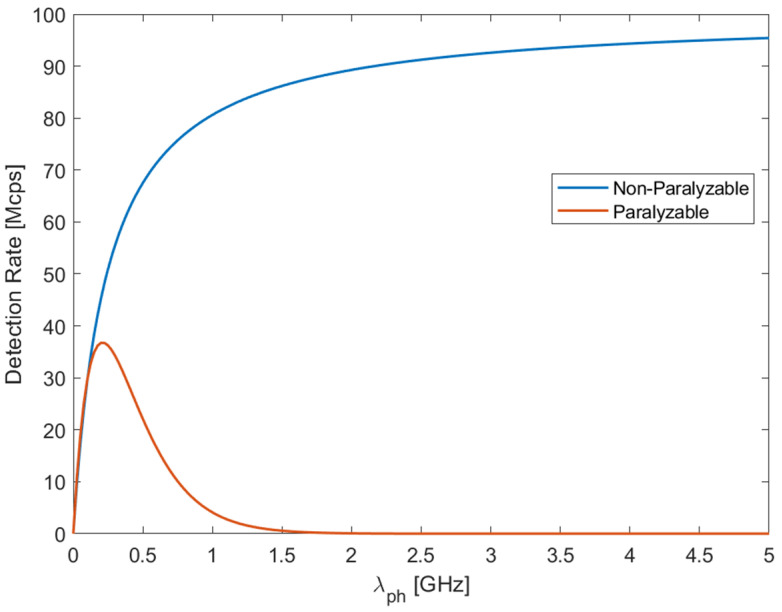 Figure 1
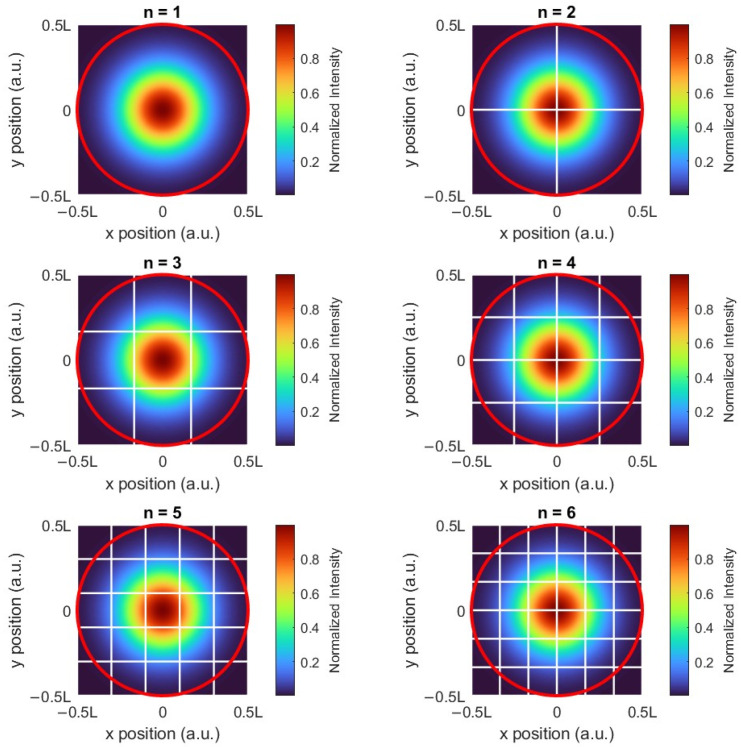 Figure 2
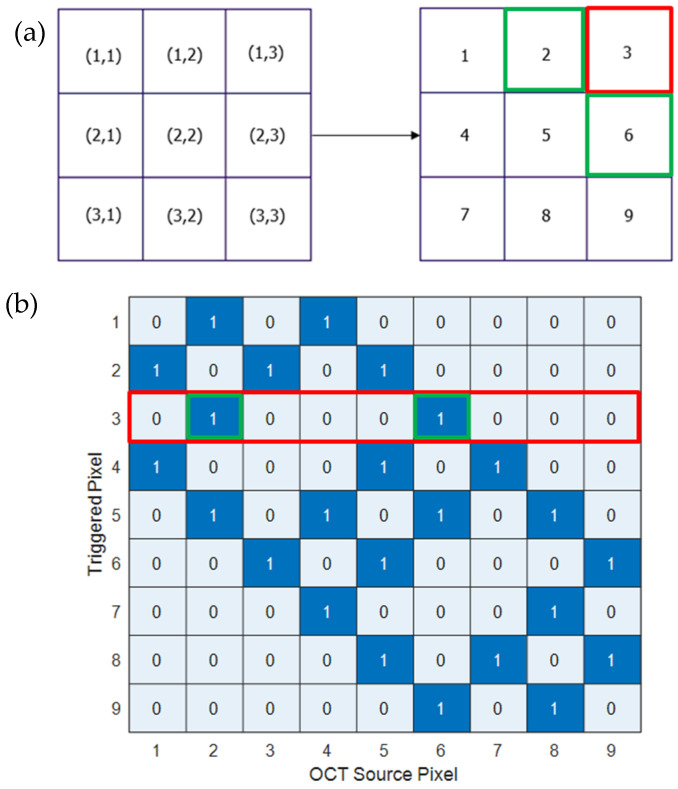 Figure 3
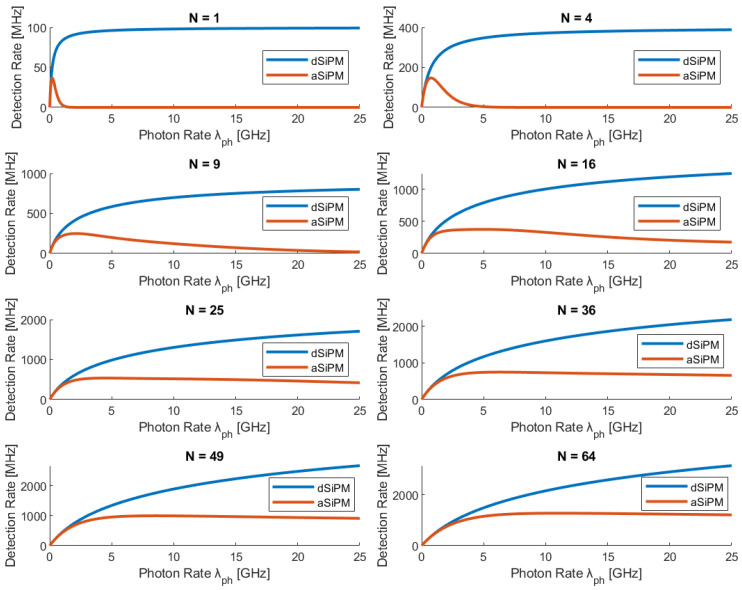 Figure 4
Peer Reviews
No public reviews on file for this paper yet. If you reviewed it on a platform where reviews are public (OpenReview, ICLR, NeurIPS, ICML), you can paste yours below so the community can read it here.
Videos
No videos yet. Explain this paper in a talk, walkthrough, or lecture? Add one.
Taxonomy
TopicsQuantum Information and Cryptography · Advanced Optical Sensing Technologies · Advanced Photonic Communication Systems
1. Introduction
As quantum computing threatens classical cryptographic protocols, the integration of quantum secure methods to share encryption keys like Discrete Variable Quantum Key Distribution (DV-QKD) into commercial infrastructure becomes critical [1]. A particularly challenging environment is the intra-data center network, characterized by short-reach links (<10 km) and requirements for high-throughput key generation [2,3,4].
In these high-flux environments, the primary bottleneck for the quantum key generation rate is the dead time of the Single-Photon Detector (SPD) being used. While Superconducting Nanowire Single-Photon Detectors (SNSPDs) offer excellent performance, their cryogenic cooling requirements render them economically unviable for widespread data center deployment.
CMOS-based Silicon Single-Photon Avalanche Diodes (SPADs) operate at room temperature and are cost-effective but suffer from dead times (typically nanoseconds) that saturate detection rates well below the gigahertz regime required for modern data traffic [5,6,7].
This paper proposes the use of Silicon Photomultiplier (SiPM), an array of SPADs, to mitigate these limitations. By treating the SiPM not merely as an imaging device [8,9] but as a high-rate multi-pixel detector, we model how spatial multiplexing allows the detector to remain active even when individual pixels are dead, significantly extending the achievable key generation rate. To properly contextualize this approach, it is necessary to review the current landscape of detector modeling. State-of-the-art modeling of the SiPM response has largely focused on characterizing intrinsic device physics and optimizing energy resolution for spectroscopic applications, rather than maximizing digital count rates for communications. Extensive work has been done to describe the statistical nature of correlated noise. For instance, Schioppa derived exact recursive solutions to extract dark count and crosstalk rates from dark noise spectra [10], while Kawata et al. and Para rigorously characterized the geometric probability distribution of afterpulsing and its impact on excess noise factors [11,12]. Regarding saturation and non-linearity, recent models have incorporated the complex analog recovery of pixels. Rosado developed a statistical model describing the mean output charge and current linearity [13], accounting for the recovery of gain and photodetection efficiency described by Gallina et al. [14]. Similarly, Vinogradov et al. analyzed SiPM efficiency in terms of Photon Number Resolution (PNR) and Detective Quantum Efficiency (DQE) [15]. However, these studies primarily address the fidelity of pulse height measurements for calorimetry and medical imaging, rather than the maximum achievable photon counting throughput required for QKD. In the pursuit of overcoming this throughput bottleneck, previous studies have explored active dead-time management strategies. Notably, Polyakov et al. [16] demonstrated an ‘intelligent’ detection system that utilizes a high-speed 1-by-N optical switch to actively route incoming photons to available ‘live’ detectors based on their firing history. While this technique effectively minimizes the aggregate dead time, it requires real-time feedback logic to monitor detector states and actively steer photon paths. In contrast, our work focuses on passive spatial multiplexing inherent to standard SiPM. Unlike active switching, the SiPM allows the detector to remain responsive through the probabilistic distribution of photon arrivals across multiple pixels. This passive architecture eliminates the need for external routing logic and preserves the intrinsic statistical nature of the photon flux, a critical feature for the security of high-speed DV-QKD implementations. Section 2 reviews CMOS SPAD detection models, as reported in the literature.
Section 3 summarizes the innovation of this study: a generalization of the single SPAD detection models to the case of square SiPMs.
Section 4 validates the theoretical generalized model with a simulation showcasing the performance advantage of SiPMs over a single SPAD in high-rate single-photon detection applications like intra-data center DV-QKD. We also briefly address the effects of different combining logic architectures (OR/XOR) on saturation rates as analyzed by Gnecchi et al. [17], distinguishing between logic-limited and pixel-limited saturation regimes.
2. CMOS SPAD Detection Models
To model the SiPM, we first establish the behavior of its fundamental unit: the single SPAD. The detection rate is governed by the quenching mechanism, which dictates how the device resets after an avalanche.
SPADs employing active quenching circuits (AQCs) are typically modeled as non-paralyzable [18]. In this mode, the detector is insensitive during the dead time, , but events occurring during this period do not extend the dead time. The detection rate, , is given by:
where is the total rate of avalanche triggering events. For a single SPAD, it includes avalanches due to photon absorption, dark count and afterpulsing (AP) events:
where DCR is the dark count rate, are the avalanche rates due to photon absorption and AP, respectively, is the rate photons arrive at the detector, PDP is the photon detection probability, FF is the detector’s fill factor and is the afterpulsing probability. Since AP arises from carrier trapping that can trigger subsequent events in a cascading manner, a single primary avalanche may initiate a correlated pulse train. Therefore, rather than relying on the single-event probability , we define the rate of AP-induced avalanches using the expectation value . This formulation models the geometric distribution of the afterpulsing chain established by Kawata et al. [11], and accounts for the cumulative increase in the effective count rate analyzed by Para [12].
Conversely, in high-flux regimes SPADs using passive quenching circuits (PQCs) are often paralyzable through the mechanism of dead time extension, which is described and demonstrated in [18,19]. Avalanches occurring during the recharge phase, while the applied voltage on the SPAD is below the readout’s sensing threshold, are not recorded but still discharge the capacitance, resetting the dead time. This leads to a drop in detection rate, , at high fluxes:
Single SPADs, regardless of the model, saturate at (non-paralyzable) and (paralyzable, e being Euler’s number) [18], effectively capping the detection rate (Figure 1).
In the following section, we generalize the detection rate formalism from Equations (1)–(5) to model SiPM detection rates (see Appendix A for the complete mathematical derivation).
3. Generalized Silicon Photomultiplier Detection Model
The simplest SiPM is a square array of SPADs (n-number of pixels in a row or column). To determine the effective detection rate of the array, we must account for the non-uniform photon distribution, assuming a Gaussian beam profile, representing the incident photon’s spatial probability density function (PDF). The rate of signal photons impinging on the (i,j) pixel is , where is the probability that a photon will impinge on the (i,j) pixel, derived from spatial integration of the Gaussian profile for pixel (i,j). Figure 2 illustrates the PDF distribution across individual SiPM pixels (SPADs). The primary avalanche rate for a pixel includes both avalanches due to photon absorption and dark count avalanches:
A major challenge in SiPM modeling is the cascading effect of correlated noise. An AP event could cascade into a series of AP avalanches in the same pixel, while an optical crosstalk (OCT) event could spatially cascade, triggering OCT avalanches in surrounding pixels. Furthermore, every AP event could trigger OCT avalanches in its neighbors and vice versa—a pixel triggered due to OCT could be triggered by AP afterwards. Thus, three coupled equations are required to derive the total avalanche rate of a single pixel in a SiPM:
where and are the (i,j) pixel’s total avalanche rate and avalanche rates due to AP and OCT events, respectively, and is the probability that a pixel will be triggered by an OCT event from a neighboring pixel, according to the four nearest neighbors model derived in [20], and was found to agree with the experimental evidence presented in it. Substituting (8) in (7) gives:
where . Defining column vectors where each element corresponds to the avalanche rate of a specific pixel in the array for and simplify the calculation and (10) becomes:
where is the identity matrix, and is a coupling matrix, representing how the element of (corresponds to pixel (i,j) in the two-dimensional SiPM representation) might be triggered by OCT coming from avalanches in its nearest neighbors (as illustrated in Figure 3) (Of course, the possible r values are also determined by the triggered pixel location in the array. For example-when , r cannot be , as there is no such pixel in the array. Another example: for , as means that pixel number 3 (Figure 3a) sourcing OCT, which could trigger pixel number 4, which cannot happen according to the four nearest neighbors model [20]):
where , marks the row corresponding to the OCT triggered pixel—m, and marks the column representing the OCT source pixel. means pixel could be triggered by OCT sourcing from its adjacent pixels, and means the pixel does not trigger an OCT to itself and non-adjacent pixels do not trigger OCT in pixel as well.
Thus, the total avalanche rate can be described in a vector notation as a function of and the correlated noise probabilities:
The effective detection rate of the SiPM is the sum of the rates of individual pixels, processed according to their quenching architecture. For a Digital SiPM (dSiPM), where each pixel is actively quenched (non-paralyzable):
For an Analog SiPM (aSiPM), where pixels are passively quenched (paralyzable):
4. Simulation Results and Discussion
Simulations were conducted for SiPMs with varying pixel counts under a Gaussian illumination profile (see Figure 4). Increasing significantly delays saturation. For a SiPM constructed out of SPADs the achievable detection rate is larger by more than an order of magnitude for both dSiPM and aSiPM. Also, the aSiPM demonstrates paralysis resistance; while individual pixels in an aSiPM are paralyzable, the array exhibits “pseudo-saturation”. As shown in the simulation results, for , the aSiPM detection rate matches the dSiPM up to a photon incident rate of . Beyond this, the dSiPM outperforms due to its non-paralyzable nature, but the aSiPM remains viable for rates far exceeding a single SPAD. Figure 4 clearly demonstrates the substantial benefits of employing SiPMs for short-reach, high-rate quantum communication applications such as DV-QKD in data-center environments.
While the presented model focuses on the statistical availability of pixels (passive spatial multiplexing), practical implementations of dSiPMs must also consider the bandwidth limitations imposed by the electronic readout architecture. As analyzed by Gnecchi et al. [17], the method of combining pixel outputs, typically via OR-trees or XOR-trees, introduces a secondary saturation mechanism known as “routing pile-up.” In an OR-tree architecture, coincident events triggered by multiple photons (or simultaneous signal and noise events) are merged into a single digital pulse if they overlap in time, potentially undercounting the true flux.
However, we determined that, for the specific constraints of intra-data center DV-QKD applications, which favor compact detectors, the choice of electronic architecture has a negligible impact on the saturation curves presented in Figure 4. According to the analysis in [17], particularly the relationship between array size and maximum count rate, the performance advantage of XOR-logic over OR-logic becomes significant only when the number of pixels is large enough ( ) for the array’s effective dead time to approach the logic circuit’s minimum pulse width limits. For the regime modeled in this work ( ), the detection rate is dominated by the fundamental pixel dead time scaling rather than the combining logic’s saturation.
It is important to note that, while the merging of coincident events in OR-trees does not significantly alter the macroscopic throughput in this regime, it does have implications for the Quantum Bit Error Rate (QBER). Specifically, if an afterpulsing event and a simultaneous optical crosstalk event are merged due to routing pile-up, they are registered as a single false count, which obscures the true noise flux and affects the QBER differently than if each correlated noise event were resolved. A full analysis of how these specific coincidence mechanisms degrade the QBER requires a distinct probabilistic framework that goes beyond the throughput saturation model presented here.
5. Conclusions
This study is, to our knowledge, the first to generalize the detection rate models of single SPADs to SiPMs, SPAD arrays, explicitly accounting for cascading correlated noise sources. We showed that SiPMs overcome the dead-time limitations of single SPADs, enabling gigahertz-range detection rates essential for intra-data center DV-QKD.
The reference list from the paper itself. Each links out to its DOI / PubMed record.
- 1Shor P.W. Preskill J. Simple Proof of Security of the BB 84 Quantum Key Distribution Protocol Phys. Rev. Lett.20008544144410.1103/Phys Rev Lett.85.44110991303 · doi ↗ · pubmed ↗
- 2Qiu K. Haw J.Y. Qin H. Ng N.H.Y. Kasper M. Ling A. Quantum-Secured Data Centre Interconnect in a field environment J. Surveill. Secur. Saf.2024518419710.20517/jsss.2024.02 · doi ↗
- 3Wells Fargo Technology Quantum Key Distribution for Symmetric Key Generation Wells Fargo San Francisco, CA, USA September 2024 Available online: https://www.toshiba.eu/solutions/quantum/wp-content/uploads/resources/External-Case-Study-QKD-Symmetric-Key-Generation.pdf(accessed on 13 February 2026)
- 4Jain N. Hoff U. Gambetta M. Rodenberg J. Gehring T. Quantum key distribution for data center security—A feasibility studyar Xiv 202310.48550/ar Xiv.2307.130982307.13098 · doi ↗
- 5Webster E.A.G. Richardson J.A. Grant L.A. Renshaw D. Henderson R.K. A Single-Photon Avalanche Diode in 90-nm CMOS Imaging Technology With 44% Photon Detection Efficiency at 690 nm IEEE Electron Device Lett.20123369469610.1109/LED.2012.2187420 · doi ↗
- 6Takai I. Matsubara H. Soga M. Ohta M. Ogawa M. Yamashita T. Single-Photon Avalanche Diode with Enhanced NIR-Sensitivity for Automotive LIDAR Systems Sensors 20161645910.3390/s 1604045927043569 PMC 4850973 · doi ↗ · pubmed ↗
- 7Katz A. Blank T. Fenigstein A. Leitner T. Nemirovsky Y. Active-Reset for the N+ P Single-Ended SPAD Used in the NIR Li DAR Receivers IEEE Trans. Electron Devices 2019665191519510.1109/TED.2019.2946015 · doi ↗
- 8Eshkoli A. 3D CMOS Imaging Based on Si-Photomultiplier Ph.D. Thesis Technion—Israel Institute of Technology Haifa, Israel 2022 Available online: https://technion.primo.exlibrisgroup.com/permalink/972TEC_INST/1798 ite/alma 9926839734303971(accessed on 13 February 2026)