Acrylamide in Food: From Maillard Reaction to Public Health Concern
Gréta Törős, Walaa Alibrahem, Nihad Kharrat Helu, Szintia Jevcsák, Aya Ferroudj, József Prokisch

TL;DR
Acrylamide, a harmful chemical formed in cooked foods, poses health risks and requires new strategies for detection and reduction.
Contribution
This review provides a comprehensive update on acrylamide formation, detection, mitigation, and health impacts from 2013 to 2025.
Findings
LC–MS/MS enables trace-level acrylamide detection (≤10 µg/kg), aiding compliance and process optimization.
Mitigation strategies like vacuum frying and predictive modeling can reduce acrylamide by up to 70% in some foods.
Polyphenols and fibers may lower acrylamide formation and bioavailability through detoxification mechanisms.
Abstract
Acrylamide is a heat-induced food contaminant that can be formed through the Maillard reaction between reducing sugars and asparagine in carbohydrate-rich foods. It is recognized as having carcinogenic, neurotoxic, and reproductive risks, prompting global regulatory and research attention. This review synthesizes recent advances (2013–2025) in understanding acrylamide’s formation mechanisms, detection methods, mitigation strategies, and health implications. Analytical innovations such as LC–MS/MS have enabled detection at trace levels (≤10 µg/kg), supporting process optimization and compliance monitoring. Effective mitigation strategies combine cooking adjustments, ingredient reformulation, and novel technologies, including vacuum frying, ohmic heating, and predictive modeling, which can achieve up to a 70% reduction in certain food categories. Dietary polyphenols and fibers also hold…
Genes, proteins, chemicals, diseases, species, mutations and cell lines named across the full text — each resolved to its canonical identifier and authoritative record.
Click any figure to enlarge with its caption.
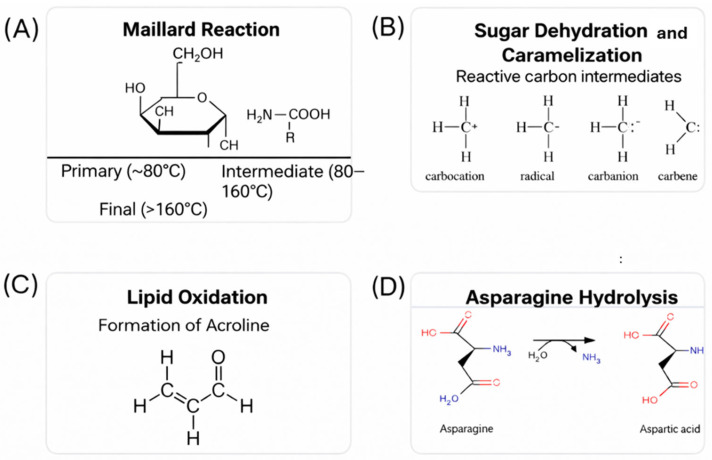 Figure 1
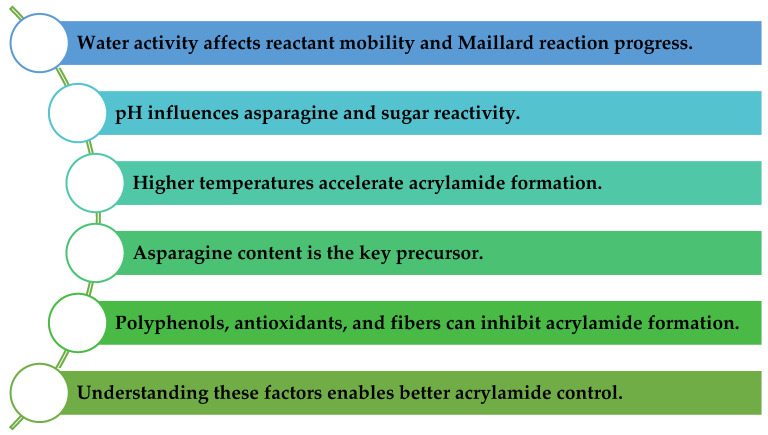 Figure 2
 Figure 3
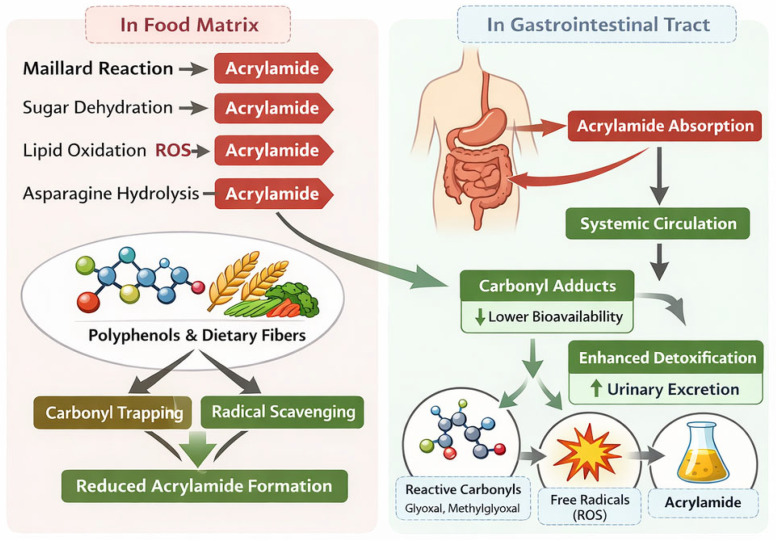 Figure 4
Peer Reviews
No public reviews on file for this paper yet. If you reviewed it on a platform where reviews are public (OpenReview, ICLR, NeurIPS, ICML), you can paste yours below so the community can read it here.
Videos
No videos yet. Explain this paper in a talk, walkthrough, or lecture? Add one.
Taxonomy
TopicsPotato Plant Research · Sulfur Compounds in Biology · Edible Oils Quality and Analysis