Self-Assembled (Nano)Structures of Human Serum Albumin with Thermoresponsive Chitosan-g-PNIPAM Graft Copolymer
Florin Bucatariu, Larisa-Maria Petrila, Timeea-Anastasia Ciobanu, Marius-Mihai Zaharia, Stergios Pispas, Marcela Mihai

TL;DR
This paper explores how human serum albumin interacts with a thermoresponsive polymer to form nanostructures or macrostructures depending on mixing conditions.
Contribution
The study introduces a new thermoresponsive graft copolymer and investigates its interaction with HSA under varying molar ratios and addition orders.
Findings
Nanostructures or macrostructures form depending on the molar ratio and order of addition of HSA and Chit-g-PNIPAM.
Thermoresponsiveness and stability of the formed structures were analyzed using turbidimetry and DLS.
Dynamic light scattering shows structure formation depends on the mixing sequence and component ratios.
Abstract
Protein–polyelectrolyte entities (complex, coacervates, flocs, gels, etc.) are of great interest due to their potential applications in biological and medical fields. This study focuses on investigating the interactions between a model protein, human serum albumin (HSA) and a newly synthesized hybrid thermoresponsive copolymer based on chitosan polysaccharide grafted with poly(N-isopropylacrylamide) synthetic polymer chains (Chit-g-PNIPAM), in aqueous media, by mixing the individual component aqueous solutions. Depending on the mixing molar ratio and the order of addition of the two components (protein and copolymer), either stable nanostructured suspension or macrostructures’ phase separation have been observed. Dynamic light scattering (DLS) results reveal that the Chit-g-PNIPAM/HSAx (molar ratio 5:x, where x = 1, 2, 3, 5, 10 and 15) nanostructures’ and HSA/Chit-g-PNIPAMx (molar ratio…
Genes, proteins, chemicals, diseases, species, mutations and cell lines named across the full text — each resolved to its canonical identifier and authoritative record.
Click any figure to enlarge with its caption.
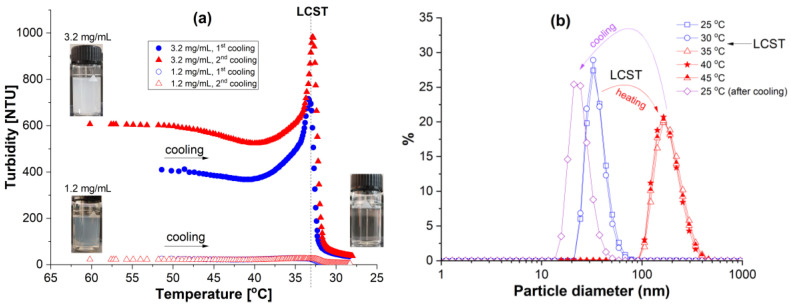 Figure 1
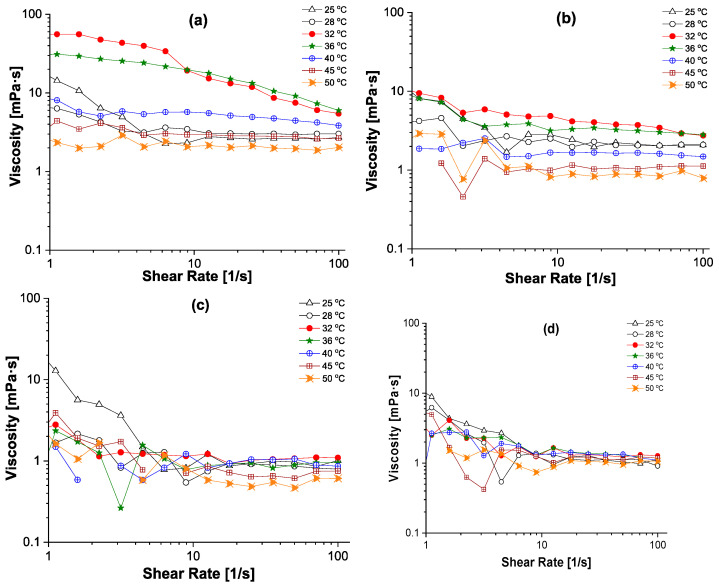 Figure 2
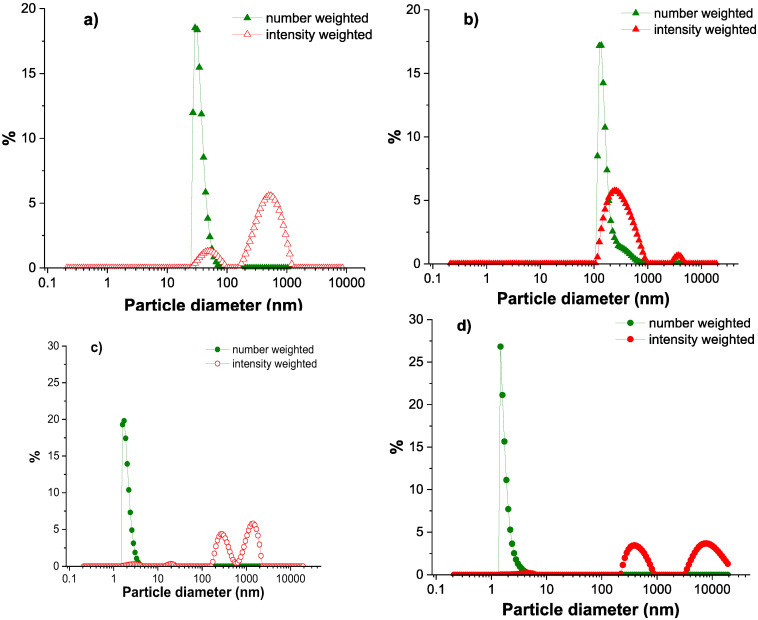 Figure 3
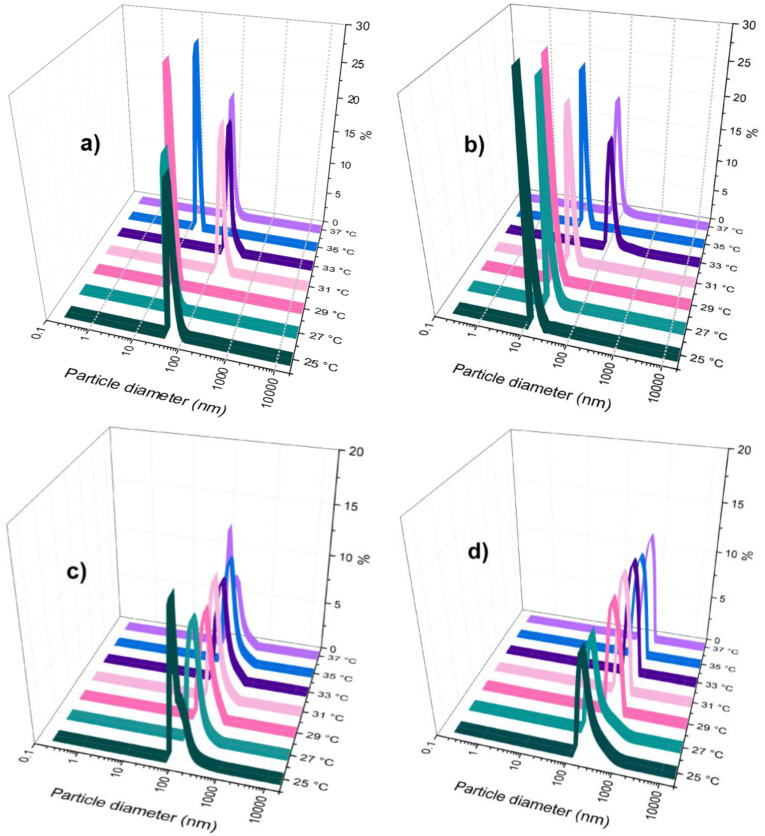 Figure 4
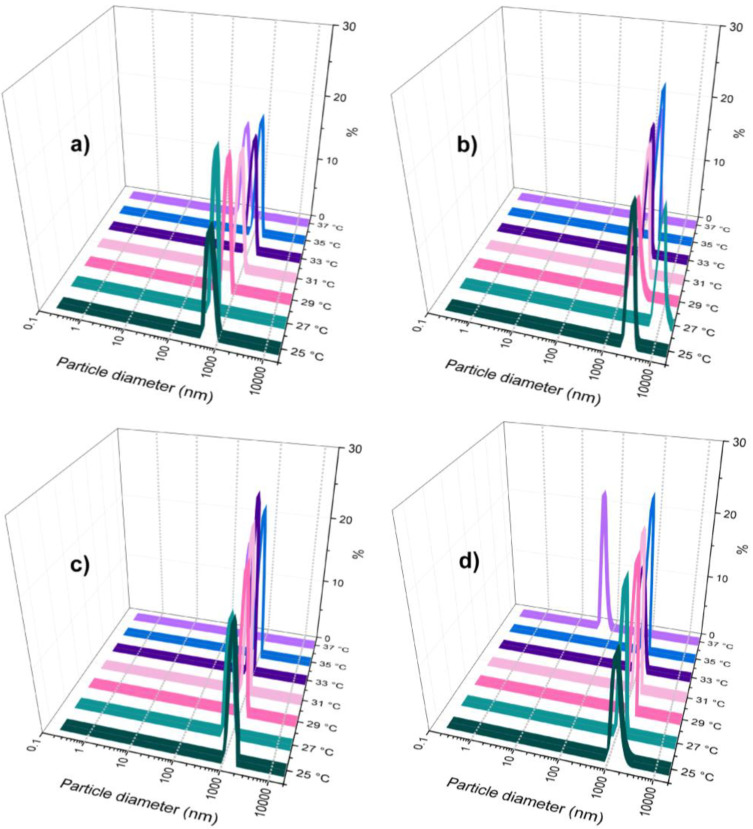 Figure 5
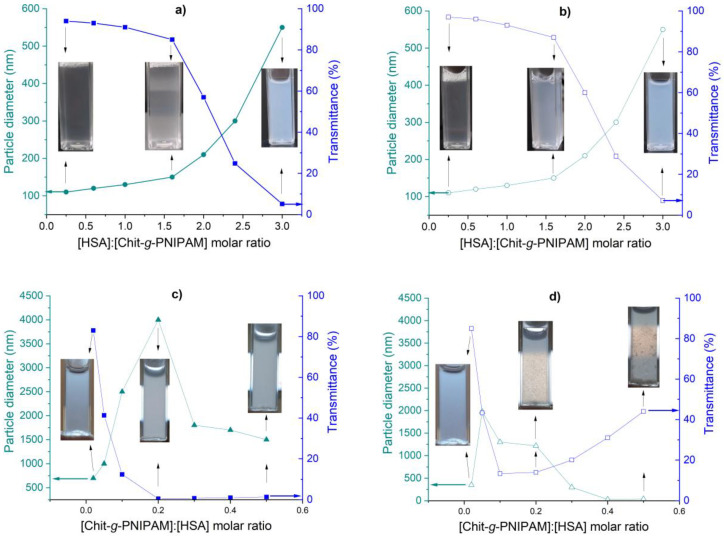 Figure 6
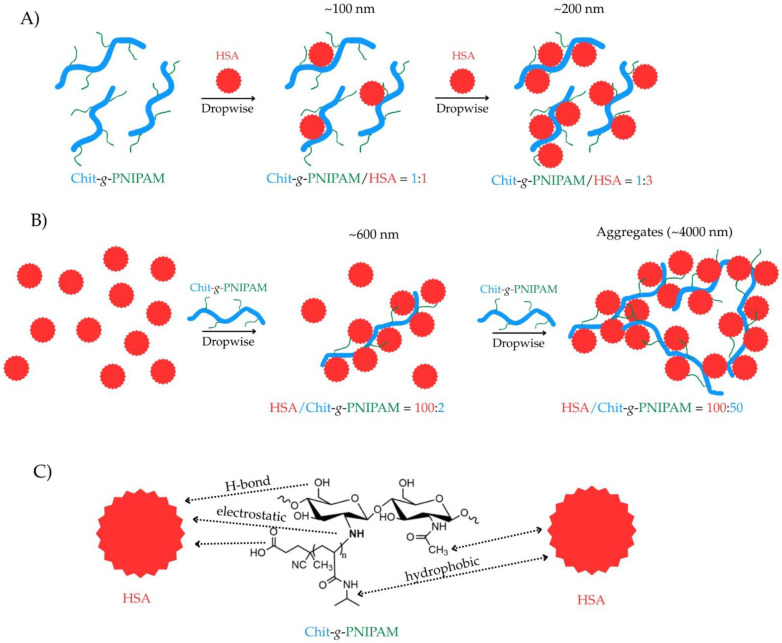 Figure 7
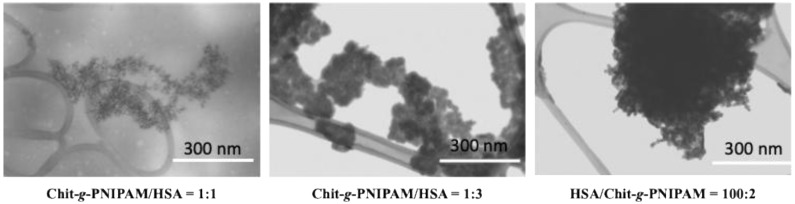 Figure 8
Peer Reviews
No public reviews on file for this paper yet. If you reviewed it on a platform where reviews are public (OpenReview, ICLR, NeurIPS, ICML), you can paste yours below so the community can read it here.
Videos
No videos yet. Explain this paper in a talk, walkthrough, or lecture? Add one.
Taxonomy
TopicsProtein Interaction Studies and Fluorescence Analysis · Hydrogels: synthesis, properties, applications · Polymer Surface Interaction Studies