Dried Blood Spot for CXCL-10 and Tacrolimus: Integrated Non-Invasive Monitoring to Guide Personalized Treatment in Adult Kidney Transplant Recipients
Olga Millán, Jordi Rovira, Virginia Fortuna, Pedro Ventura-Aguiar, Fritz Diekmann, Mercè Brunet

TL;DR
This study explores using dried blood spots to monitor CXCL-10 and tacrolimus in kidney transplant patients, offering a non-invasive way to detect rejection and adjust treatment.
Contribution
The study introduces a novel DBS-based method for CXCL-10 quantification to guide personalized immunosuppression in kidney transplant recipients.
Findings
CXCL-10 levels in dried blood spots were significantly higher in patients with rejection compared to event-free patients.
DBS-based tacrolimus monitoring showed strong correlation with venous blood measurements, with no significant bias.
The CXCL-10 DBS method demonstrated high diagnostic accuracy for detecting rejection (AUC: 0.952).
Abstract
Background/objectives: Kidney transplant recipients require lifelong immunosuppression and monitoring to prevent rejection, infection, and graft dysfunction. Current surveillance relies on tacrolimus therapeutic drug monitoring and, when needed, invasive biopsies. Dried blood spot (DBS) sampling provides a minimally invasive, patient-friendly option for remote follow-up. This study aims to develop and evaluate a DBS-based method for CXCL-10 quantification that, in combination with tacrolimus exposure monitoring, could help identify kidney recipients at risk of rejection and cytomegalovirus (CMV) infection and guide immunosuppression adjustment. Methods: The study included 81 selected kidney recipients for CXCL-10-DBS analysis by ELISA (12 T-cell mediated rejection; 10 antibody-mediated rejection; 6 CMV infection and 53 clinical event-free) and 10 healthy volunteers. A Tacrolimus-DBS…
Genes, proteins, chemicals, diseases, species, mutations and cell lines named across the full text — each resolved to its canonical identifier and authoritative record.
Click any figure to enlarge with its caption.
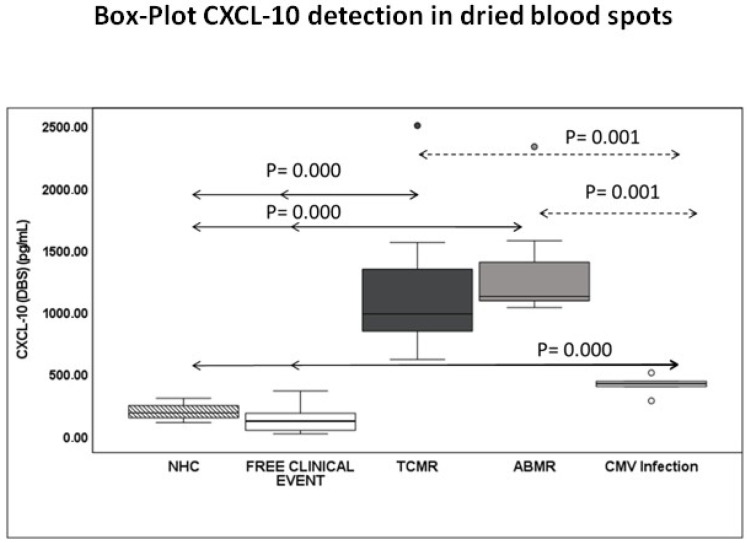 Figure 1
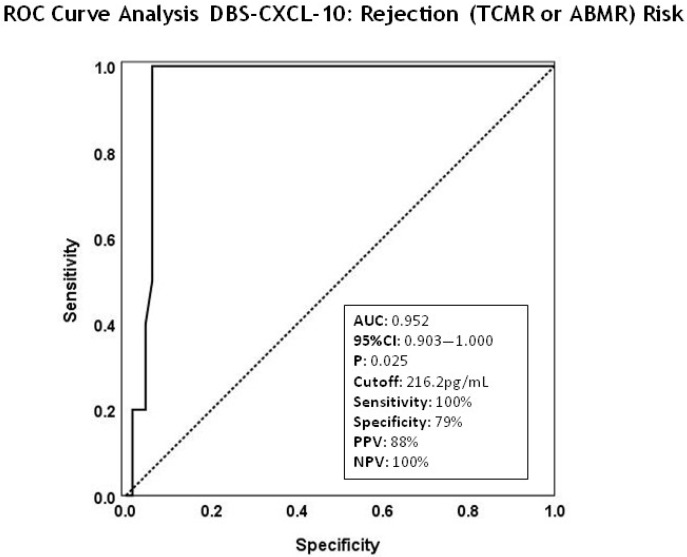 Figure 2
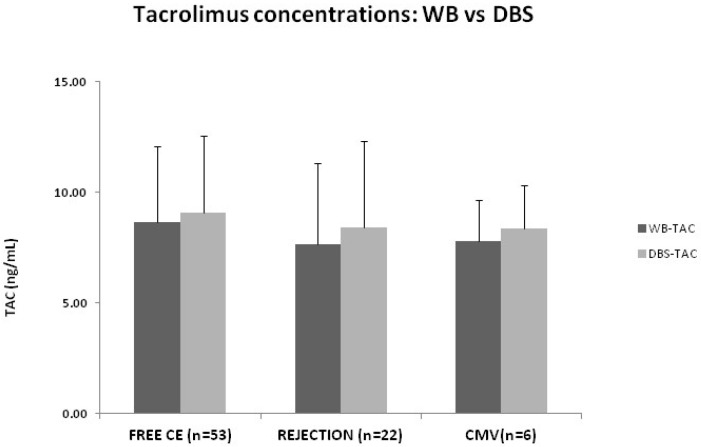 Figure 3
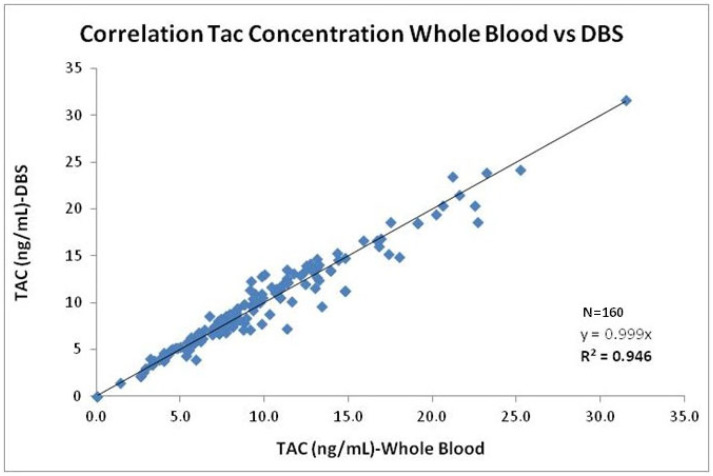 Figure 4
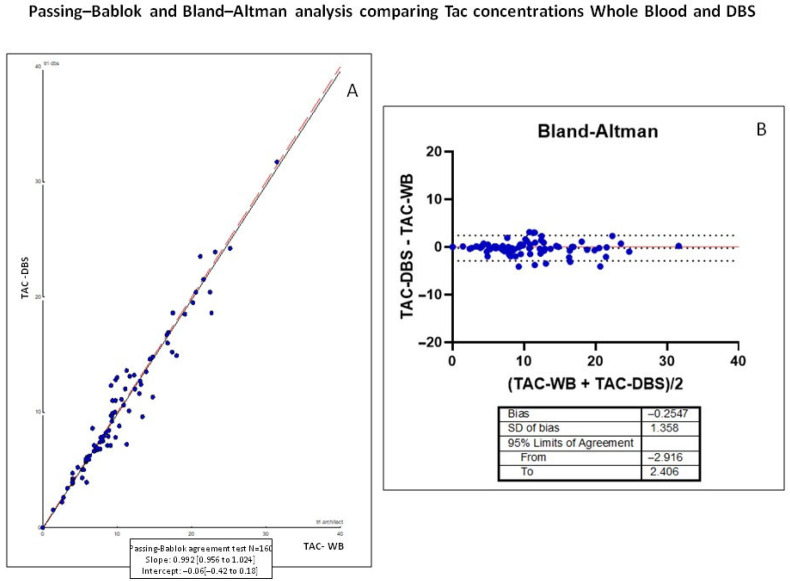 Figure 5
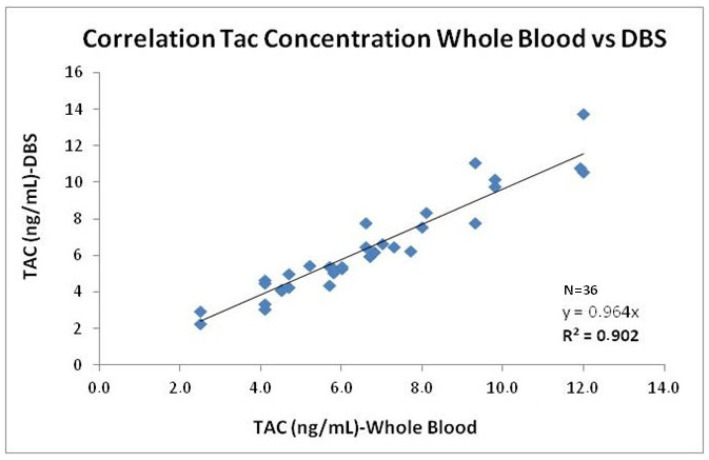 Figure 6
Peer Reviews
No public reviews on file for this paper yet. If you reviewed it on a platform where reviews are public (OpenReview, ICLR, NeurIPS, ICML), you can paste yours below so the community can read it here.
Videos
No videos yet. Explain this paper in a talk, walkthrough, or lecture? Add one.
Taxonomy
TopicsRenal Transplantation Outcomes and Treatments · Biosimilars and Bioanalytical Methods · Cytomegalovirus and herpesvirus research