RepACNet: A Lightweight Reparameterized Asymmetric Convolution Network for Monocular Depth Estimation
Wanting Jiang, Jun Li, Yaoqian Niu, Hao Chen, Shuang Peng

TL;DR
RepACNet is a lightweight neural network for estimating depth from a single image, designed to work efficiently on mobile devices without sacrificing accuracy.
Contribution
RepACNet introduces reparameterized asymmetric convolution designs and integrates MLP-Mixer components for efficient monocular depth estimation.
Findings
RepACNet achieves competitive performance on NYU Depth v2 and KITTI Eigen benchmarks.
The model maintains significantly fewer parameters than state-of-the-art methods.
RepTMAC and SECDC components enable efficient global feature interaction and multi-scale depth feature capture.
Abstract
Monocular depth estimation (MDE) is a cornerstone task in 2D/3D scene reconstruction and recognition with widespread applications in autonomous driving, robotics, and augmented reality. However, existing state-of-the-art methods face a fundamental trade-off between computational efficiency and estimation accuracy, limiting their deployment in resource-constrained real-world scenarios. It is of high interest to design lightweight but effective models to enable potential deployment on resource-constrained mobile devices. To address this problem, we present RepACNet, a novel lightweight network that addresses this challenge through reparameterized asymmetric convolution designs and CNN-based architecture that integrates MLP-Mixer components. First, we propose Reparameterized Token Mixer with Asymmetric Convolution (RepTMAC), an efficient block that captures long-range dependencies while…
Genes, proteins, chemicals, diseases, species, mutations and cell lines named across the full text — each resolved to its canonical identifier and authoritative record.
Click any figure to enlarge with its caption.
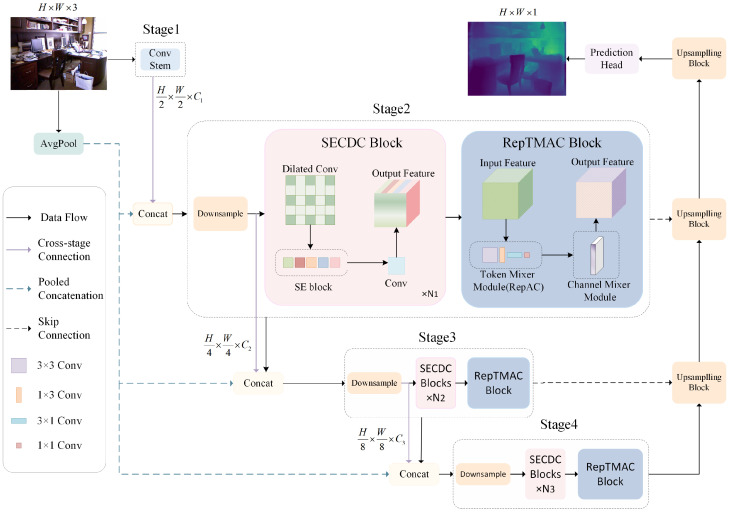 Figure 1
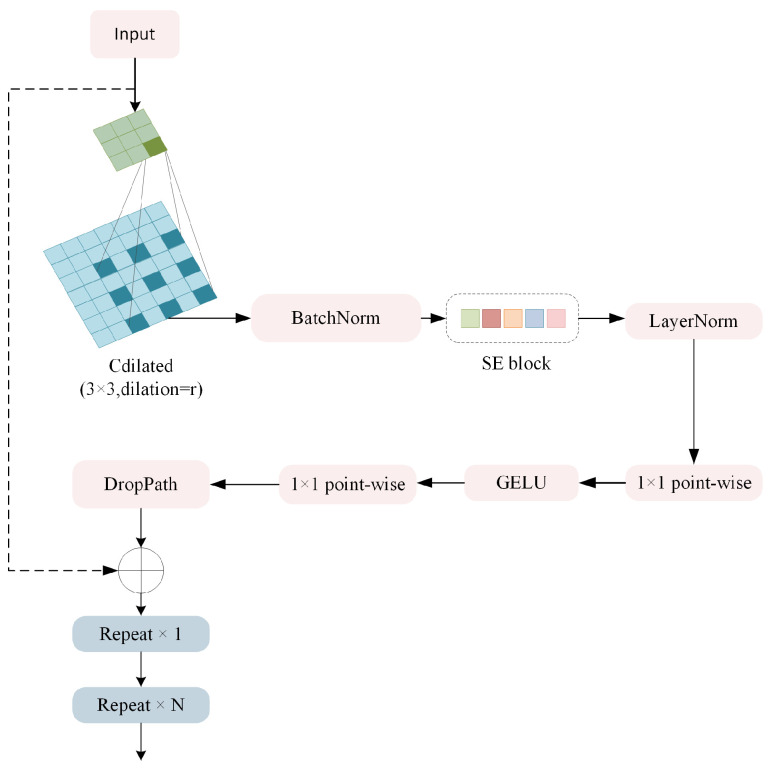 Figure 2
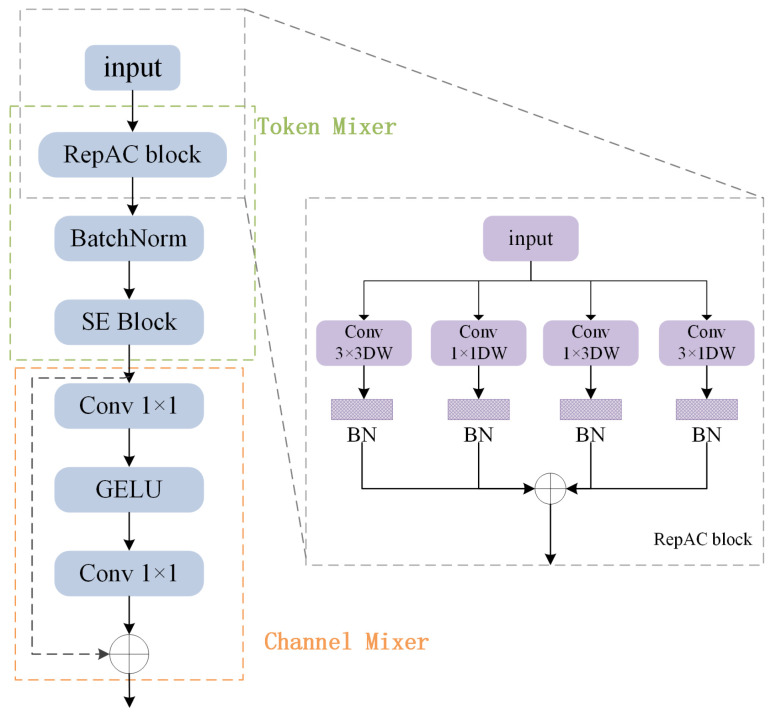 Figure 3
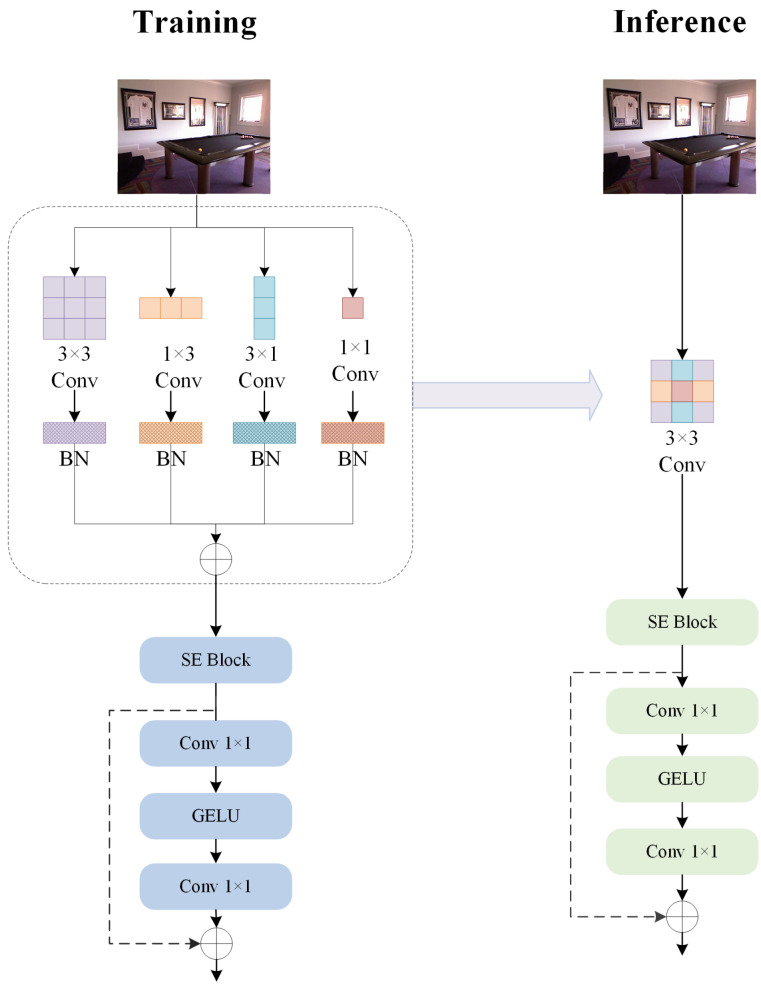 Figure 4
 Figure 5
 Figure 6
 Figure 7
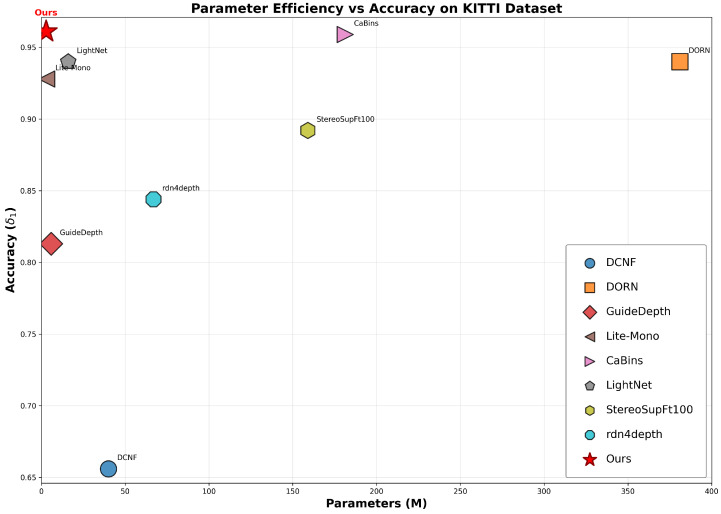 Figure 8
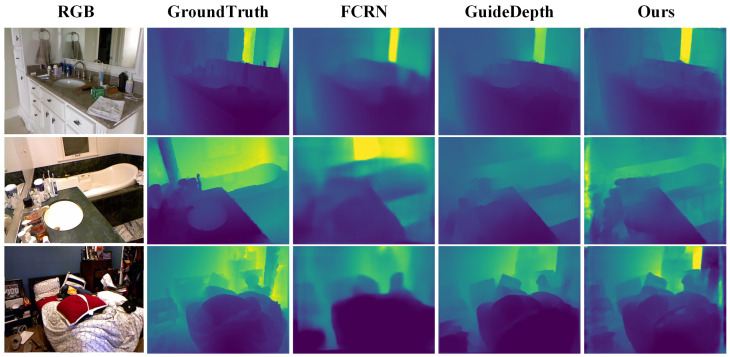 Figure 9
Peer Reviews
No public reviews on file for this paper yet. If you reviewed it on a platform where reviews are public (OpenReview, ICLR, NeurIPS, ICML), you can paste yours below so the community can read it here.
Videos
No videos yet. Explain this paper in a talk, walkthrough, or lecture? Add one.
Taxonomy
TopicsAdvanced Vision and Imaging · Advanced Neural Network Applications · Robotics and Sensor-Based Localization