Metal-Functionalized Nanozymes in Antibacterial Wound Management: Recent Advances and Future Perspectives
Selvam Sathiyavimal, Devaraj Bharathi, Ezhaveni Sathiyamoorthi

TL;DR
Metal-functionalized nanozymes show promise for treating infected wounds by mimicking enzymes, fighting bacteria, and aiding tissue repair, but safety concerns remain.
Contribution
This review highlights recent advances in metal-based nanozymes for wound healing and identifies key challenges and future directions.
Findings
Metal-functionalized nanozymes exhibit enzyme-like activity that produces reactive oxygen species and inhibits biofilms.
These nanozymes can be integrated into hydrogels, films, and fibers to enhance wound healing.
Safety issues like metal ion release and long-term biocompatibility need to be addressed for clinical translation.
Abstract
Chronic and infected wounds continue to pose significant clinical challenges due to microbial infections, biofilm development, inflammation, and poor tissue regeneration. Traditional antibiotics medications often show low efficacy and lack stability. The demand for new therapeutic approaches is increasing due to bacterial resistance. Metal-based nanozymes have intrinsic enzyme-like catalytic activity and emerged as a promising class of antibacterial agents for wound-healing applications. The functionalization with metals such as silver (Ag), copper (Cu), iron (Fe), manganese (Mn), cerium (Ce), platinum (Pt) and gold (Au) enhances peroxidase (POD)-, oxidase (OXD)-, and catalase (CAT)-like biomimetic activities. This improvement enables efficient reactive oxygen species (ROS) production, biofilm inhibition, and microenvironment-responsive antibacterial activity. These metal-nanozymes also…
Genes, proteins, chemicals, diseases, species, mutations and cell lines named across the full text — each resolved to its canonical identifier and authoritative record.
Click any figure to enlarge with its caption.
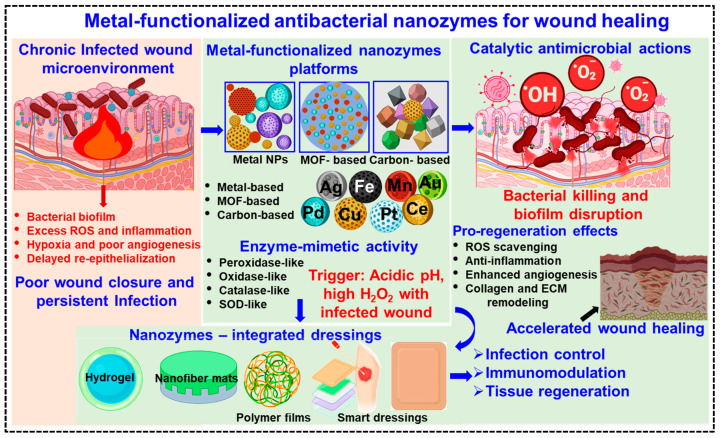 Figure 1
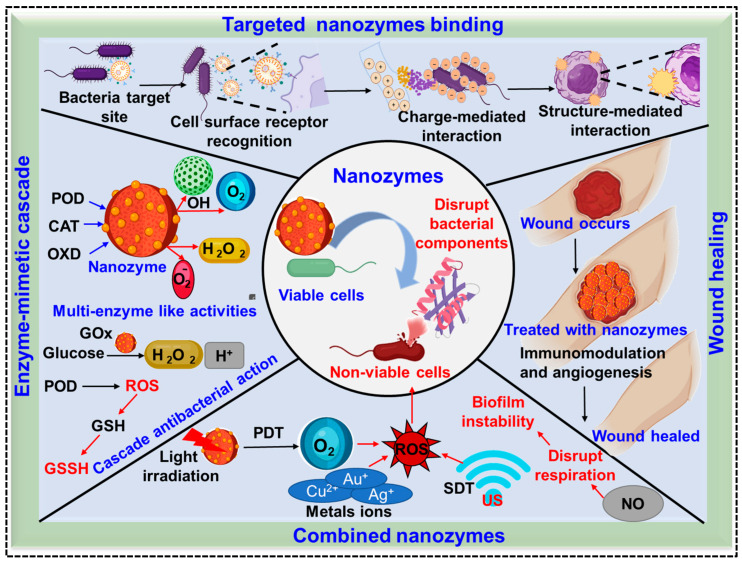 Figure 2
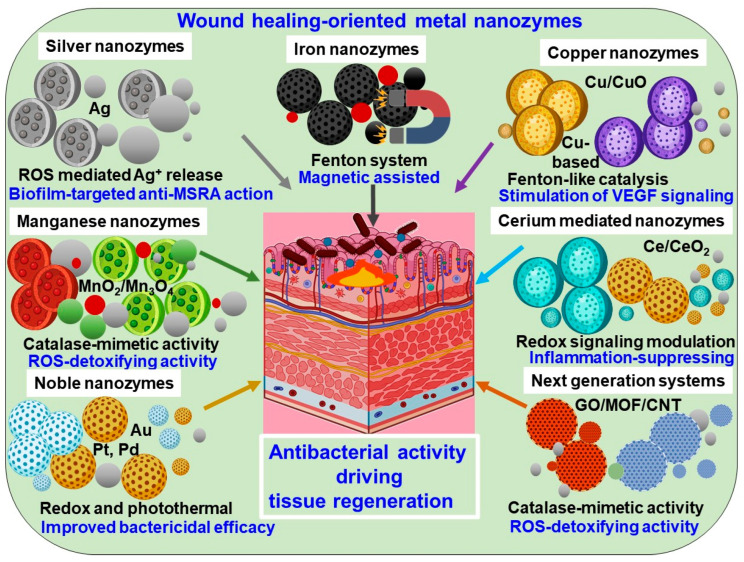 Figure 3
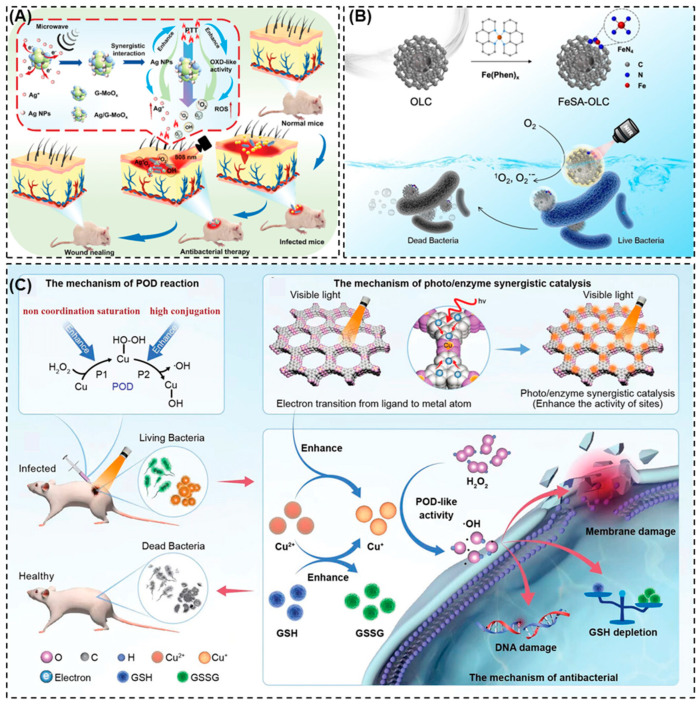 Figure 4
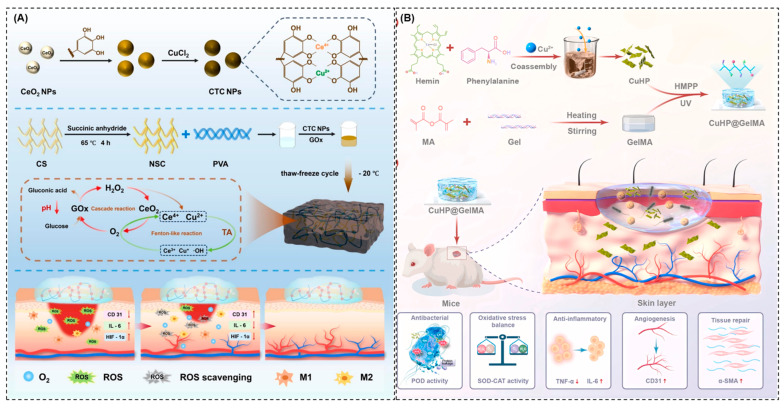 Figure 5
Peer Reviews
No public reviews on file for this paper yet. If you reviewed it on a platform where reviews are public (OpenReview, ICLR, NeurIPS, ICML), you can paste yours below so the community can read it here.
Videos
No videos yet. Explain this paper in a talk, walkthrough, or lecture? Add one.
Taxonomy
TopicsAdvanced Nanomaterials in Catalysis · Nanoplatforms for cancer theranostics · Nanocluster Synthesis and Applications